
In the world of global finance, few symbols carry as much weight as “AAPL.” For many investors, Apple Inc. is more than just a consumer electronics company; it is a cornerstone of the modern portfolio and a barometer for the health of the technology sector at large. When an individual asks, “What is Apple’s stock price?” they are often seeking more than a real-time quote. They are looking for an understanding of the company’s valuation, its stability as an asset, and its potential for future growth.
Navigating the complexities of Apple’s stock price requires a deep dive into financial metrics, historical performance, and the macroeconomic factors that move the needle for a company with a multi-trillion-dollar market capitalization. This guide explores the financial architecture of Apple and what investors should consider when evaluating its price.
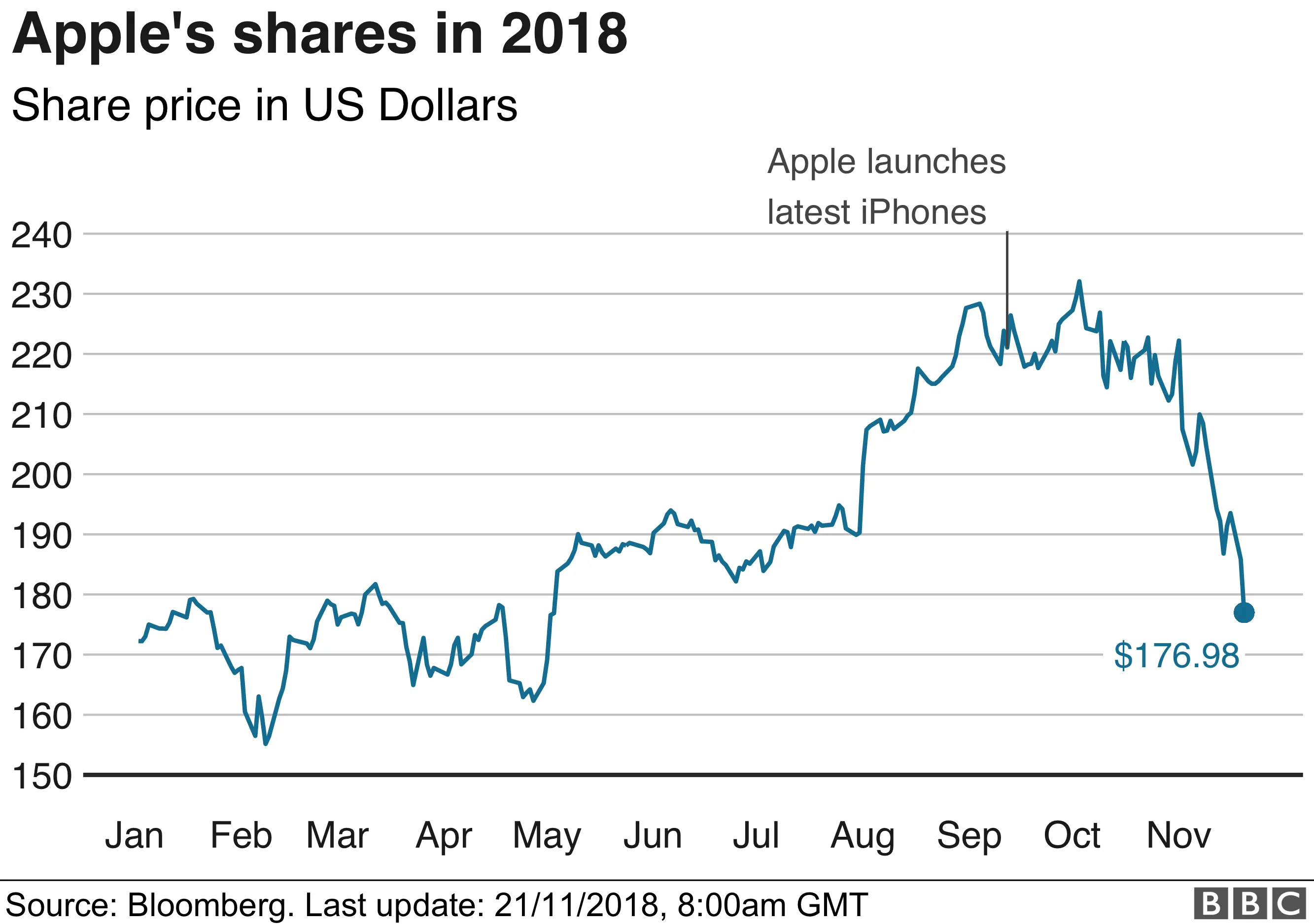
The Financial Fundamentals: What Drives Apple’s Price?
The price of a stock is essentially the market’s consensus on the present value of a company’s future cash flows. For Apple, this calculation is driven by several key financial pillars that professional analysts and retail investors alike monitor with precision.
Revenue Diversification and Profit Margins
Historically, Apple’s stock price was heavily tethered to the iPhone’s quarterly shipment numbers. However, over the last decade, the company has successfully pivoted toward a more diversified revenue model. The “Services” segment—including the App Store, iCloud, Apple Music, and Apple Pay—has become a primary driver of valuation. Unlike hardware, which carries higher manufacturing costs, the Services segment boasts significantly higher gross margins. When Services revenue grows as a percentage of the total mix, the market often rewards Apple with a higher Price-to-Earnings (P/E) multiple, reflecting the increased quality and predictability of its earnings.
Earnings Per Share (EPS) and the P/E Ratio
The most common metric used to judge if Apple’s stock price is “expensive” or “cheap” is the P/E ratio. This represents how much investors are willing to pay for every dollar of the company’s profit. Apple’s P/E has historically fluctuated based on interest rates and growth expectations. If the EPS continues to rise through organic growth and efficiency, the stock price generally follows. Investors look for a consistent “beat” on EPS during quarterly earnings calls as a signal of operational excellence.
The Balance Sheet and Cash Reserves
Apple is famous for its “fortress” balance sheet. With hundreds of billions of dollars in cash and marketable securities, the company possesses a level of financial flexibility that is almost unparalleled in corporate history. This liquidity allows Apple to weather economic downturns, fund massive research and development (R&D) projects, and, perhaps most importantly, return capital to shareholders.
Historical Performance and the Role of Capital Returns
To understand where Apple’s price is going, one must look at how it has managed its capital in the past. Apple’s stock price is not just a reflection of its products, but a reflection of its aggressive and disciplined capital return program.
The Power of Share Buybacks
One of the most significant contributors to the long-term appreciation of Apple’s stock price is its massive share repurchase program. By buying back its own stock, Apple reduces the total number of shares outstanding. This makes each remaining share more valuable, as it represents a larger slice of the company’s “earnings pie.” Over the years, Apple has spent hundreds of billions of dollars on buybacks, effectively engineering a steady lift in the stock price even during periods of stagnant revenue growth.
Dividend Growth and Stability
While Apple is often categorized as a “growth” stock, it also functions as a “dividend” stock. Though the yield may appear modest compared to utility companies, the consistency and growth of Apple’s dividend make it attractive to institutional investors and those seeking passive income. A growing dividend acts as a floor for the stock price; as the yield becomes more attractive, buyers often step in to support the price during market corrections.
Impact of Stock Splits
Apple has a history of implementing stock splits (most recently a 4-for-1 split in 2020). While a split does not change the fundamental value of the company—much like cutting a pizza into more slices doesn’t create more pizza—it does lower the nominal price of a single share. This makes the stock more accessible to retail investors and increases liquidity in the options market. Historically, these events have been met with increased buying pressure, contributing to short-term price appreciation.
Macroeconomic Factors and Market Dynamics
No stock exists in a vacuum. Apple’s price is frequently influenced by external forces that have little to do with the company’s internal operations and everything to do with the global financial environment.
Interest Rates and the “Risk-Free” Rate
The Federal Reserve’s interest rate policy is perhaps the single largest external driver of Apple’s valuation. When interest rates rise, the “discount rate” used by analysts to value future earnings also rises, which typically lowers the present value of the stock. Furthermore, higher rates make bonds more attractive relative to stocks. As a “mega-cap” stock, Apple is often used by large institutional funds as a source of liquidity; when they need to move into safer assets like Treasuries, Apple’s stock price can face downward pressure regardless of its fundamental performance.
Global Supply Chains and Currency Fluctuations
As a global powerhouse, Apple derives a significant portion of its revenue from international markets. This exposes the stock price to “currency headwinds.” When the U.S. dollar is strong, the products Apple sells abroad in Euros or Yen convert back into fewer dollars, which can hurt reported earnings. Additionally, any instability in the global supply chain—particularly in manufacturing hubs—can lead to inventory shortages, impacting the quarterly figures that drive the stock price.
Institutional Ownership and Index Inclusion
Apple is a dominant weight in the S&P 500, the Nasdaq-100, and the Dow Jones Industrial Average. This means that millions of investors own Apple stock through passive index funds and ETFs. When money flows into the “market” as a whole, Apple’s price naturally rises due to these automated purchases. Conversely, when investors pull money out of general equity funds, Apple’s stock price can drop simply because it is the largest component of those funds, not because of any bad news specific to the company.
Investment Strategies: How to Approach AAPL
For those looking to move beyond simply asking for the price and toward building a position, a strategic financial approach is necessary. Investing in a company of Apple’s size requires a long-term perspective and an understanding of market cycles.
Dollar-Cost Averaging (DCA)
Given the volatility inherent in the tech sector, many financial advisors recommend Dollar-Cost Averaging (DCA) for Apple stock. By investing a fixed dollar amount at regular intervals, an investor buys more shares when the price is low and fewer when the price is high. This strategy mitigates the risk of “market timing”—the often-futile attempt to buy at the absolute bottom.
Assessing the “Margin of Safety”
Value investors often look for a “margin of safety” before purchasing Apple shares. This involves calculating the intrinsic value of the company based on discounted cash flow (DCF) models and waiting for the market price to fall below that value. While Apple rarely trades at a “bargain” price due to its high quality, periods of market-wide panic often provide entries that are historically favorable for the patient investor.
Risk Management and Portfolio Concentration
While Apple is often viewed as a “safe” bet in technology, no single stock is without risk. Investors must be mindful of portfolio concentration. Because Apple is so large, many investors find they are already heavily exposed to it through their 401(k)s or mutual funds. Adding a direct position in AAPL should be done with an eye toward overall diversification to ensure that one’s financial future isn’t overly dependent on a single corporate entity.
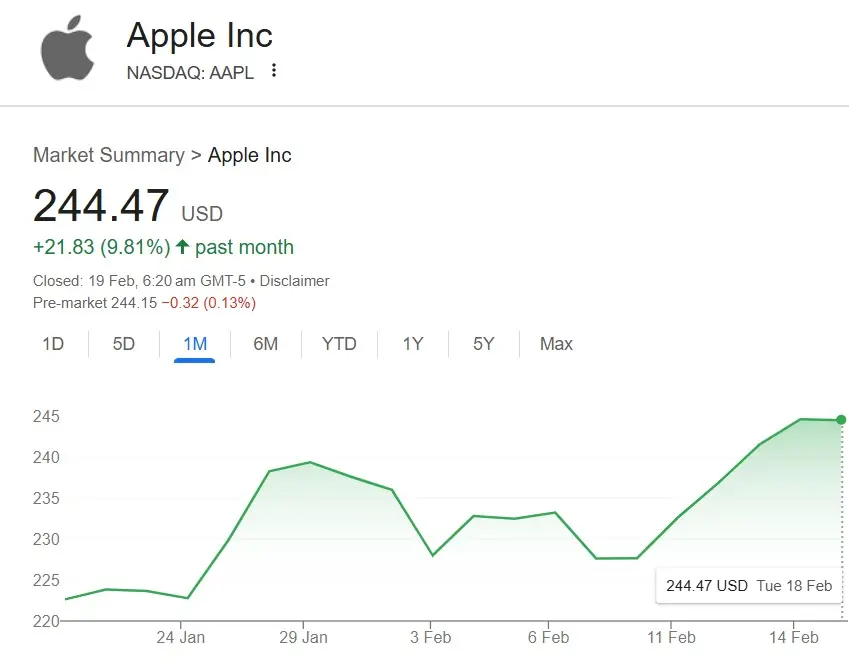
Conclusion: The Price is More Than a Number
The price of Apple stock is a dynamic data point that encapsulates the collective wisdom—and sometimes the collective fear—of the global market. It reflects the company’s ability to generate massive profits, its discipline in returning value to shareholders, and its resilience in the face of shifting economic tides.
For the modern investor, understanding “what is Apple’s stock price” means looking past the ticker and into the financial engine that powers the world’s most valuable brand. By focusing on fundamental valuation, historical trends, and macroeconomic influences, one can move from being a casual observer to a sophisticated participant in the story of one of the greatest financial successes in history. Whether you view it as a growth engine or a stable store of value, Apple remains a definitive study in the intersection of business excellence and financial markets.
aViewFromTheCave is a participant in the Amazon Services LLC Associates Program, an affiliate advertising program designed to provide a means for sites to earn advertising fees by advertising and linking to Amazon.com. Amazon, the Amazon logo, AmazonSupply, and the AmazonSupply logo are trademarks of Amazon.com, Inc. or its affiliates. As an Amazon Associate we earn affiliate commissions from qualifying purchases.