
Apple Inc. stands as a titan of industry, a company whose market capitalization frequently eclipses the Gross Domestic Product of entire nations. Its financial valuation is a subject of intense scrutiny for investors, economists, and technology enthusiasts alike. When we ask, “What is Apple Inc. worth?”, we are delving deep into the realms of business finance, market dynamics, and fundamental valuation principles that determine the perceived and actual economic value of a global corporation. It’s not merely a static number but a dynamic reflection of its financial health, market perception, and future prospects, firmly placing this inquiry within the Money category of financial analysis.

Understanding Apple’s worth requires more than just glancing at a stock ticker; it demands an intricate exploration of its financial statements, its market position, its strategies for growth, and the broader economic landscape. From its staggering revenue streams to its massive cash reserves and its strategic capital allocation, Apple’s valuation is a complex tapestry woven from countless financial threads.
Unpacking the Colossus: Defining Corporate Valuation
To comprehend the sheer scale of Apple’s financial standing, one must first grasp the core concepts used to measure a company’s worth. These metrics provide the financial language through which analysts and investors communicate a firm’s value.
Market Capitalization: The Primary Metric
The most common and frequently cited measure of a company’s worth is its market capitalization, often shortened to “market cap.” This figure represents the total dollar value of a company’s outstanding shares of stock. It is calculated by multiplying the current share price by the total number of shares outstanding. For example, if Apple has 15 billion shares outstanding and its stock trades at $180 per share, its market cap would be $2.7 trillion.
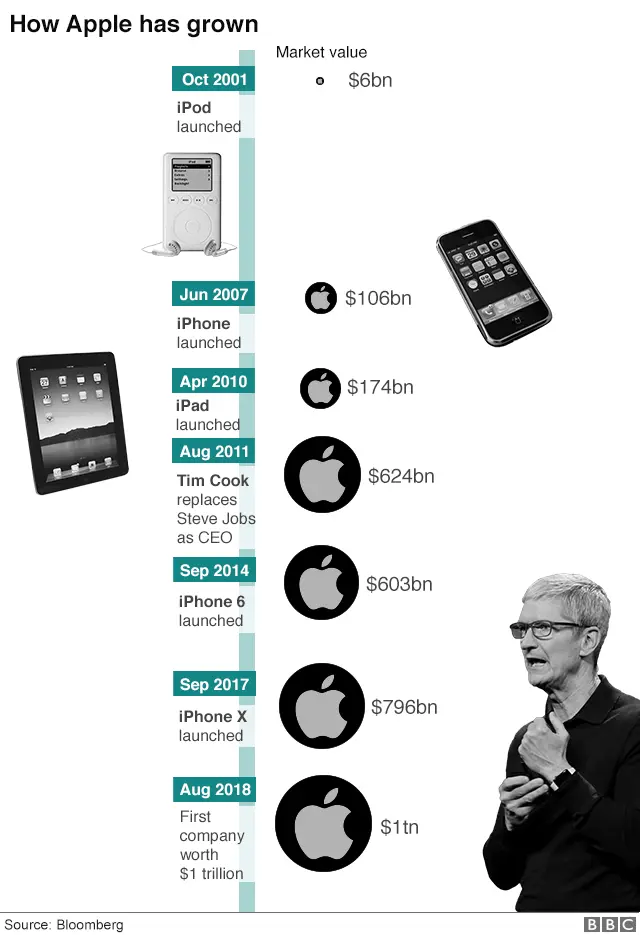
Apple consistently ranks among the largest companies globally by market capitalization, often vying for the top spot. This metric offers a real-time snapshot of how the market values the company at any given moment. However, it’s essential to remember that market cap is a constantly fluctuating figure, influenced by investor sentiment, earnings reports, economic news, and myriad other factors that affect the company’s share price. While a powerful indicator, market cap primarily reflects public equity value and doesn’t fully encompass all aspects of a company’s financial structure.
Beyond Market Cap: Enterprise Value and Book Value
While market capitalization is widely used, it doesn’t tell the whole story, especially when considering a company’s true economic value or its price in a potential acquisition. This is where Enterprise Value (EV) comes into play. EV is often considered a more comprehensive valuation measure, as it accounts for both the equity and debt of a company, while also subtracting its cash and cash equivalents. The formula is typically: Enterprise Value = Market Capitalization + Total Debt – Cash & Cash Equivalents.
For a company like Apple, with significant cash reserves and often strategic use of debt, EV can provide a different perspective. It represents the total cost an acquirer would pay for the company, taking into account not just its equity but also its financial liabilities and liquid assets. A high EV for Apple reflects its substantial overall financial footprint and the cost to own the entire business, free and clear of its cash.
Another valuation metric is Book Value, which represents the net asset value of a company, calculated as its total assets minus its total liabilities. It essentially indicates what shareholders would receive if the company were liquidated. For tech companies like Apple, Book Value often lags far behind Market Cap and Enterprise Value because much of their worth resides in intangible assets—such as brand equity, intellectual property, and ecosystem value—which are not fully captured on a balance sheet at their true market value. While less relevant for a high-growth, asset-light tech giant like Apple compared to, say, a manufacturing or real estate company, understanding Book Value still provides a foundational perspective on the company’s underlying tangible assets.
The Financial Pillars Supporting Apple’s Trillion-Dollar Valuation
Apple’s immense worth is not built on speculative hype alone; it is underpinned by exceptionally robust financial performance and strategically managed capital. The company consistently demonstrates strong revenue generation, impressive profitability, and a disciplined approach to its balance sheet.
Robust Revenue Streams and Profitability
At the heart of Apple’s financial might are its diverse and extraordinarily profitable revenue streams. The company’s product segment, led by the ubiquitous iPhone, remains its largest contributor. The iPhone’s sustained popularity, high average selling prices (ASPs), and premium market positioning drive colossal sales volumes. Beyond the iPhone, products like Mac computers, iPad tablets, Apple Watch, and AirPods earphones contribute significantly, each commanding strong market share and customer loyalty. Apple’s ability to maintain premium pricing across its product portfolio, even in competitive markets, is a testament to its brand strength and perceived product quality, translating directly into higher revenues and gross margins.
Equally critical, and increasingly emphasized by investors, is the burgeoning Services segment. This segment includes revenue from the App Store, Apple Music, iCloud, Apple TV+, Apple Pay, advertising, and warranty services (AppleCare). The Services segment boasts significantly higher gross margins than products and provides recurring revenue, making it a highly valued component of Apple’s financial profile. Its consistent growth mitigates some of the cyclicality often associated with hardware sales, providing a stable and predictable earnings stream that enhances Apple’s overall valuation multiple. The sheer scale and profitability of both its product and services divisions ensure that Apple generates immense net income, reinforcing investor confidence and driving its market worth.
Balance Sheet Strength: Cash, Debt, and Shareholder Returns
Apple’s balance sheet is a marvel of corporate finance. The company is renowned for holding massive cash reserves, often totaling hundreds of billions of dollars. This substantial cash pile provides immense financial flexibility, allowing Apple to fund aggressive research and development, make strategic acquisitions, withstand economic downturns, and return capital to shareholders. This financial fortress acts as a powerful buffer against economic volatility and positions Apple for long-term strategic maneuvers without relying heavily on external financing.
While flush with cash, Apple also strategically utilizes debt. This might seem counterintuitive for a company with such liquid assets, but Apple often borrows money at very low interest rates to fund its capital return programs (share buybacks and dividends) in a more tax-efficient manner than repatriating overseas cash, which might be subject to higher taxes. The ability to borrow cheaply underscores its exceptional creditworthiness and prudent financial management.
Crucially, Apple is an aggressive proponent of shareholder returns. Through massive share repurchase programs, the company reduces the number of outstanding shares, which typically boosts earnings per share (EPS) and can support the stock price. This commitment to reducing share count signals management’s confidence in the company’s future and provides a direct return to shareholders. Furthermore, Apple pays a consistent dividend, which, while modest compared to its share price, attracts income-focused investors and signals financial stability and predictable cash flow. These shareholder-friendly policies are integral to maintaining investor confidence and sustaining a high market valuation.
Key Drivers and Enduring Strengths Influencing Apple’s Worth
Apple’s valuation is not just a sum of its financial parts; it’s also a reflection of intangible assets and strategic advantages that are difficult to replicate. These enduring strengths create a competitive moat that sustains its profitability and market leadership.
Brand Loyalty and Ecosystem Lock-in
While the “Brand” category is distinct, its financial impact is undeniable and fundamentally contributes to Apple’s monetary worth. Apple’s brand loyalty is legendary. Customers are often willing to pay a premium for Apple products due to perceived quality, design, user experience, and status. This loyalty translates directly into consistent sales, pricing power, and higher margins. Financially, a strong brand reduces marketing costs, increases customer retention, and creates a powerful barrier to entry for competitors.
More importantly, Apple’s ecosystem lock-in is a colossal financial asset. Once users are invested in the Apple ecosystem—owning an iPhone, using iCloud, subscribing to Apple Music, and purchasing apps from the App Store—they become incredibly sticky. Switching costs, both financial and psychological, deter users from migrating to competing platforms. This interconnected web of hardware, software, and services ensures a continuous revenue stream from existing customers, driving repeat purchases of new devices and subscriptions to various services. This ecosystem provides a predictable, high-margin revenue base that significantly enhances Apple’s long-term financial stability and, consequently, its valuation.
Innovation and Future Growth Vectors
Apple’s historical prowess in innovation is a critical driver of its sustained worth. The company consistently invests massive sums in research and development (R&D) to create new products and enhance existing ones. This commitment to innovation is priced into its stock, as investors anticipate future revenue streams from groundbreaking technologies. Recent examples include the Apple Vision Pro, which represents a bold foray into spatial computing, and persistent rumors of future ventures into automotive technology or advanced health devices.
Beyond new product categories, Apple’s growth is also propelled by global market penetration. While mature markets remain crucial, expanding into emerging economies and increasing its user base in vast regions like India offers significant untapped potential. Continuous technological advancements, coupled with strategic market expansion, ensure that Apple has multiple future growth vectors to drive revenue and earnings for years to come, justifying its premium valuation in the eyes of investors.
Supply Chain Mastery and Operational Efficiency
Apple’s supply chain mastery is a competitive advantage that directly impacts its financial performance. The company’s ability to design, manufacture, and distribute millions of complex devices globally with remarkable efficiency allows it to achieve economies of scale, control costs, and maintain high gross margins. Tight control over its supply chain minimizes production delays, manages inventory effectively, and optimizes logistics, all of which contribute to strong profitability.
This operational efficiency extends beyond manufacturing to its retail operations and global distribution network. By owning its retail stores, Apple controls the customer experience and captures retail margins. Its sophisticated distribution ensures products reach consumers quickly and efficiently, optimizing sales velocity. These operational strengths are reflected in Apple’s financial statements through high inventory turnover, strong cash conversion cycles, and robust operating margins, which are key indicators of a well-run, profitable enterprise.
Navigating Volatility: Factors Influencing Apple’s Fluctuating Worth
Despite its foundational strengths, Apple’s market worth is not immune to external pressures and market dynamics. Its valuation is constantly influenced by a variety of macroeconomic factors, competitive threats, and investor sentiment.
Macroeconomic Headwinds and Consumer Spending
As a global consumer electronics giant, Apple is highly susceptible to macroeconomic headwinds. Factors such as inflation, rising interest rates, and economic slowdowns directly impact consumer discretionary spending. When economic uncertainty looms, consumers may delay purchasing expensive new iPhones, Macs, or Watches, leading to slower sales growth or even declines. Currency fluctuations also play a significant role; a strong U.S. dollar can make Apple’s products more expensive in international markets, reducing demand and impacting reported revenue when translated back into dollars. Geopolitical tensions and trade disputes can also disrupt supply chains or impact market access, posing financial risks that can affect Apple’s valuation.
Competitive Landscape and Regulatory Scrutiny
Apple operates in highly competitive markets. While it holds a premium position, it faces fierce competition from the Android ecosystem (Samsung, Google, Xiaomi, etc.) in smartphones, Microsoft and Google in computing, and various other players in wearables and services. Intense competition can pressure pricing, reduce market share, and necessitate higher marketing or R&D spending, all of which can impact profitability and, consequently, its valuation.
Furthermore, Apple is increasingly subject to regulatory scrutiny worldwide. Antitrust concerns, particularly regarding its App Store policies, app commissions, and control over its ecosystem, pose significant financial risks. Potential legislative changes, fines, or mandated alterations to its business model (e.g., allowing third-party app stores, reducing app commission rates) could directly impact its highly profitable Services revenue, which is a key driver of its current valuation. These regulatory challenges introduce uncertainty that can weigh on investor sentiment and the company’s stock price.
Investor Sentiment and Market Perception
Beyond fundamentals, Apple’s daily worth is heavily influenced by investor sentiment and market perception. Analyst ratings, news cycles, product reviews, and even social media trends can impact the stock price. Positive news regarding new product launches, strong earnings reports, or favorable macroeconomic data can drive the stock higher, while negative reports or broader market downturns can lead to declines. The sheer size of Apple means it often acts as an anchor for major market indices, and its movements can reflect overall market sentiment. Institutional investors, hedge funds, and retail traders constantly buy and sell shares based on their outlook, creating a dynamic environment where perceived value can sometimes temporarily diverge from underlying financial performance.
Investing in Apple: A Financial Perspective
For investors, assessing Apple’s worth is about determining whether its current stock price reflects its true intrinsic value and future growth potential. This involves utilizing various financial metrics and adopting a strategic investment horizon.
Valuation Metrics for Investors
When considering an investment in Apple, financial professionals use several valuation multiples. The Price-to-Earnings (P/E) ratio is one of the most common, comparing the company’s share price to its earnings per share. A high P/E ratio suggests investors expect higher future growth, while a lower P/E might indicate it’s undervalued or has limited growth prospects. Investors might compare Apple’s P/E to its historical average or to that of its industry peers.
The Price/Earnings to Growth (PEG) ratio refines the P/E by factoring in the company’s expected earnings growth rate, providing a more nuanced view for growth stocks. A PEG ratio closer to 1 or below is often seen as favorable. Additionally, the Dividend Yield, which measures the annual dividend payout relative to the share price, is important for income-focused investors. By analyzing these and other metrics like Price-to-Sales (P/S) and Enterprise Value-to-EBITDA (EV/EBITDA), investors can gain a comprehensive understanding of whether Apple’s stock is currently trading at an attractive valuation relative to its financial performance and future outlook.

Long-Term vs. Short-Term Investment Horizons
Apple is often viewed as a cornerstone for long-term growth portfolios. Its consistent profitability, strong brand, vast ecosystem, and commitment to innovation make it an attractive holding for investors seeking compounding returns over many years. Long-term investors typically focus on Apple’s fundamental strengths, its ability to generate free cash flow, and its strategic direction, often weathering short-term market fluctuations. For them, understanding Apple’s worth is about its durable competitive advantages and its capacity to grow earnings over a decade or more.
Conversely, some traders engage with Apple for short-term trading opportunities, attempting to capitalize on daily or weekly price movements driven by news, technical analysis, or shifts in market sentiment. This approach is highly speculative and focuses less on the company’s intrinsic worth and more on its immediate stock price trajectory. Regardless of the horizon, a deep understanding of Apple’s financial underpinnings and the factors influencing its worth remains paramount for making informed investment decisions. Analyzing “what Apple Inc. is worth” ultimately provides the bedrock for evaluating its investment potential within the vast landscape of the global financial markets.
aViewFromTheCave is a participant in the Amazon Services LLC Associates Program, an affiliate advertising program designed to provide a means for sites to earn advertising fees by advertising and linking to Amazon.com. Amazon, the Amazon logo, AmazonSupply, and the AmazonSupply logo are trademarks of Amazon.com, Inc. or its affiliates. As an Amazon Associate we earn affiliate commissions from qualifying purchases.