
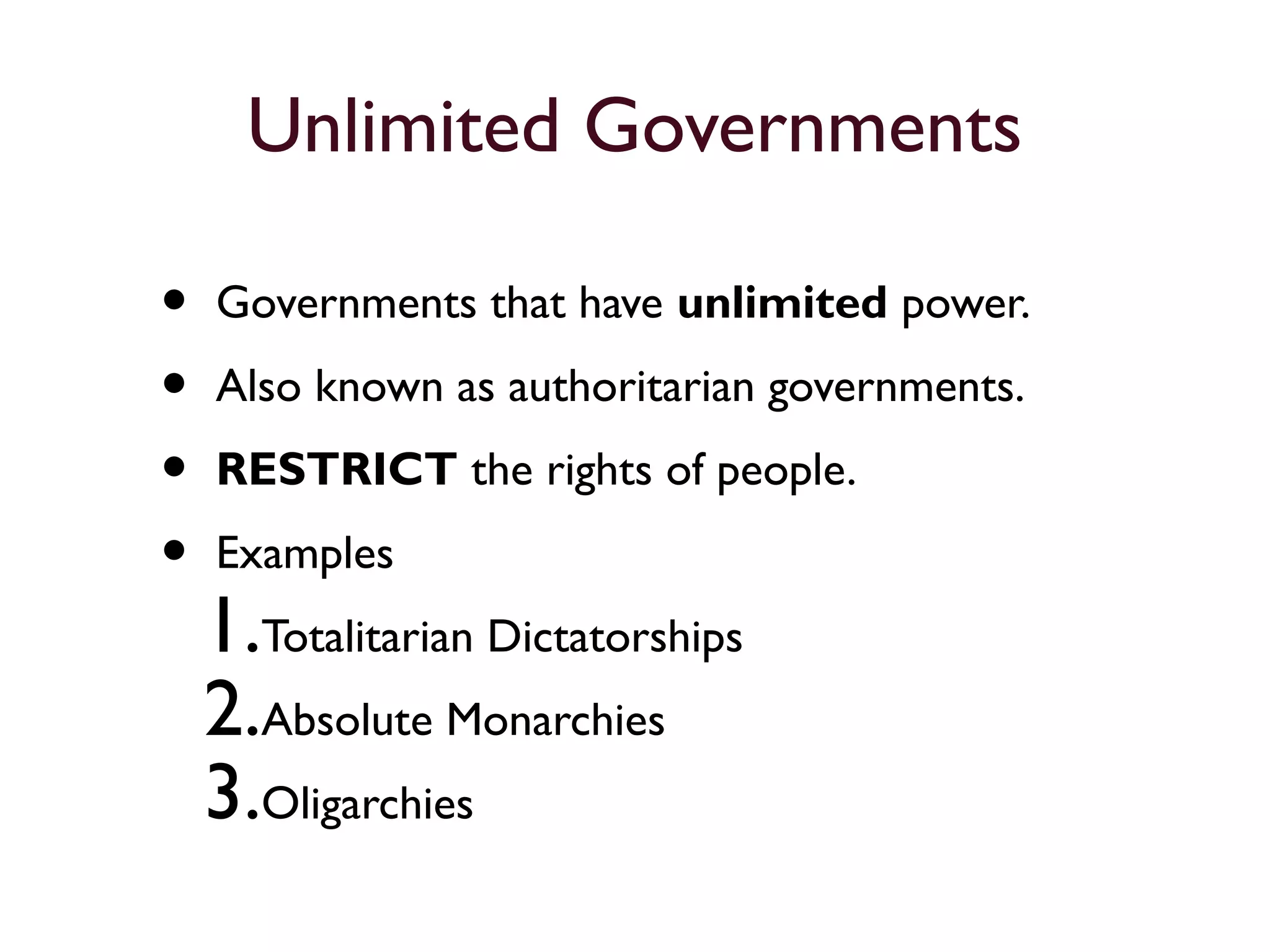
The notion of an “unlimited government” is a foundational concept in political philosophy, representing a system where the power of the ruling entity is not confined by any inherent limitations. Historically, this has manifested in various forms of authoritarianism, absolutism, and totalitarianism, where the state’s authority extends to nearly all aspects of public and often private life. However, in the 21st century, the advent and pervasive integration of advanced technologies introduce a new dimension to this age-old concept. The mechanisms through which an unlimited government could operate, and the potential for its existence and expansion, are now profoundly influenced by the digital landscape. Examining “unlimited government” through a technological lens allows us to understand how digital tools and infrastructures can amplify, enable, and even challenge unchecked state power, making it a crucial topic within the Tech niche.

The Technological Underpinnings of Unchecked Power
The very definition of an unlimited government is one that is not constrained by established legal frameworks, constitutional checks and balances, or the collective will of its populace. Historically, the enforcement of such unlimited power relied on brute force, extensive bureaucracy, and pervasive surveillance facilitated by human agents. Today, technology offers a far more efficient, scalable, and often invisible means of achieving and maintaining such absolute control. The digital revolution has provided governments with unprecedented tools for data collection, analysis, dissemination of information, and enforcement of directives, creating fertile ground for the emergence and consolidation of unlimited governmental authority.
Pervasive Surveillance and Data Collection
At the heart of any unlimited government lies the ability to monitor its citizens comprehensively. In the digital age, this capability has been exponentially enhanced by a vast array of technologies. Governments can now collect, process, and analyze enormous quantities of data from virtually every aspect of a citizen’s life.
Mass Data Interception and Analysis
Modern telecommunications infrastructure, coupled with advanced algorithms, allows for the mass interception of digital communications. This includes not just phone calls and text messages, but also emails, instant messaging, social media interactions, and even the content of web browsing. Sophisticated data analytics can then sift through this deluge of information to identify patterns, flag dissent, track associations, and predict potential threats to the regime. This capability moves beyond targeted surveillance to a blanket monitoring of entire populations, providing a government with an unparalleled awareness of its citizens’ activities and thoughts.
Biometric Identification and Tracking
The proliferation of biometric technologies, such as facial recognition systems, fingerprint scanners, and gait analysis, further bolsters a government’s surveillance apparatus. Integrated with widespread camera networks in public spaces and increasingly, within private devices, these technologies allow for the real-time tracking of individuals. An unlimited government could leverage these systems to monitor the movements of any citizen, identify their presence at protests or gatherings, and cross-reference this information with other collected data to build detailed profiles of every individual. This creates a chilling effect, where the constant awareness of being watched can suppress free expression and association.
Digital Identity and Control
The concept of a mandatory digital identity, often tied to a national identification number and integrated with various online services, can serve as a powerful tool for an unlimited government. Such systems can consolidate all personal information, financial transactions, online activities, and even social credit scores into a single, government-controlled profile. This allows for granular control over access to services, travel, and even basic freedoms, based on compliance with government dictates. Non-compliance could lead to the instant restriction or revocation of essential digital or physical access, effectively marginalizing or punishing individuals without due process.
Information Control and Propaganda
An unlimited government requires not only the power to suppress dissent but also the ability to shape public perception and control the narrative. Technology plays a pivotal role in this aspect, offering sophisticated tools for mass communication, censorship, and the dissemination of propaganda.
Censorship and Content Filtering
The internet, once heralded as a bastion of free expression, can be effectively weaponized for censorship by an unlimited government. Advanced firewalls and filtering technologies can block access to specific websites, keywords, and online content deemed undesirable. This not only restricts the flow of information from external sources but also curtails domestic discourse, preventing citizens from accessing alternative viewpoints or organizing opposition. The implementation can be so sophisticated that users are unaware of the extent of the censorship they are experiencing.
Algorithmic Manipulation and Disinformation
Beyond outright censorship, modern governments can employ sophisticated algorithms to manipulate the information landscape. Through targeted advertising, social media bot networks, and the amplification of state-sponsored narratives, an unlimited government can flood the digital space with carefully crafted disinformation and propaganda. These campaigns can aim to discredit opposition, sow confusion, create echo chambers that reinforce the regime’s ideology, and ultimately erode trust in independent sources of information. The ability to personalize these messages to individual users based on collected data makes them even more potent and persuasive.
The Creation of Digital Echo Chambers
By controlling the information fed to citizens, an unlimited government can create sophisticated digital echo chambers. These are environments where individuals are primarily exposed to information that confirms their existing beliefs, often reinforcing the government’s narrative and isolating them from dissenting opinions. Social media algorithms, when manipulated, can be highly effective in creating and maintaining these bubbles, making it difficult for individuals to encounter or even comprehend alternative perspectives. This fragmentation of public discourse makes collective resistance and critical thinking significantly harder to achieve.
The Technological Infrastructure for Enforcement
Maintaining an unlimited government in the digital age requires a robust technological infrastructure for enforcement. This encompasses not only the surveillance and information control mechanisms but also the tools that translate governmental directives into tangible consequences for individuals.
Centralized Control Systems and Automation

Unlimited governments can leverage centralized digital control systems to automate and streamline the enforcement of their policies. This can range from automated financial sanctions imposed on individuals or organizations deemed a threat, to the automatic disabling of digital access or even the initiation of legal proceedings based on algorithmic flagging. The automation of these processes reduces the need for human intervention, making enforcement faster, more consistent, and harder to circumvent.
Digital Surveillance for Law Enforcement and Social Control
Beyond intelligence gathering, digital surveillance technologies are increasingly used for direct law enforcement and social control. For example, smart city initiatives, while often presented with civic benefits, can be repurposed by an unlimited government to monitor and control citizen behavior. Traffic cameras with facial recognition, sensors that track public assembly, and apps that monitor individuals’ compliance with regulations can all contribute to a pervasive system of digital oversight, where any deviation from prescribed norms can be immediately detected and penalized.
The “Internet of Things” (IoT) as a Surveillance Network
The burgeoning “Internet of Things” (IoT) presents a vast and often overlooked network of potential surveillance points. Connected devices in homes, offices, and public spaces – from smart appliances to industrial sensors – can be compromised or mandated for data collection. An unlimited government could exploit this interconnectedness to gather intimate details about citizens’ daily routines, habits, and even their health, further solidifying its informational advantage and control.
The Blurred Lines: Unlimited Government in a Digital World
The concept of “unlimited government” is not merely an abstract political theory; it is increasingly shaped by and manifested through technological advancements. The very definition of what constitutes “unlimited” is being redefined by the capabilities offered by the digital realm. While democratic societies strive to implement checks and balances against governmental overreach, the pervasive nature of technology presents ongoing challenges to these safeguards.
The Erosion of Privacy and Anonymity
A fundamental aspect of individual liberty is the right to privacy and the ability to maintain anonymity in certain contexts. Unlimited governments, by their very nature, seek to eliminate these concepts. In the digital age, this is achieved through the systematic dismantling of privacy. The ubiquitous collection of personal data, often without explicit consent or full understanding by individuals, creates a society where anonymity is increasingly difficult, if not impossible, to maintain. This erosion of privacy is not just a data security issue; it is a fundamental challenge to the freedom from unwarranted scrutiny and the ability to engage in private thought and action.
The Rise of Digital Authoritarianism
The fusion of advanced technology with authoritarian regimes has given rise to what is often termed “digital authoritarianism.” This is a form of governance that leverages digital tools and infrastructure to enhance and consolidate state control, often at the expense of civil liberties and democratic principles. Countries that have embraced widespread surveillance, censorship, and algorithmic manipulation are prime examples of how technology can enable and perpetuate unlimited governmental power. The effectiveness of these methods can be so profound that they can create a superficial appearance of order and stability, masking a deep and pervasive lack of freedom.
The Challenge to Democratic Governance
The principles of democratic governance, which are built upon transparency, accountability, and citizen participation, are inherently threatened by the characteristics of an unlimited government. When technology allows for unchecked surveillance, information control, and the suppression of dissent, the very foundations of democracy are undermined. The ability of citizens to freely elect their representatives, to engage in open debate, and to hold their government accountable is severely compromised when the state possesses such potent technological tools for manipulation and control.
Counteracting Unlimited Power in the Digital Age
While the technological capabilities that could facilitate an unlimited government are significant, they are not insurmountable. The same technological advancements that empower unchecked authority also offer tools and strategies for resistance, accountability, and the preservation of civil liberties.
Cryptography and Secure Communication
The advancement of cryptography has provided individuals and organizations with the means to secure their communications and protect their data from unwarranted access. End-to-end encryption, secure messaging apps, and decentralized communication platforms offer a crucial layer of privacy and security in an increasingly monitored digital environment. These technologies enable citizens to communicate freely and organize without fear of immediate detection, providing a vital countermeasure against pervasive surveillance.
Open Source and Decentralized Technologies
The principles of open-source software and decentralized technologies are inherently aligned with challenging centralized power structures. Open-source software allows for scrutiny of code, ensuring that there are no hidden backdoors or malicious functionalities. Decentralized platforms, such as blockchain technology and distributed ledger systems, can create systems that are resistant to single points of failure or control, making them more resilient to governmental interference. These technologies empower individuals and communities to build and control their own digital infrastructure, reducing reliance on potentially compromised centralized services.
Digital Activism and Citizen Journalism
The internet and social media, despite their potential for manipulation, also serve as powerful platforms for digital activism and citizen journalism. These tools enable individuals to expose governmental overreach, share information that is being censored, and mobilize collective action. By documenting and disseminating evidence of human rights abuses or authoritarian practices, citizens can create a record that can be used to hold governments accountable, both domestically and on the international stage. The speed and reach of digital communication allow for rapid response and global awareness, which can be a significant deterrent to unlimited governmental power.
The Importance of Digital Literacy and Education
Ultimately, the most potent defense against the rise of an unlimited government in the digital age lies in the informed vigilance of its citizens. Comprehensive digital literacy and education are paramount. Understanding how technology works, recognizing the potential for its misuse, and being aware of one’s digital rights are essential. Empowering citizens with this knowledge allows them to critically evaluate information, protect their digital footprint, and advocate for policies that safeguard privacy and civil liberties. A technologically savvy populace is far less susceptible to manipulation and far more likely to demand transparency and accountability from their government.
In conclusion, the concept of an unlimited government, while rooted in political theory, is now deeply intertwined with technological capabilities. From pervasive surveillance to sophisticated information control, technology provides the means for unchecked power to flourish. However, the same digital landscape also offers potent tools for resistance, accountability, and the preservation of individual freedoms. By understanding these technological underpinnings and actively promoting digital literacy and secure practices, societies can work towards ensuring that technological advancement serves to enhance, rather than erode, the principles of liberty and democratic governance.
aViewFromTheCave is a participant in the Amazon Services LLC Associates Program, an affiliate advertising program designed to provide a means for sites to earn advertising fees by advertising and linking to Amazon.com. Amazon, the Amazon logo, AmazonSupply, and the AmazonSupply logo are trademarks of Amazon.com, Inc. or its affiliates. As an Amazon Associate we earn affiliate commissions from qualifying purchases.