
In the intricate world of global finance, central banks play a pivotal role in maintaining economic stability and fostering growth. Among the most powerful tools at their disposal are Open Market Operations (OMOs). Far from being an arcane concept reserved for economists, understanding OMOs is fundamental to grasping how monetary policy influences everything from interest rates on your mortgage to the health of national economies. Simply put, OMOs refer to the buying and selling of government securities in the open market by a central bank. This seemingly straightforward action has profound ripple effects, directly impacting the money supply, short-term interest rates, and ultimately, the overall economic climate. For individuals, businesses, and investors, a clear comprehension of these operations unveils the mechanics behind macroeconomic shifts and provides insight into the potential trajectory of financial markets.
The Foundation of Monetary Policy: Understanding OMOs
At the heart of any nation’s economic management lies its monetary policy, a set of actions undertaken by a central bank to influence the availability and cost of money and credit to help promote national economic goals. Open Market Operations are the primary instrument through which these policies are executed, serving as the central bank’s most flexible and frequently used tool to achieve its objectives.
Defining Open Market Operations (OMOs)
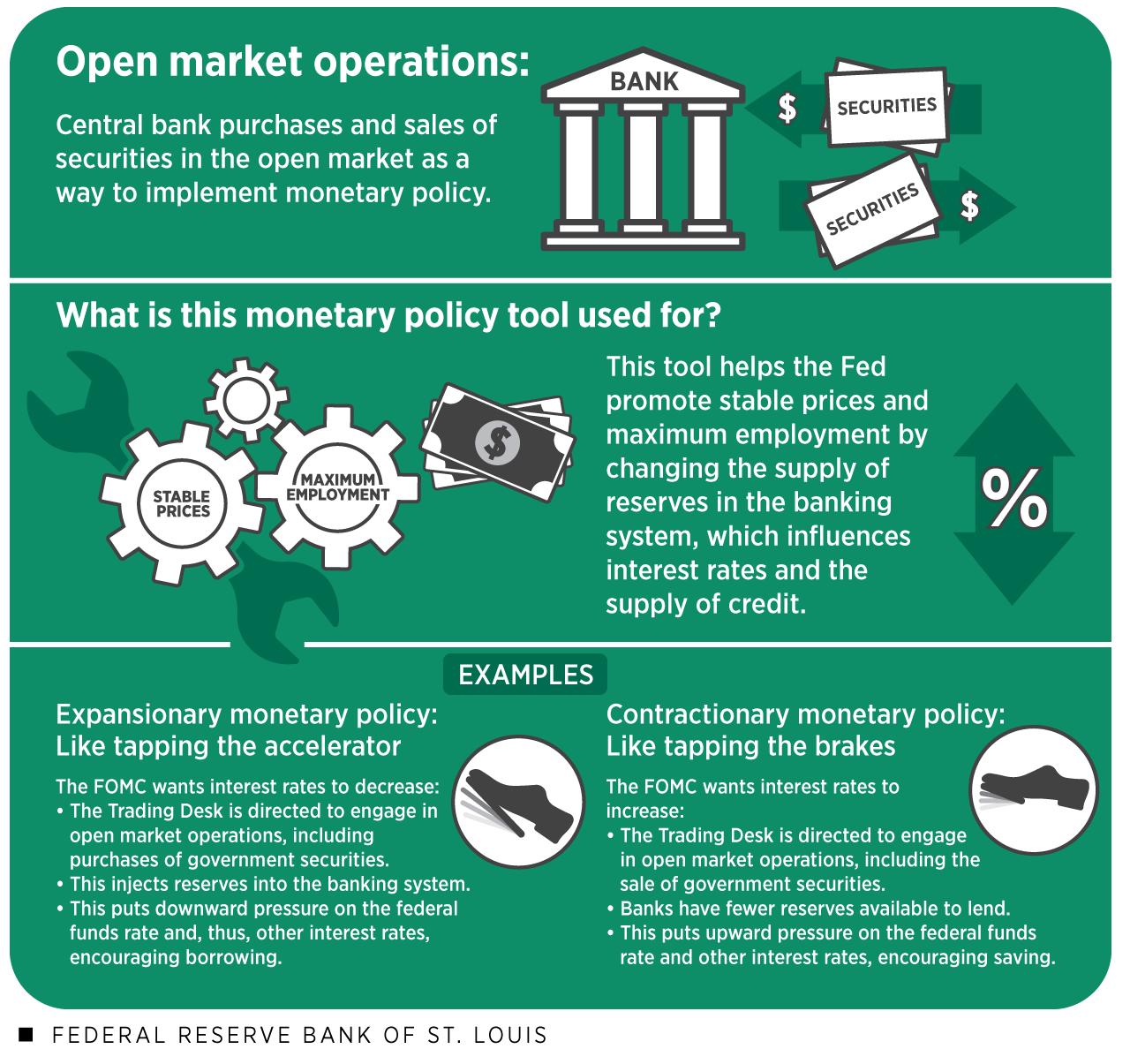
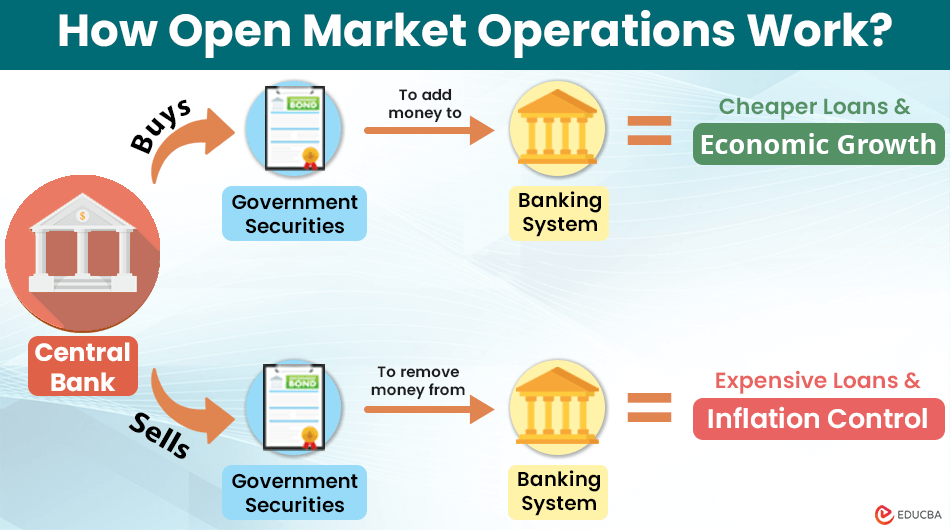
Open Market Operations are transactions involving the central bank’s purchase or sale of government securities (such as treasury bonds, bills, or notes) from or to commercial banks and other financial institutions in the open market. The “open market” aspect is crucial, signifying that these transactions are conducted with market participants rather than directly with the government, ensuring market-driven pricing and efficiency. When a central bank buys securities, it injects money into the banking system, increasing the money supply. Conversely, when it sells securities, it withdraws money from the system, decreasing the money supply. This continuous ebb and flow of funds is the essence of OMOs.
The Role of the Central Bank
The central bank, often an independent entity like the Federal Reserve in the United States, the European Central Bank (ECB), or the Bank of England, is charged with a dual mandate: price stability and maximum sustainable employment. To achieve these goals, it influences the overall availability of money and credit in the economy. OMOs are its day-to-day levers. By adjusting the quantity of reserves in the banking system, the central bank can steer short-term interest rates toward a target level, thereby influencing borrowing costs for consumers and businesses, and stimulating or curbing economic activity as needed. This direct intervention in the financial markets provides a nuanced control mechanism that other policy tools might lack.
Primary Tools: Buying and Selling Securities
The effectiveness of OMOs stems from the central bank’s unique ability to create or destroy money. When it buys securities, it doesn’t just shuffle existing money; it essentially creates new bank reserves for the financial institution from which it bought the securities. This newly created money becomes part of the banking system’s reserves, which banks can then lend out. The opposite occurs when the central bank sells securities: it receives funds from banks, which effectively removes reserves from the banking system, reducing the money supply. These transactions, though seemingly simple, are complex and are conducted on a massive scale, often involving billions of dollars, to produce the desired macroeconomic effects.
How Open Market Operations Influence the Economy
The impact of OMOs extends far beyond the immediate banking sector, rippling through the entire economy and affecting everything from inflation rates to employment levels. Understanding these linkages is key to appreciating the power of monetary policy.
Impact on Interest Rates
The most direct and immediate impact of OMOs is on short-term interest rates, particularly the overnight interbank lending rate (such as the federal funds rate in the U.S.). When the central bank buys securities, it increases the supply of reserves in the banking system. With more reserves available, banks have less need to borrow from each other, pushing down the interbank lending rate. Conversely, selling securities reduces reserves, making banks more eager to borrow, which drives up the interbank rate. Changes in this benchmark short-term rate then influence other interest rates throughout the economy, including prime rates, mortgage rates, and bond yields, affecting the cost of borrowing for both businesses and consumers.
Controlling the Money Supply
The ultimate objective of OMOs is to control the money supply – the total amount of currency and other liquid assets in a country’s economy. By buying securities, the central bank injects money into the system, directly increasing the reserves held by commercial banks. These reserves then allow banks to make more loans, further expanding the money supply through the money multiplier effect. Conversely, by selling securities, the central bank reduces bank reserves, thereby constraining their lending capacity and contracting the money supply. This control over the money supply is critical for managing inflation and economic growth. Too much money can lead to inflation, while too little can stifle economic activity.
Stimulating or Cooling Economic Activity
The central bank uses OMOs to either stimulate or cool down economic activity, depending on the prevailing economic conditions. During periods of slow economic growth or recession, the central bank might conduct expansionary OMOs (buying securities). This increases the money supply, lowers interest rates, makes borrowing cheaper, and encourages businesses to invest and consumers to spend, thereby stimulating demand and job creation. Conversely, if the economy is overheating and inflation is a concern, the central bank might implement contractionary OMOs (selling securities). This reduces the money supply, raises interest rates, makes borrowing more expensive, and discourages excessive spending and investment, helping to rein in inflationary pressures.
Types and Mechanisms of OMOs
Open Market Operations are not monolithic; they encompass various types and mechanisms, each designed for specific purposes and time horizons. The central bank employs a mix of these operations to fine-tune its influence on the financial markets.
Permanent Open Market Operations (POMOs)
Permanent OMOs involve outright purchases or sales of securities by the central bank, with no agreement to reverse the transaction. These operations are typically used to implement long-term changes in the supply of bank reserves. For instance, if the central bank wants to permanently increase the overall level of reserves in the system to accommodate long-term economic growth or to offset a persistent drain of reserves, it will conduct outright purchases of government bonds. POMOs are less frequent than temporary operations but are crucial for shaping the structural liquidity conditions of the banking system and signalling long-term monetary policy stance.
Temporary Open Market Operations: Repurchase and Reverse Repurchase Agreements
Temporary OMOs are the most frequently used type, designed to manage short-term fluctuations in bank reserves and steer the federal funds rate towards its target. These include:
-
Repurchase Agreements (Repos): In a repo, the central bank buys securities from financial institutions with an agreement to sell them back at a specified date and price, usually overnight or for a few days. This injects reserves into the banking system temporarily, providing short-term liquidity and easing upward pressure on the federal funds rate. Repos are expansionary and are used when there’s a temporary shortage of reserves.
-
Reverse Repurchase Agreements (Reverse Repos): The opposite of a repo, a reverse repo involves the central bank selling securities to financial institutions with an agreement to buy them back later. This temporarily drains reserves from the banking system, reducing liquidity and pushing up the federal funds rate. Reverse repos are contractionary and are used to absorb excess liquidity and prevent the federal funds rate from falling too low. These temporary operations allow for fine-tuning of the money market without making permanent changes to the central bank’s balance sheet.
The Federal Funds Rate Target
In many countries, particularly the U.S., the federal funds rate target is the cornerstone of monetary policy. This is the target interest rate at which commercial banks lend their excess reserves to each other overnight. The central bank does not directly set this rate but influences it heavily through its OMOs. By managing the supply of reserves in the banking system through repos, reverse repos, and outright purchases/sales, the central bank effectively creates the conditions for the federal funds rate to settle at its desired target. This target rate then serves as a benchmark for other interest rates, translating monetary policy into broader economic impacts.
The Broader Economic Impact and Strategic Implications
The strategic deployment of OMOs has far-reaching consequences, influencing the fundamental health and direction of an economy. Their effectiveness, however, is not without its challenges.
Managing Inflation and Deflation
A primary objective of OMOs is to maintain price stability, which means controlling inflation and preventing deflation. When inflation (a sustained increase in the general price level) threatens, the central bank can conduct contractionary OMOs to reduce the money supply and raise interest rates. Higher borrowing costs curb demand, slowing economic activity and thus alleviating inflationary pressures. Conversely, during periods of deflation (a sustained decrease in the general price level), which can be damaging to an economy, expansionary OMOs can be used to inject money, lower rates, and stimulate spending, thereby combating deflationary spirals. This delicate balancing act is central to macroeconomic management.
Fostering Economic Stability and Growth
Beyond immediate price stability, OMOs contribute significantly to overall economic stability and sustainable growth. By smoothing out short-term fluctuations in interest rates and liquidity, central banks provide a predictable financial environment that encourages long-term investment and planning by businesses. When the cost of capital is stable and reasonable, businesses are more likely to expand, innovate, and create jobs. This in turn fosters consumer confidence and spending, leading to a virtuous cycle of economic growth. OMOs, therefore, are not just about managing money; they are about creating the conditions for a thriving economy.
Challenges and Limitations of OMOs
Despite their power, OMOs face several challenges and limitations. One is the “zero lower bound,” where nominal interest rates cannot effectively go below zero. Once rates hit zero, conventional OMOs become less effective in stimulating an economy. Another challenge lies in the “liquidity trap,” where increased money supply fails to stimulate the economy because people hoard cash instead of spending or investing it, often due to high uncertainty. Furthermore, the effectiveness of OMOs can be influenced by the confidence of financial markets, the state of banks’ balance sheets, and external global economic factors. In times of severe crisis, central banks often resort to unconventional monetary policy tools, such as quantitative easing (QE), which are essentially large-scale OMOs that involve buying a wider range of assets to exert a more direct influence on longer-term interest rates.
OMOs in Practice: A Global Perspective
While the core principles of OMOs remain consistent across central banks, their specific implementation, terminology, and emphasis can vary based on national economic structures and policy frameworks.
The Federal Reserve’s Approach
The Federal Reserve (the Fed) in the United States primarily uses OMOs to manage the federal funds rate, its key policy rate. The Federal Open Market Committee (FOMC) sets a target range for this rate, and the Fed’s trading desk in New York conducts OMOs daily to keep the rate within that target. Historically, repos and reverse repos have been the workhorses for day-to-day liquidity management, while outright purchases/sales were used for longer-term policy adjustments. Post-2008 financial crisis, the Fed also engaged in large-scale asset purchases (quantitative easing), which are essentially a form of expanded OMOs designed to influence longer-term interest rates when short-term rates were at the zero lower bound.
European Central Bank (ECB) Operations
The European Central Bank, responsible for monetary policy in the Eurozone, also relies heavily on OMOs. The ECB’s OMOs include main refinancing operations (MROs), which are weekly liquidity-providing reverse transactions with a one-week maturity, serving as the primary tool for managing liquidity in the banking system. It also conducts longer-term refinancing operations (LTROs) with a three-month maturity, and fine-tuning operations to address unexpected liquidity fluctuations. The ECB’s operations differ slightly in structure due to the multi-country nature of the Eurozone but serve the same fundamental purpose of influencing interbank interest rates and steering the money supply.

Other Central Banks and Their Strategies
Central banks worldwide, from the Bank of Japan to the Bank of England and emerging market central banks, employ OMOs tailored to their specific economic environments. While the tools might have different names (e.g., “discount window” or “reserve requirements” alongside OMOs), the underlying mechanism of influencing bank reserves and short-term interest rates remains universal. The sophistication and frequency of OMOs often reflect the maturity and depth of a nation’s financial markets. In developing economies, OMOs might be less frequent or complemented by other direct intervention tools due to shallower money markets. Regardless of the specific nuances, OMOs stand as a testament to the enduring power of central banks to shape economic outcomes.
In conclusion, Open Market Operations are more than just financial jargon; they are the subtle yet profound levers that central banks pull to guide the global economy. By carefully managing the supply of money and the cost of borrowing, these institutions aim to foster an environment of price stability, sustainable growth, and full employment. For anyone navigating the complexities of personal finance, investing, or business strategy, understanding “what is an open market operation” offers invaluable insight into the forces that shape our financial landscape.
aViewFromTheCave is a participant in the Amazon Services LLC Associates Program, an affiliate advertising program designed to provide a means for sites to earn advertising fees by advertising and linking to Amazon.com. Amazon, the Amazon logo, AmazonSupply, and the AmazonSupply logo are trademarks of Amazon.com, Inc. or its affiliates. As an Amazon Associate we earn affiliate commissions from qualifying purchases.