
The Foundational Paradigm of Software Development
At its core, Object-Oriented Programming (OOP) represents a powerful and widely adopted paradigm in software development, fundamentally shifting the way developers conceptualize and structure applications. Rather than focusing solely on a sequence of actions or logic, OOP centers around the concept of “objects.” These objects are self-contained units that encapsulate both data (attributes or properties) and the code that manipulates that data (methods or behaviors).
Historically, programming often followed a procedural paradigm, where programs were broken down into functions or subroutines that operated on data that was often global or passed around explicitly. While effective for simpler applications, this approach could become unwieldy for complex systems, leading to issues with maintainability, reusability, and scalability. OOP emerged as a solution to these challenges, offering a more intuitive and modular way to model real-world entities and their interactions within software. By organizing software design around these intelligent, interconnected objects, OOP facilitates the creation of robust, flexible, and easily manageable applications that can adapt to evolving requirements. It’s a way of thinking about software that mirrors how we perceive and interact with the physical world, making the development process more aligned with human understanding.

Deconstructing the Pillars: The Four Core Principles of OOP
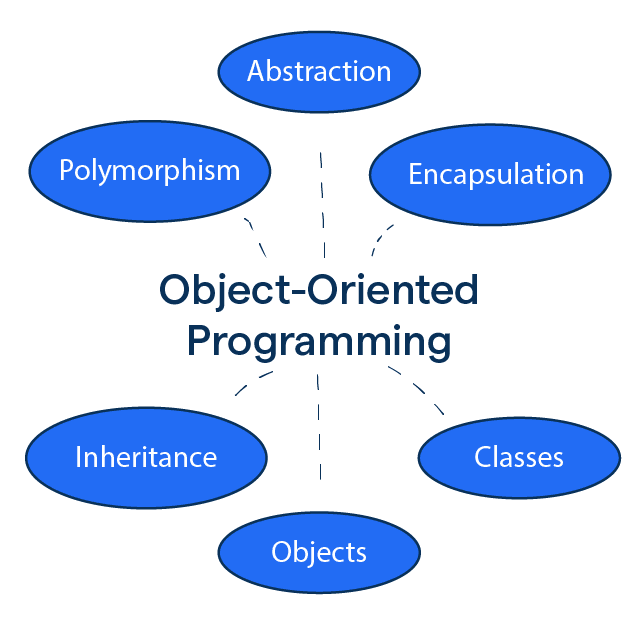
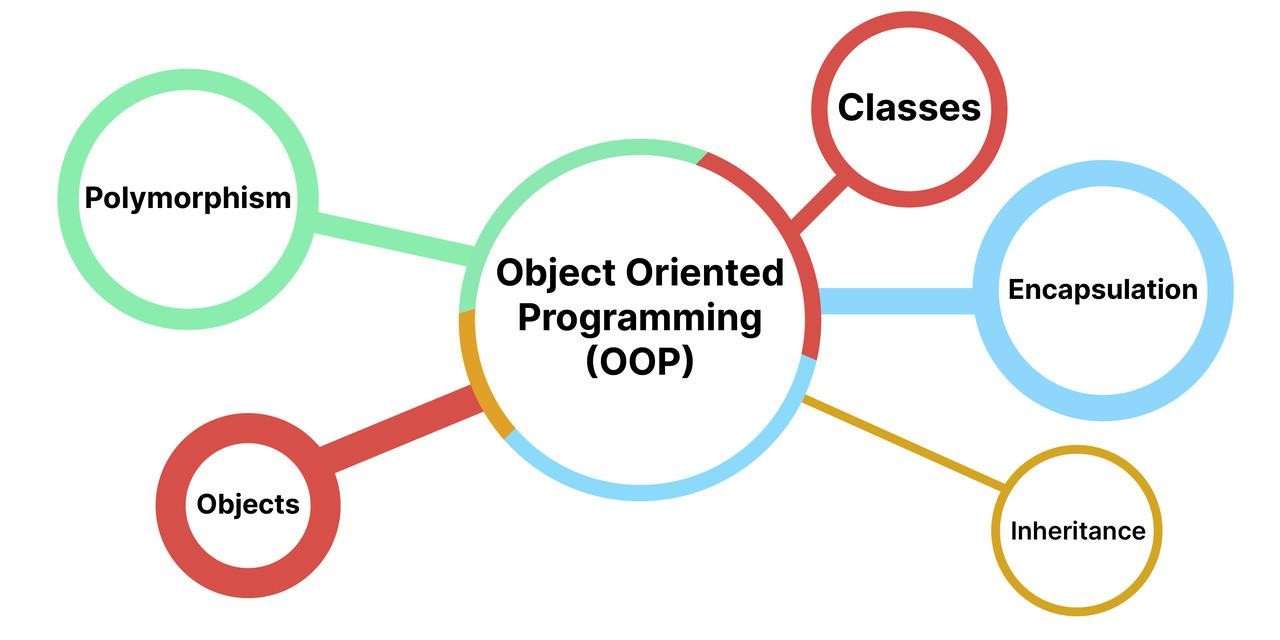
The true power and elegance of Object-Oriented Programming stem from its four foundational principles, often referred to as pillars. Understanding these concepts is crucial for grasping how OOP helps build scalable and maintainable software systems.
Encapsulation
Encapsulation is the mechanism of bundling data (attributes) and the methods (functions) that operate on that data into a single unit, known as an object. More importantly, it involves restricting direct access to some of an object’s components, meaning certain internal data or methods can only be accessed or modified through predefined public interfaces (methods). This concept is often likened to a car’s engine: you know how to drive the car (interact with its public interface), but you don’t need to understand the intricate mechanics of the engine (its private internal workings) to do so.
The primary benefit of encapsulation is data hiding. It protects an object’s internal state from unauthorized or unintended external modification, ensuring data integrity. By controlling access, developers can change the internal implementation of an object without affecting the external code that uses it, as long as the public interface remains consistent. This drastically reduces the ripple effect of changes, making code more robust and easier to maintain.
Inheritance
Inheritance is a powerful OOP mechanism that allows a new class (the “child” or “subclass”) to acquire the properties and behaviors (attributes and methods) of an existing class (the “parent” or “superclass”). This creates a hierarchical relationship where the child class automatically possesses all the characteristics of its parent and can also add its own unique features or override inherited ones.
The main advantage of inheritance is code reusability. Instead of writing the same code multiple times, a developer can define common functionalities in a base class and then have multiple specialized classes inherit from it. For example, a Vehicle class might have attributes like speed and methods like accelerate(). A Car class and a Truck class could then inherit from Vehicle, automatically gaining these base functionalities and adding their specific attributes like numberOfDoors for Car or cargoCapacity for Truck. This not only saves development time but also promotes consistency across related objects.
Polymorphism
Polymorphism, meaning “many forms,” is the ability of an object to take on many forms. In OOP, it allows objects of different classes to be treated as objects of a common superclass. This means a single interface can be used to represent different underlying forms of types, and a method call can behave differently depending on the object it is invoked on.
There are two main types of polymorphism:
- Method Overloading: Where multiple methods in the same class have the same name but different parameters (number, type, or order).
- Method Overriding: Where a subclass provides a specific implementation for a method that is already defined in its superclass. When the method is called on an object of the subclass, the overridden version is executed.
Polymorphism provides immense flexibility and extensibility. For instance, if you have a Shape class with a draw() method, and Circle, Square, and Triangle classes inherit from Shape and override the draw() method, you can have a collection of Shape objects and call draw() on each without knowing its exact type at compile time. Each object will “draw” itself in its unique way. This simplifies code, makes it more generic, and easier to extend with new types of objects.
Abstraction
Abstraction is the principle of hiding complex implementation details and showing only the essential features of an object or system. It focuses on what an object does rather than how it does it. This is often achieved through abstract classes and interfaces, which define a contract for what a class should do, without specifying the complete implementation.
The goal of abstraction is to manage complexity. By providing a clear, simplified view of an object, developers can interact with it at a higher level without being bogged down by the intricate inner workings. Consider using a remote control for a television: you press a button to change the channel or adjust the volume without needing to understand the complex circuitry inside the TV or the remote. Abstraction allows programmers to design systems with well-defined boundaries, improving readability, reducing cognitive load, and enhancing the maintainability of large-scale applications. It’s about providing a necessary and sufficient interface to the user, nothing more, nothing less.
The Tangible Advantages of Object-Oriented Programming
Adopting the OOP paradigm brings a multitude of practical benefits to software development, making it the preferred choice for constructing complex, large-scale applications. These advantages contribute significantly to efficiency, robustness, and long-term viability of software projects.
Modularity and Organization
OOP naturally encourages breaking down a large system into smaller, independent, and self-contained objects. Each object represents a distinct entity or concept from the problem domain, with clear responsibilities and interfaces. This modularity makes the entire system easier to understand, design, and manage. Developers can work on individual modules without affecting others, streamlining the development process for teams. Debugging becomes simpler as issues can often be isolated to specific objects, and testing can be performed on individual components rather than the entire system at once.
Code Reusability
One of the most significant advantages of OOP, particularly through inheritance, is the promotion of code reusability. Once a class is defined and thoroughly tested, it can be reused in various parts of the same application or even in different projects. Inheritance allows derived classes to inherit existing functionalities from base classes, reducing the need to write redundant code. This not only saves development time and effort but also minimizes the chances of introducing new bugs, as the reused code is already proven to be reliable.
Enhanced Maintainability
The principles of encapsulation and abstraction play a crucial role in improving code maintainability. Encapsulation ensures that an object’s internal state can only be modified through its public methods, preventing unintended side effects from external changes. Abstraction simplifies the view of complex systems, allowing developers to focus on higher-level interactions without being overwhelmed by low-level details. This makes it easier to understand existing code, diagnose problems, and implement changes or enhancements without introducing new issues in other parts of the system.
Scalability and Extensibility
OOP provides a robust framework for building scalable applications. As new features or functionalities are required, they can often be implemented by creating new objects, extending existing classes through inheritance, or implementing new interfaces without requiring major modifications to the core system. Polymorphism further aids extensibility by allowing new types of objects to be integrated seamlessly into existing structures, as long as they adhere to a common interface. This flexibility is vital for applications that need to evolve and grow over time, allowing for easier adaptation to changing business requirements.
Facilitated Collaboration
In team-based software development, OOP’s modular nature significantly aids collaboration. With clear object boundaries and responsibilities, different team members can work concurrently on separate parts of the system with minimal conflicts. The well-defined interfaces between objects act as contracts, ensuring that components developed by different individuals can integrate smoothly. This leads to more efficient development cycles and better coordination across large development teams.
OOP in Practice: Languages and Real-World Impact
The theoretical advantages of OOP are powerfully manifested in countless real-world applications, powered by a diverse array of programming languages that embrace its principles. OOP has become an industry standard, shaping the landscape of modern software.
Common OOP Languages
Several popular programming languages are either inherently object-oriented or support OOP features extensively:
- Java: A quintessential OOP language, Java is known for its “write once, run anywhere” philosophy. It’s a cornerstone for enterprise-level applications, Android mobile development, big data processing, and web back-ends.
- Python: While multi-paradigm, Python strongly supports OOP. Its clear syntax and extensive libraries make it popular for web development (Django, Flask), data science, machine learning, artificial intelligence, automation, and scripting.
- C++: An extension of the C language, C++ adds powerful OOP capabilities. It’s widely used for high-performance computing, game development (Unreal Engine), operating systems, embedded systems, and resource-intensive applications.
- C#: Developed by Microsoft, C# is an object-oriented language primarily used for developing Windows desktop applications, web applications (ASP.NET), and game development with the Unity engine.
- JavaScript (ES6+): Originally a client-side scripting language, modern JavaScript versions (ES6 and later) incorporate robust OOP features like classes and modules. It’s indispensable for front-end web development, and with Node.js, it’s also a major player in server-side development.
- Ruby: A purely object-oriented language known for its elegant syntax and productivity. It’s widely used for web development, most notably with the Ruby on Rails framework.
Real-World Applications
The impact of OOP is ubiquitous, underpinning a vast array of technologies we interact with daily:
- Operating Systems and Graphical User Interfaces (GUIs): Modern operating systems like Windows, macOS, and Linux leverage OOP principles to manage system resources, processes, and user interfaces. GUI frameworks (e.g., Cocoa for macOS, Android UI toolkit, Windows Presentation Foundation) extensively use objects to represent buttons, windows, text fields, and other interactive elements.
- Web Development: Both front-end and back-end web development heavily rely on OOP. Front-end frameworks like React, Angular, and Vue (though not strictly OOP, they use component-based, object-like structures) manage UI components as objects. Back-end frameworks like Java Spring Boot, Node.js (with Express), and Python Django structure their applications using classes and objects for models, controllers, and services.
- Game Development: High-performance game engines like Unity (C#) and Unreal Engine (C++) are built entirely on OOP. Game entities like characters, enemies, items, and environments are all modeled as objects, benefiting from inheritance for common traits and polymorphism for diverse behaviors.
- Enterprise Software: Large-scale business applications, customer relationship management (CRM) systems, enterprise resource planning (ERP) systems, and banking software frequently use Java or C# to build robust, modular, and maintainable systems.
- Databases and ORM: Object-Relational Mapping (ORM) tools (e.g., Hibernate for Java, SQLAlchemy for Python) use OOP concepts to map database tables and records to programming language objects, simplifying database interactions for developers.
- AI and Machine Learning: Libraries and frameworks for AI and machine learning (e.g., TensorFlow, PyTorch) leverage OOP to organize models, layers, datasets, and training algorithms into manageable and reusable objects.
Navigating the Challenges and Embracing Best Practices
While OOP offers significant advantages, its effective implementation requires careful consideration and adherence to best practices to mitigate potential pitfalls and maximize its benefits.
Potential Challenges
The adoption of OOP is not without its hurdles, particularly for those new to the paradigm:
- Steeper Learning Curve: Grasping the core concepts of encapsulation, inheritance, polymorphism, and abstraction can initially be more complex than procedural programming, requiring a shift in thinking about problem-solving.
- Over-Engineering: If not applied judiciously, OOP can sometimes lead to overly complex designs with too many classes and unnecessary layers of abstraction, making the system more difficult to understand and maintain than it needs to be. This is often referred to as “design patterns gone wild.”
- Increased Overhead: In some scenarios, creating numerous objects and managing their interactions can introduce slight performance or memory overhead compared to highly optimized procedural code, although modern compilers and hardware often mitigate this significantly.
Essential Best Practices
To truly harness the power of OOP and avoid its potential drawbacks, developers should adhere to established best practices:
- Single Responsibility Principle (SRP): A cornerstone of good object-oriented design, SRP dictates that every class should have only one reason to change. This means a class should have one, and only one, responsibility. Adhering to SRP leads to smaller, more focused classes that are easier to test, maintain, and understand.
- DRY (Don’t Repeat Yourself): This principle emphasizes avoiding redundant code. In OOP, reuse is often achieved through inheritance, composition, or by extracting common logic into helper methods or utility classes. Duplicated code is a maintenance nightmare, as changes in one place must be replicated everywhere the code appears.
- Composition over Inheritance: While inheritance is a fundamental pillar, over-relying on deep inheritance hierarchies can lead to fragile base classes and tight coupling. Composition (where a class contains instances of other classes) often provides greater flexibility. It allows a class to acquire behavior by assembling objects that implement the desired features, rather than inheriting from a rigid class structure. This approach makes it easier to change behavior at runtime.
- Meaningful Naming Conventions: Clear, descriptive names for classes, objects, methods, and variables are paramount. Good naming makes code self-documenting, reducing the need for extensive comments and making it easier for other developers (or your future self) to understand the code’s purpose and functionality.
- Utilize Design Patterns: Design patterns are proven, reusable solutions to common problems encountered in software design. Patterns like Singleton, Factory, Observer, and Strategy provide standardized approaches to structuring objects and their interactions, leading to more robust, flexible, and understandable systems. Learning and applying appropriate design patterns can significantly elevate the quality of object-oriented code.
- Test-Driven Development (TDD): Writing tests before writing the actual code encourages a modular design, as classes and methods must be easily testable. This practice helps ensure that each object fulfills its intended responsibility and interacts correctly within the larger system.
By conscientiously applying these best practices, developers can create object-oriented systems that are not only powerful and efficient but also elegant, maintainable, and adaptable to future challenges.
aViewFromTheCave is a participant in the Amazon Services LLC Associates Program, an affiliate advertising program designed to provide a means for sites to earn advertising fees by advertising and linking to Amazon.com. Amazon, the Amazon logo, AmazonSupply, and the AmazonSupply logo are trademarks of Amazon.com, Inc. or its affiliates. As an Amazon Associate we earn affiliate commissions from qualifying purchases.