
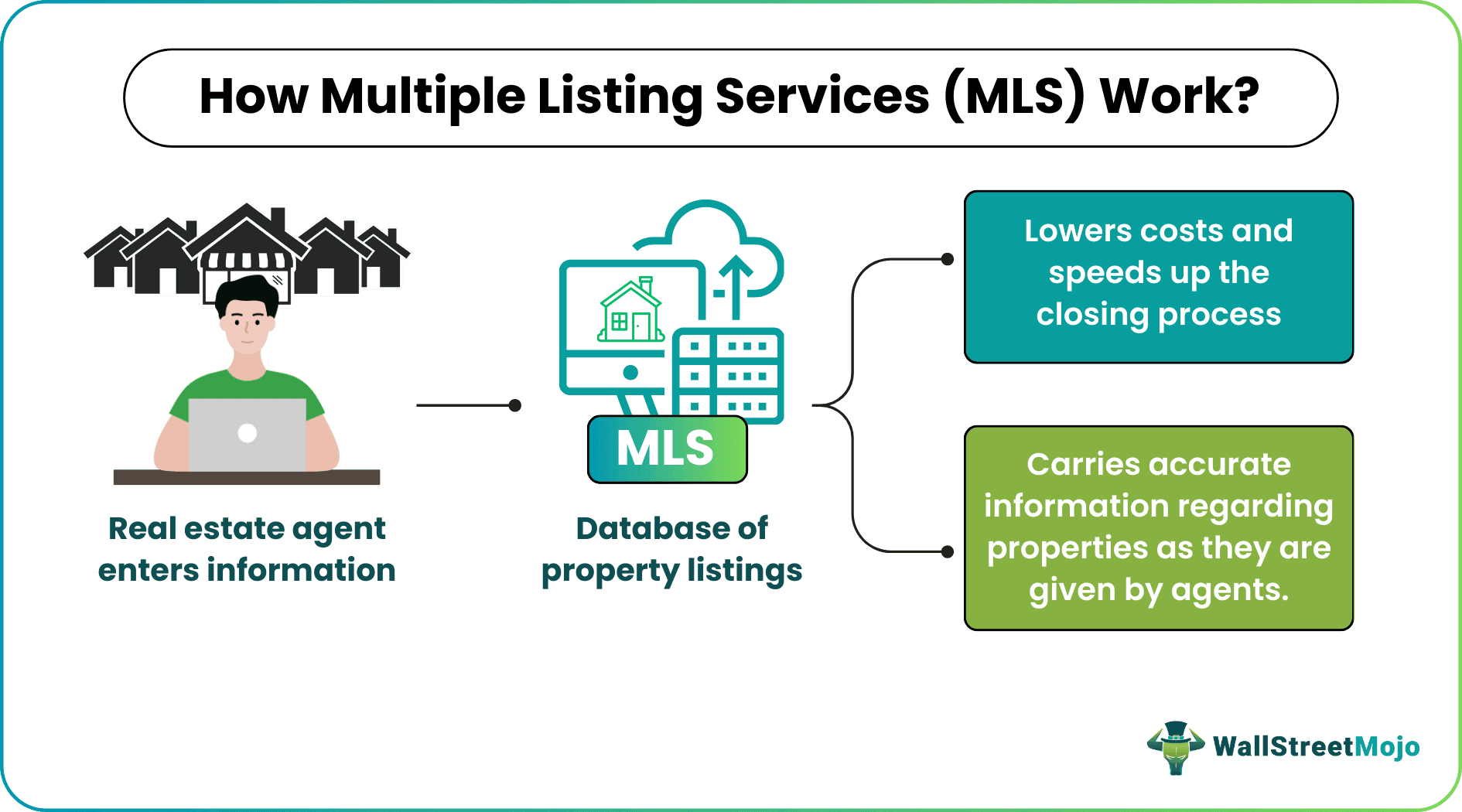
In the rapidly evolving landscape of real estate, the Multiple Listing Service (MLS) stands as the primary technological infrastructure that facilitates the exchange of property information. While often viewed by the general public as a simple catalog of homes for sale, an MLS is a sophisticated, private database and suite of digital tools used by real estate professionals to share information, establish contractual offers of compensation, and maintain a centralized, real-time pulse on the market. To understand the modern MLS is to understand the intersection of big data, cloud computing, and software-as-a-service (SaaS) architecture that drives a multi-billion dollar industry.

The MLS is not a single, monolithic entity but rather a network of over 500 regional databases across the United States. These systems provide the foundational data that powers consumer-facing portals, valuation tools, and investment analytics. For tech-focused professionals, the MLS represents one of the most successful examples of a collaborative data ecosystem, where competitors share proprietary information to ensure market liquidity and transparency.
The Technical Evolution of the Multiple Listing Service
To appreciate where the MLS stands today, one must look at the digital transformation it has undergone over the last three decades. The system originated as physical gatherings where brokers exchanged paper cards detailing property listings. As technology progressed, these card files evolved into localized computer databases, eventually migrating to the cloud-based platforms we see today.
The Shift from Proprietary Silos to Standardized Data
Historically, different MLS organizations used varied data structures, making it nearly impossible for software developers to build tools that worked across multiple regions. This lack of interoperability was a significant hurdle for real estate technology trends. The emergence of the Real Estate Standards Organization (RESO) changed the landscape by introducing a standardized “Data Dictionary” and unified transport protocols.
Modern MLS platforms now adhere to these standards, ensuring that a “bathroom count” or “square footage” field is defined identically across different systems. This standardization is what allows third-party apps, CRM systems, and AI tools to ingest MLS data seamlessly. The transition from the legacy Real Estate Transaction Standard (RETS) to the modern RESO Web API represents a major leap forward, allowing for faster, more secure, and more efficient data transfers between the MLS and the various applications that rely on its feed.
Cloud-Based Infrastructure and Real-Time Syncing
The modern MLS is built on robust cloud infrastructure, allowing for high-speed indexing and real-time updates. When a listing status changes from “Active” to “Pending” in a local MLS, that information is pushed through an Internet Data Exchange (IDX) feed. Through complex synchronization algorithms, this update is reflected across thousands of websites and mobile applications within minutes. This level of concurrency requires high-availability database management and optimized caching strategies to handle millions of queries per hour from both human users and automated bots.
The MLS Software Ecosystem: More Than Just a Database
While the data itself is the core value of an MLS, the software platforms that house this data—the “front-end” tools—have become increasingly sophisticated. These platforms are comprehensive SaaS solutions that provide real-time analytics, automated reporting, and client management tools.
Front-End Innovation and User Interface (UI) Design
Major software vendors like CoreLogic, Black Knight, and FBS dominate the MLS vendor space, offering platforms such as Matrix, Paragon, and Flexmls. These tools serve as the operating system for real estate agents. Modern UI improvements have focused on mobile-first design, recognizing that the “office” of a real estate professional is often their vehicle.
Today’s MLS software includes advanced mapping tools powered by GIS (Geographic Information Systems) technology. Users can draw custom boundaries, view flood zones, analyze school districts, and overlay heat maps of price-per-square-foot trends. These visual data representations are made possible by integrating third-party spatial data layers with the core MLS listing information.
The Integration of the Real Estate “Tech Stack”
The MLS does not exist in a vacuum; it is the hub of a much larger tech stack. Through the use of APIs and Single Sign-On (SSO) technology, a modern MLS platform integrates with various productivity tools:
-
Digital Signature Platforms: Integrating directly with tools like DocuSign or Dotloop to pull property data into legal contracts automatically.
-
Customer Relationship Management (CRM): Syncing MLS search activity with agent CRMs to track buyer preferences and automate lead nurturing.
-
Electronic Lockbox Systems: Using Bluetooth and encrypted mobile apps to control physical access to properties, with every entry recorded back into the MLS audit trail.
-
Tax and Public Record Databases: Aggregating historical tax data, deed transfers, and lien information to provide a 360-degree view of a property’s financial history.
The Impact of Big Data and AI on the MLS
As the volume of historical property data grows, the real estate industry is increasingly turning to Artificial Intelligence (AI) and Machine Learning (ML) to extract value from the MLS. What used to be a simple search tool has evolved into a predictive engine.
Predictive Analytics and Market Intelligence
By analyzing decades of historical sales data stored within the MLS, machine learning models can now predict market trends with remarkable accuracy. Automated Valuation Models (AVMs) use regression analysis and neural networks to estimate home values in real-time. These models factor in hundreds of variables from the MLS, including seasonal trends, hyper-local demand shifts, and even the “days on market” for comparable properties.
For investors and developers, the tech-enabled MLS provides “buy-box” automation. AI algorithms can scan thousands of new listings the moment they hit the server, identifying properties that meet specific investment criteria—such as a specific cap rate or price-to-rent ratio—and alerting the user before the listing has even appeared on consumer portals.
Computer Vision and Image Processing
One of the most exciting technology trends in the MLS space is the application of computer vision to listing photos. AI can now “read” the images uploaded to the MLS to identify features that aren’t always captured in the text fields. For example, an AI tool can scan photos to determine if a kitchen has granite countertops, stainless steel appliances, or hardwood floors.
This metadata is then used to refine search results and improve the accuracy of property valuations. Computer vision can also detect the quality of a home’s condition, assigning a “numerical score” to a property’s aesthetic appeal, which helps in normalizing data for large-scale financial analysis.
Cybersecurity and Data Integrity in the MLS
Because the MLS contains sensitive information—including seller contact details, showing instructions, and historical transaction prices—digital security is a paramount concern. The integrity of the real estate market depends on the accuracy and exclusivity of this data.
Protecting the Transactional Pipeline
Cybersecurity in the MLS involves multi-factor authentication (MFA) for members, encrypted data transmission, and rigorous auditing of data access. Distributed Denial of Service (DDoS) protection and advanced firewalls are standard for MLS vendors to ensure that the market remains “open” 24/7.
Furthermore, data “scraping” by unauthorized bots is a constant challenge. MLS organizations employ sophisticated bot-detection algorithms to prevent proprietary data from being harvested by unlicensed entities. This protection of data intellectual property (IP) is what maintains the value of the MLS membership model.
Managing the Syndication Pipeline
The process of “syndication” involves the controlled distribution of MLS data to third-party consumer sites. This is a complex technical pipeline that requires strict rules-based engines. A listing must be formatted differently for a local brokerage site than for a national portal. The tech infrastructure behind the MLS manages these permissions, ensuring that when a seller opts out of internet display, or when a price is updated, those changes propagate across the entire digital ecosystem according to specific business rules and licensing agreements.

The Future of Property Data: Blockchain and Beyond
Looking ahead, the conversation around MLS technology is shifting toward even more decentralized and transparent systems. While the current centralized database model is efficient, many are exploring the potential of blockchain technology to further revolutionize property records.
A blockchain-based MLS could potentially create an immutable ledger of a property’s entire history—not just sales, but every repair, permit, and inspection. Smart contracts could automate the distribution of commissions and the transfer of titles directly through the MLS interface, reducing the need for manual processing and minimizing the risk of wire fraud.
The MLS is no longer just a “list” of homes. it is a high-performance, data-rich environment that serves as the engine for the modern real estate economy. As AI tools, API integrations, and cloud computing continue to advance, the MLS will remain the central technological hub, transforming raw data into actionable insights for the global property market. In an era where information is the most valuable commodity, the Multiple Listing Service represents the gold standard of collaborative, industry-specific technology.
aViewFromTheCave is a participant in the Amazon Services LLC Associates Program, an affiliate advertising program designed to provide a means for sites to earn advertising fees by advertising and linking to Amazon.com. Amazon, the Amazon logo, AmazonSupply, and the AmazonSupply logo are trademarks of Amazon.com, Inc. or its affiliates. As an Amazon Associate we earn affiliate commissions from qualifying purchases.