
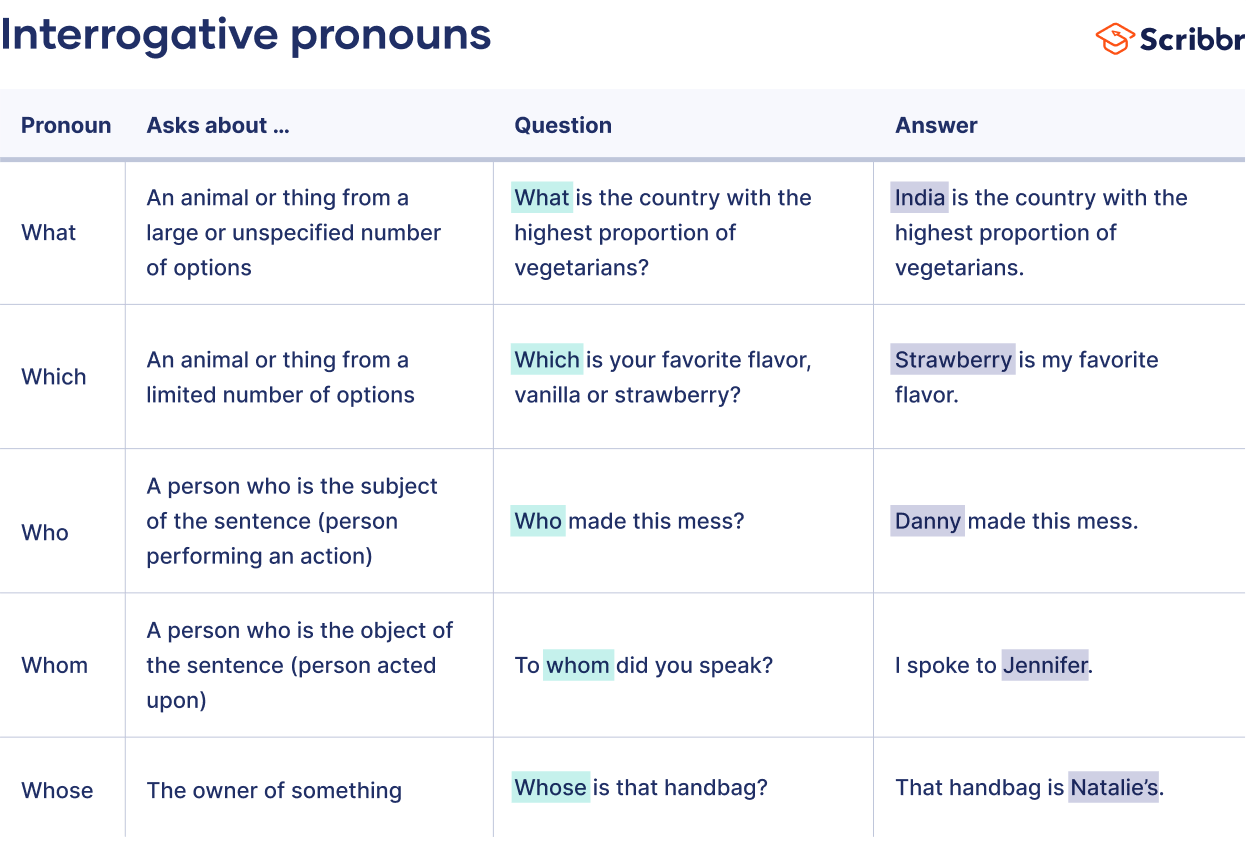
In the realm of traditional grammar, an interrogative pronoun is a word used to ask a question. Words like “who,” “whom,” “whose,” “what,” and “which” serve as the linguistic signposts that direct an inquiry, seeking specific information from the listener. They replace the unknown noun in a question, making the question itself concise and targeted. For centuries, this concept has been a bedrock of human communication, enabling us to seek knowledge, clarify understanding, and navigate complex social interactions.
However, in the burgeoning landscape of artificial intelligence and advanced computing, the seemingly simple definition of an interrogative pronoun takes on an entirely new dimension of complexity and critical importance. For AI systems, understanding “what is an interrogative pronoun” isn’t merely a matter of linguistic classification; it’s the foundational challenge in bridging the gap between human language and machine comprehension. It’s about empowering software to parse intent, extract crucial information from user queries, and ultimately, to engage in meaningful, interactive dialogue. This article delves into the technological significance of interrogative pronouns, exploring how AI systems are engineered to recognize, interpret, and leverage these crucial question words to drive a new era of intelligent interaction.

The Core of Conversational AI: Understanding Questions
The primary goal of conversational AI — be it a chatbot, a virtual assistant, a search engine, or any interactive software — is to understand what a human user is trying to achieve or find out. At the heart of this understanding lies the ability to correctly interpret questions. Without a robust mechanism for identifying and processing interrogative pronouns, an AI system would struggle to differentiate between a statement, a command, or a genuine query for information.
Identifying the “Question Word” in User Input
For an AI, the initial step in processing a user’s question involves meticulously parsing the input string to pinpoint the interrogative pronoun. This isn’t always as straightforward as it seems for a machine. Consider the nuances: “Who is the CEO?” is a direct question, but “Tell me who the CEO is” embeds the question. NLP models employ various techniques, starting with tokenization (breaking down sentences into individual words or tokens) and then moving to Part-of-Speech (POS) tagging. POS tagging assigns a grammatical category (like noun, verb, adjective) to each token. Interrogative pronouns are tagged specifically, allowing the system to flag the sentence as an inquiry.
Beyond simple identification, the system must also consider the role of the pronoun. Is “what” referring to an object, an event, or a concept? Is “who” referring to a person or an entity? These distinctions are crucial for directing the AI’s subsequent information retrieval or generation processes. Advanced NLP pipelines leverage syntactic parsing, which analyzes the grammatical structure of sentences to understand the relationships between words. This helps an AI to identify not just the interrogative pronoun, but also the specific noun or concept it refers to in the context of the question.
Distinguishing Between Question Types
Once an interrogative pronoun is identified, an intelligent system must go further to classify the type of question being asked. This classification significantly influences how the AI will formulate its response or search for information.
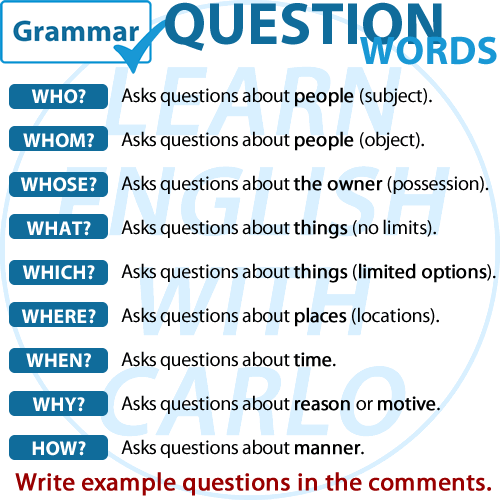
- Factual Questions (Who, What, When, Where): These often seek specific pieces of information that can be retrieved from a knowledge base or database. For example, “Who founded Google?” requires a name; “What is the capital of France?” requires a city; “When was the internet invented?” requires a date. AI systems use entity recognition to identify potential answers within structured or unstructured data.
- Procedural Questions (How): These ask for steps or methods. “How do I reset my password?” necessitates a sequence of actions. AI models need access to process flows or tutorial documents to generate relevant instructions.
- Explanatory Questions (Why): These seek reasons or justifications. “Why did the stock market crash?” demands an analysis of causes. Answering “why” questions is often the most challenging, requiring deep semantic understanding and inference capabilities, moving beyond simple data retrieval to causal reasoning.
- Comparative/Choice Questions (Which): These imply a selection from a set of options or a comparison. “Which laptop is best for gaming?” requires criteria analysis and comparison.
- Possessive Questions (Whose): These seek ownership or association. “Whose phone is this?” points to a specific individual.
By accurately categorizing the question type based on the interrogative pronoun and surrounding context, an AI system can trigger the most appropriate module for processing the query, leading to more relevant and helpful responses.
Technical Implementation: How AI Processes Interrogative Pronouns
The journey from a human asking a question to an AI providing an intelligent answer is a complex pipeline involving multiple layers of computational linguistics and machine learning. Interrogative pronouns are key markers at several critical junctures of this process.
Rule-Based Systems vs. Machine Learning Models
Early AI systems and chatbots often relied heavily on rule-based systems to identify and respond to questions. These systems were programmed with explicit rules: “If input contains ‘who’ and ‘CEO’, look up CEO in database.” While effective for narrow domains, they lacked flexibility and struggled with variations in language, synonyms, and complex sentence structures. They required extensive manual rule creation and maintenance.
Modern AI, however, primarily leverages machine learning (ML) models, particularly deep learning, for NLP tasks. These models learn patterns from vast datasets of human language. By being trained on millions of sentences, including countless questions, ML models learn to statistically identify interrogative pronouns, their contextual meanings, and the types of information they typically solicit. This approach allows for greater robustness, adaptability, and the ability to handle ambiguity and novel phrasing.
Tokenization, Part-of-Speech Tagging, and Dependency Parsing
When a user types “What time is it?”, the text first undergoes tokenization, splitting it into [“What”, “time”, “is”, “it”, “?”]. Next, Part-of-Speech (POS) tagging is applied, yielding annotations like [“What”: Interrogative Pronoun, “time”: Noun, “is”: Verb, “it”: Pronoun, “?”: Punctuation]. This immediately flags “What” as a key element for a question.
More critically, dependency parsing comes into play. This process analyzes the grammatical relationships between words in a sentence, identifying the “head” word for each dependent word. For “What time is it?”, a dependency parser might identify “What” as the object of “is” or “time” as the object modified by “What.” This helps the AI understand what the question is actually about (in this case, “time”) and its relationship to the interrogative pronoun. In a more complex sentence like “Which report did John submit?”, dependency parsing links “Which” to “report” and identifies “John” as the subject who performed the action. This deep structural analysis is fundamental to understanding the precise query.
Semantic Understanding and Contextual Interpretation
Beyond syntax, AI systems strive for semantic understanding, which involves grasping the meaning and intent behind the words. Interrogative pronouns are crucial for this. “What is your name?” is semantically different from “What is the capital of France?”, even though both use “what.” Semantic parsing attempts to map natural language sentences into structured meaning representations that AI can process logically.
Furthermore, contextual interpretation is vital, especially in multi-turn conversations. If a user asks, “Who won the game?” and then “What was the score?”, the AI needs to understand that “What” in the second question refers to the same game mentioned in the first. This requires maintaining a conversational state and using coreference resolution techniques to link pronouns (including interrogative pronouns implicitly referring to previous context) to their antecedents. Modern transformer-based models, such as GPT series, excel at this due to their attention mechanisms that weigh the relevance of all words in a sequence, allowing for sophisticated contextual understanding.
Applications Across the Tech Landscape
The sophisticated processing of interrogative pronouns by AI systems has enabled a revolution in how we interact with technology, powering critical functionalities across a multitude of applications.
Enhancing Search Engines and Information Retrieval
The original mission of search engines like Google was to answer questions. While keyword matching was the early approach, modern search engines utilize advanced NLP to understand the intent behind a query, especially those framed as questions. When you type “who invented the lightbulb?”, the search engine identifies “who” as seeking a person, and “invented lightbulb” as the core subject. It then retrieves and ranks results based on semantic relevance, often providing a direct answer snippet at the top of the search results page. This is a direct application of interrogative pronoun processing leading to more efficient and accurate information retrieval. Future developments, powered by large language models, aim to allow users to ask increasingly complex, multi-faceted questions and receive synthesized, coherent answers rather than just links.
Powering Chatbots and Virtual Assistants
Perhaps the most visible application of interrogative pronoun understanding is in chatbots and virtual assistants (like Siri, Alexa, Google Assistant). These tools are designed to simulate human conversation, and questioning is central to their functionality. When a user asks “What’s the weather like?”, the assistant identifies “what” as seeking information about a state, “weather” as the topic, and “like” as indicating current conditions. It then queries a weather API and synthesizes a response. For customer service chatbots, correctly interpreting questions like “How do I return an item?” or “Where is my order?” is paramount to providing helpful, automated support, reducing the need for human intervention. The accuracy of these systems directly correlates with their NLP models’ ability to dissect user questions.
Improving Data Analysis through Conversational Interfaces
Beyond general information and customer service, the ability to “ask questions” of data is transforming business intelligence and data analytics. Tools that offer conversational interfaces allow users to query complex datasets using natural language instead of requiring technical SQL commands or intricate dashboard configurations. For instance, a business analyst could ask, “What were our sales figures in Q3 in Europe for product X?” The system identifies “what” for figures, “Q3” for time, “Europe” for region, and “product X” for product, then translates this natural language query into an executable database query. This democratizes data access, enabling non-technical users to gain insights rapidly, fostering data-driven decision-making across organizations.
Challenges and Future Directions in NLP for Interrogative Pronouns
Despite significant advancements, fully mastering the nuances of interrogative pronouns in AI remains a complex challenge, pushing the boundaries of NLP research.
Ambiguity and Contextual Nuance
Human language is inherently ambiguous, and questions are no exception. Consider “What did you see?” Without context, the AI doesn’t know what refers to. Or “Which port is it?” — “port” could mean a harbor, a computer connector, or a type of wine. Resolving such ambiguity requires sophisticated contextual understanding, often leveraging knowledge graphs, common sense reasoning, and an awareness of the ongoing conversation. While large language models have made strides here, achieving human-level contextual understanding in all scenarios is still an active area of research.
Furthermore, rhetorical questions or questions implying a statement (e.g., “Isn’t it obvious?”) pose challenges, as the AI must understand that no direct answer is expected.
Multilingual Question Answering
While English-language NLP for interrogative pronouns is relatively mature, extending this sophistication to a multitude of other languages presents unique hurdles. Different languages have varying grammatical structures, word orders, and ways of expressing questions. Some languages might not have direct equivalents for certain interrogative pronouns, or their usage might depend heavily on inflections and particles. Developing robust multilingual question-answering systems requires overcoming these linguistic diversities, often through transfer learning or training on massive parallel datasets.
The Promise of Advanced AI Models (Transformers, LLMs)
The advent of transformer architectures and large language models (LLMs) has dramatically improved AI’s ability to understand and generate human language, including processing interrogative pronouns. These models, trained on colossal amounts of text data, learn intricate patterns of syntax, semantics, and context. They are highly effective at:
- Contextual Embeddings: Representing words not just by themselves, but by their meaning in the context of the entire sentence, significantly aiding ambiguity resolution.
- Question Answering (QA): Directly generating answers to questions by synthesizing information from learned knowledge, rather than just retrieving documents.
- Conversational Memory: Maintaining a coherent understanding across multiple turns of dialogue, crucial for follow-up questions.
Future research in this area will focus on making these models even more robust, interpretable, and efficient, especially in low-resource languages and highly specialized domains. The goal is to move beyond merely answering questions to truly understanding human inquiry, enabling machines to engage in more natural, empathetic, and insightful dialogues.
Conclusion
From a simple grammatical definition to a pivotal component of artificial intelligence, the interrogative pronoun has traversed a fascinating journey. For AI, it is not just a part of speech; it is the key to unlocking human intent, the gateway to knowledge retrieval, and the bedrock of truly interactive computing. The meticulous engineering behind identifying, classifying, and semantically understanding “who,” “what,” “where,” “when,” “why,” and “which” forms the invisible yet indispensable foundation upon which our digital assistants, intelligent search engines, and conversational interfaces are built. As AI continues to evolve, the sophistication with which it processes these fundamental question words will undoubtedly shape the future of human-machine interaction, moving us closer to a world where technology doesn’t just respond, but genuinely understands and assists.
aViewFromTheCave is a participant in the Amazon Services LLC Associates Program, an affiliate advertising program designed to provide a means for sites to earn advertising fees by advertising and linking to Amazon.com. Amazon, the Amazon logo, AmazonSupply, and the AmazonSupply logo are trademarks of Amazon.com, Inc. or its affiliates. As an Amazon Associate we earn affiliate commissions from qualifying purchases.