
In the world of personal finance and business strategy, few decisions carry as much weight as the choice of legal structure. When entrepreneurs move beyond the “side hustle” phase and into the realm of scalable enterprise, one word inevitably dominates the conversation: incorporation. But what is an incorporation, and why does it serve as the bedrock of the modern financial system?
At its core, incorporation is the legal process of forming a new corporation. This entity is recognized by the law as a “person,” separate and distinct from its owners. While this might sound like a mere bureaucratic formality, it is, in fact, a sophisticated financial tool designed to manage risk, optimize taxes, and facilitate the massive accumulation of capital. For anyone serious about business finance, understanding the mechanics of incorporation is not optional—it is the prerequisite for long-term wealth preservation and growth.

The Financial Mechanics of Incorporation: Separation and Protection
The primary motivation for incorporation is the creation of a “corporate veil.” In a sole proprietorship or a general partnership, the business owner and the business are one and the same in the eyes of the law. If the business incurs a debt or loses a lawsuit, the owner’s personal assets—their home, their savings, their retirement accounts—are all at risk. Incorporation fundamentally changes this equation.
Legal Personhood and Limited Liability
By incorporating, you create a legal entity that can own property, sign contracts, and incur debt independently of its shareholders. This introduces the concept of “limited liability.” From a financial perspective, this means that a shareholder’s loss is limited strictly to the amount they have invested in the company. If a corporation goes bankrupt, creditors generally cannot pursue the personal assets of the directors or shareholders to satisfy the business’s obligations. This protection is the catalyst for modern investment; without it, few individuals would risk their life savings to fund a new venture.
Capital Structure and the Issuance of Shares
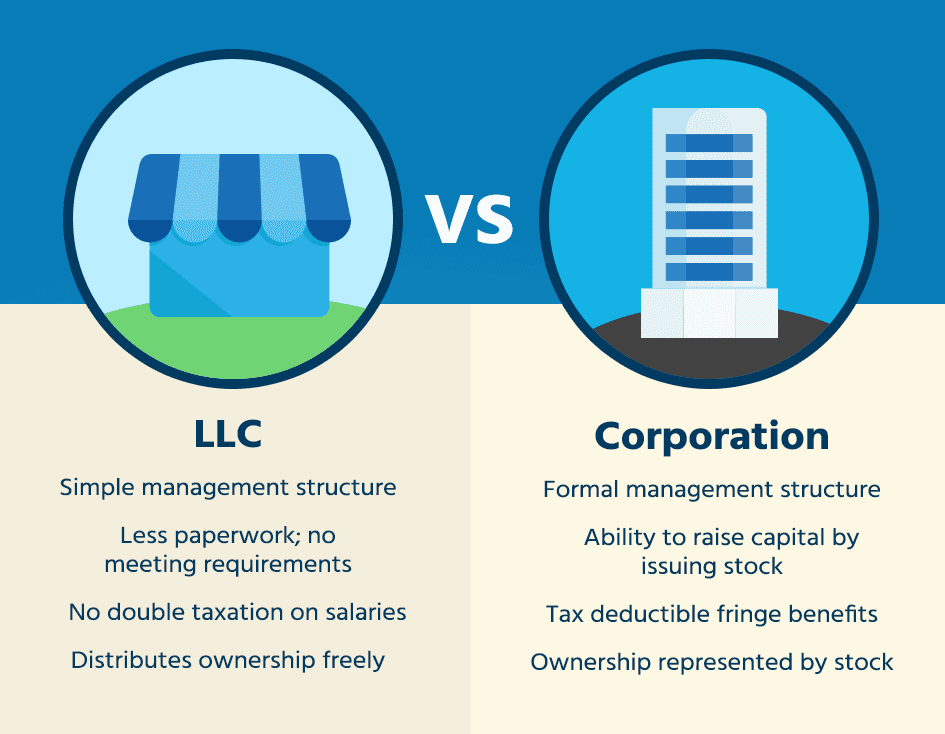
Unlike simpler business forms, a corporation has a formal capital structure defined by shares of stock. This is a vital financial tool for growth. Incorporation allows a business to “itemize” its value and sell pieces of it to raise capital without taking on debt. By issuing common or preferred stock, a corporation can attract diverse investors, ranging from friends and family to institutional venture capitalists. This ability to exchange equity for liquid capital is the engine that drives the scaling of global enterprises.
Tax Implications and Fiscal Advantages of the Corporate Structure
From a “Money” niche perspective, the most compelling reason to incorporate often lies in the tax code. Governments frequently use corporate tax policy to encourage investment and economic activity, providing incorporated entities with a suite of financial maneuvers unavailable to the average individual taxpayer.
Corporate Tax Rates vs. Personal Income
In many jurisdictions, the flat corporate tax rate is significantly lower than the highest marginal personal income tax rates. By incorporating, business owners can choose to keep profits within the corporation—known as retained earnings—rather than distributing them as personal income. This allows the money to be reinvested in the business’s growth at a much lower tax friction. For a high-earning entrepreneur, this can result in hundreds of thousands of dollars in tax savings over the life of the business.
Deductible Business Expenses and Employee Benefits
Incorporation opens the door to a more sophisticated array of deductible expenses. A corporation can often deduct the costs of operations, including health insurance premiums, retirement plan contributions (like a 401(k)), and life insurance for its employees and owners. While sole proprietors have some access to these deductions, the “C-Corporation” structure in particular allows for a more expansive range of fringe benefits that are tax-deductible for the business and tax-exempt for the employee. This creates a high-efficiency environment for building wealth and providing for one’s family.
Understanding S-Corp and C-Corp Designations
It is important to distinguish between the two primary tax designations in the United States: the C-Corp and the S-Corp.
- C-Corporations are subject to “double taxation”—the entity pays taxes on profits, and then shareholders pay taxes on dividends. However, they offer the most flexibility for reinvestment and attracting international investors.
- S-Corporations are “pass-through” entities. The profits flow directly to the shareholders’ personal tax returns, avoiding the double tax. This is often the preferred route for small-to-medium business owners who want the liability protection of a corporation with the tax simplicity of a partnership.

Funding, Growth, and the Investor Perspective
If the goal of your business is to achieve significant scale or eventually reach an “exit” (selling the company), incorporation is virtually mandatory. Professional investors, from angel investors to private equity firms, rarely invest in unincorporated entities because the legal and financial risks are too high and the structure is too messy.
Scalability through Venture Capital and Private Equity
Incorporation provides a standardized legal framework that investors understand. When a venture capitalist invests in a startup, they are looking for a C-Corporation (usually incorporated in Delaware due to its business-friendly laws). This structure allows for different “classes” of stock, giving investors specific rights, such as liquidation preference or anti-dilution protections. Without incorporation, the complex financial engineering required to fund high-growth tech or biotech firms would be impossible.
Creditworthiness and Business Financing
Just as individuals have credit scores, corporations build their own credit profiles. By incorporating, a business can establish its own credit history separate from the owner’s personal credit. This is a massive financial milestone. A strong corporate credit rating allows the business to secure loans, lines of credit, and favorable terms from suppliers based on the company’s cash flow and assets rather than the owner’s personal guarantee. Over time, this “decouples” the owner’s personal financial health from the business’s capital needs.
Exit Strategies: M&A and Initial Public Offerings (IPOs)
The ultimate “Money” move for any entrepreneur is the exit. Whether it’s being acquired by a competitor or going public on a stock exchange, these events require a corporate structure. An incorporation allows for a clean transfer of ownership through the sale of shares. In an acquisition, the buying company is essentially purchasing the legal entity and all its assets and contracts in one fell swoop. If the business were not incorporated, transferring every individual asset, lease, and contract would be a logistical and financial nightmare.
The Economic Reality: The Costs and Compliance of Incorporating
While the financial benefits of incorporation are vast, it is not a “free lunch.” Maintaining a corporation requires a level of fiscal discipline and administrative overhead that can be burdensome for smaller operations.
Initial Setup and Compliance Fees
The process of incorporation involves filing “Articles of Incorporation” with the state and paying the associated filing fees. Beyond the initial setup, there are ongoing costs such as annual report fees, franchise taxes, and the cost of a registered agent. For a startup on a shoestring budget, these costs must be weighed against the immediate benefits of liability protection and tax efficiency.
Ongoing Administrative Maintenance and “Corporate Formalities”
To maintain the “corporate veil” and protect your personal assets, you must treat the corporation as a truly separate entity. This means keeping meticulous financial records, maintaining separate bank accounts, holding annual meetings of shareholders and directors, and recording minutes of those meetings. If an owner treats the corporate bank account like a personal piggy bank—a practice known as “commingling funds”—a court can “pierce the corporate veil,” holding the owner personally liable for the company’s debts. From a business finance perspective, this requires hiring professional accountants and legal counsel to ensure the entity remains in good standing.
Conclusion: Incorporation as a Vehicle for Wealth
In the final analysis, an incorporation is more than just a legal document; it is a sophisticated financial vehicle. It provides the “shock absorbers” of limited liability, the “fuel” of capital raising through shares, and the “navigation system” of corporate tax strategy.
For the serious entrepreneur or investor, the question isn’t whether to incorporate, but when and where. By transforming a business into a corporation, you move from being a mere worker to being a shareholder in a lasting institution. It is the definitive step in moving from a side hustle to a professional enterprise, providing the necessary structure to build, protect, and eventually liquidate significant wealth. Whether you are looking to save on taxes, protect your family’s home, or court Silicon Valley investors, incorporation is the foundational architecture upon which modern financial success is built.
aViewFromTheCave is a participant in the Amazon Services LLC Associates Program, an affiliate advertising program designed to provide a means for sites to earn advertising fees by advertising and linking to Amazon.com. Amazon, the Amazon logo, AmazonSupply, and the AmazonSupply logo are trademarks of Amazon.com, Inc. or its affiliates. As an Amazon Associate we earn affiliate commissions from qualifying purchases.