
In the vast landscape of manufacturing, few processes are as ubiquitous, versatile, and fundamental as extrusion. Far from being a niche engineering term, extrusion is a core technological marvel that shapes our world, quite literally, by transforming raw materials into components essential for nearly every industry. From the precision-engineered parts of a smartphone to the structural beams of a skyscraper, the principles of extrusion are at play, enabling mass production of objects with complex, consistent cross-sections. At its heart, extrusion is a process where a material is pushed or drawn through a die of the desired cross-section. This seemingly simple action belies a sophisticated interplay of material science, mechanical engineering, and process control that makes modern manufacturing possible.

The Core Mechanics of Extrusion: A Technological Marvel
Extrusion, in its essence, is a continuous forming process. It’s a testament to human ingenuity in engineering material flow and transformation. The technological underpinnings are surprisingly elegant, allowing for remarkable adaptability across a staggering range of materials.
The Principle of Continuous Transformation
The fundamental principle behind extrusion is the creation of a continuous profile. Unlike casting or molding, which typically produce discrete parts, extrusion excels at generating long, uniform lengths that can then be cut to size. This continuity is a key advantage, reducing waste and increasing production efficiency for products like window frames, pipes, wires, and even food products like pasta or breakfast cereals. The material, whether it be a molten plastic, a softened metal billet, or a paste-like ceramic, is subjected to immense pressure. This pressure forces it to flow through a precisely shaped opening – the die – which imparts the desired cross-sectional geometry. As the material emerges from the die, it retains this shape, and is then typically cooled and solidified, completing its transformation. The technological challenge lies in managing the material’s rheology (flow properties) under varying temperatures and pressures to ensure a consistent, defect-free output.
Key Components: Extruder, Die, and Cooling Systems
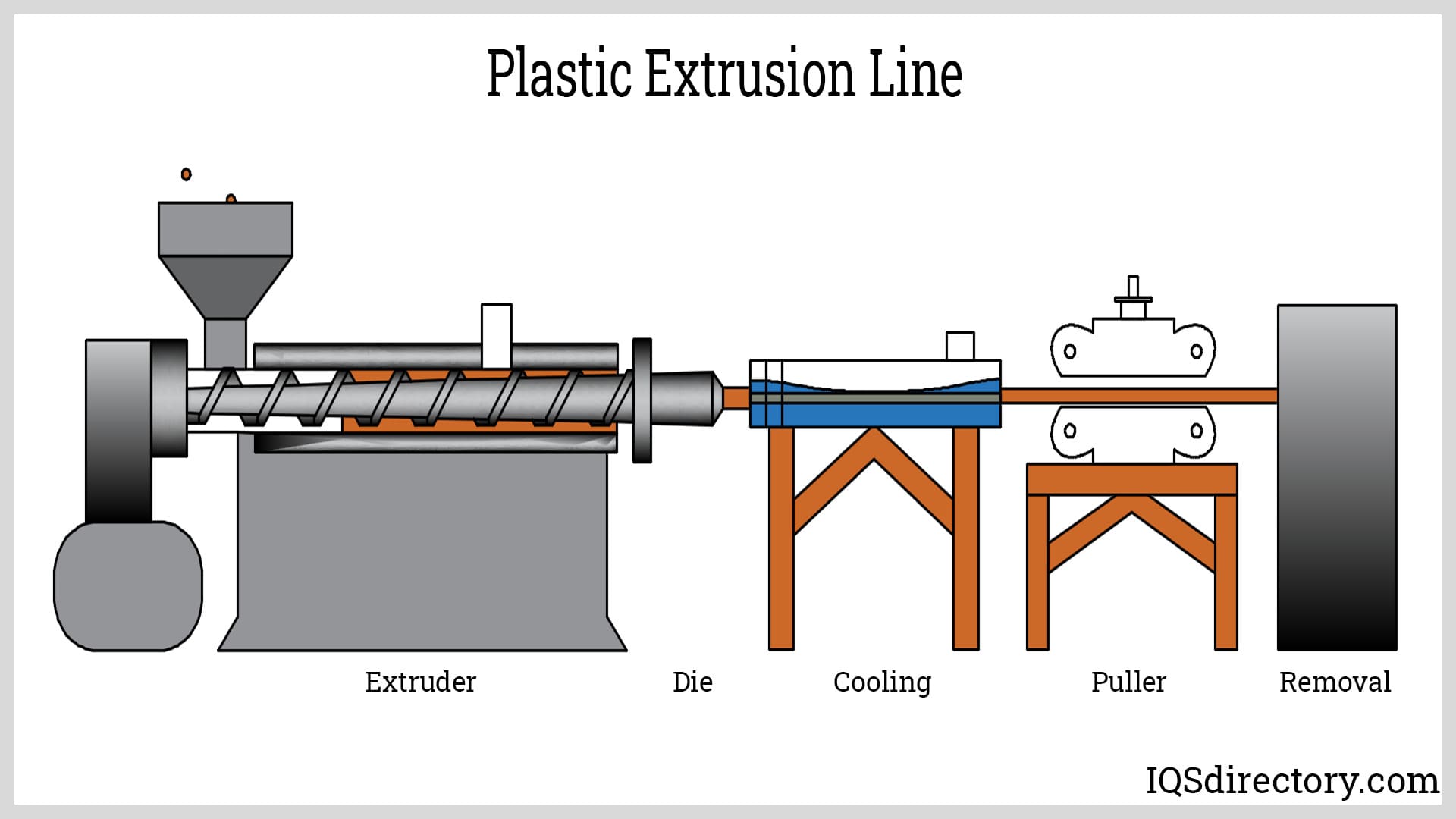
The machinery involved in extrusion is highly specialized, designed for precision and durability under strenuous conditions. The extruder itself is the powerhouse, housing the mechanism that applies force to the material. For plastics, this usually involves a rotating screw within a heated barrel that melts and homogenizes the polymer before pushing it forward. For metals, hydraulic rams often push a pre-heated billet.
The die is perhaps the most critical component, as it defines the final shape. Dies are precision-engineered tools, often made from hardened steel or specialized alloys, capable of withstanding extreme temperatures and pressures while maintaining their intricate geometries. Their design involves complex computational fluid dynamics and finite element analysis to predict material flow and prevent defects.
Finally, cooling systems are essential to solidify the extruded profile. For plastics, water baths or air cooling zones are common. For metals, air or water quenching might be used, often coupled with stretching or straightening processes to achieve final dimensional accuracy and desired mechanical properties. The integration and precise control of these components are what elevate extrusion from a simple pushing action to a sophisticated technological process.
Diverse Materials, Diverse Applications
The technological brilliance of extrusion lies in its adaptability to an incredibly broad spectrum of materials, each requiring specific engineering considerations:
-
Metals: Aluminum, copper, steel, and alloys are extensively extruded. Aluminum, in particular, benefits from extrusion due to its ductility and lightweight properties, making it ideal for everything from window frames to aircraft components. The process enhances the metal’s strength and allows for complex hollow or multi-chamber profiles that would be difficult or impossible to achieve with other methods.
-
Plastics: Polymers are perhaps the most commonly extruded materials. From PVC pipes and automotive trims to plastic films, sheets, and insulation for wires, plastic extrusion is a cornerstone of modern consumer goods and infrastructure. The technology allows for precise control over material properties, enabling the creation of custom compounds with specific flexibility, rigidity, or chemical resistance.
-
Composites and Ceramics: Advanced composites, often incorporating fibers, can be extruded to create strong, lightweight components. Ceramics and even advanced refractory materials can also be extruded in paste form, dried, and then fired, creating intricate shapes for high-temperature applications.
-
Food and Pharmaceuticals: Extrusion also plays a vital role in creating various food products (pasta, snacks, pet food) and even some pharmaceutical formulations, where precise dosing and shape are critical. The technology here is adapted for hygiene and food-grade materials.
The ability to process such a diverse array of materials underscores extrusion’s role as a truly universal manufacturing technology, constantly evolving with advancements in material science.
Types of Extrusion: Tailoring Technology to Needs
The fundamental principle of extrusion can be executed in numerous ways, each optimized for specific materials, desired product characteristics, and production efficiencies. These variations represent distinct technological approaches to material forming.
Hot Extrusion vs. Cold Extrusion: Process Optimization
A primary distinction in metallic extrusion lies in the temperature at which the process occurs relative to the material’s recrystallization temperature.
-
Hot Extrusion: This method involves heating the metal billet to a high temperature, typically above its recrystallization temperature but below its melting point. Heating significantly reduces the material’s yield strength and increases its ductility, making it easier to push through the die with less force. This allows for the creation of more complex shapes and larger reductions in cross-section. However, hot extrusion can lead to oxidation, grain growth, and requires robust lubrication and cooling systems. It’s technologically challenging to maintain uniform temperature across large billets and intricate dies.
-
Cold Extrusion: Performed at or near room temperature, cold extrusion offers superior dimensional control, improved surface finish, and enhanced mechanical properties (due to strain hardening) compared to hot extrusion. It eliminates the need for heating equipment and reduces oxidation. The technological trade-off is that it requires significantly higher forces, limiting the complexity of shapes and the maximum reduction possible. Tools and dies must be exceptionally strong and wear-resistant, often made from advanced carbides, and complex lubrication strategies are critical to prevent galling.
Direct vs. Indirect Extrusion: Engineering Efficiencies
These two primary methods describe how the material is pushed relative to the die and container.
-
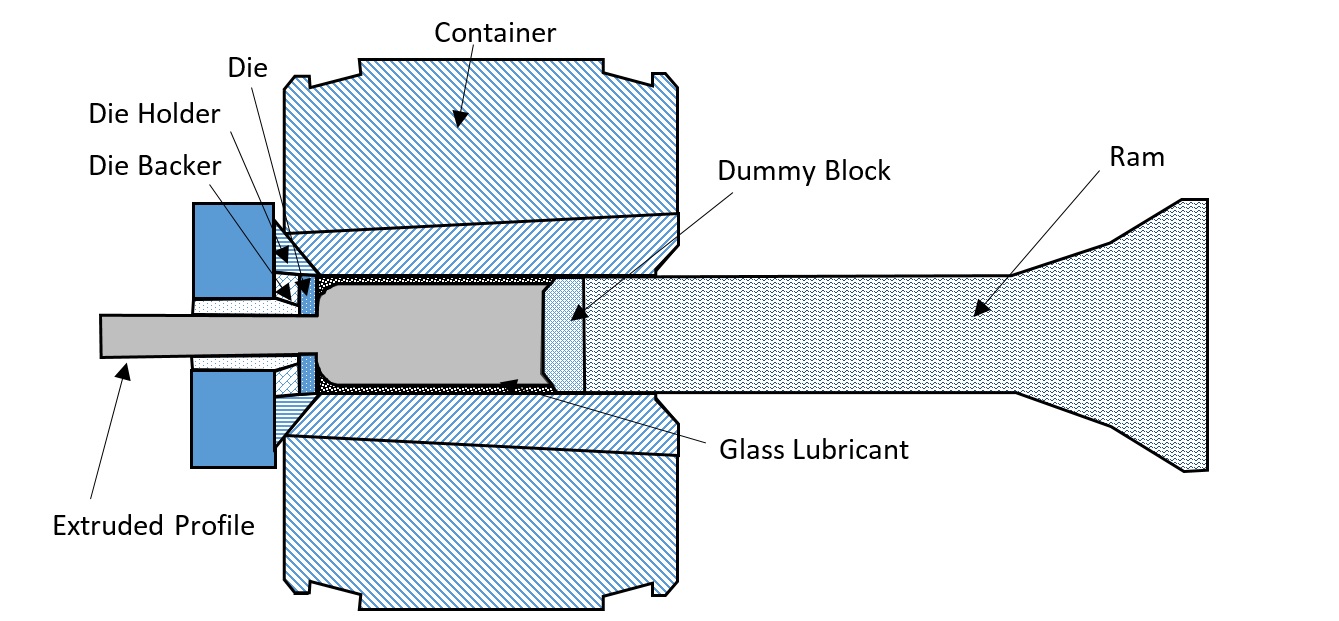
Direct Extrusion (Forward Extrusion): This is the most common method. The billet is placed in a container, and a ram pushes it through a stationary die at the opposite end. Friction between the billet and the container walls is a significant factor, requiring more force and potentially leading to non-uniform material flow. Lubrication technology is crucial here to minimize friction and prevent defects.
-
Indirect Extrusion (Backward Extrusion): In this method, the die is mounted on a hollow ram, which pushes into the stationary billet. The material then flows backward, through the die and around the hollow ram. The key technological advantage is the elimination of friction between the billet and the container walls, as the billet remains stationary relative to the container. This significantly reduces the required extrusion force, extends die life, and allows for larger billets to be extruded. However, the hollow ram design restricts the maximum size of the extruded product and the complexity of the die.
Hydrostatic Extrusion & Other Specialized Methods
Beyond the fundamental direct and indirect approaches, several specialized extrusion technologies address unique material properties and application requirements.
-
Hydrostatic Extrusion: Here, the billet is surrounded by a pressurized fluid (e.g., oil) within a sealed chamber. A ram then forces the fluid, which in turn forces the billet through the die. The main technological advantage is that the fluid reduces friction between the billet and the container, as well as on the die surface, allowing for higher reduction ratios, smoother material flow, and the extrusion of brittle materials that might crack under conventional methods. The need for high-pressure fluid containment and specialized seals makes this a more complex, but often more effective, technology for difficult-to-form materials.
-
Impact Extrusion: A high-speed punch “impacts” a metal slug, causing it to flow rapidly around the punch and up between the punch and die walls, forming a hollow part. This high-velocity deformation process is ideal for producing thin-walled, seamless tubes or cans (e.g., toothpaste tubes, aerosol cans) at very high production rates.
-
Ram Extrusion and Screw Extrusion: These terms often refer to the mechanism of force application, particularly in plastic and ceramic extrusion.
-
Ram Extrusion: A plunger or ram pushes the material, often a compacted powder or paste, through a die. This is common for ceramics, carbon, and some specialized plastics like PTFE.
-
Screw Extrusion: The dominant method for plastics, a rotating screw (or multiple screws) within a heated barrel melts, homogenizes, and conveys the polymer forward, forcing it through the die.
-
Single-Screw Extruders: The workhorse of the plastics industry, providing efficient melting and pumping for a wide range of polymers.
-
Twin-Screw Extruders: Offer superior mixing capabilities, often used for compounding different polymers, additives, and fillers. Their intermeshing screws provide intense shear, ideal for high-performance plastics and reactive extrusion processes.
-
-
Each of these extrusion types represents a unique technological solution, carefully engineered to optimize material behavior, product quality, and production efficiency for specific industrial demands.
The Technological Edge: Advancements and Innovation in Extrusion
The field of extrusion is far from stagnant. It is a vibrant arena of continuous innovation, driven by demands for higher precision, greater efficiency, new materials, and sustainable practices. Modern extrusion lines are sophisticated technological ecosystems.
Automation and Robotics in Extrusion Lines
The integration of automation and robotics has revolutionized extrusion. Robotic arms handle material loading, die changes, and post-extrusion processing like cutting, deburring, and stacking, significantly reducing manual labor and increasing throughput. Automated control systems monitor and adjust parameters like temperature, pressure, and screw speed in real-time, ensuring consistent product quality and minimizing human error. Sensor technologies, including inline optical gauges and laser scanners, provide continuous dimensional feedback, allowing for immediate process corrections. This level of automation not only boosts efficiency but also enhances safety in environments that can involve high temperatures and heavy machinery.
Material Science: Developing Advanced Polymers and Alloys
Breakthroughs in material science directly fuel advancements in extrusion. The development of new high-performance polymers, reinforced composites, and specialized metal alloys has expanded the capabilities of extrusion. For instance, lightweight aluminum alloys with enhanced strength are continually being developed for automotive and aerospace applications, directly impacting fuel efficiency and performance. Similarly, the creation of biodegradable plastics or engineering polymers with extreme temperature resistance opens new markets and applications for extruded products. Researchers are also exploring smart materials that can change properties in response to external stimuli, potentially leading to entirely new classes of extruded components.
Software and Simulation: Optimizing Die Design and Process Parameters
Computational tools have become indispensable in modern extrusion. Sophisticated CAD/CAM software is used to design complex dies with unprecedented precision. Furthermore, advanced simulation software, employing Finite Element Analysis (FEA) and Computational Fluid Dynamics (CFD), allows engineers to model material flow through the die, predict temperature distributions, stress points, and potential defects before physical prototypes are made. This virtual prototyping significantly reduces development time and costs, optimizes die geometry for improved material flow, minimizes pressure drop, and helps in selecting optimal process parameters. AI and machine learning are increasingly being used to analyze historical data and suggest optimal extrusion settings, leading to “first-time-right” manufacturing.
Additive Manufacturing’s Influence and Hybrid Processes
While extrusion is a subtractive/formative process, additive manufacturing (3D printing) is beginning to influence its future. Additive manufacturing can be used to rapidly prototype complex die designs, accelerating the development cycle. More exciting are hybrid processes where elements of extrusion are combined with additive techniques. For instance, in “cold spray extrusion” or “fused filament fabrication (FFF) with enhanced features,” new material combinations and intricate internal structures can be achieved, pushing the boundaries of what’s possible in continuous manufacturing. Research into printing extrusion dies directly from advanced materials is also underway, promising quicker turnaround and even more customized production.
Extrusion’s Indispensable Role Across Modern Industries
The reach of extrusion technology permeates nearly every aspect of our technologically advanced society. Its ability to create uniform, precise, and often custom-profiled components efficiently makes it a cornerstone for diverse sectors.
Automotive and Aerospace: Lightweighting and Structural Integrity
In both automotive and aerospace industries, the drive for lightweighting and enhanced structural integrity is paramount. Extruded aluminum alloys are critical for these sectors, providing excellent strength-to-weight ratios. In automobiles, extruded components form chassis parts, bumper beams, engine mounts, and heat exchangers, contributing to fuel efficiency and crash safety. In aerospace, extruded profiles are used for wing spars, fuselage stringers, and structural supports, where precision and reliability are non-negotiable. The ability to create complex hollow shapes through extrusion drastically reduces material consumption and assembly time compared to traditional fabrication methods.
Electronics and Consumer Goods: Precision and Mass Production
Extrusion plays a quiet but crucial role in the electronics and consumer goods industries. Aluminum extrusions are widely used for heat sinks in computers and other electronic devices, efficiently dissipating heat from sensitive components. Plastic extrusions form countless parts, from cable insulation and conduits to components within appliances, housings, and decorative trims. The precision achievable with extrusion ensures components fit together seamlessly in mass-produced items, from washing machines to smartphone casings, demonstrating its impact on both functionality and aesthetics.
Construction and Infrastructure: Durability and Customization
The construction sector relies heavily on extruded products for both durability and design flexibility. PVC and aluminum window and door frames are common examples, offering excellent insulation and resistance to weathering. Extruded pipes for water, gas, and drainage systems form the backbone of modern infrastructure. Furthermore, custom aluminum extrusions allow architects to create unique building facades, roofing systems, and interior design elements that are both aesthetically pleasing and structurally sound. The long, continuous profiles that extrusion creates are ideal for large-scale building projects.
Medical Devices and Food Processing: Sterility and Specific Profiles
In highly regulated industries like medical devices and food processing, extrusion meets stringent requirements for sterility, material integrity, and precision. In medicine, extruded plastic tubing is used for catheters, IV lines, and endoscopic instruments, where biocompatibility and precise internal diameters are critical. Extruded silicone profiles are used for seals and gaskets in medical equipment. In food processing, extruders shape everything from breakfast cereals and snack foods to pet food pellets, ensuring consistent texture, size, and cooking properties. The hygienic design of food-grade extruders and dies is a key technological challenge in this sector.
The Future of Extrusion Technology: Sustainability and Smart Manufacturing
As global demands shift towards greater sustainability and intelligent production, extrusion technology is evolving rapidly, embracing new paradigms to remain a leading force in manufacturing.
Eco-Friendly Materials and Energy Efficiency
The future of extrusion is inextricably linked to environmental responsibility. Research and development are intensely focused on processing recycled materials (plastics and metals) more effectively, reducing reliance on virgin resources. The development of new bio-based and biodegradable polymers that can be extruded is also a significant trend, addressing concerns about plastic waste. Furthermore, advancements in extruder design, motor technologies (e.g., servo-driven systems), and insulation are continuously improving the energy efficiency of extrusion lines, reducing their carbon footprint. Waste heat recovery systems are becoming more common, turning a byproduct into a resource.
Industry 4.0 and Smart Extrusion Plants
Extrusion is at the forefront of the Industry 4.0 revolution. Smart extrusion plants leverage interconnected systems, IoT sensors, and cloud computing to create highly optimized and responsive manufacturing environments. Real-time data collection from every stage of the extrusion process – from material feeding to cooling and cutting – enables comprehensive monitoring and control. This data is used to identify bottlenecks, predict equipment failures (predictive maintenance), and fine-tune process parameters dynamically. The goal is to achieve self-optimizing extrusion lines that can respond autonomously to changes in material properties or environmental conditions, maximizing uptime and quality.
AI and Machine Learning for Predictive Maintenance and Quality Control
Artificial Intelligence (AI) and Machine Learning (ML) are set to transform extrusion. By analyzing vast datasets of operational parameters, machine vibrations, temperature profiles, and product quality metrics, AI algorithms can predict when maintenance is needed before a breakdown occurs, saving significant costs and reducing downtime. In quality control, AI-powered vision systems can inspect extruded products at high speeds, detecting minute defects that human eyes might miss. ML models can also learn from past extrusion runs to automatically adjust parameters for new materials or designs, significantly reducing setup times and material waste during product changeovers. This capability is crucial for achieving high-mix, low-volume production economically.
The Push Towards Customization and On-Demand Production
The market increasingly demands customized products and faster turnaround times. Extrusion technology is adapting to this by enabling greater flexibility. Rapid die change systems, driven by automation, allow for quicker transitions between different product profiles. The integration of advanced simulation and AI-driven process control means that even short runs of highly customized extrusions can be produced efficiently. Furthermore, decentralized production models, facilitated by connected technologies, could allow for more localized, on-demand extrusion of components, reducing transportation costs and lead times. The future sees extrusion not just as a mass production technology, but as a highly agile and responsive manufacturing solution capable of meeting the bespoke needs of a dynamic market.
In conclusion, extrusion is far more than a simple manufacturing process; it is a continuously evolving technological discipline that underpins much of our modern world. From its foundational mechanical principles to the cutting-edge integration of AI, robotics, and advanced materials, extrusion remains a vibrant and essential pillar of technological innovation, shaping the products and industries of today and tomorrow.
aViewFromTheCave is a participant in the Amazon Services LLC Associates Program, an affiliate advertising program designed to provide a means for sites to earn advertising fees by advertising and linking to Amazon.com. Amazon, the Amazon logo, AmazonSupply, and the AmazonSupply logo are trademarks of Amazon.com, Inc. or its affiliates. As an Amazon Associate we earn affiliate commissions from qualifying purchases.