
In the rapidly evolving landscape of medical technology, acronyms often serve as the gatekeepers to complex scientific disciplines. When asking “what does EP stand for in medical terms,” the answer is Electrophysiology. While it sounds like a purely biological term, modern EP is, in fact, one of the most technologically advanced sectors of medicine. It is a field where computer science, electrical engineering, and biological data converge to treat the human heart’s internal electrical system.
As we move deeper into the era of Digital Health, EP has transitioned from a manual diagnostic process into a high-tech frontier driven by 3D mapping software, artificial intelligence, and robotic precision. This article explores the technological architecture behind Electrophysiology and how MedTech is redefining what is possible in cardiac intervention.

Understanding EP in the Digital Age: From Diagnosis to Data-Driven Treatment
Electrophysiology is essentially the study of the electrical properties of biological cells and tissues. In a clinical cardiac setting, an “EP Study” refers to a sophisticated procedure where technicians and physicians use specialized equipment to map the heart’s electrical signals. This isn’t just about reading a pulse; it is about high-resolution data acquisition.
The Core of EP: Electrophysiology Meets Advanced Hardware
The hardware used in EP labs today is a marvel of electrical engineering. To understand how the heart beats, technicians use intracardiac catheters—thin, flexible wires equipped with micro-sensors. These sensors act as high-fidelity transducers that convert the heart’s bio-electrical impulses into digital signals. The tech stack involved here requires incredibly low latency; a delay of even a few milliseconds in signal processing could lead to an inaccurate diagnosis.
The catheters themselves have evolved from simple wires to “smart catheters.” These devices often feature contact-force sensing technology, which provides real-time haptic and visual feedback to the operator, ensuring that the sensor is touching the heart tissue with exactly the right amount of pressure to gather clean data without causing damage.
Digital Mapping Systems: The GPS of the Human Heart
Perhaps the most significant “Tech” component of modern EP is the 3D Electroanatomical Mapping System (EAM). Leading platforms like Biosense Webster’s CARTO or Abbott’s EnSite Precision function similarly to a GPS for the human body.
These systems use magnetic fields and impedance-based tracking to create a digital twin of the patient’s heart in real-time. As the EP catheter moves inside a chamber, the software renders a high-definition 3D model, color-coded to show the voltage and timing of electrical signals. This allows specialists to “see” the exact location of a short circuit (arrhythmia) with sub-millimeter precision. The integration of CT and MRI scans into these live 3D maps represents a pinnacle of medical imaging and data fusion.
The Technological Infrastructure of EP Labs
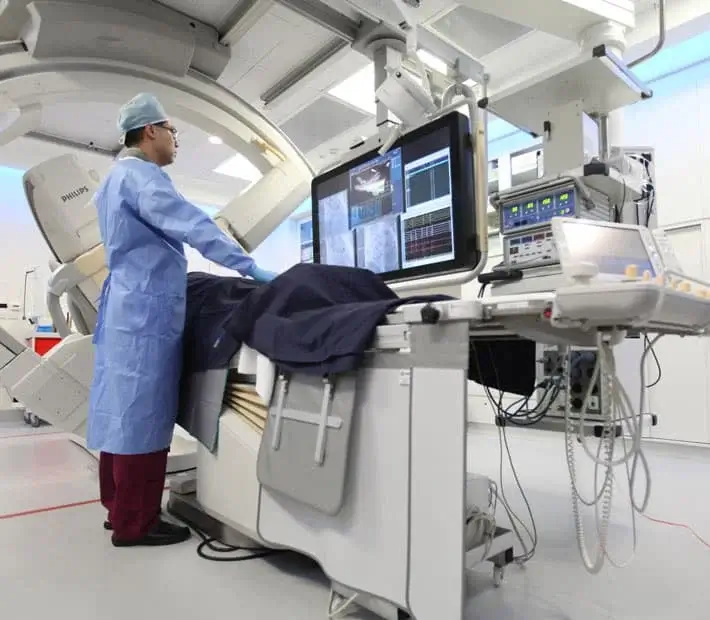
An EP lab is less like a traditional operating room and more like a high-end data center or a flight control room. The infrastructure required to support electrophysiology is massive, involving specialized servers, multi-monitor displays, and complex signal-filtering software.
Robotic Navigation Systems
One of the most exciting trends in EP technology is the rise of Robotic Magnetic Navigation (RMN). Companies like Stereotaxis have developed systems that allow a physician to guide a catheter using high-powered magnets controlled via a computer workstation.
Instead of manually pushing a wire through a vein, the operator uses a joystick or a digital interface to manipulate magnetic fields. This technology minimizes human error, reduces radiation exposure for the staff (as they can operate from a shielded control room), and allows for levels of catheter stability and reach that are physically impossible for the human hand. It is a prime example of how robotics and software are augmenting human capabilities in the medical field.
High-Frequency Ablation and Energy Delivery Tech
Once a problem is identified via mapping, it must be treated, usually through a process called “ablation.” This involves using specific types of energy to neutralize the tiny area of tissue causing the electrical malfunction. The technology behind this has shifted from simple radiofrequency (heat) to sophisticated “Pulsed Field Ablation” (PFA).
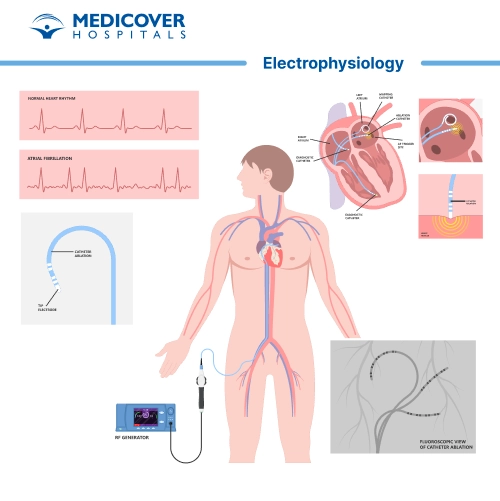
PFA is a non-thermal energy source that uses high-voltage electrical fields to create pores in cell membranes (electroporation). The tech is highly “tissue-selective,” meaning it can be tuned to affect only heart cells while leaving surrounding nerves and the esophagus untouched. The precision of the pulse-width and the voltage-amplitude in PFA systems is a testament to the advancements in power electronics and digital control systems.
AI and Machine Learning in Electrophysiology
As EP procedures generate massive amounts of data—often gigabytes per patient—the role of Artificial Intelligence (AI) and Machine Learning (ML) has become indispensable. We are moving away from human interpretation toward algorithmic validation.
Predictive Analytics for Arrhythmias
AI algorithms are now being trained on millions of ECG (Electrocardiogram) strips to predict when a patient might develop an arrhythmia before it even happens. In the EP lab, AI can analyze the complex “fractionated” signals that appear on a monitor, which are often too chaotic for the human eye to decipher. By using pattern recognition, ML models can pinpoint the “rotors” or sources of Atrial Fibrillation, providing a digital roadmap for where the specialist should intervene.
Automated ECG Interpretation and Remote Monitoring
Beyond the lab, the “EP” designation extends into the cloud. Digital health platforms now utilize AI to monitor patients 24/7. Software-as-a-Service (SaaS) models in the medical space allow for automated ECG interpretation, where cloud-based algorithms flag abnormalities and send instant alerts to a physician’s dashboard. This reduces the “noise” of data and allows medical professionals to focus on high-risk events, essentially creating an automated triage system powered by Big Data.
The Intersection of Wearables and EP Tech
The consumer technology market has collided with the world of Electrophysiology in a way that was unthinkable a decade ago. Every “EP” specialist now has to account for the data coming from a patient’s wrist.
Consumer Tech as a Bridge to Professional Medical Data
Devices like the Apple Watch, Fitbit, and Oura Ring have brought EP technology to the masses. These devices use photoplethysmography (PPG) and simplified single-lead ECGs to monitor heart rhythms. While they are not as powerful as the multi-thousand-dollar systems in an EP lab, the software integration is revolutionary.
The “tech” story here is about data interoperability. We are seeing a shift where patient-generated data from a smartwatch can be seamlessly integrated into a clinical Electronic Health Record (EHR). This allows the EP specialist to see a “longitudinal” view of a patient’s heart health over months, rather than a single “snapshot” taken during an office visit.
Cybersecurity in Electrophysiological Devices
With the rise of internet-connected pacemakers and implantable cardioverter-defibrillators (ICDs), cybersecurity has become a critical sub-niche of EP technology. These devices are essentially specialized computers implanted in the body, and like any computer, they are susceptible to hacking.
The tech industry has responded by developing advanced encryption protocols and “air-gapped” communication methods for these devices. Ensuring that a heart device can receive a software update over-the-air (OTA) without being vulnerable to unauthorized access is a major focus for MedTech security engineers. The intersection of life-saving hardware and cybersecurity is perhaps the most high-stakes area of Digital Security today.
Conclusion: The Road Ahead for MedTech in EP
So, what does EP stand for in medical terms? While the literal answer is Electrophysiology, in the context of the 21st century, it stands for a Technological Revolution. It represents the shift from “guesswork” to “precision,” driven by a powerful stack of hardware and software.
The future of EP tech lies in further miniaturization, more autonomous robotic systems, and AI that can predict cardiac events with near-perfect accuracy. As we integrate virtual reality (VR) for procedural planning and leverage the “Internet of Medical Things” (IoMT) for post-operative care, the line between a “doctor” and a “technologist” continues to blur.
For tech enthusiasts and professionals, Electrophysiology stands as a testament to how digital innovation can be applied to the most fundamental aspect of human life: the beating of a heart. The “EP” lab of the future will likely be a fully automated, AI-driven environment, proving that the heart of medicine is now, more than ever, digital.
aViewFromTheCave is a participant in the Amazon Services LLC Associates Program, an affiliate advertising program designed to provide a means for sites to earn advertising fees by advertising and linking to Amazon.com. Amazon, the Amazon logo, AmazonSupply, and the AmazonSupply logo are trademarks of Amazon.com, Inc. or its affiliates. As an Amazon Associate we earn affiliate commissions from qualifying purchases.