
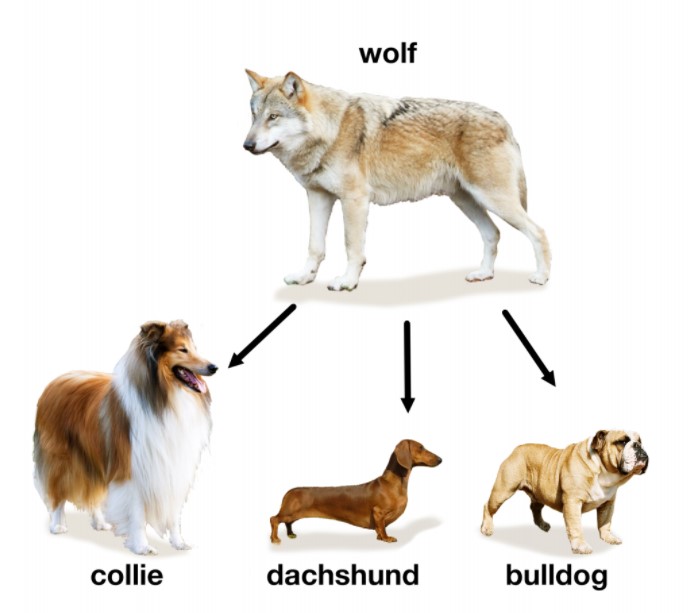
In the traditional biological sense, artificial selection—or selective breeding—is the process by which humans intervene in the reproduction of plants or animals to ensure that specific desirable traits are passed down to future generations. From the domestication of wolves into loyal companions to the transformation of wild grasses into high-yield crops, artificial selection has shaped the physical world for millennia.
However, as we move deeper into the digital age, the principles of artificial selection have migrated from the farm to the server room. In the realm of technology, artificial selection is no longer about biological DNA; it is about code, data, and user behavior. Today, tech giants and software engineers act as the “breeders” of the digital ecosystem, intentionally selecting certain features, algorithms, and data points to survive while letting others become obsolete. This technological evolution is not random; it is a calculated, human-driven process that dictates how we interact with the world.
Algorithmic Selection: The Survival of the Clicked
The most pervasive example of artificial selection in modern technology is found within the recommendation engines of social media and streaming platforms. Whether it is TikTok’s “For You” page, YouTube’s suggested videos, or Netflix’s movie rankings, these systems are designed to perform a digital version of selective breeding.
The Feedback Loop: How User Behavior Directs Evolution
In this context, the “trait” being selected for is user engagement. Algorithms are programmed with a “fitness function”—a goal they must achieve. For most platforms, that goal is time spent on the app. When a user interacts with a piece of content, they are providing a data point that signals the “fitness” of that specific content type. The algorithm then “selects” similar traits—be it video length, color palette, or subject matter—and replicates them across the user’s feed.
This creates a high-speed evolutionary cycle. Content that does not capture attention is “culled” from the ecosystem, rarely to be seen again, while high-engagement content is “bred” into new iterations. This is why we see “content trends” dominate the internet; creators are essentially adapting their digital DNA to survive the artificial selection pressures exerted by the algorithm.
Content Curation and the Death of Randomness
This selective process has fundamentally changed the way information is distributed. In the early days of the internet, discovery was often serendipitous. Today, artificial selection ensures that only the most “fit” (meaning most addictive or relevant) information reaches the top. While this provides a highly personalized experience, it also narrows the diversity of the digital gene pool, leading to echo chambers where only specific viewpoints are selected for survival.
Genetic Algorithms and Evolutionary Computing
Beyond consumer-facing apps, artificial selection is a literal methodology used in high-level software engineering and artificial intelligence development. Known as “Genetic Algorithms” (GAs), this branch of computer science mimics the process of natural selection to solve complex optimization problems.
Understanding Genetic Algorithms in Software Development
A genetic algorithm starts with a “population” of potential solutions to a problem. These solutions are represented as sets of parameters, similar to chromosomes. The algorithm evaluates each solution based on a predetermined fitness score. The “weakest” solutions are discarded, while the “strongest” are allowed to “mate.”
During this mating process, the algorithm performs “crossover” (combining parts of two successful solutions) and “mutation” (introducing random changes). This process is repeated over thousands of generations. Through this rigorous artificial selection, the software eventually “evolves” a solution that a human programmer might never have been able to conceive manually. This is used extensively in fields like aerospace engineering to design more aerodynamic wings or in logistics to find the most efficient delivery routes.
Neural Architecture Search (NAS)
A more contemporary application is Neural Architecture Search. Designing a neural network—the “brain” of an AI—is a laborious task for humans. Engineers now use NAS to automate this. The system creates hundreds of different AI architectures and tests them against a dataset. The ones that perform best are “selected” and used as templates for the next generation of models. In this scenario, we are using artificial selection to breed the very intelligence that will eventually power our future.
Reinforcement Learning from Human Feedback (RLHF)

The rise of Large Language Models (LLMs), such as ChatGPT and Claude, has introduced a specialized form of artificial selection called Reinforcement Learning from Human Feedback (RLHF). This is perhaps the most direct technological parallel to the domestication of animals.
The Role of Human Interveners as “Breeders”
When an AI model is first trained, it is “wild.” It may produce factually incorrect, biased, or nonsensical responses. To “domesticate” the model, human trainers act as the selective pressure. They are presented with multiple responses generated by the AI and asked to rank them.
By choosing one response over another, the human is performing artificial selection. They are telling the system: “This trait (politeness, accuracy, brevity) is desirable; replicate it. That trait (hallucination, aggression, verbosity) is undesirable; eliminate it.” Through millions of these selections, the AI’s behavior is shaped to meet human standards.
Shaping the Personality of Artificial Intelligence
This process does more than just fix errors; it selects for a specific “personality.” Different tech companies use different selective pressures. One company might select for a safe, cautious AI, while another might select for a creative, witty one. This is exactly how humans bred different dog breeds for different purposes—some for hunting, some for herding, and some for companionship. We are now breeding “strains” of digital intelligence based on our specific needs and values.
Curated Ecosystems: Hardware and Software Gatekeeping
Artificial selection also occurs at the macro level of tech ecosystems. Corporate giants like Apple and Google act as the ultimate arbiters of which technologies are allowed to thrive within their walled gardens.
Platform Evolution through App Store Gatekeeping
The App Store and Google Play Store are environments where artificial selection is enforced through policy. When Apple introduces a new privacy requirement (such as App Tracking Transparency), it creates a new environmental pressure. Apps that cannot adapt to this new “climate” are removed or lose their viability, while those that embrace the new traits flourish.
By setting the rules of the marketplace, these companies select for specific technological traits: security, minimalism, and integration. This is why apps across the board have begun to look and feel similar; they have all been forced to evolve toward the same “ideal” traits favored by the platform owners.
The Standardization of User Interface (UI) Traits
We see a similar trend in hardware. Why do almost all smartphones look like glass rectangles? Because the market—driven by consumer preference and manufacturing efficiency—has “selected” against physical keyboards, removable batteries, and headphone jacks. In the tech world, the “survival of the fittest” often results in a convergence toward a single, highly optimized design, as those are the traits that prove most profitable and functional in the current environment.
The Ethical Implications of Digital Selection
While artificial selection in technology has led to incredibly efficient tools and personalized experiences, it carries significant risks. In biology, a lack of genetic diversity makes a species vulnerable to disease. In technology, a lack of “algorithmic diversity” can lead to systemic biases and the stifling of innovation.
When we allow a small group of developers or a single “fitness function” (like profit or engagement) to dictate the evolution of our tools, we risk losing the “wild” variations that lead to true breakthroughs. Furthermore, if our selective pressures are flawed—if we inadvertently select for outrage instead of truth, or convenience instead of privacy—the resulting technology will reflect those flaws.
As we continue to “breed” our algorithms and “cultivate” our digital ecosystems, it is crucial to remain conscious of the traits we are selecting. Artificial selection is a powerful tool for progress, but it requires a responsible “breeder” to ensure that the resulting evolution serves the long-term interests of humanity rather than just the immediate demands of the market.

Conclusion
The concept of artificial selection has successfully transitioned from the biological to the digital. Today, we are not just selecting for the sweetest corn or the fastest horse; we are selecting for the most engaging video, the most efficient code, and the most helpful AI. By understanding that technology evolves through a process of human-driven selection, we can better appreciate the power we hold as consumers and creators. We are the ones defining the “fitness” of the future. The technologies that surround us tomorrow will be the direct descendants of the choices we select today.
aViewFromTheCave is a participant in the Amazon Services LLC Associates Program, an affiliate advertising program designed to provide a means for sites to earn advertising fees by advertising and linking to Amazon.com. Amazon, the Amazon logo, AmazonSupply, and the AmazonSupply logo are trademarks of Amazon.com, Inc. or its affiliates. As an Amazon Associate we earn affiliate commissions from qualifying purchases.