
The quest for the perfect sourdough loaf often leads bakers down a rabbit hole of ingredients, starters, and techniques. Yet, a crucial element, often overlooked in its initial importance, is the very vessel that shapes and bakes this beloved bread: the baking vessel itself. For the sourdough enthusiast, the choice of what to bake in can dramatically influence the crust, crumb, and overall character of the final product. This isn’t merely about containing dough; it’s about creating an environment that mimics the intense, humid heat of a professional oven, coaxing out that signature sourdough tang and a gloriously crisp crust.
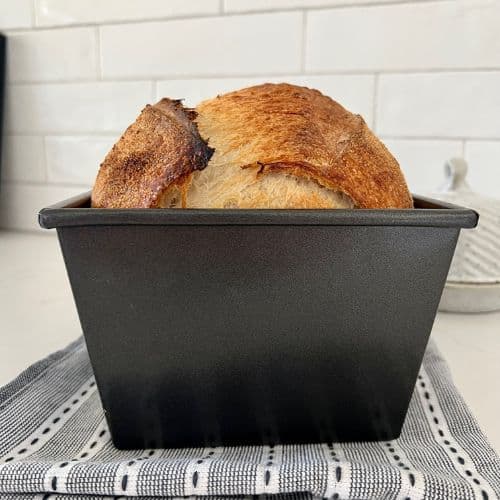
While the allure of specialized sourdough equipment might seem daunting to newcomers, the reality is that a thoughtful understanding of heat retention, steam generation, and material properties can empower bakers with readily available kitchen tools. This exploration delves into the technical nuances of sourdough baking vessels, focusing on how different materials and designs contribute to optimal outcomes. We will dissect the role of cast iron, ceramic, and even innovative modern solutions, examining their strengths, weaknesses, and the scientific principles that govern their effectiveness in transforming simple dough into artisanal sourdough. This isn’t just about a pot; it’s about understanding the interplay of heat transfer, moisture management, and the physical constraints that shape a truly exceptional sourdough.
The Science of the Sourdough Crust: Heat, Steam, and the Ideal Vessel
The foundation of a great sourdough crust lies in two critical factors: intense heat and trapped steam. During the initial stages of baking, the dough needs to expand rapidly – a phenomenon known as “oven spring.” This expansion is facilitated by the rapid release of steam within the dough. If this steam escapes too quickly, the crust can set prematurely, limiting the loaf’s rise. This is where the baking vessel plays a pivotal role.
Heat Retention: The Cornerstone of Oven Spring
The material of your baking vessel is paramount to its ability to retain and radiate heat. Sourdough requires a consistently high temperature, particularly in the initial baking phase. Materials like cast iron excel in this regard. Their dense molecular structure allows them to absorb and store a significant amount of heat. Once preheated, they act as a thermal battery, providing a steady stream of radiant heat to the dough, ensuring a powerful and sustained oven spring. This consistent heat transfer is crucial for the yeast and bacteria in the sourdough starter to produce the maximum amount of carbon dioxide, leading to a light and airy crumb.
Steam Generation: The Crust’s Secret Sauce
Steam is the silent architect of a perfect sourdough crust. During the initial baking period, the moisture on the surface of the dough vaporizes, creating a steamy environment. This steam plasticizes the outer layer of the dough, allowing it to stretch and expand without cracking. Without sufficient steam, the crust will dry out too quickly and become tough, inhibiting oven spring and resulting in a less desirable texture. A well-designed baking vessel will trap this steam, creating a humid microclimate around the loaf.
- Lidded Vessels: Dutch ovens, with their heavy, tight-fitting lids, are the undisputed champions of steam retention. The lid traps the moisture released by the dough, creating a self-basting environment. This elevated humidity not only promotes oven spring but also contributes to a thin, crisp crust that shatters beautifully when sliced.
- Steam Injection Alternatives: While lidded vessels are ideal, bakers without them can still achieve good results through alternative steam generation methods. Placing a tray of hot water or ice cubes in the oven alongside an unlidded baking dish can provide some initial steam. However, these methods are often less efficient and can lead to a thicker, less delicate crust compared to the results achieved with a Dutch oven. The science behind this is simple: the contained environment of a Dutch oven maintains a higher concentration of water vapor for a longer duration.
The interplay between heat retention and steam generation is symbiotic. A vessel that efficiently retains heat will also help to sustain the steam it creates, as the heat prevents the steam from condensing too rapidly. Conversely, a vessel that allows heat to escape quickly will also struggle to maintain a steamy atmosphere. Therefore, understanding these fundamental principles is key to selecting and utilizing your sourdough baking vessel effectively.
The Dominant Player: Cast Iron Dutch Ovens
When the conversation turns to baking sourdough bread, the cast iron Dutch oven inevitably emerges as the reigning champion. Its robust construction and exceptional thermal properties make it ideally suited for replicating the conditions of a professional bread oven in a home kitchen. The material itself, coupled with its often-enamelled finish, offers a unique combination of benefits that directly address the scientific requirements for superior sourdough.
Thermal Mass and Even Heating
Cast iron’s defining characteristic is its high thermal mass. This means it can absorb and store a substantial amount of heat. When preheated to the high temperatures required for sourdough (typically between 450-500°F or 230-260°C), the cast iron becomes incredibly hot and maintains this temperature consistently. This even distribution of heat across the base and sides of the loaf is crucial. Unlike thinner metal pans that can develop hot spots, cast iron radiates heat uniformly, preventing uneven browning and ensuring that the entire loaf experiences optimal oven spring. This consistent thermal energy transfer is vital for the sourdough’s delicate fermentation process to reach its full potential during baking.
The Power of the Lid: Steam Containment Engineered
The true magic of the Dutch oven lies in its heavy, tightly fitting lid. This lid serves a dual purpose: it acts as a heat reflector, bouncing radiant heat back onto the dough, and, more importantly, it traps the moisture released by the fermenting dough. As the dough bakes, it releases steam. In a Dutch oven, this steam is contained, creating a humid environment. This trapped steam plays a critical role in the initial stages of baking by:
- Plasticizing the Crust: The steam keeps the surface of the dough moist and pliable, allowing it to expand significantly before the crust sets. This is the primary driver of impressive oven spring, resulting in a taller, more open crumb.
- Preventing Premature Drying: Without sufficient steam, the outer layer of the dough would dry out and harden too quickly, restricting expansion and leading to a dense, flat loaf. The Dutch oven effectively prevents this, ensuring the crust remains flexible for longer.
- Promoting a Shiny, Thin Crust: The prolonged exposure to steam contributes to a beautiful, glossy finish and a delicate, crisp crust that offers a satisfying crackle when bitten into.
Enamel vs. Unenamelled Cast Iron
While both enamelled and unenamelled cast iron Dutch ovens can produce excellent sourdough, there are subtle differences worth noting:
- Enamelled Cast Iron: These ovens are coated with a porcelain enamel finish. This coating makes them non-reactive, meaning they won’t impart a metallic taste to your bread. They are also easier to clean and maintain, as food is less likely to stick. The enamel can, however, be susceptible to chipping if mishandled. The smooth surface of enamel can also slightly affect steam release dynamics compared to raw cast iron.
- Unenamelled Cast Iron: These are the more traditional Dutch ovens. They develop a natural seasoning over time, which becomes increasingly non-stick. Some bakers believe they offer superior heat distribution and a more authentic crust due to the direct contact with the metal. However, they require more diligent seasoning and maintenance to prevent rust and sticking. They are also reactive and can impart a metallic flavour if not properly seasoned or if acidic ingredients are used.
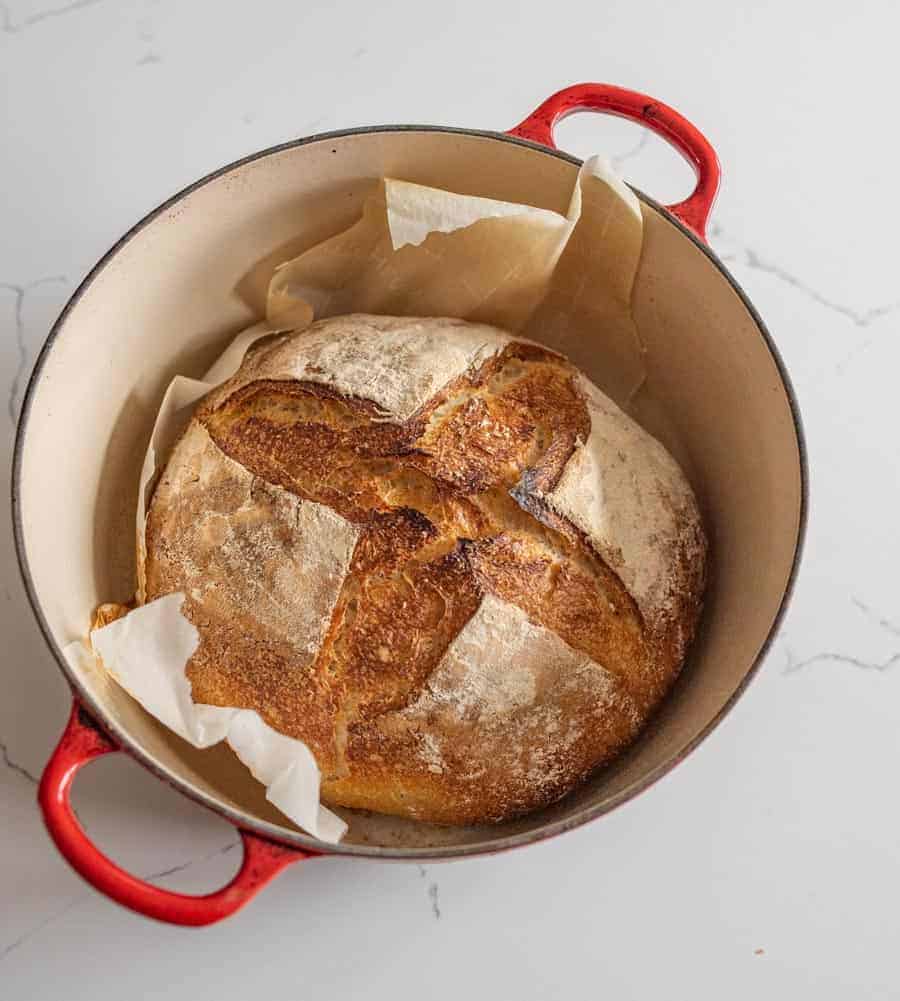
For sourdough baking, the difference between the two is often marginal for home bakers. Both will effectively trap heat and steam, leading to superior results compared to open baking. The choice often comes down to personal preference regarding maintenance and the aesthetic appeal of the finish.
Alternative Baking Vessels: Ingenuity in the Absence of a Dutch Oven
While the Dutch oven reigns supreme, the art of sourdough baking is adaptable. Many resourceful bakers achieve excellent results using alternative vessels that, while not offering the same level of steam containment, can still provide the necessary heat retention and a reasonable environment for crust development. Understanding the principles behind why these work, and their limitations, is key to mastering sourdough with whatever tools you have at hand.
The Humble Baking Stone or Steel
A baking stone or baking steel is a popular choice for those who prefer a more open oven environment or lack a Dutch oven. These are flat, thick surfaces that are preheated in the oven.
- Heat Retention: Like cast iron, thick ceramic baking stones and dense steel plates absorb and store a significant amount of heat. When the dough is placed directly on the preheated surface, it receives a powerful blast of radiant heat from below, promoting excellent oven spring. This direct contact ensures rapid heat transfer, vital for the initial expansion of the loaf.
- Steam Generation Challenges: The primary drawback of baking stones and steels is their inability to trap steam effectively. The open oven environment allows steam to escape quickly. To compensate, bakers often resort to creating steam manually. This can involve placing a tray of hot water or ice cubes on a lower rack of the oven during the initial baking phase. The heat from the oven will cause the water to rapidly vaporize, creating a steamy atmosphere.
- Crust Characteristics: While effective for oven spring, the crust achieved with a baking stone or steel, without robust steam, might be slightly thicker and less delicate than one baked in a Dutch oven. However, with practice and proper steam management, a very satisfying crust can still be achieved. Baking steels, being denser and more conductive than stones, are generally considered superior for heat transfer and can produce a wonderfully crisp crust.
Other Oven-Safe Cookware: The Versatile Alternatives
Beyond dedicated baking stones, several common kitchen items can be repurposed for sourdough baking with varying degrees of success. The key is to choose materials that can withstand high temperatures and offer reasonable heat retention.
- Ceramic or Stoneware Casserole Dishes: These dishes, particularly those with heavy bases and tight-fitting lids, can function similarly to a Dutch oven. The ceramic material offers good heat retention, and the lid can trap a significant amount of steam. However, ceramic is more brittle than cast iron and can be prone to thermal shock if not preheated and handled carefully. The lid fit might not be as precise as a Dutch oven, leading to some steam loss.
- Heavy-Gauge Metal Baking Pans (e.g., Römertopf, Clay Cookers): Some specialized clay cookers, like the Römertopf, are designed for baking bread and can create a steamy environment due to their porous nature when wet. Heavy-gauge metal roasting pans or deep skillets can also be used. For these, preheating the pan is crucial for optimal heat transfer. If they have lids, they can help with steam. If not, manual steam creation will be necessary. The thinner nature of many metal pans compared to cast iron will mean they don’t retain heat quite as well.
- Upside-Down Baking Sheet (as a makeshift cloche): For those with absolutely no lidded oven-safe vessels, a resourceful technique involves baking the sourdough directly on a preheated baking sheet and then covering it with another preheated inverted baking sheet or a metal bowl acting as a cloche. This creates a temporary enclosed space to trap steam. This method requires careful handling to avoid burns and will likely produce a less consistent result than a purpose-built vessel.
Regardless of the alternative chosen, preheating the vessel thoroughly is a non-negotiable step. This ensures that the dough immediately begins to bake upon contact, maximizing oven spring. Experimentation and understanding the specific properties of your chosen cookware will be essential to adapting techniques and achieving desirable sourdough outcomes.
The Dough Meets the Vessel: Practical Considerations for Success
The choice of baking vessel is only one part of the equation. How you prepare and place your sourdough dough within that vessel significantly impacts the final result. From shaping to scoring and loading, each step has a technical implication for how the dough interacts with the heat and steam.
Shaping and Proofing: Setting the Stage
The final shape of your sourdough loaf influences how it will expand in the oven. A well-shaped loaf with good surface tension will hold its structure better. When it comes to proofing (the final rise), the environment matters.
- Proofing Baskets (Bannetons): These traditional woven baskets, often made of rattan or cane, help to support the dough during its final rise and impart a pleasing spiral pattern. Proofing in a banneton also helps to develop a taut skin on the dough, which is crucial for good oven spring.
- Cold Retardation (Overnight Proof): Many sourdough bakers opt for a long, cold proof in the refrigerator. This slows down fermentation, allowing for a more complex flavour to develop and making the dough easier to handle when it’s time to bake. Cold dough also helps to ensure a more controlled oven spring.
Scoring: The Art and Science of Controlled Expansion
Scoring, the act of cutting decorative or functional patterns into the surface of the dough before baking, is not merely aesthetic. It’s a critical technical step that controls how the loaf expands in the oven.
- Facilitating Oven Spring: When the hot, humid air hits the scored dough, the cuts act as predetermined weak points. The dough can then expand outward and upward through these scores, preventing uncontrolled bursting and ensuring a more even rise.
- Tooling and Technique: A sharp blade, such as a lame (a razor blade holder designed for dough scoring) or a sharp kitchen knife, is essential. The depth and angle of the score will affect the final pattern and the degree of expansion. A deeper, angled score will generally open up more dramatically.
- The Vessel’s Role: The scoring should be done just before the loaf is transferred into the preheated vessel. This ensures that the cuts are fresh and will open up effectively during the initial blast of heat and steam. The confines of a Dutch oven or the intense heat of a baking stone will encourage these scores to open cleanly.

Loading and Baking: The Moment of Transformation
Transferring the dough into a screaming hot oven and its even hotter vessel requires precision and speed.
- Using Parchment Paper: Parchment paper is an invaluable tool for transferring sourdough into a hot Dutch oven or onto a baking stone. It allows you to lift and lower the dough easily without it sticking to your hands or peel, minimizing heat loss and ensuring the dough lands perfectly.
- The “Dump and Cover” Technique: For Dutch ovens, the typical method is to lift the dough (often with the parchment) and gently lower it into the hot vessel. Immediately place the lid on. This rapid enclosure is crucial for capturing the initial burst of steam.
- Baking Schedule: Most sourdough recipes involve two distinct baking phases:
- Covered/Steamy Phase (e.g., 20-25 minutes): In a Dutch oven, the lid is on. On a baking stone, manual steam is generated. This phase focuses on oven spring and developing the initial crust structure.
- Uncovered/Drying Phase (e.g., 20-30 minutes): The lid is removed (or steam generation stops). This allows the crust to crisp up, brown, and achieve its final texture and colour. Temperature is often slightly reduced during this phase.
By understanding these practical considerations, bakers can move beyond simply choosing a vessel and instead engage in a thoughtful, technical approach to sourdough baking, ensuring that their chosen equipment is utilized to its full potential to create consistently delicious loaves.
aViewFromTheCave is a participant in the Amazon Services LLC Associates Program, an affiliate advertising program designed to provide a means for sites to earn advertising fees by advertising and linking to Amazon.com. Amazon, the Amazon logo, AmazonSupply, and the AmazonSupply logo are trademarks of Amazon.com, Inc. or its affiliates. As an Amazon Associate we earn affiliate commissions from qualifying purchases.