
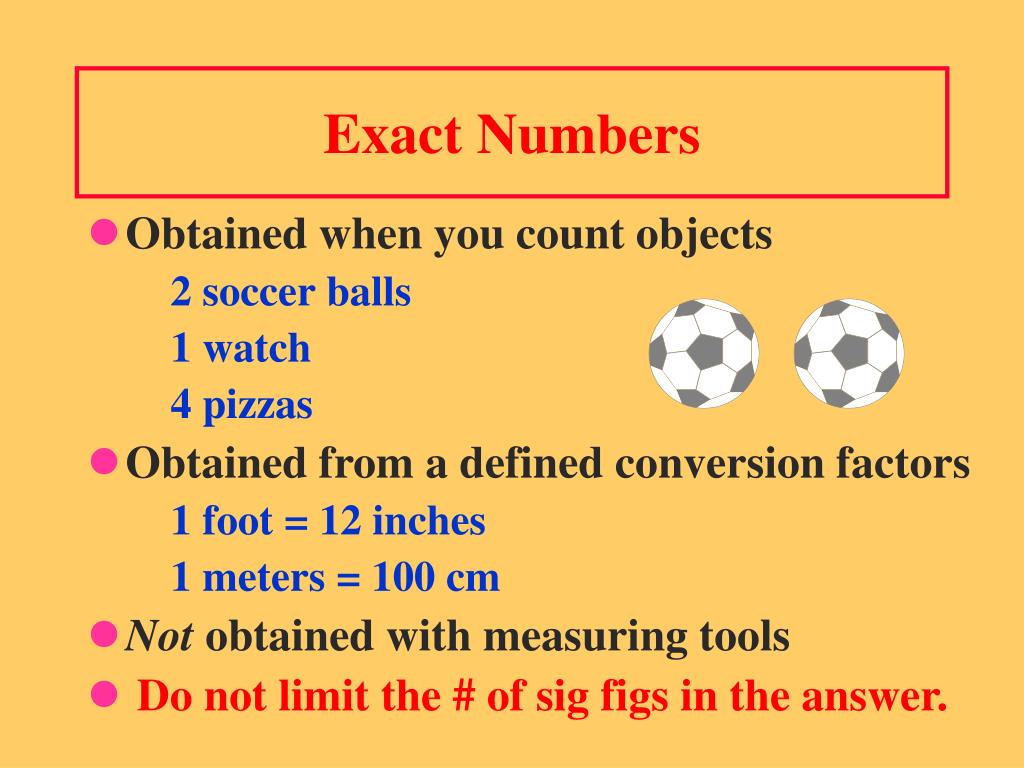
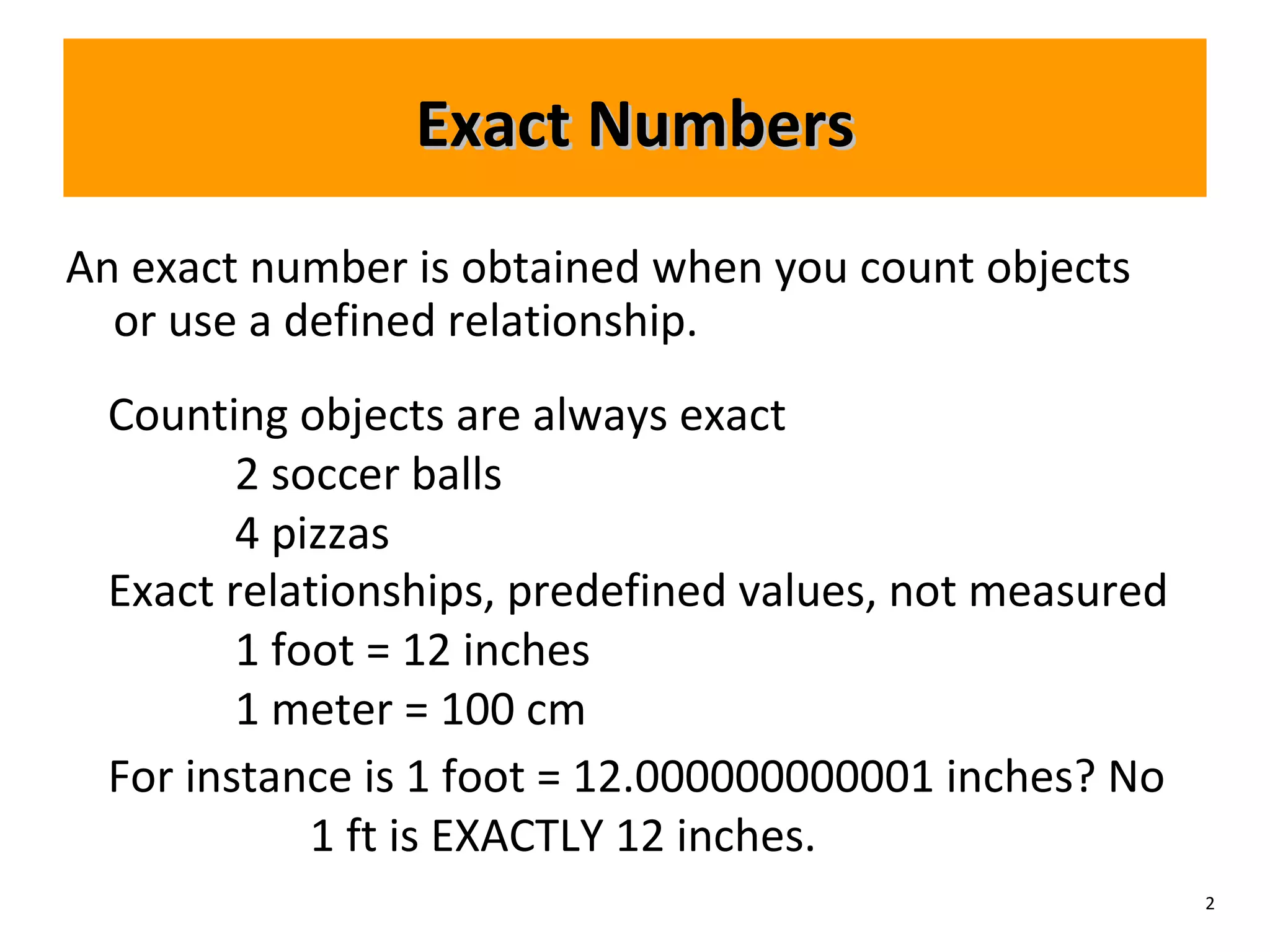
In the realm of mathematics, an “exact number” is a value known with absolute certainty—one that has no margin for error or uncertainty. This includes defined constants (like 12 inches in a foot) or counted quantities (like 15 servers in a rack). However, as we transition from theoretical mathematics to the world of technology, software engineering, and data science, the definition of an “exact number” becomes a cornerstone of system architecture.
In computing, the distinction between an exact number and an approximate one is the difference between a successful transaction and a system-wide failure. Whether you are building a financial app, a scientific simulation, or an AI model, understanding how hardware and software handle numerical precision is vital. This article explores the technical nuances of exact numbers, the architecture of digital precision, and why “close enough” is rarely acceptable in high-stakes technology.

The Fundamental Distinction: Exact vs. Inexact Data Types
In software development, data types are the containers used to store information. Not all containers are created equal. To handle numbers, developers must choose between types that represent values exactly and those that represent them approximately.
Integers: The Bedrock of Digital Counting
An integer is the purest form of an exact number in computing. Because integers represent whole numbers (…, -2, -1, 0, 1, 2, …), they do not suffer from the precision loss associated with fractions. In technical terms, an integer is stored in binary format without a decimal point. Whether you are using a 32-bit integer or a 64-bit integer, the value 100 is stored precisely as 100.
In system architecture, integers are used for indices, loop counters, and primary keys in databases. If a system counts 1,000 API requests, that number is exact. There is no such thing as 1,000.000000001 requests. Whenever a technical requirement calls for absolute certainty in counting, integers are the standard.
Fixed-Point Decimals: Why Precision Demands Rigor
When we need to represent fractions—such as 10.50—but still require “exactness,” we turn to fixed-point arithmetic. Unlike the “floating-point” numbers used in general calculations, fixed-point numbers allocate a specific, unchangeable number of digits after the decimal point.
This is most commonly seen in the DECIMAL or NUMERIC data types in SQL databases like PostgreSQL or MySQL. For instance, a DECIMAL(10,2) type will always store two digits after the decimal. This is critical for financial technology (FinTech). If a banking app stores a balance, it cannot afford the rounding errors inherent in floating-point math. In this context, an exact number is one where every decimal place is accounted for and stored in a way that prevents “drift” during addition or subtraction.
Floating-Point Arithmetic and the Myth of Universal Accuracy
While exact numbers are desirable, they are computationally expensive and limited in range. To handle everything from the width of an atom to the distance between galaxies, computer scientists use “floating-point” numbers. However, the price of this versatility is the loss of exactness.
The IEEE 754 Standard: How Computers “Estimate” Fractions
Most modern processors use the IEEE 754 standard for floating-point computation. This method represents numbers in a format similar to scientific notation (e.g., 1.23 x 10^4). While this allows for a massive range of values, it introduces a problem: many decimal numbers cannot be represented exactly in binary.
A classic example in JavaScript or Python is the calculation 0.1 + 0.2. To a human, the exact number is 0.3. To a computer using floating-point math, the result is often 0.30000000000000004. This happens because 0.1 is a repeating fraction in binary, much like 1/3 is a repeating decimal (0.333...) in base 10. The computer eventually has to “cut off” the number, turning an exact decimal into an inexact binary approximation.
Rounding Errors and Their Real-World Technical Consequences
The transition from an exact number to an approximation can have catastrophic results in high-reliability systems. One of the most famous technical failures occurred in 1991 during the Gulf War. A Patriot missile system had been running for 100 hours. The internal clock, which used a floating-point representation of time, had accumulated a rounding error of 0.34 seconds. While a third of a second seems negligible, at the speed the missile was traveling, it missed an incoming Scud missile by over 600 meters.
In modern software, these errors manifest in less dramatic but equally problematic ways, such as “drifting” totals in analytics dashboards or broken logic in gaming engines where a character might fall through a floor because their “exact” coordinate was rounded down by a fraction of a millimeter.
High-Precision Computing in AI and Big Data
As we enter the era of Artificial Intelligence and Large Language Models (LLMs), the definition of an exact number is being reconsidered in light of computational efficiency.
Arbitrary-Precision Arithmetic (Bignum)
When a project requires exact numbers that exceed the capacity of standard 64-bit processors, developers use “arbitrary-precision” libraries (often called “Bignum”). Languages like Python handle this natively for integers, allowing you to calculate numbers with thousands of digits without overflow.
In fields like cryptography, exactness is non-negotiable. RSA encryption, for example, relies on the multiplication of massive prime numbers. If a single bit is rounded or approximated, the entire security protocol fails. In these technical niches, “exact” means that every single digit, no matter how large the number, is preserved in memory and verified through checksums.
The Trade-off: Speed vs. Accuracy in Machine Learning
Interestingly, the AI revolution is moving in the opposite direction. Training a model like GPT-4 requires billions of calculations per second. Using “exact” or high-precision numbers (like 64-bit floats) would make the process too slow and energy-intensive.
Instead, AI engineers use “reduced precision” types like FP16 (16-bit) or BF16 (Brain Floating Point). In this context, the “exact number” is sacrificed for speed. The model doesn’t need to know a weight is exactly 0.7654321; 0.76 is often sufficient. This architectural choice highlights a core principle in tech: exactness is a resource that must be spent wisely. We use exact numbers for the “logic” of the system (how many users, how much money) and approximate numbers for the “intelligence” of the system (probability and pattern recognition).
Best Practices for Developers: Ensuring Data Integrity
Understanding what an exact number is allows engineers to build more resilient systems. Data integrity starts with choosing the right representation at the architectural level.
Choosing the Right Data Type for the Use Case
The first rule of technical precision is to match the data type to the domain.
- Use Integers for counting, unique IDs, and discrete units. If you are building an e-commerce platform, store prices as integers in “cents” (e.g., $10.00 becomes 1000) to ensure every addition and subtraction is an exact number operation.
- Use Fixed-Point/Decimal for reporting and displays where users expect to see specific decimal places without floating-point artifacts.
- Use Floating-Point (Float/Double) for physical simulations, graphics, and general-purpose calculations where the range of the number is more important than its precision.
Testing for Precision in Distributed Systems
In modern cloud computing, data often travels between different services written in different languages. A number that starts as an exact Decimal in a Python microservice might be converted into an inexact Float when it reaches a JavaScript frontend.
To maintain “exactness” across a stack, technical teams must implement strict serialization protocols. This often involves passing numbers as strings (e.g., "123.45") in JSON APIs instead of raw numbers. By treating the number as a string during transit, you prevent the receiving environment’s parser from converting it into an approximation. Furthermore, implementing unit tests that check for “epsilon” (the smallest possible difference between two values) helps ensure that calculations remain within an acceptable range of exactness.
Conclusion: The Value of Precision
What is an exact number? In the digital world, it is a promise of consistency. It is the assurance that the value you store today will be the same value you retrieve tomorrow, and that every operation performed on that value will follow the strict laws of logic rather than the estimations of hardware.
As technology continues to evolve—from the bit-level precision of blockchain ledgering to the massive, approximate matrices of neural networks—the ability to distinguish between exact and inexact numbers remains one of the most critical skills in a technologist’s toolkit. Precision is not just a mathematical concept; it is the foundation of digital trust. By choosing the right data structures and understanding the limitations of binary arithmetic, we ensure that the systems we build are not only fast and powerful but also fundamentally correct.
aViewFromTheCave is a participant in the Amazon Services LLC Associates Program, an affiliate advertising program designed to provide a means for sites to earn advertising fees by advertising and linking to Amazon.com. Amazon, the Amazon logo, AmazonSupply, and the AmazonSupply logo are trademarks of Amazon.com, Inc. or its affiliates. As an Amazon Associate we earn affiliate commissions from qualifying purchases.