
In the vast and intricate world of computer programming and software development, fundamental concepts serve as the building blocks upon which complex systems are constructed. Among these foundational elements, the array stands out as one of the most ubiquitous and essential data structures. Often encountered early in a programmer’s journey, understanding arrays is not merely about memorizing a definition; it’s about grasping a powerful tool for organizing and manipulating data efficiently. While the term might sound technical, an array is, at its core, a surprisingly intuitive concept: a structured collection of items, all of the same type, stored together in contiguous memory locations. Imagine a series of neatly labeled boxes, each holding an identical type of item, lined up in an orderly fashion. This simple yet profound structure is the backbone of countless algorithms, applications, and technological innovations that power our digital world. From managing lists of users in an app to processing pixels in an image, arrays provide a direct and performable way to handle ordered sequences of data, making them indispensable for anyone diving into software creation, data analysis, or algorithmic design.
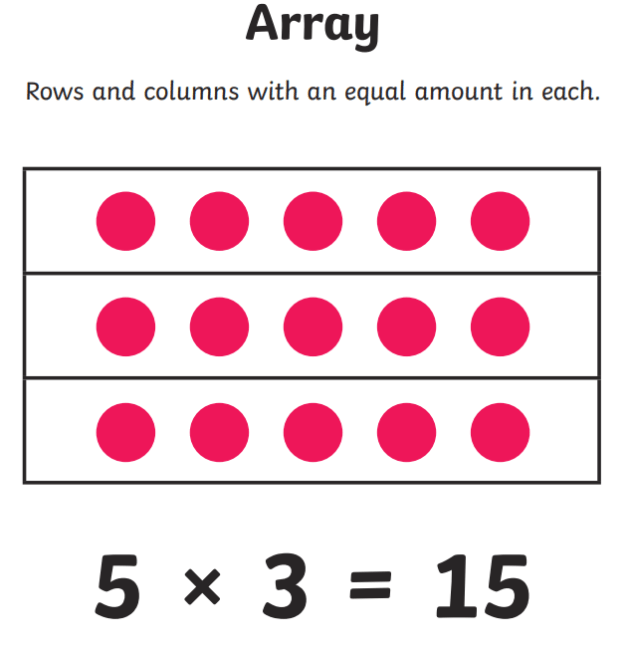
The Core Concept: Understanding Arrays
To truly appreciate the power of arrays, it’s crucial to delve into their defining characteristics and how they operate within a computer’s memory. This foundational understanding demystifies their utility and highlights why they remain a cornerstone of programming paradigms across various languages.
Definition and Analogy
At its most basic, an array is a linear collection of elements, all of which are of the same data type. These elements are stored in adjacent memory locations, making it incredibly efficient to access them. Think of an array as a long shelf with multiple compartments, where each compartment is designed to hold the same kind of object – say, only books, or only tools. Each compartment has a unique number (its index), allowing you to pinpoint the exact item you need without sifting through the entire collection. This ordered, sequential arrangement is what gives arrays their distinct advantage. Unlike a free-floating group of items, an array imposes structure, enabling predictable and fast operations.
Key Characteristics
Several core characteristics define arrays and dictate their behavior:
-
Homogeneous: Typically, all elements within an array must be of the same data type. For example, an array of integers can only store integers, and an array of strings can only store strings. While some dynamically typed languages (like Python or JavaScript) might allow “arrays” (or lists) to hold mixed types, their underlying implementation often involves storing references, rather than the values directly, maintaining a form of homogeneity in the references themselves.
-
Fixed Size (in many languages): In many traditional, strongly-typed languages (e.g., C, C++, Java), arrays are declared with a fixed size. Once created, their capacity cannot be changed. This characteristic contributes to their memory efficiency but can also be a limitation, requiring careful planning or the use of more dynamic alternatives like ArrayLists or vectors when the number of elements is uncertain.
-
Ordered Collection: Elements in an array maintain a specific order. The first element you put in remains the first, and so on. This order is preserved, allowing for sequential access and deterministic behavior.
-
Contiguous Memory Allocation: One of the most significant features of arrays is that their elements are stored in contiguous memory blocks. This means that if you know the memory address of the first element, you can easily calculate the address of any other element simply by multiplying its index by the size of each element. This contiguous storage is critical for performance, especially for operations that involve iterating through elements or accessing them randomly.
Indexing: How Elements are Accessed
To retrieve or modify an element within an array, we use an index (also known as a subscript). An index is a numerical value that specifies the position of an element within the array. Most programming languages use zero-based indexing, meaning the first element is at index 0, the second at index 1, and so forth, up to n-1 for an array of n elements. For instance, in an array named scores with five elements, scores[0] would refer to the first score, scores[1] to the second, and scores[4] to the last. Understanding indexing is fundamental to interacting with arrays effectively, as it provides direct, constant-time access to any element, regardless of its position within the array.
Types and Dimensions of Arrays
Arrays are not limited to simple linear lists. Their design allows for powerful extensions into multiple dimensions, enabling the representation of more complex data structures. The concept of “dimension” refers to the number of indices required to uniquely identify an element.
One-Dimensional Arrays (Vectors)
The most common type of array is the one-dimensional array, often referred to as a vector. As discussed, it’s a linear sequence of elements, each accessible via a single index. Examples include a list of student names, a series of temperature readings, or the individual characters in a word.
// Example in Java

int[] numbers = {10, 20, 30, 40, 50}; // A one-dimensional array of integers

String[] names = {"Alice", "Bob", "Charlie"}; // A one-dimensional array of strings
These arrays are intuitive and are used extensively for managing simple lists where order is important.
Multi-Dimensional Arrays (Matrices, 3D Arrays)
When data naturally exists in a grid or tabular format, multi-dimensional arrays come into play. The most common multi-dimensional array is the two-dimensional array, often called a matrix. It can be visualized as a table with rows and columns, where each element requires two indices for access: one for the row and one for the column.
// Example in Java

int[][] matrix = {

    {1, 2, 3},

    {4, 5, 6},

    {7, 8, 9}

};

// Accessing element at row 1, column 2 (value is 6)

int value = matrix[1][2];
Two-dimensional arrays are widely used in image processing (where each pixel can be represented by a row and column), game development (for game boards or maps), and scientific computing (for representing mathematical matrices).
Arrays can extend beyond two dimensions to three-dimensional arrays (e.g., representing a cube or volume data), or even higher dimensions, though these become less common and harder to visualize intuitively. A 3D array might be used to represent voxels in a 3D model, where an element is identified by X, Y, and Z coordinates.
Jagged Arrays (Arrays of Arrays)
A special type of multi-dimensional array, particularly prevalent in languages like Java and C#, is the jagged array (also known as an “array of arrays”). Unlike a true multi-dimensional array where all rows have the same number of columns, a jagged array is an array whose elements are themselves arrays of varying lengths.
// Example in Java

int[][] jaggedArray = new int[3][]; // Declare an array of 3 integer arrays

jaggedArray[0] = new int[] {1, 2};

jaggedArray[1] = new int[] {3, 4, 5, 6};

jaggedArray[2] = new int[] {7};
Jagged arrays are useful when the data you are representing has a variable structure within its “rows” or sub-collections. They offer flexibility that fixed-size multi-dimensional arrays do not, but at the cost of slightly more complex memory management and access patterns.
Why Arrays Are Indispensable in Programming
The simplicity and directness of arrays mask their profound impact on computational efficiency and their role as fundamental building blocks for more complex data structures and algorithms. Their continued relevance in modern software development is a testament to their inherent strengths.
Efficient Data Storage and Retrieval
The primary advantage of arrays stems from their contiguous memory allocation. This characteristic leads to:
-
Constant-Time Access (O(1)): Because elements are stored sequentially, and each element has a fixed size, the memory address of any element can be calculated directly using its index and the base address of the array. This means retrieving an element takes the same amount of time regardless of whether it’s the first or the last element, making array lookups incredibly fast.
-
Cache Locality: Modern computer processors often use CPU caches to speed up memory access. When an element from an array is accessed, surrounding elements are often loaded into the cache as well, thanks to their contiguous storage. This “cache locality” means that subsequent accesses to nearby elements are much faster, as they are retrieved from the high-speed cache rather than slower main memory. This optimization is crucial for performance-intensive applications.
Foundation for Other Data Structures
Many more sophisticated data structures are built upon the humble array. Understanding arrays is thus a prerequisite for grasping these advanced concepts:
-
Stacks and Queues: These linear data structures, which follow LIFO (Last-In, First-Out) and FIFO (First-In, First-Out) principles respectively, can be efficiently implemented using arrays. Elements are added or removed from one end (for stacks) or both ends (for queues) of the underlying array.
-
Hash Tables: While they appear complex, many hash table implementations use an array as their primary storage mechanism. Hash functions map keys to array indices, providing fast average-case access times.
-
Heaps: A heap, a specialized tree-based data structure that satisfies the heap property, is commonly implemented using a simple array due to its ability to implicitly represent a complete binary tree.
-
Dynamic Arrays (Vectors/ArrayLists): As discussed, traditional arrays often have fixed sizes. Dynamic arrays, like C++’s
std::vectoror Java’sArrayList, offer the flexibility of a list with the underlying performance benefits of an array. When they run out of space, they automatically create a new, larger array and copy all elements over.
Practical Applications
Arrays are not just theoretical constructs; they are actively used across almost every domain of software:
-
Image Processing: An image can be represented as a 2D array of pixels, where each pixel’s value (or RGB components) is an element. Operations like filtering, resizing, and rotation heavily rely on array manipulation.
-
Game Development: Game boards (like chess or tic-tac-toe), maps, inventory systems, and character animations often use arrays to store and manage game-related data.
-
Database Management: While databases use more complex structures, the underlying storage for records or column data in memory might leverage arrays for efficient retrieval and processing.
-
Signal Processing: Audio signals, sensor data, and other time-series data are frequently stored and processed as arrays of numerical values.
-
Scientific Computing and Machine Learning: Numerical libraries (like NumPy in Python) make extensive use of arrays and matrices for performing complex mathematical operations, which are fundamental to simulations, data analysis, and machine learning algorithms.
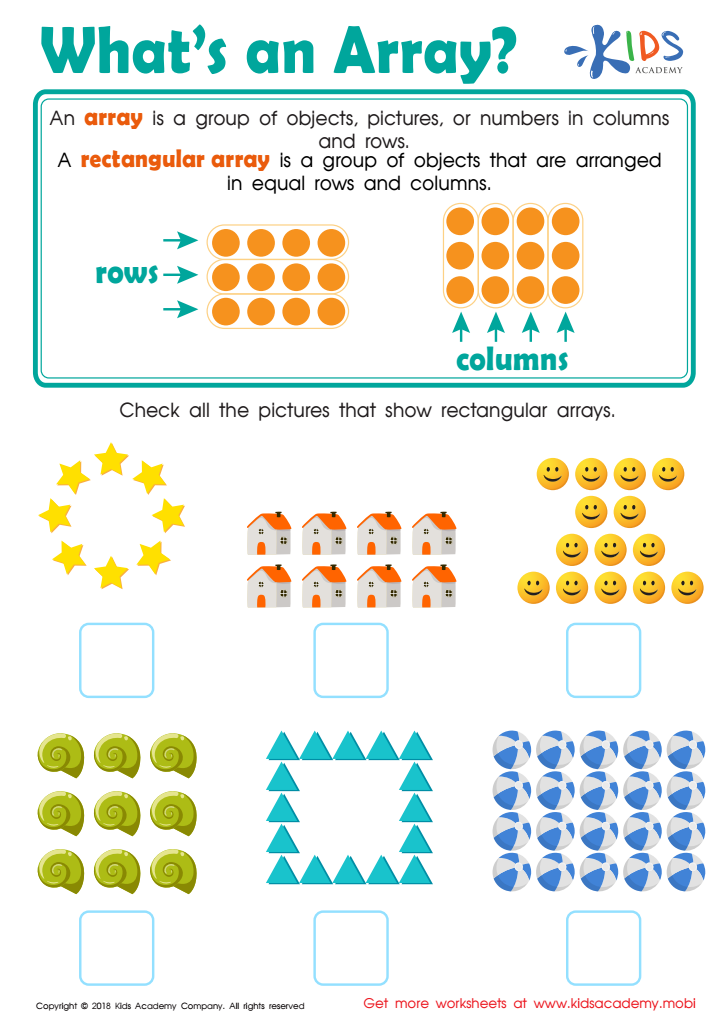
Working with Arrays: Common Operations and Considerations
Interacting with arrays involves a set of standard operations that form the backbone of many programming tasks. Understanding these operations, along with their implications, is crucial for effective and performant code.
Declaration and Initialization
Before an array can be used, it must be declared, specifying its data type and, in many languages, its size. It can then be initialized, either by assigning values to its elements one by one or through an initializer list.
// Declaration in Java

int[] grades; // Declares an integer array variable


// Initialization

grades = new int[5]; // Allocates memory for 5 integers

grades[0] = 90;

grades[1] = 85;

// ... or combined declaration and initialization

int[] scores = {100, 95, 80}; // Array of 3 integers
Proper declaration ensures that the system allocates the necessary memory, while initialization populates the array with meaningful data.
Accessing and Modifying Elements
As previously mentioned, elements are accessed and modified using their index.
// Accessing an element

int firstScore = scores[0]; // firstScore will be 100


// Modifying an element

scores[1] = 98; // Changes the second score from 95 to 98
Direct access via index is one of the most powerful features of arrays, enabling rapid data manipulation.
Traversing Arrays
Iterating through all elements of an array is a common operation, used for tasks like printing all values, performing calculations on each element, or searching for a specific value. This is typically done using loops:
// Traversing with a for loop (standard)

for (int i = 0; i < scores.length; i++) {

    System.out.println(scores[i]);

}


// Traversing with an enhanced for loop (for-each)

for (int score : scores) {

    System.out.println(score);

}
The choice of loop depends on whether you need to access the index itself or just the element’s value.
Resizing and Dynamic Arrays
The fixed-size nature of traditional arrays can be a limitation when the number of elements is not known beforehand or can change during runtime. To overcome this, many languages provide dynamic array implementations (like ArrayList in Java or std::vector in C++). These structures appear to offer a variable-size array, but internally, they work by:
-
Creating an underlying fixed-size array.
-
When the array becomes full, creating a new, larger fixed-size array (often double the current size).
-
Copying all elements from the old array to the new array.
-
Discarding the old array.
This process ensures that, on average, operations remain efficient, while providing the flexibility of a growing collection. However, the occasional “resize” operation can be computationally expensive due to the copying involved.
Performance Implications (Cache Locality, Contiguous Memory)
The contiguous memory allocation of arrays plays a significant role in their performance. When data is stored together, it benefits from processor cache mechanisms, leading to faster access times. This is why array-based algorithms often outperform those using linked lists for sequential access, even though linked lists offer more flexible memory allocation. Understanding these performance implications allows developers to choose the most appropriate data structure for a given task, balancing flexibility, memory usage, and execution speed.
Arrays in Different Programming Languages
While the core concept of an array remains consistent, its implementation and idiomatic use can vary significantly across programming languages. These differences often reflect the language’s design philosophy, its type system, and its target applications.
Strongly-typed vs. Dynamically-typed languages
-
Strongly-typed languages (e.g., C, C++, Java): In these languages, arrays are typically type-specific and fixed in size. An
int[]array in Java can only hold integers. This strong typing helps catch errors at compile time and ensures memory efficiency by knowing the exact size of each element. Multidimensional arrays are often true blocks of contiguous memory (C/C++) or arrays of arrays (Java). -
Dynamically-typed languages (e.g., Python, JavaScript, Ruby): These languages often use more flexible data structures that are referred to as “arrays” but are often implemented as dynamic lists or vectors under the hood. For instance, Python’s
listcan hold elements of different types and automatically resizes. While this offers immense flexibility, the underlying implementation might involve storing references to objects rather than the objects themselves directly in contiguous memory, potentially affecting cache performance compared to raw C arrays. JavaScript’s arrays are also highly flexible, capable of holding various types and resizing dynamically.
Built-in Array Types vs. List/Vector Implementations
Some languages provide raw, primitive array types as a fundamental part of their syntax (e.g., C-style arrays int arr[]). Others, like Java, treat arrays as objects but still provide direct syntax. Modern languages and their standard libraries often offer more sophisticated, higher-level abstractions that wrap these primitive arrays, providing additional functionality and safety:
-
C++
std::vector: A powerful template class that provides a dynamic array with automatic memory management, bounds checking (optional), and rich functionality for insertion, deletion, and iteration. It’s the preferred choice over raw C-style arrays for most applications in C++. -
Java
ArrayList: Similar tostd::vector,ArrayListis a class that implements theListinterface, providing a resizable array implementation. It’s part of Java’s Collections Framework. -
Python
list: Python’slistis arguably its most versatile and commonly used data structure, serving as a dynamic, heterogeneous array. For numerical operations, specialized libraries like NumPy introduce highly optimized array objects (ndarray) that are far more efficient than Python lists for mathematical computations. -
JavaScript
Array: JavaScript arrays are dynamic, can hold mixed data types, and come with a rich set of built-in methods for manipulation.
These higher-level implementations abstract away much of the manual memory management and provide safer, more convenient ways to work with array-like data, albeit sometimes with a slight overhead compared to direct memory manipulation using raw arrays.

Conclusion
The array, despite its apparent simplicity, is a powerhouse in the realm of computer science and programming. From its role as a contiguous block of homogeneous data to its evolution into multi-dimensional forms and dynamic, flexible list implementations, arrays serve as an indispensable tool for organizing, storing, and efficiently accessing data. Their constant-time access, benefits from cache locality, and foundational role in building more complex data structures like stacks, queues, and hash tables underscore their critical importance.
Whether you are developing a sophisticated AI algorithm that processes vast datasets, designing a responsive mobile application, or crafting the intricate logic of a video game, arrays will invariably be a part of your toolkit. Understanding not just what an array is, but how it works, why it is efficient, and when to choose it over other data structures, is a fundamental skill for any aspiring or seasoned technologist. As technology continues to evolve, the principles embodied by the array – efficient data organization and rapid access – will remain timeless and central to the innovation that shapes our digital future.
aViewFromTheCave is a participant in the Amazon Services LLC Associates Program, an affiliate advertising program designed to provide a means for sites to earn advertising fees by advertising and linking to Amazon.com. Amazon, the Amazon logo, AmazonSupply, and the AmazonSupply logo are trademarks of Amazon.com, Inc. or its affiliates. As an Amazon Associate we earn affiliate commissions from qualifying purchases.