
In the architecture of the modern internet, geography is often perceived as a secondary concern. We send emails across oceans in milliseconds and stream high-definition video from servers located thousands of miles away. However, beneath this layer of global connectivity lies a complex system of regional identification and data routing. At the heart of this system is the IP address. Specifically, an “American IP address” serves as a digital passport, signaling to every server, website, and service on the web that a device is physically—or virtually—located within the United States.
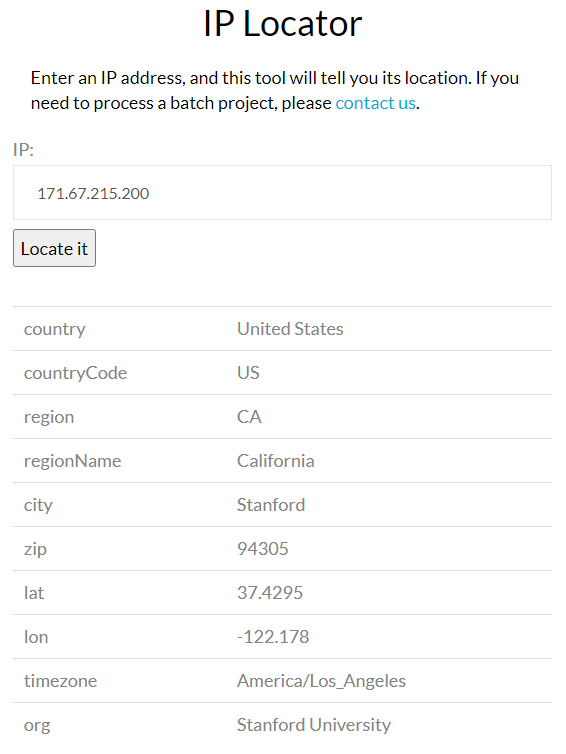
Understanding what an American IP address is, how it is assigned, and why it is a cornerstone of digital security and content delivery is essential for anyone navigating the current technological landscape.
The Technical Anatomy of Regional IP Allocation
To understand an American IP address, one must first understand the hierarchy of internet governance. IP addresses are not generated at random; they are part of a strictly managed global resource.
The Role of IANA and ARIN
The process begins with the Internet Assigned Numbers Authority (IANA), which oversees the global allocation of IP addresses. IANA distributes large blocks of these addresses to five Regional Internet Registries (RIRs). For the North American region—which includes the United States, Canada, and parts of the Caribbean—the responsible body is the American Registry for Internet Numbers (ARIN).
When a service provider or a data center in the United States requires IP addresses to facilitate its operations, it applies to ARIN. Once a block of addresses is assigned to a US-based entity, those addresses are cataloged in global databases as being “American.”
Geolocation Databases: The Web’s Map
An IP address itself is just a string of numbers (like 192.0.2.1 for IPv4 or a longer hexadecimal string for IPv6). It does not inherently contain the word “America.” Instead, third-party services known as geolocation databases (such as MaxMind or IP2Location) maintain massive tables that map IP ranges to specific geographic coordinates.
When you visit a website, the server looks up your IP address in these databases. If your IP falls within a range registered to a US provider by ARIN, the website recognizes you as having an American IP address. This handshake happens in microseconds and dictates much of your online experience.
Why Your Digital Location Matters: The Utility of a US IP
Having an American IP address is more than just a technical detail; it is a functional requirement for various software applications and digital services. The utility of these addresses spans from entertainment to high-level software development.
Accessing Region-Locked Digital Ecosystems
One of the most common reasons users and technologies interface with American IP addresses is “geo-fencing.” Many software-as-a-service (SaaS) platforms and streaming providers restrict their full catalogs to specific regions due to licensing agreements or regulatory compliance. For instance, certain financial tools or media platforms may only be accessible if the incoming request originates from a US-based IP. In this context, the IP address acts as a primary gatekeeper for digital rights management (DRM).
Software Localization and Testing
For developers and QA engineers, an American IP is a vital tool for “localized” testing. If a tech company is launching an app designed for the US market, engineers located in Europe or Asia must use a US IP address to see the app exactly as a local user would. This includes checking if the correct currency is displayed, if the latency is within acceptable limits for US data centers, and if regional third-party API integrations (like local maps or tax calculators) are functioning correctly.
Cybersecurity and Fraud Prevention
From a security standpoint, many US-based corporations use IP filtering as a defensive measure. To prevent unauthorized access to sensitive internal networks, a company might “whitelist” only American IP ranges. This adds a layer of security, as attackers from high-risk foreign regions are blocked at the perimeter before they can even attempt a login.
How to Obtain and Manage an American IP Address

As the internet has evolved, the ability to change one’s digital location has become a sophisticated field of software engineering. Whether for privacy or professional necessity, there are several technical methods to acquire an American IP address.
Virtual Private Networks (VPNs)
A VPN is perhaps the most robust method for obtaining a US IP address. It works by creating an encrypted tunnel between the user’s device and a server located in the United States. When the user connects to the internet through this tunnel, the “outside world” only sees the IP address of the US server, rather than the user’s actual local IP.
Technically, this involves the encapsulation of data packets. The user’s original IP is hidden within the VPN protocol (such as OpenVPN or WireGuard), and the US server acts as a relay, performing the request on the user’s behalf.
Proxy Servers and SOCKS5
Proxies are another common tool, though they function differently than VPNs. A proxy acts as an intermediary for specific applications rather than the entire device’s traffic. A SOCKS5 proxy, for example, can be configured within a web browser or a specific piece of software to route traffic through a US-based server. While proxies are often faster than VPNs because they frequently lack heavy encryption, they are generally considered less secure for sensitive data handling.
Smart DNS and Transparent Proxies
For users who only need to bypass geo-blocks without the overhead of a full VPN, Smart DNS is a popular technological solution. Instead of rerouting all traffic, Smart DNS only intercepts the DNS queries (the requests that turn a URL into an IP address) and redirects the portion related to location. This tricks the destination server into believing the request is coming from within the United States without changing the user’s actual IP for other tasks.
Security, Privacy, and the Ethics of IP Masking
The use of American IP addresses brings up significant questions regarding digital security and the legalities of data sovereignty.
Data Privacy and US Jurisdiction
Using an American IP address means that your data traffic is, at some point, passing through US-based infrastructure. This subjects that data to US laws, such as the Electronic Communications Privacy Act (ECPA). For tech-savvy users concerned about privacy, it is important to understand that “being” in the US digitally means your traffic could be subject to subpoenas or data requests by US law enforcement, depending on the terms of service of the IP provider (like a VPN or hosting service).
Preventing IP Leaks
A major technical challenge when using a virtual American IP address is the “IP leak.” Even when a VPN is active, certain browser protocols like WebRTC or DNS vulnerabilities can “leak” the user’s true, non-US IP address. Advanced users and security professionals use “Kill Switches”—software features that immediately disconnect the device from the internet if the secure connection to the US server is lost—ensuring that the real IP is never exposed to the public web.
The Future of IP Addressing: IPv4 vs. IPv6 in the US
The landscape of American IP addresses is currently undergoing a massive transition as the world moves from IPv4 to IPv6.
The Exhaustion of IPv4
IPv4 addresses, which are 32-bit numbers, are finite. There are only about 4.3 billion of them, and they have effectively run out. In the United States, the scarcity of IPv4 addresses has created a secondary market where blocks of “American IPs” are bought and sold for significant sums. This has led to the widespread use of Carrier-Grade NAT (Network Address Translation), where thousands of users might share a single American IP address.
The Shift to IPv6
IPv6 is the solution to this scarcity, utilizing 128-bit addresses to provide a virtually infinite number of IPs. The United States has been a leader in IPv6 adoption, with many major ISPs and mobile carriers already routing the majority of their traffic through IPv6. For the average user, an American IPv6 address looks very different—a long string of numbers and letters—but it functions the same way in terms of geolocation and regional identification.

Conclusion
An American IP address is more than just a sequence of digits; it is a fundamental component of the internet’s geographical and security framework. From the high-level coordination of ARIN to the granular packet-switching of a VPN, these addresses define how we access information, how developers test their products, and how companies secure their borders.
As we move toward a more interconnected and IPv6-dominated future, the concept of the “American IP” will continue to evolve. However, the core principle remains the same: in a digital world, where you are is often just as important as what you are doing. Understanding the mechanics behind your digital location is the first step in mastering the tools of the modern web.
aViewFromTheCave is a participant in the Amazon Services LLC Associates Program, an affiliate advertising program designed to provide a means for sites to earn advertising fees by advertising and linking to Amazon.com. Amazon, the Amazon logo, AmazonSupply, and the AmazonSupply logo are trademarks of Amazon.com, Inc. or its affiliates. As an Amazon Associate we earn affiliate commissions from qualifying purchases.