
Investing in the global marketplace has never been more accessible, yet navigating international equities can often feel like venturing into a labyrinth of unfamiliar regulations, currencies, and trading systems. For U.S. investors seeking exposure to foreign companies without the complexities of direct international trading, American Depositary Receipts (ADRs) offer a streamlined solution. Understanding “what is an ADR stock” is crucial for any investor looking to diversify their portfolio beyond domestic borders.
Unpacking the Concept of ADRs
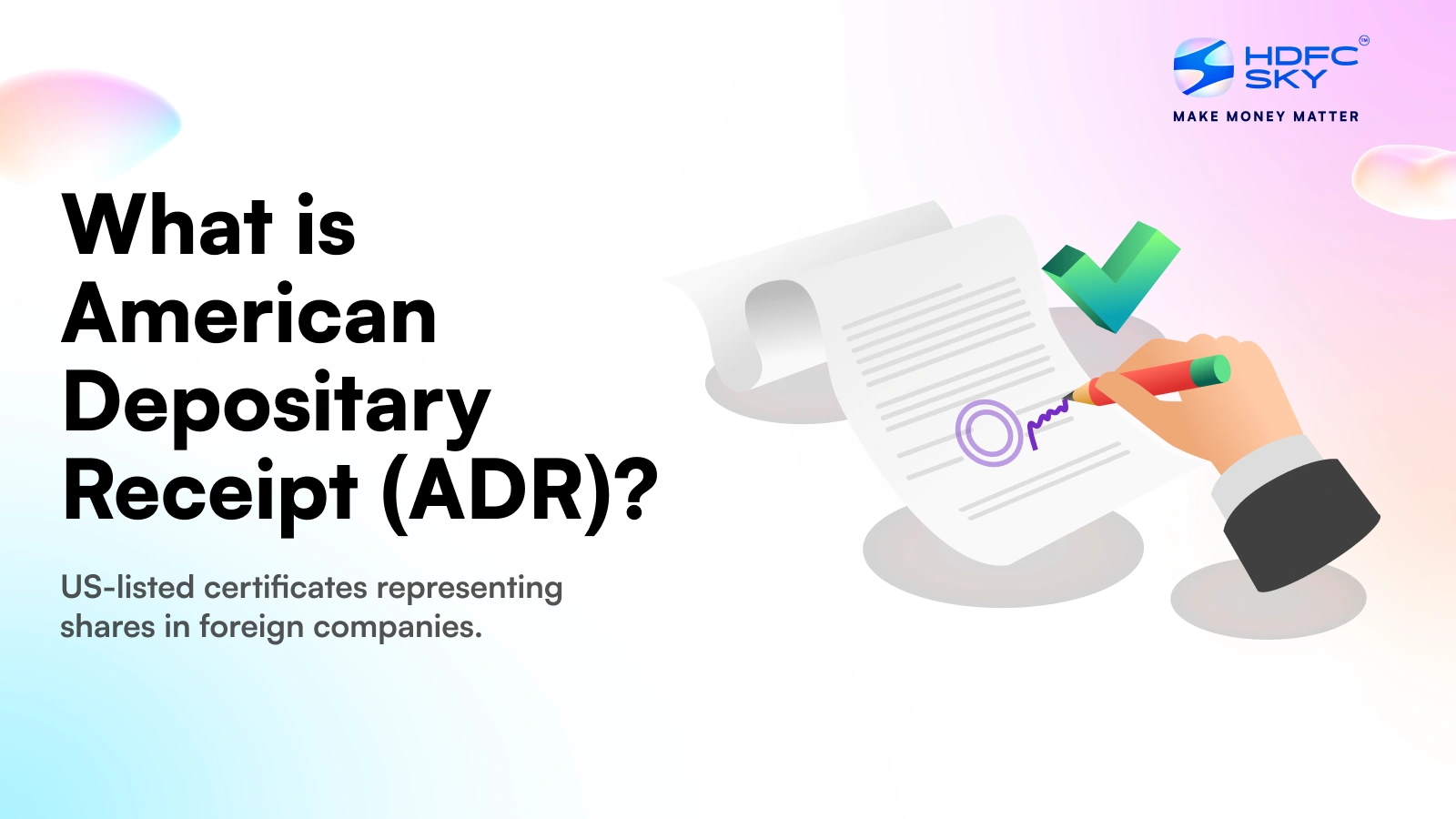
At its core, an ADR is a certificate issued by a U.S. depositary bank that represents a specified number of shares (or sometimes a fraction of a share) in a foreign company. These certificates trade on U.S. stock exchanges or over-the-counter (OTC) markets, making shares of non-U.S. companies available to American investors in a familiar format.
Defining ADRs
An American Depositary Receipt functions as a proxy for shares of a non-U.S. company. When you purchase an ADR, you are not directly buying shares on a foreign stock exchange. Instead, you are buying a certificate denominated in U.S. dollars that represents ownership of those underlying foreign shares. These underlying shares are held in custody by the U.S. depositary bank, typically in the foreign company’s home market.
The primary purpose of ADRs is to bridge the gap between foreign companies and U.S. investors. For foreign companies, ADRs provide a mechanism to raise capital and increase their visibility and liquidity in the lucrative U.S. market without undertaking the full cost and regulatory burden of a direct listing. For U.S. investors, ADRs simplify the process of investing in international equities by eliminating the need to deal with foreign currency conversions, foreign brokerages, different settlement procedures, and often distinct regulatory frameworks.
Why ADRs Exist
ADRs emerged in the late 1920s as a solution to practical challenges faced by American investors wanting to buy British shares. At the time, direct investment involved physical share certificates, international transfers, and complicated currency exchanges. ADRs were designed to streamline this process by localizing the investment experience.
Their existence today continues to serve several vital functions:
- Access to Global Diversification: ADRs allow U.S. investors to easily add foreign companies to their portfolios, providing exposure to different economies, industries, and growth drivers that may not be present in the domestic market. This diversification can potentially reduce overall portfolio risk and enhance returns.
- Simplified Trading: All ADR transactions are settled in U.S. dollars through U.S. brokerage accounts, just like domestic stocks. This removes the complexities and potential costs associated with foreign currency exchange and international wire transfers.
- Regulatory Compliance: While the underlying company operates under its home country’s regulations, sponsored ADRs often meet U.S. Securities and Exchange Commission (SEC) reporting requirements, providing U.S. investors with familiar levels of financial disclosure.
- Liquidity Enhancement: For foreign companies, having their shares represented by ADRs can significantly increase the liquidity of their stock by tapping into the vast pool of capital available in the U.S. market.
The Mechanics of ADRs: How They Work
Understanding the operational flow of ADRs clarifies how this financial instrument facilitates cross-border investing. It involves a sophisticated interplay between the foreign company, U.S. financial institutions, and the investor.
The Issuance Process
The journey of an ADR typically begins when a U.S. depositary bank, often in collaboration with a foreign company, decides to establish an ADR program.
- Underlying Share Acquisition: The U.S. depositary bank, or its custodian agent in the foreign country, purchases the shares of the foreign company on its home exchange.
- Custody: These foreign shares are then deposited with a custodian bank in the foreign country, which holds them securely on behalf of the U.S. depositary bank.
- ADR Issuance: In return for the deposited foreign shares, the U.S. depositary bank issues ADRs in the United States. Each ADR typically represents a specific ratio of underlying foreign shares (e.g., one ADR might represent five shares of the foreign stock, or vice-versa, depending on the price and liquidity needs).
- Trading: These newly issued ADRs are then available for U.S. investors to buy and sell on U.S. stock exchanges (like the NYSE or Nasdaq) or over-the-counter (OTC) markets, just like any domestic stock.
The depositary bank plays a crucial, ongoing role. It manages the ADR program, handles all corporate actions such as stock splits and mergers, converts dividends paid in foreign currency into U.S. dollars, and distributes them to ADR holders. It also facilitates shareholder voting rights, often by collecting votes from ADR holders and casting them on the underlying shares.
Key Players
Several entities are integral to the functioning of an ADR program:
- Foreign Company (Issuer): This is the non-U.S. company whose equity shares are represented by the ADRs. The company may actively pursue an ADR program to access U.S. capital markets or merely tolerate its existence.
- Depositary Bank (U.S.): A U.S. financial institution, typically a large commercial bank, that issues the ADRs, holds the underlying foreign shares (via a custodian), and provides all related services. These services include record-keeping, dividend distribution, and facilitating corporate actions. Examples include JPMorgan Chase, BNY Mellon, Citibank, and Deutsche Bank.
- Custodian Bank (Foreign): An institution, usually a local bank in the foreign company’s home country, that physically holds the actual foreign shares on behalf of the U.S. depositary bank. This ensures that the ADRs are backed by real assets.
- Investors: Individuals, mutual funds, hedge funds, or other institutional investors who purchase ADRs to gain exposure to foreign companies.
Types of ADRs and Their Implications for Investors
Not all ADRs are created equal. They are categorized into different “levels,” primarily based on the extent of the foreign company’s involvement and the regulatory requirements they meet. These distinctions have significant implications for investors regarding transparency, liquidity, and accessibility.
Sponsored vs. Unsponsored ADRs
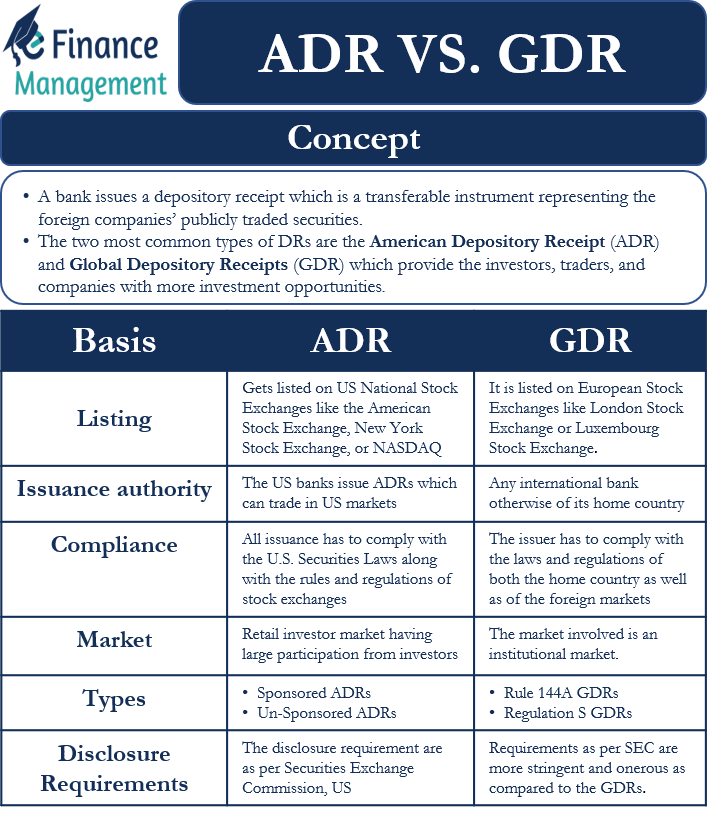
The fundamental differentiator among ADRs is whether they are “sponsored” or “unsponsored.”
-
Sponsored ADRs: These programs are established and actively supported by the foreign company itself. The company chooses a single depositary bank and typically bears the costs of the program. Sponsored ADRs usually offer better transparency and investor relations as the foreign company is motivated to provide information to its U.S. shareholder base. They are further classified into three levels based on their listing venue and SEC compliance:
- Level I ADRs: These are the most basic and least expensive sponsored programs. They trade only on the over-the-counter (OTC) market and require minimal SEC reporting. Foreign companies typically use Level I programs to test the waters of the U.S. market and gauge investor interest without incurring significant costs or extensive regulatory burdens. Liquidity can be lower compared to higher levels.
- Level II ADRs: To qualify for Level II, a foreign company must meet stricter SEC reporting requirements and publicly disclose its financial information in English. These ADRs can be listed on major U.S. stock exchanges like the New York Stock Exchange (NYSE) or Nasdaq. Listing on an exchange typically increases visibility, liquidity, and investor confidence.
- Level III ADRs: These represent the highest level of sponsored ADR program. A foreign company launching a Level III program not only lists its ADRs on a major U.S. exchange but also conducts a public offering of new shares in the U.S. This means the company is directly raising capital in the U.S. market, adhering to the most stringent SEC reporting and disclosure requirements, similar to a U.S. domestic company. Level III ADRs are often the most liquid and transparent.
-
Unsponsored ADRs: These programs are initiated by a U.S. depositary bank without the direct involvement or consent of the foreign company. Multiple banks can issue unsponsored ADRs for the same foreign company. They typically trade only on the OTC market, offer limited financial disclosure (as the foreign company is not obligated to provide it), and tend to be less liquid than sponsored ADRs. The costs of an unsponsored program are usually borne by the depositary bank and passed on to investors through higher fees.
Investing Considerations Based on Type
The type of ADR significantly influences the investment profile:
- Transparency and Information: Level II and III sponsored ADRs provide the most comprehensive financial reporting, making due diligence easier. Unsponsored and Level I ADRs offer less information, which can increase investment risk due to opacity.
- Liquidity: Generally, Level III ADRs offer the highest liquidity due to exchange listings and capital-raising activities, followed by Level II. Level I and unsponsored ADRs, trading OTC, may have lower trading volumes and wider bid-ask spreads, making it harder to enter or exit positions efficiently.
- Integration with U.S. Markets: Level III ADRs are the most integrated, behaving much like domestic stocks regarding capital access and regulatory scrutiny. Unsponsored ADRs are the least integrated, reflecting more of a direct pass-through of the foreign stock’s market dynamics.
- Cost and Fees: Higher-level sponsored programs might involve more substantial depositary service fees, though these are typically disclosed. Unsponsored ADRs might also carry fees, sometimes less transparently.
Advantages and Disadvantages of Investing in ADRs
While ADRs offer an attractive gateway to international markets, investors must weigh their numerous benefits against potential drawbacks and unique risks.
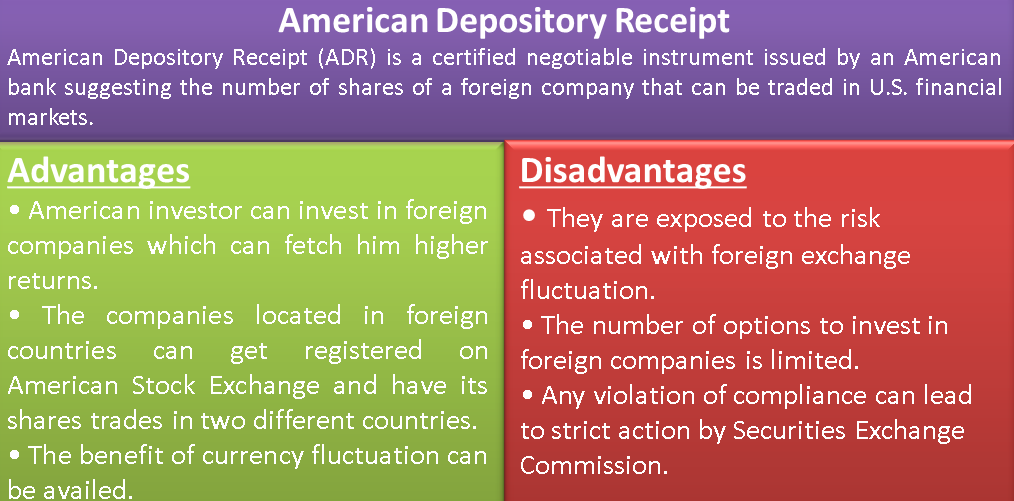
Benefits for U.S. Investors
- Ease of Access and Convenience: ADRs remove many hurdles of direct international investing. Investors buy and sell them through standard U.S. brokerage accounts, settle trades in U.S. dollars, and receive dividends in U.S. dollars. This simplifies the entire process.
- Diversification: ADRs provide an efficient way to diversify an investment portfolio geographically and by industry, tapping into growth opportunities in emerging markets or specific sectors not prominent domestically.
- Enhanced Information and Transparency (for Sponsored ADRs): Sponsored ADRs, especially Level II and III, require the foreign company to comply with SEC regulations and provide financial reports in English. This significantly improves transparency and allows for easier analysis compared to trying to obtain and interpret foreign language reports from overseas exchanges.
- Simplified Corporate Actions: The depositary bank handles complex corporate actions (like stock splits, rights offerings, or mergers) on behalf of ADR holders, converting them into U.S.-friendly terms.
- Tax Efficiency (Potential): While foreign dividends may be subject to withholding tax in the country of origin, U.S. investors can often claim these foreign taxes as a credit against their U.S. income tax, avoiding double taxation.
Potential Drawbacks and Risks
- Currency Risk: This is perhaps the most significant risk. The value of an ADR is tied to the underlying foreign shares and, by extension, to the value of the foreign currency. If the foreign currency depreciates against the U.S. dollar, the value of the ADR (and any dividends paid) will decrease when converted back to USD, even if the underlying share price remains stable in its local currency.
- Depositary Fees: Depositary banks charge various fees for their services, which can include annual service fees, dividend processing fees, and foreign exchange conversion fees. These small fees can accumulate and impact overall returns, particularly for smaller investments.
- Limited Voting Rights: While ADR holders typically have voting rights, they often exercise them indirectly through the depositary bank, which collects and tallies their votes. This can sometimes dilute the direct influence compared to holding actual foreign shares.
- Liquidity Concerns: While Level II and III ADRs are generally liquid, Level I and unsponsored ADRs trading on the OTC market can suffer from lower trading volumes and wider bid-ask spreads, making it challenging to buy or sell at desired prices.
- Market and Political Risk: Investing in ADRs means exposure to the economic, political, and regulatory risks of the foreign company’s home country. Political instability, economic downturns, or changes in foreign government policies can directly impact the underlying company’s performance and, consequently, the ADR’s value.
- Delisting Risk: A foreign company may decide to terminate its ADR program, which can force ADR holders to convert their certificates into actual foreign shares, sell them, or accept cash, potentially incurring fees and tax consequences.
Navigating ADRs in Your Investment Portfolio
Incorporating ADRs into your investment strategy requires careful consideration and due diligence, just like any other investment. They can be powerful tools for diversification but demand a nuanced understanding of their specific characteristics.
Research and Due Diligence
Before investing in an ADR, conduct thorough research:
- Understand the Underlying Company: Analyze the foreign company’s fundamentals, financial health, management team, competitive landscape, and growth prospects, just as you would for a domestic stock. Understand its industry within its home market.
- Assess Country-Specific Risks: Research the economic stability, political climate, regulatory environment, and geopolitical risks of the foreign company’s home country. These factors can significantly influence the company’s operations and profitability.
- Identify the ADR Type: Determine if the ADR is Level I, II, III, or unsponsored. This informs you about the level of transparency, reporting requirements, and typical liquidity. A Level III ADR offers more comfort due to its stringent U.S. regulatory oversight.
- Review Depositary Bank Information: Understand the specific terms, conditions, and fee structures associated with the ADR program through the depositary bank.
- Analyze Currency Trends: Be aware of the historical and projected trends of the foreign currency relative to the U.S. dollar, as currency fluctuations will impact your returns.
Integration into a Diversified Strategy
ADRs are excellent tools for building a diversified portfolio, but they should be integrated thoughtfully:
- Strategic Allocation: Determine what percentage of your total portfolio you wish to allocate to international equities. ADRs can fulfill this allocation efficiently.
- Sectoral Exposure: Use ADRs to gain exposure to specific global sectors or industries that are underdeveloped or perform differently in the U.S. market, such as particular types of technology in Asia or specific consumer goods in Europe.
- Emerging Market Access: ADRs are a common way to invest in companies from emerging markets, which often offer higher growth potential but come with increased risk.
- Risk Management: While ADRs add diversification, they also introduce new risks (currency, political). Balance these with your overall risk tolerance and existing portfolio holdings.
Tax Considerations for ADR Holders
Investing in ADRs comes with unique tax implications that investors should be aware of:
- Foreign Withholding Tax: Many foreign countries impose a withholding tax on dividends paid by their domestic companies. This tax is typically deducted by the foreign government before the depositary bank receives the dividend.
- Foreign Tax Credit: The good news for U.S. investors is that the IRS generally allows you to claim a foreign tax credit on your U.S. tax return for these taxes paid to foreign governments. This credit helps to avoid double taxation on your investment income. You typically need to report these foreign taxes using IRS Form 1116.
- Consult a Professional: Tax laws relating to international investments can be complex. It is always advisable to consult with a qualified tax advisor to understand your specific obligations and optimize your tax strategy when investing in ADRs.
In conclusion, ADRs offer a powerful, accessible avenue for U.S. investors to participate in global growth and diversify their portfolios. By understanding their structure, types, and associated benefits and risks, investors can strategically incorporate these instruments to broaden their financial horizons.
aViewFromTheCave is a participant in the Amazon Services LLC Associates Program, an affiliate advertising program designed to provide a means for sites to earn advertising fees by advertising and linking to Amazon.com. Amazon, the Amazon logo, AmazonSupply, and the AmazonSupply logo are trademarks of Amazon.com, Inc. or its affiliates. As an Amazon Associate we earn affiliate commissions from qualifying purchases.