
An amended tax return is a revised version of a tax return that has already been filed with the tax authority. It’s a formal mechanism allowing taxpayers to correct errors, add omitted information, or update their filing status after the original return has been submitted. While the goal for many is to file an accurate return the first time, life happens, and mistakes or new information can necessitate a revisit to a previously submitted tax document. Understanding when and how to amend a tax return is a crucial aspect of responsible financial management, ensuring compliance and potentially adjusting one’s tax liability, whether that means securing a larger refund or settling an additional tax due. This process is not a punishment for mistakes but rather a vital tool for maintaining accuracy and rectifying inaccuracies, ultimately reflecting the true financial picture of the taxpayer for a given year.
Why You Might Need to Amend Your Tax Return
Numerous scenarios can lead a taxpayer to consider amending an already filed tax return. These reasons range from simple oversight to significant life changes, each necessitating a correction to ensure the taxpayer’s financial records accurately reflect their tax obligations and entitlements. It’s important to recognize that amending a return isn’t solely for correcting errors that result in owing more tax; it can often lead to a larger refund or a reduced tax liability.
Overlooked Income or Deductions
One of the most common reasons for amending a tax return is the discovery of previously unreported income or overlooked deductions and credits. Perhaps a Form W-2, 1099-MISC, or 1099-INT arrived late, or a forgotten bank account had some taxable interest. Conversely, many taxpayers discover they missed claiming eligible deductions, such as contributions to an Individual Retirement Account (IRA), student loan interest, or various itemized deductions they qualify for but neglected to include. Missing out on legitimate deductions or credits means overpaying taxes, making an amendment a financially prudent step. Similarly, forgetting to report income can lead to penalties and interest if discovered by the IRS, so proactive amendment is always advisable.
Changes in Filing Status
Life events can sometimes occur or be clarified after a tax return has been filed, impacting one’s filing status. For instance, if a taxpayer filed as Single but later realized they qualified for Head of Household status due to supporting a dependent, an amendment would be necessary. Similarly, if a divorce was finalized later in the year than initially anticipated, or if a child’s custody arrangement changed, these details could alter the correct filing status (e.g., from Married Filing Jointly to Married Filing Separately, or vice-versa, depending on the specifics and applicable rules). The correct filing status is foundational to calculating tax liability, deductions, and credits, making it a critical element to amend if initially incorrect.
New Information After Filing
Sometimes, taxpayers receive corrected tax documents (like a corrected W-2c or 1099-R) after they’ve already filed their original return. These corrected documents indicate that the information initially provided to the IRS was inaccurate, requiring a corresponding correction to the tax return. This could involve revised wage figures, altered distributions from retirement accounts, or changes in investment income. Relying on outdated or incorrect source documents can significantly skew a tax calculation, making an amendment essential to align with the most current and accurate financial data.
Mathematical Errors
While modern tax software minimizes these, manual mathematical errors can still occur, especially for those who file paper returns or who make manual entries. A simple transposition of numbers, an incorrect sum, or a miscalculation of a percentage could lead to an incorrect tax liability. Even with software, an incorrect input value can lead to a calculation error. If an egregious mathematical error is discovered, an amendment serves to correct the numbers and ensure the final tax calculation is accurate. However, minor mathematical errors are often corrected by the IRS themselves, so taxpayers should wait to see if the IRS processes the correction before filing an amendment for minor math issues.
The Process of Amending a Tax Return
Amending a tax return is a structured process that requires attention to detail. The Internal Revenue Service (IRS) provides a specific form for this purpose, and following the correct steps ensures a smooth and effective correction of your tax records.
Form 1040-X: The Key Document
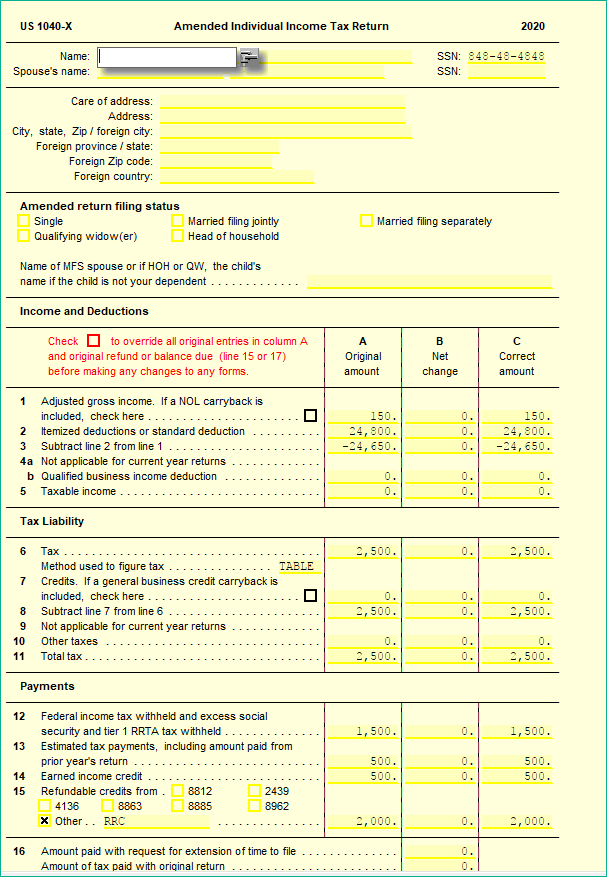
For individual U.S. federal income tax returns, the primary form used to amend a previously filed Form 1040, 1040-SR, or 1040-NR is Form 1040-X, Amended U.S. Individual Income Tax Return. This form is designed to show the original figures, the corrected figures, and the net change in your tax liability or refund. It’s crucial to understand that you do not refile your original tax return; instead, you use Form 1040-X to explain what you are changing and why. The form itself guides you through reporting the original amounts, the net change, and the correct amounts for income, deductions, and credits. Each change must be clearly explained in Part III of Form 1040-X, “Explanation of Changes,” providing specific details for the IRS to understand the amendments.
Gathering Your Documentation
Before you begin filling out Form 1040-X, gather all necessary documents. This includes a copy of your original tax return for the year you are amending, any corrected tax forms (W-2c, 1099-R, etc.), and any new documentation supporting additional deductions or credits you wish to claim. Having your original return handy is critical because Form 1040-X requires you to enter the figures from that return before showing the corrected figures. Any supporting schedules or forms that are impacted by your amendment (e.g., Schedule A for itemized deductions, Schedule C for business income) should also be reviewed and potentially re-prepared with the corrected information, though they are usually not submitted with Form 1040-X unless specifically requested or if they are integral to the explanation.
Understanding the Impact on Your Refund or Payment
When you amend a tax return, the primary outcome will be either an increase in your refund, a reduction in your tax liability (leading to a refund or less tax due), or an increase in your tax liability (meaning you owe more tax).
If your amendment results in an additional tax payment due, you should pay the amount as soon as possible to minimize potential interest and penalties. You can make this payment when you mail Form 1040-X.
If the amendment results in a larger refund, the IRS will process your amended return and issue the refund. It’s important to note that amended returns typically take longer to process than original returns.
When to File an Amended Return

Generally, you should file Form 1040-X within three years from the date you filed your original return or within two years from the date you paid the tax, whichever is later. This is often referred to as the statute of limitations for amendments to claim a refund. If you are amending to report additional income and pay more tax, there’s generally no time limit to file, but interest and penalties will accrue from the original due date of the tax. It’s always advisable to file as soon as you discover an error. Do not file an amended return if the IRS has already identified an error and sent you a notice (e.g., CP2000 notice for unreported income). In such cases, respond directly to the notice.
Potential Outcomes and Considerations
Amending a tax return sets in motion a specific review process with the IRS, and understanding the potential outcomes and associated considerations is key to managing your financial expectations.
Receiving a Refund or Owing More Tax
The most direct outcome of an amended return is either receiving an additional tax refund or being required to pay more tax. If your corrections lead to a lower tax liability than originally reported, the IRS will process your Form 1040-X and, if approved, issue a refund for the difference. Conversely, if your amendment increases your tax liability, you will owe the additional tax. It is crucial to submit this payment promptly along with your Form 1040-X to avoid or minimize interest and penalties. The IRS treats the additional tax owed on an amended return as if it was owed from the original due date of the tax return, regardless of when you file the amendment.
Interest and Penalties on Underpayments
If your amended return indicates that you originally underpaid your taxes, the IRS will assess interest on the additional amount owed. This interest typically begins accruing from the original due date of the tax return (usually April 15th) until the date the tax is paid. In some cases, penalties might also apply, especially if the underpayment was substantial or if there’s evidence of negligence or intentional disregard of rules. For this reason, if you anticipate owing more tax, filing an amended return and paying the additional amount as quickly as possible is prudent financial management. The sooner you correct the record and remit payment, the less you will pay in interest and potential penalties.
Impact on State Tax Returns
It’s important to remember that most states have their own income tax systems, and changes to your federal tax return often have a direct impact on your state tax return. If you amend your federal return, you will likely need to amend your state tax return(s) as well. Each state has its own specific amendment forms and procedures, similar to the federal Form 1040-X. Failing to amend your state return after a federal amendment could lead to discrepancies, potential audits, or missed refunds at the state level. Always check your state’s tax agency website for their specific requirements regarding amended returns.
The Processing Timeframe
Unlike original returns, which are often processed relatively quickly, amended returns typically take longer. The IRS states that it can take up to 16 weeks (or even longer during peak periods or for complex cases) to process Form 1040-X. During this time, you can generally track the status of your amended return using the “Where’s My Amended Return?” tool on the IRS website. It’s essential to be patient and avoid calling the IRS for status updates unless the processing time has significantly exceeded the stated timeframe. During this waiting period, avoid making any further changes or inquiries that could further delay processing.
Common Misconceptions and Best Practices
Navigating the process of amending a tax return can sometimes be confusing, leading to common pitfalls. Understanding these and adopting best practices can streamline the process and minimize potential issues.
Don’t File a Second Original Return
A frequent misconception is that taxpayers should simply file a new Form 1040 with the corrected information if they discover an error. This is incorrect and can lead to significant processing delays and confusion with the IRS. Always use Form 1040-X for federal individual income tax amendments. Filing a second original return for the same tax year can trigger multiple reviews and inquiries from the IRS, complicating what should be a straightforward correction.
When to Seek Professional Help
While amending a simple return might be manageable for most individuals, complex situations often warrant professional assistance. If your amendment involves intricate tax laws, significant changes in income or deductions, or multiple affected schedules, consulting a qualified tax professional (such as a Certified Public Accountant or an Enrolled Agent) is highly recommended. A professional can help ensure accuracy, identify all applicable changes, and correctly complete Form 1040-X, potentially saving you from future IRS correspondence or missed opportunities for tax savings. They can also represent you if the amended return triggers an audit or additional questions from the IRS.
Keeping Meticulous Records
Good record-keeping is paramount in all aspects of personal finance, and it becomes especially critical when amending a tax return. Keep copies of your original tax return, the amended Form 1040-X, all supporting documentation for both the original and amended figures, and any correspondence with the IRS. These records serve as your proof if there’s ever a question about your filing or a need to refer back to the specific changes you made. Digital copies backed up securely, along with physical copies, offer the best protection.
The Statute of Limitations for Amending
Be mindful of the statute of limitations. As mentioned, you generally have three years from the date you filed your original return or two years from the date you paid the tax (whichever is later) to file an amended return to claim a refund. If you are filing to report additional income and owe more tax, while there isn’t a strict “deadline” for the amendment itself, interest and penalties accrue from the original due date of the tax. Filing an amendment outside the refund statute of limitations means you generally cannot claim a refund, but you are still obligated to report income and pay any tax due. Always verify the specific deadlines for your situation, especially if close to the cutoff, to avoid missing out on potential refunds.
Amending a tax return is a normal part of the tax system, designed to give taxpayers the flexibility to correct their records. While it adds an extra step to tax compliance, understanding the process, knowing when to act, and adopting best practices can turn a potential headache into a manageable and financially beneficial exercise.
aViewFromTheCave is a participant in the Amazon Services LLC Associates Program, an affiliate advertising program designed to provide a means for sites to earn advertising fees by advertising and linking to Amazon.com. Amazon, the Amazon logo, AmazonSupply, and the AmazonSupply logo are trademarks of Amazon.com, Inc. or its affiliates. As an Amazon Associate we earn affiliate commissions from qualifying purchases.