
In the dynamic world of economics, few concepts are as fundamental and impactful as aggregate demand and aggregate supply. These two forces, acting in concert, form the bedrock upon which economic health and stability are built. While the terms might sound complex, their underlying principles are surprisingly intuitive and have profound implications for everything from individual purchasing decisions to the success of global markets. This article will delve into the intricacies of aggregate demand and supply, exploring how they function, what influences them, and why understanding them is crucial for anyone interested in technology, branding, and finance.
The Engine of the Economy: Understanding Aggregate Demand
Imagine the entire nation as a giant marketplace. Aggregate demand (AD) represents the total demand for all finished goods and services produced within an economy at a given price level and time period. It’s not just about what you, as an individual, want to buy; it encompasses the collective desires and purchasing power of every consumer, business, government, and foreign entity interacting within that economy.
Components of Aggregate Demand
To truly grasp aggregate demand, we need to break it down into its constituent parts. Think of these as the different engines that power the economy’s demand for goods and services:
-
Consumption (C): This is the largest component of aggregate demand, representing the spending by households on goods and services. It includes everything from your daily coffee and groceries to major purchases like cars and homes. Factors influencing consumption include disposable income, consumer confidence, interest rates, and wealth. In today’s tech-driven world, consumption increasingly includes spending on software subscriptions, apps, and the latest gadgets that enhance our digital lives and productivity. The accessibility and affordability of these technological advancements directly impact household spending patterns.
-
Investment (I): This refers to spending by businesses on capital goods, such as machinery, equipment, buildings, and software. It also includes changes in inventories. Investment is crucial for economic growth as it expands the productive capacity of the economy. For businesses, investment is often driven by expectations of future profits, technological advancements that improve efficiency, and the cost of borrowing (interest rates). In the tech sector, constant innovation leads to significant investment in research and development, new hardware, and sophisticated AI tools to maintain a competitive edge.
-
Government Spending (G): This includes all government expenditures on goods and services. It encompasses everything from infrastructure projects (roads, bridges) and defense spending to the salaries of public employees and social welfare programs. Government spending can be a powerful tool for managing the economy, either by stimulating demand during downturns or curbing inflation during booms. Policies related to digital infrastructure development or funding for AI research can significantly impact aggregate demand.
-
Net Exports (NX): This is the difference between a country’s exports (goods and services sold to other countries) and its imports (goods and services bought from other countries). If a country exports more than it imports, net exports are positive, adding to aggregate demand. Conversely, if imports exceed exports, net exports are negative, subtracting from aggregate demand. In a globalized economy, the attractiveness of a country’s products and brands on the international stage, as well as the strength of its currency, play a significant role in net exports. Technology exports, for instance, can be a major driver of a nation’s trade balance.
The Aggregate Demand Curve: A Relationship of Opposites
The aggregate demand curve illustrates the relationship between the overall price level in an economy and the total quantity of goods and services demanded. It slopes downward, indicating that as the price level falls, the quantity of aggregate demand increases, and vice versa. This inverse relationship can be explained by several factors:
-
The Wealth Effect: When the price level falls, the real value of assets (like savings and investments) increases. People feel wealthier and are therefore inclined to spend more, increasing aggregate demand. Conversely, rising prices erode the purchasing power of assets, leading to reduced spending.
-
The Interest Rate Effect: A lower price level generally leads to lower interest rates. This is because households and businesses need to hold less money to finance their purchases. Lower interest rates make borrowing cheaper, encouraging both consumption and investment, thus increasing aggregate demand.
-
The Exchange Rate Effect: When the domestic price level falls, domestic goods become relatively cheaper for foreign buyers. This leads to an increase in exports and a decrease in imports, boosting net exports and thus aggregate demand. Conversely, higher domestic prices make exports less attractive and imports more appealing.
The Productive Capacity: Understanding Aggregate Supply
While aggregate demand represents the desire to buy, aggregate supply (AS) represents the total quantity of goods and services that firms in an economy are willing and able to produce and sell at a given price level and time period. It’s the economy’s capacity to produce.
Distinguishing Between Short-Run and Long-Run Aggregate Supply
The behavior of aggregate supply differs significantly in the short run compared to the long run. This distinction is crucial for understanding economic fluctuations.
The Short-Run Aggregate Supply (SRAS)
The short-run aggregate supply (SRAS) curve depicts the relationship between the price level and the quantity of output supplied when some input prices, particularly wages, are fixed or sticky. In the short run, as the overall price level rises, firms find it more profitable to produce more goods and services, even if their input costs haven’t fully adjusted. This is because they can sell their output at higher prices while their wages remain the same, at least temporarily.
The SRAS curve typically slopes upward. This upward slope is due to:
-
Sticky Wages and Prices: In the short run, wages and other input prices are often slow to adjust to changes in the overall price level. When the general price level rises, firms can increase their profits by producing more without immediately increasing their costs proportionally. This incentivizes them to expand production.
-
Profit Motive: Higher output prices relative to input costs lead to higher profit margins for firms, encouraging them to produce more.
The Long-Run Aggregate Supply (LRAS)
The long-run aggregate supply (LRAS) curve represents the economy’s total output when all prices, including wages, are fully flexible and have adjusted to changes in the price level. In the long run, the economy’s productive capacity is determined by its resources – labor, capital, land, and technology – rather than the price level.
The LRAS curve is vertical at the economy’s potential output. This means that in the long run, the economy will produce at its full employment level of output, regardless of the price level. Any attempt to push output beyond this potential in the long run would require fundamental increases in the economy’s productive capacity. Factors that shift the LRAS include:
-
Technological Advancements: Innovations in technology, such as new AI tools, more efficient software, or advanced manufacturing processes, can increase productivity and expand the economy’s long-run potential output.
-
Growth in the Labor Force: An increase in the number of workers available to produce goods and services will expand the economy’s capacity.
-
Capital Accumulation: Investment in new machinery, infrastructure, and education leads to a larger and more productive capital stock.
-
Natural Resources: Discoveries or depletion of natural resources can impact long-run supply.
The Dance of Demand and Supply: Achieving Equilibrium
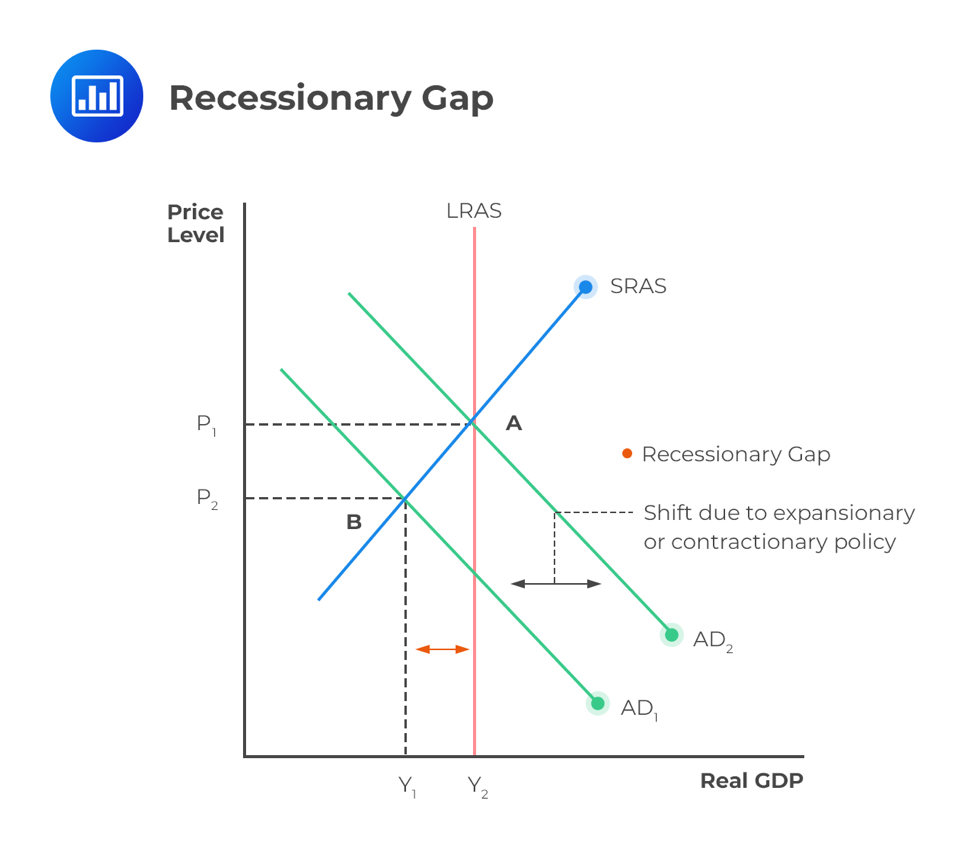
The interaction of aggregate demand and aggregate supply determines the equilibrium price level and the equilibrium level of real output in an economy. This is the point where the total quantity of goods and services demanded equals the total quantity supplied.
Shifts in Aggregate Demand and Supply: Driving Economic Change
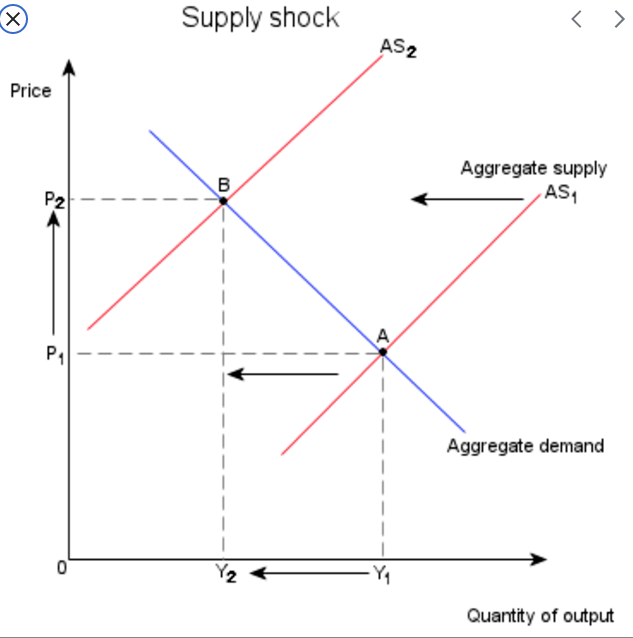
The equilibrium is not static. It is constantly shifting due to various factors that can move the AD and AS curves. Understanding these shifts is key to comprehending economic phenomena like inflation, recession, and economic growth.
Factors Shifting the Aggregate Demand Curve:
-
Changes in Consumer Confidence: Positive consumer sentiment can lead to increased spending (shift AD right). Pessimism can lead to decreased spending (shift AD left).
-
Changes in Investment Spending: Optimistic business outlooks or lower interest rates can encourage investment (shift AD right).
-
Changes in Government Spending or Taxation: Increased government spending or tax cuts can boost AD (shift AD right). Reduced spending or tax hikes can decrease AD (shift AD left).
-
Changes in Net Exports: A strong global demand for domestic products can increase exports and AD (shift AD right).
Factors Shifting the Aggregate Supply Curve:
-
Changes in Input Prices: A decrease in the cost of raw materials, energy, or labor (wages) will shift SRAS to the right, as firms can produce more profitably. An increase in input prices will shift SRAS to the left.
-
Technological Advancements: Innovations that improve productivity will shift both SRAS and LRAS to the right, indicating an increased capacity to produce.
-
Changes in Expectations: If firms expect prices to rise in the future, they might reduce current supply to sell at higher prices later.
-
Government Policies: Taxes, subsidies, and regulations can impact the cost of production and thus shift the aggregate supply curves.
The Impact on Technology, Brands, and Money
The principles of aggregate demand and supply are not abstract economic theories; they have tangible impacts on the areas that drive modern economies: technology, brands, and money.
Technology: Innovation Meets Demand
The tech industry is a prime example of how aggregate demand and supply interact. The rapid pace of technological innovation drives aggregate supply by creating new and improved goods and services. Companies invest heavily in R&D (part of investment in AD) to develop cutting-edge software, AI tools, and gadgets. This increased supply, when coupled with growing consumer desire (part of consumption in AD) for these advancements, fuels economic growth. Trends in productivity apps, for instance, directly contribute to both aggregate demand (consumers spending on subscriptions) and aggregate supply (businesses using these tools to become more efficient).
Brands: Shaping Consumer Desires and Perceptions
Brands play a critical role in influencing aggregate demand, specifically through the consumption component. Effective brand strategies and compelling marketing campaigns create demand for specific products and services. A strong brand can imbue a product with perceived value beyond its functional utility, encouraging consumers to spend more. Brand reputation and design choices directly impact consumer confidence and purchasing decisions, influencing the shape and shifts of the AD curve. For example, a well-established tech brand launching a new gadget can generate significant aggregate demand due to brand loyalty and trust.
Money: The Medium of Exchange and its Economic Impact
Money is the fundamental medium of exchange that facilitates all transactions in aggregate demand and supply. Understanding the flow of money is crucial for analyzing economic health. Personal finance decisions, investment strategies, and online income opportunities all contribute to the components of aggregate demand. For instance, increased personal savings and investment in financial markets can lead to higher aggregate demand for goods and services, while smart financial management ensures individuals can meet their consumption needs. Business finance directly impacts investment, a key component of AD. Fluctuations in interest rates, a monetary factor, directly influence both investment and consumption decisions, thus impacting aggregate demand.

Conclusion: Navigating the Economic Landscape
Understanding aggregate demand and aggregate supply is not just for economists; it’s essential for anyone navigating the complexities of the modern economy. Whether you’re an entrepreneur developing the next groundbreaking tech product, a marketer building a powerful brand, or an individual striving for financial well-being, these fundamental economic forces shape your opportunities and challenges. By recognizing what drives these forces – from technological innovation and consumer confidence to government policy and the availability of resources – we can gain a clearer picture of the economic landscape and make more informed decisions for a prosperous future.
aViewFromTheCave is a participant in the Amazon Services LLC Associates Program, an affiliate advertising program designed to provide a means for sites to earn advertising fees by advertising and linking to Amazon.com. Amazon, the Amazon logo, AmazonSupply, and the AmazonSupply logo are trademarks of Amazon.com, Inc. or its affiliates. As an Amazon Associate we earn affiliate commissions from qualifying purchases.