
Modern automotive engineering has shifted its focus from purely mechanical performance to sophisticated electronic integration. Among the various acronyms that populate a contemporary vehicle’s dashboard or spec sheet, AFS—which stands for Adaptive Front-lighting System—represents a significant leap in driving safety and visibility. As drivers demand more intelligence from their vehicles, the shift toward dynamic illumination has become a cornerstone of automotive technology trends.
The Evolution of Automotive Illumination
Lighting technology in automobiles has undergone a remarkable transformation over the last century. From the dim, unreliable oil lamps of the early 1900s to the high-intensity discharge (HID) and light-emitting diode (LED) systems of today, the goal has always remained the same: to provide the driver with a clear view of the road ahead. However, for most of that history, headlights were static. They pointed directly forward, meaning that when a driver navigated a curve, the headlights continued to shine into the darkness of the roadside rather than onto the path of travel.
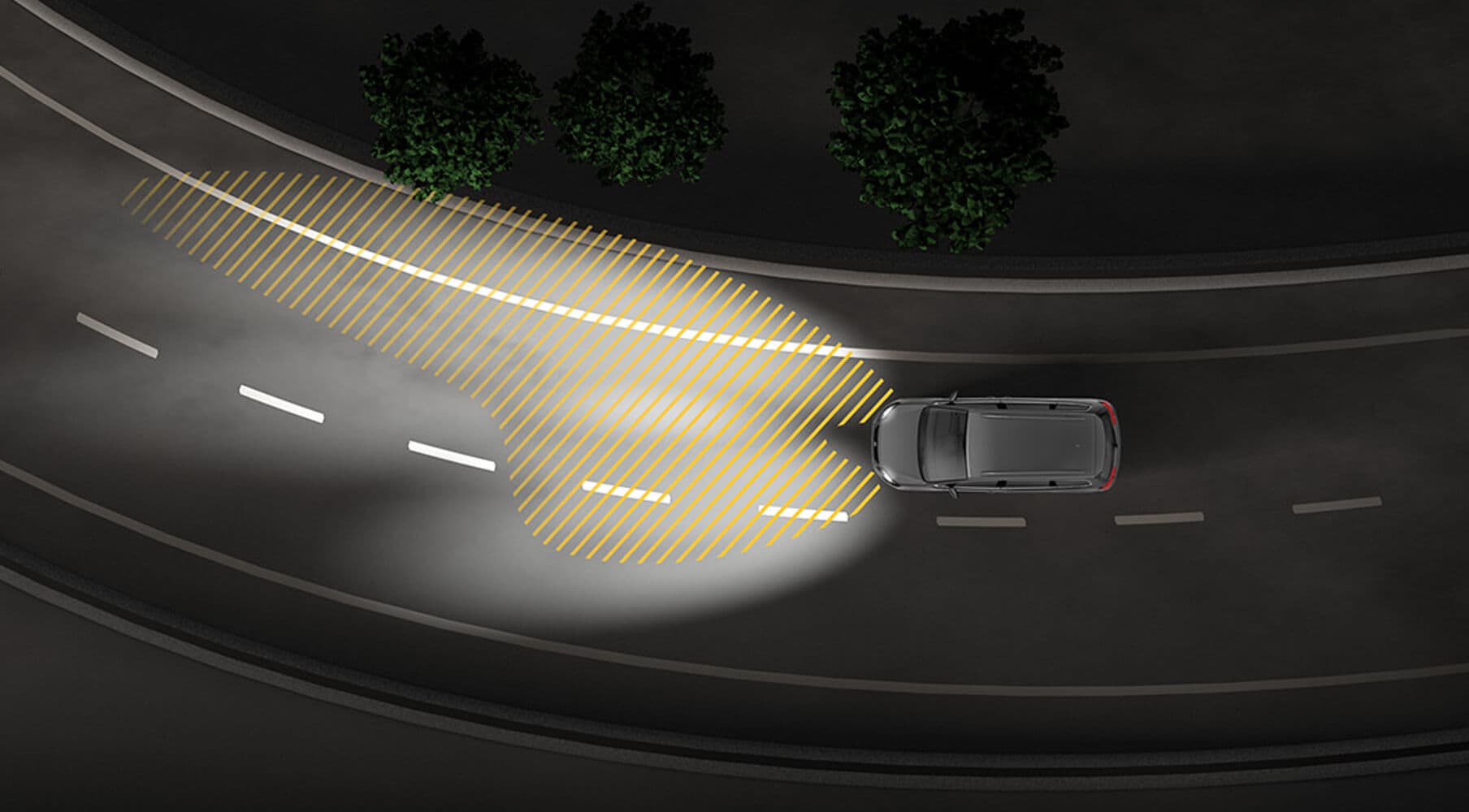
Understanding the Mechanics of AFS
The Adaptive Front-lighting System was developed to address this fundamental flaw. AFS is an electronic, intelligent system that adjusts the direction and intensity of the vehicle’s low-beam headlights based on steering input, vehicle speed, and sometimes even the tilt of the car. When you turn the steering wheel to negotiate a bend, the AFS sensors detect this movement and physically rotate the headlight modules to follow the curvature of the road. This ensures that the light beam is always directed exactly where the vehicle is heading, rather than where the front bumper happens to be pointing.
The Sensor Suite and Electronic Control
At the heart of an AFS setup is a sophisticated array of sensors. These typically include steering angle sensors, yaw rate sensors, and wheel speed sensors. The data from these sources is fed into an electronic control unit (ECU), which calculates the optimal angle for the headlight projection. Because the system relies on real-time data processing, the adjustment occurs in milliseconds. This is not a mechanical linkage, but rather a digitized, software-driven response that mimics the way a human gaze shifts to anticipate a turn.
Safety Benefits and Visibility Enhancements
The primary motivation for implementing AFS is the dramatic improvement in safety, particularly during night driving. Statistics consistently show that visibility-related accidents are a significant concern, especially on winding rural roads or in poorly lit urban environments. By illuminating the road ahead before the vehicle actually enters the turn, AFS allows drivers to spot obstacles, pedestrians, cyclists, or wildlife much earlier than they would with traditional headlights.
Dynamic Cornering vs. Static Lighting
Many entry-level vehicles feature “cornering lights,” which are simple fog lights that illuminate when the steering wheel reaches a certain angle or the turn signal is engaged. It is important to distinguish these from true AFS. While cornering lights provide a modest improvement in visibility at intersections, they are a static solution. AFS is a dynamic system; it provides a continuous, fluid adjustment that covers the entire arc of a turn. This provides a sense of confidence to the driver, as the transition between straight-line visibility and curve illumination is seamless.

Weather and Road Surface Adaptation
Advanced AFS setups often incorporate more than just horizontal swiveling. In many high-end systems, the headlights can also adjust the vertical beam pattern. For example, if a car is heavily loaded in the rear, the front may tilt upward, potentially blinding oncoming traffic. AFS uses leveling sensors to automatically keep the beam focused at the correct height regardless of the vehicle’s weight distribution. Furthermore, some systems can adjust the beam spread—widening the light pattern at low speeds to increase peripheral visibility in town, and narrowing it at high speeds to project light further down the highway.
Integration with Emerging Vehicle Technologies
As we look toward the future of autonomous vehicles and advanced driver assistance systems (ADAS), the role of AFS is expanding. The technology is no longer an isolated component; it is becoming a modular part of the vehicle’s overall sensor-fusion network.
The Role of AFS in Autonomous Driving
While autonomous vehicles (AVs) rely on LiDAR, radar, and cameras to “see” the environment, human drivers still remain the primary users of AFS. However, the software logic behind AFS is laying the groundwork for how future cars will communicate with their surroundings. As machine learning algorithms become more proficient at predicting road geometry, AFS will evolve to be even more proactive. Future systems may utilize GPS mapping data to “know” a turn is coming before the steering wheel is even turned, adjusting the lights in anticipation of the road’s topography.
The Shift to Matrix and Laser Technologies
The evolution of AFS is closely tied to the shift toward digital lighting. Modern Matrix LED systems take the concept of AFS to the extreme. Instead of moving the entire headlight unit, these systems use hundreds of individual, electronically controlled LEDs that can be turned on or off independently. This allows for “pixel-perfect” illumination. An AFS-enabled Matrix system can keep the road brightly lit while simultaneously masking out the specific portion of the beam that would hit an oncoming car, effectively providing high-beam performance without blinding other drivers.
Market Impact and Future Outlook
For manufacturers, the implementation of AFS has become a key differentiator in the premium and luxury vehicle segments. Brands that prioritize safety and technology are finding that consumers are increasingly willing to pay a premium for features that reduce the stress of nighttime driving. As the underlying electronic components—servos, sensors, and microprocessors—continue to decrease in cost due to economies of scale, it is highly probable that AFS will transition from a luxury feature to a standard industry expectation, much like anti-lock braking systems (ABS) and electronic stability control (ESC) did in the past.
Sustainability and Efficiency
Beyond safety, there is an energy component to the evolution of AFS. The move toward LED and laser-based lighting systems means that these adaptive features consume significantly less power than the halogen or xenon bulbs of the past. In the era of electric vehicles (EVs), every watt saved improves range. By precisely focusing light only where it is needed and using efficient semiconductor-based light sources, automakers are effectively reducing the electrical load on the vehicle’s battery, contributing to the broader goal of vehicle efficiency.

Conclusion: The Future of Light
Adaptive Front-lighting Systems represent the marriage of mechanical precision and computational intelligence. By moving beyond the static limitations of early headlight designs, AFS has fundamentally changed how we navigate the night. It is a prime example of how software and sensor integration can transform a passive hardware component into an active safety partner. As we move closer to a fully digitized and potentially autonomous automotive landscape, the ability of a vehicle to “see” and “think” about its environment—starting with its ability to illuminate the path ahead—will continue to be a defining characteristic of technological progress in the automotive sector. For the consumer, this translates to a safer, less fatiguing, and more intuitive driving experience, proving that sometimes, the most effective technology is that which works quietly and efficiently in the background, illuminating the road ahead.
aViewFromTheCave is a participant in the Amazon Services LLC Associates Program, an affiliate advertising program designed to provide a means for sites to earn advertising fees by advertising and linking to Amazon.com. Amazon, the Amazon logo, AmazonSupply, and the AmazonSupply logo are trademarks of Amazon.com, Inc. or its affiliates. As an Amazon Associate we earn affiliate commissions from qualifying purchases.