
Aetna, a venerable name in the American healthcare landscape, stands as a pivotal provider of insurance and related services, playing a critical role in the financial security and health management of millions. Far more than just a company, Aetna represents a comprehensive ecosystem of financial instruments and services designed to protect individuals, families, and businesses from the often unpredictable and substantial costs associated with healthcare. Understanding “what is Aetna insurance” means delving into its expansive offerings, its operational mechanics, and its strategic position within the broader financial and healthcare markets. At its core, Aetna provides a financial safety net, transforming potential catastrophic medical bills into manageable, predictable expenses through a system of pooled risk and managed care.
A Legacy of Financial Protection and Healthcare Solutions
Aetna’s journey began over 170 years ago, evolving from a life insurance company to one of the largest and most influential providers of health benefits in the United States. Its enduring presence underscores its adaptability and commitment to addressing the evolving financial needs related to health and wellness.
Aetna’s Origins and Evolution
Founded in 1853 in Hartford, Connecticut, Aetna initially focused on life insurance. Over the decades, it strategically expanded its portfolio, recognizing the growing demand for diverse financial protection products. The mid-20th century saw Aetna shift significantly towards health insurance, a move that would define its future. This evolution was not merely about offering more products; it was about refining its financial models to better serve a complex healthcare system, navigating economic shifts, regulatory changes, and medical advancements. Today, as part of CVS Health, Aetna leverages an integrated approach, aiming to simplify healthcare by connecting insurance benefits with pharmacy services and community-based care, thereby optimizing financial outcomes for its members.
Core Mission and Values in the Insurance Landscape
Aetna’s mission revolves around building a healthier world. From a financial perspective, this translates into providing accessible, affordable, and high-quality healthcare coverage that empowers members to make informed financial decisions about their health. The company’s values emphasize integrity, excellence, and a commitment to its members, all of which are critical in a sector where trust and financial transparency are paramount. By striving to make healthcare simpler and more personalized, Aetna aims to reduce financial stress for its beneficiaries, allowing them to focus on their well-being without the constant worry of insurmountable medical debt. This mission is undergirded by sophisticated actuarial science and robust financial management, ensuring the long-term stability and reliability of its promises.
Who Aetna Serves: A Broad Spectrum of Needs
Aetna’s financial products are designed to cater to an incredibly diverse clientele. This includes:
-
Individuals and Families: Seeking direct coverage to protect against personal healthcare costs.
-
Employers: Ranging from small businesses to large corporations, providing group health benefits as a crucial component of employee compensation and financial security.
-
Government Entities: Partnering with federal and state programs like Medicare and Medicaid to administer managed care plans for eligible populations, often those with specific financial needs or vulnerabilities.
-
International Clients: Offering global health insurance solutions for expatriates and multi-national corporations.
This broad reach means Aetna’s financial models must be flexible and robust enough to manage varied risk pools and regulatory environments, offering tailored financial solutions that range from basic catastrophic coverage to comprehensive wellness programs.
Understanding Aetna’s Diverse Portfolio of Financial Products
Aetna’s strength lies in its comprehensive suite of insurance products, each designed to address specific financial vulnerabilities related to health.
Health Insurance Plans: Navigating Healthcare Costs
The cornerstone of Aetna’s offerings is its array of health insurance plans, which are financial contracts designed to cover medical expenses in exchange for premiums.
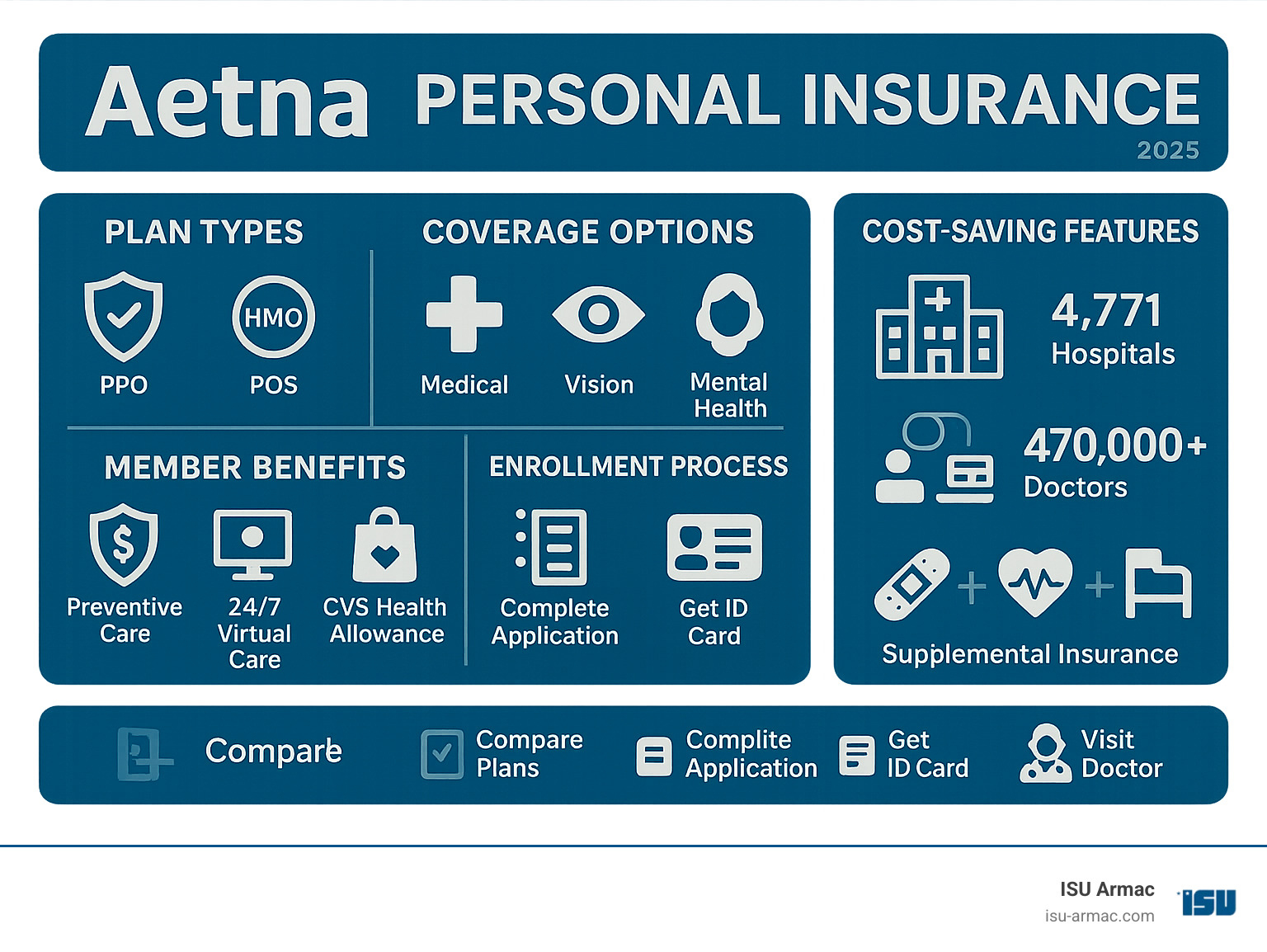
PPO, HMO, EPO, POS: Deciphering Plan Types
-
Preferred Provider Organization (PPO): Offers flexibility. Members can choose any doctor or hospital, but costs are lower when using in-network providers. This flexibility comes with generally higher premiums.
-
Health Maintenance Organization (HMO): Requires members to choose a primary care provider (PCP) who coordinates all care and provides referrals to specialists. HMOs typically have lower premiums and out-of-pocket costs but less flexibility in provider choice.
-
Exclusive Provider Organization (EPO): Similar to PPOs but generally does not cover out-of-network care, except in emergencies.
-
Point of Service (POS): A hybrid plan combining aspects of PPO and HMO, offering more flexibility than an HMO but with a gatekeeper PCP requirement.
Each plan type represents a different balance between financial cost (premiums, deductibles) and freedom of choice, allowing consumers to align their insurance with their financial priorities and healthcare preferences.
High-Deductible Health Plans (HDHPs) and HSAs/FSAs
HDHPs are designed with lower monthly premiums but higher deductibles. These plans are often paired with a Health Savings Account (HSA) or Flexible Spending Account (FSA), which are tax-advantaged financial tools allowing members to save and pay for qualified medical expenses. This provides a significant financial planning advantage, particularly for those who are relatively healthy or want to manage their healthcare spending more directly.
Coverage Components: Medical, Prescription, Dental, Vision
A typical Aetna health insurance plan includes coverage for a wide range of services:
-
Medical: Doctor visits, hospital stays, surgeries, lab tests, preventative care.
-
Prescription Drugs: A formulary (list of covered drugs) and tiered co-payments.
-
Dental and Vision: Often offered as standalone or supplemental plans, covering routine care, procedures, and corrective lenses/exams, contributing to overall financial wellness by addressing a broader spectrum of health needs.
Group Benefits for Businesses and Organizations
Aetna is a leading provider of employer-sponsored plans, which are critical for talent acquisition and retention, serving as a significant financial investment for businesses.
Employer-Sponsored Health Plans
Aetna offers customizable health plans for businesses of all sizes, allowing employers to offer competitive benefits packages that align with their budget and employee needs. These plans often involve cost-sharing arrangements between the employer and employees, impacting both corporate finance and individual employee take-home pay.
Ancillary Benefits: Life, Disability, and Voluntary Products
Beyond medical, Aetna also provides a suite of ancillary financial protection products such as:
-
Group Life Insurance: Provides a financial payout to beneficiaries upon the insured’s death.
-
Short- and Long-Term Disability Insurance: Replaces a portion of income if an employee cannot work due to illness or injury, offering crucial financial stability.
-
Voluntary Benefits: Such as critical illness or accident insurance, which employees can purchase directly, complementing their core health coverage with additional financial safeguards.
Medicare and Medicaid Solutions
Aetna plays a substantial role in government-sponsored health programs, providing financial management and access to care for seniors and low-income individuals.
Aetna Medicare Advantage Plans (Part C)
Aetna offers Medicare Advantage plans, which are private health plans approved by Medicare, providing all the benefits of original Medicare (Part A and Part B) plus additional benefits like prescription drug coverage (Part D), vision, dental, and wellness programs. These plans are a financial alternative to Original Medicare, often featuring lower out-of-pocket costs and integrated services.
Medicare Supplement Plans (Medigap)

For those who prefer Original Medicare, Aetna provides Medigap plans, which help cover the “gaps” in Original Medicare coverage, such as deductibles, co-payments, and coinsurance. These plans provide financial predictability and reduce unexpected out-of-pocket expenses.
Medicaid Managed Care Programs
Aetna partners with states to administer Medicaid managed care plans, offering comprehensive healthcare services to eligible low-income individuals and families. These programs are vital for financial equity and access to care for vulnerable populations.
International Health Insurance
For global businesses and individuals working or living abroad, Aetna provides international health insurance solutions. These plans address the unique financial and logistical challenges of accessing healthcare across borders, offering financial peace of mind to expatriates.
The Financial Mechanics of Aetna Insurance: Premiums, Deductibles, and Benefits
Understanding Aetna insurance from a financial perspective means grasping the interplay of premiums, deductibles, co-payments, and benefits—the core elements that determine a member’s out-of-pocket expenses and the insurer’s obligations.
Premiums: Your Regular Investment in Protection
Premiums are the regular payments made to Aetna to maintain coverage. These payments are the financial backbone of the insurance system, funding the pool from which claims are paid. Factors influencing premiums include age, location, plan type, tobacco use, and the number of covered individuals. From a financial planning standpoint, premiums represent a predictable, recurring expense exchanged for protection against unpredictable, potentially very high costs.
Deductibles, Copayments, and Coinsurance: Managing Out-of-Pocket Expenses
-
Deductible: The amount you must pay out-of-pocket for covered medical services before Aetna begins to pay. This is a crucial financial threshold.
-
Copayment (Copay): A fixed amount you pay for a covered healthcare service after you’ve met your deductible. It’s a smaller, predictable cost for routine services.
-
Coinsurance: Your share of the cost of a covered healthcare service, calculated as a percentage (e.g., Aetna pays 80%, you pay 20%) after you’ve met your deductible.
These mechanisms are designed to share the financial risk between the insured and the insurer, encouraging judicious use of healthcare services while still providing substantial financial protection.
Understanding Your Maximum Out-of-Pocket (MOOP) Limit
The Maximum Out-of-Pocket (MOOP) limit is a critical financial safeguard. This is the absolute maximum amount you will have to pay for covered services in a plan year. Once you reach this limit, Aetna pays 100% of the cost for all covered benefits for the remainder of the year. The MOOP provides ultimate financial predictability, ensuring that even in the event of a catastrophic illness or accident, your personal financial exposure is capped.
The Value Proposition: Financial Security Against Unforeseen Costs
The ultimate value of Aetna insurance, from a financial perspective, is the peace of mind and protection it offers against potentially devastating medical costs. Without insurance, a single major illness or accident could lead to bankruptcy. Aetna’s role is to pool risks, spread costs, and provide the financial leverage necessary to access high-quality medical care without incurring insurmountable debt. It transforms unpredictable financial risk into a manageable, budgeted expense.
Choosing Aetna: Factors for Financial Decision-Making
Selecting an Aetna plan requires careful consideration of personal financial circumstances, health needs, and long-term goals.
Assessing Your Healthcare Needs and Budget
A crucial first step is to honestly assess your expected healthcare usage and your financial capacity. Do you have chronic conditions? Do you visit the doctor frequently? What are your comfort levels with higher deductibles versus higher premiums? Balancing these factors is key to finding a plan that offers optimal financial value.
Network Access and Provider Choice
Consider the network of doctors, specialists, and hospitals. Does Aetna’s network include your preferred providers? Out-of-network care can significantly increase your financial burden, so network compatibility is a practical and financial consideration.
Member Resources and Digital Tools for Financial Management
Aetna offers a suite of digital tools and resources, including online portals, mobile apps, and customer service. These tools allow members to:
-
Track claims and deductibles.
-
Find in-network providers.
-
Estimate costs for procedures.
-
Access wellness programs.
These resources empower members to better manage their healthcare finances and make more informed decisions.
Considering Aetna’s Reputation and Financial Stability
As a major insurer, Aetna’s financial strength and reputation for customer service are important considerations. Its history and integration with CVS Health underscore its stability and long-term commitment to the insurance market, providing assurance that the company will be there to honor its financial commitments.
The Future of Health Insurance and Aetna’s Role
The landscape of healthcare and health insurance is constantly evolving, driven by technological advancements, demographic shifts, and policy changes. Aetna, as a key player, continues to adapt and innovate to meet these challenges.
Adapting to Healthcare Reform and Market Dynamics
Aetna continuously navigates the complexities of healthcare reform, such as the Affordable Care Act (ACA), and dynamic market forces. This includes adjusting its plan designs, pricing strategies, and service offerings to remain competitive and compliant while still delivering financial value to its members.
The Integration of Technology for Financial Wellness
The future of Aetna insurance is increasingly tied to technology. This includes using AI for claims processing, telehealth for convenient and cost-effective care access, predictive analytics for proactive health management, and personalized digital tools to help members understand and manage their financial obligations for healthcare. These innovations aim to reduce administrative costs, improve health outcomes, and ultimately enhance the financial experience for members.

Emphasizing Preventive Care and Value-Based Models
Aetna is increasingly focusing on preventive care and value-based care models, which incentivize providers for patient outcomes rather than just the volume of services. From a financial perspective, this approach aims to reduce overall healthcare costs in the long run by keeping members healthier, preventing serious illnesses, and promoting efficient, high-quality care. This shift represents a move towards a more sustainable financial model for both the insurer and the insured.
In conclusion, Aetna insurance is a multifaceted financial instrument designed to provide critical protection against the costs of healthcare. From its diverse range of plans and the intricate financial mechanics of premiums and deductibles, to its strategic role in public and private health programs, Aetna stands as a crucial pillar in the financial well-being of individuals and the broader economy. Understanding Aetna is to understand a significant component of modern financial planning and risk management in the context of health.
aViewFromTheCave is a participant in the Amazon Services LLC Associates Program, an affiliate advertising program designed to provide a means for sites to earn advertising fees by advertising and linking to Amazon.com. Amazon, the Amazon logo, AmazonSupply, and the AmazonSupply logo are trademarks of Amazon.com, Inc. or its affiliates. As an Amazon Associate we earn affiliate commissions from qualifying purchases.