
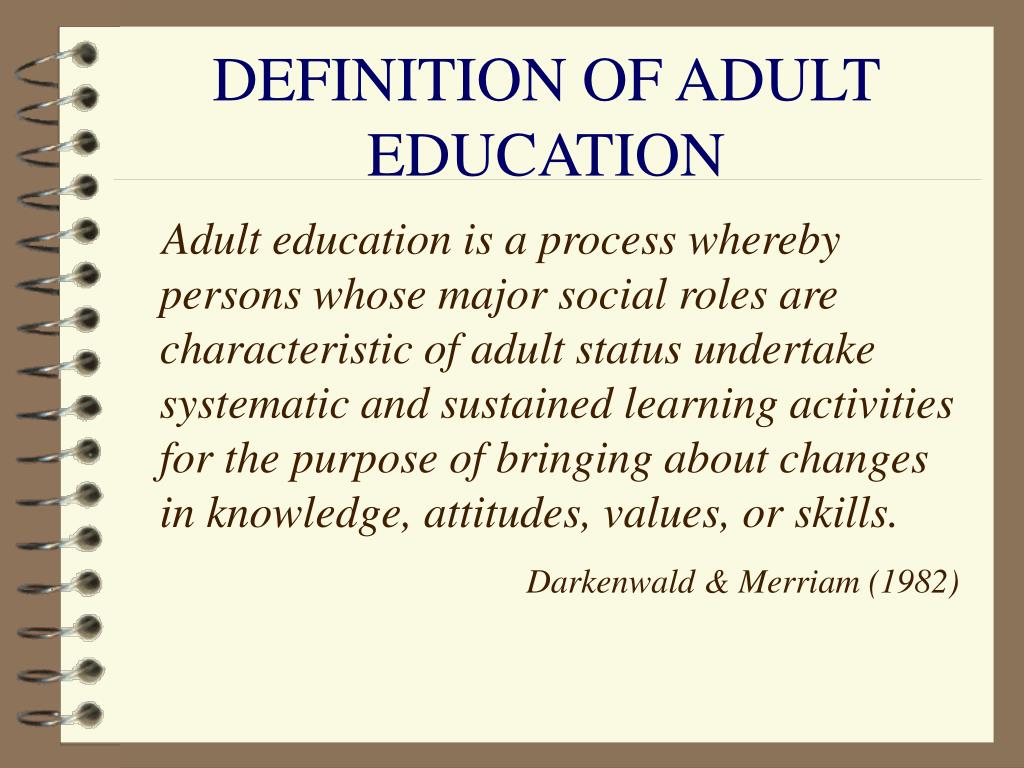
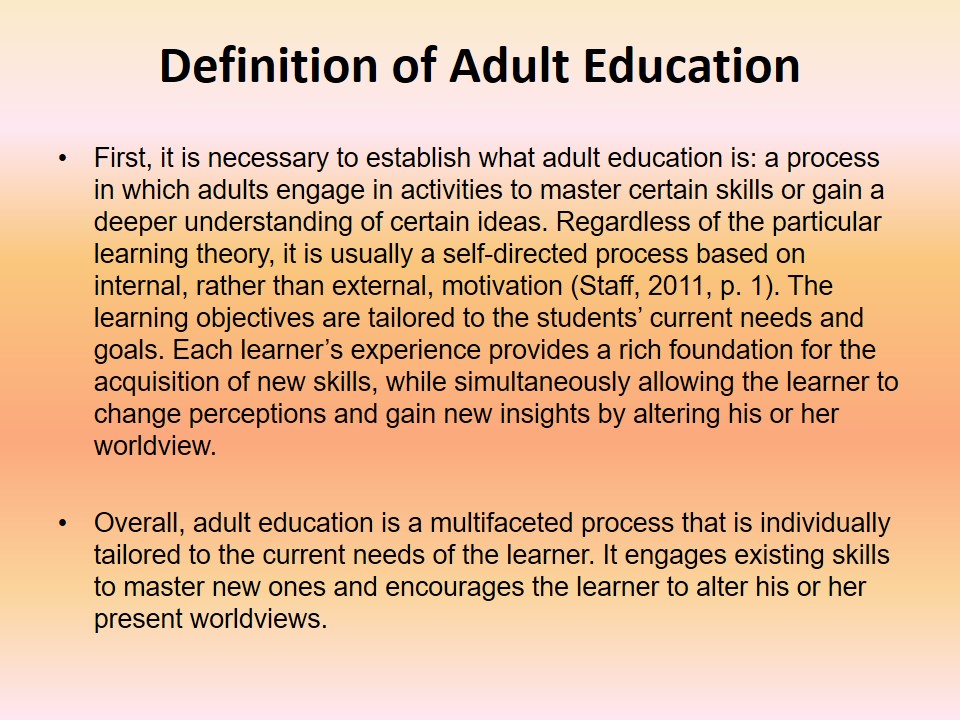
Adult education, at its core, represents a deliberate pursuit of knowledge, skills, or personal development undertaken by individuals who have typically completed their initial schooling. Far from being a mere continuation of academic studies, it is often a strategic decision with profound financial implications, serving as a critical tool for personal finance management, career advancement, wealth creation, and long-term economic stability. For many, adult education is less about acquiring a degree and more about a focused investment in human capital designed to yield tangible financial returns, whether through increased earning potential, entrepreneurial success, or enhanced financial literacy.
Adult Education as a Strategic Financial Investment
The decision to engage in adult education is frequently driven by a clear financial objective: to improve one’s economic standing. In today’s dynamic job market, static skill sets are a liability, while continuous learning becomes an asset that appreciates over time, directly impacting an individual’s financial trajectory.
Enhancing Earning Potential
One of the most immediate and quantifiable benefits of adult education is its capacity to enhance earning potential. The global economy constantly evolves, creating new demands for specific skills while rendering others obsolete. Adult education allows individuals to bridge these skill gaps, making themselves more competitive and valuable in the workforce.
For instance, acquiring industry-recognized certifications in fields like project management, data analytics, or cybersecurity through adult education programs can directly qualify individuals for higher-paying roles or promotions. These credentials signal expertise and commitment, often leading to significant bumps in salary. Furthermore, a specialized skill set can strengthen an individual’s negotiating power during salary reviews or job transitions, enabling them to command a premium for their expertise. It’s a direct application of supply and demand economics to personal finance: by increasing the supply of highly sought-after skills within oneself, an individual increases their market value.
Career Pivots and Reinvention
The modern career path is rarely linear. Many individuals find themselves needing or desiring to pivot into entirely new industries or roles, often motivated by a pursuit of better compensation, greater job security, or more alignment with personal values that also offer financial benefits. Adult education provides the necessary pathways for such career reinvention.
Whether it’s a factory worker retraining for a career in renewable energy, a marketing professional learning coding to enter the tech sector, or a stay-at-home parent acquiring administrative skills to re-enter the workforce, these transitions are often undertaken with an eye on long-term financial stability and growth. Investing in education for a career pivot can be a strategic move to escape stagnant wages, overcome industry decline, or capitalize on emerging high-growth sectors. It is a proactive step to future-proof one’s income against the threats of automation and economic shifts, fundamentally altering one’s financial risk profile for the better.
Funding Adult Education: Smart Financial Planning
While the financial benefits of adult education are clear, the upfront costs can be a significant consideration. Approaching adult education requires a sound financial plan, treating it not as an expense but as a calculated investment with anticipated returns.
Exploring Funding Avenues
Funding adult education often involves exploring a variety of financial avenues to minimize personal out-of-pocket expenses and maximize the return on investment. Many employers, recognizing the value of a skilled workforce, offer tuition reimbursement programs for courses relevant to an employee’s role or the company’s strategic goals. This can be a highly cost-effective way to upskill, as the employer bears much of the financial burden.
Beyond employer support, numerous scholarships and grants are specifically designed for adult learners, often based on financial need, academic merit, specific demographics, or chosen fields of study. These non-repayable funds can significantly reduce the financial strain. Government-sponsored training programs, often aimed at reskilling displaced workers or bolstering specific industries, also offer valuable opportunities for subsidized or free education. When self-funding is necessary, individuals must weigh the benefits of low-interest loans against personal savings, always conducting a thorough cost-benefit analysis.
Cost-Benefit Analysis and ROI
A crucial step in financial planning for adult education is performing a rigorous cost-benefit analysis to determine the potential Return on Investment (ROI). This involves quantifying not only the direct costs—tuition, fees, materials—but also the indirect costs, such as potential lost income from reduced work hours or time dedicated to study.
These costs are then weighed against the potential financial gains: projected salary increases, bonuses, promotion opportunities, or the revenue generation potential of a new business venture. For example, if a certification costs $5,000 but is reasonably expected to increase annual income by $10,000, the ROI is evident within a year. Understanding this ROI helps justify the upfront expenditure and provides a clear financial incentive for persistence. It transforms the decision from an expenditure into a strategic financial move aimed at long-term wealth accumulation.
Adult Education for Entrepreneurship and Online Income
Adult education is not solely for traditional employment. It is an invaluable resource for individuals aspiring to generate income through entrepreneurial ventures, freelancing, or the burgeoning online economy, directly impacting personal and business finance.
Developing Business Acumen
For aspiring entrepreneurs, adult education offers critical pathways to developing the necessary business acumen. Programs focused on small business management, financial literacy, marketing strategies, and operational logistics can equip individuals with the foundational knowledge to launch and sustain a successful enterprise. These courses often cover essential financial topics like budgeting, cash flow management, understanding profit and loss statements, and securing seed capital – all vital for an enterprise’s survival and growth.
Incubator programs and workshops for adult learners provide not just theoretical knowledge but also practical guidance, mentorship, and networking opportunities that are invaluable for securing investment or forging partnerships. By understanding the financial mechanics of business from the ground up, entrepreneurs can make informed decisions that mitigate risk and maximize profitability.
Mastering Digital Skills for Online Income
The internet has democratized income generation, creating myriad opportunities for online income and side hustles. Adult education is pivotal in equipping individuals with the digital skills needed to tap into this economy. Programs in digital marketing, web development, content creation, graphic design, and e-commerce platforms enable individuals to launch successful freelancing careers, build online businesses, or generate passive income streams.
Learning how to leverage platforms like Upwork, Fiverr, or Etsy, or mastering the intricacies of affiliate marketing and creating digital products, can transform raw talent into revenue. These skills offer unparalleled flexibility and scalability, allowing individuals to control their earning potential and build diverse income portfolios, moving away from reliance on a single employer.
Building and Scaling Side Hustles
Many adults seek additional income through side hustles, whether to supplement their primary income, pay off debt, or save for specific financial goals. Adult education can identify profitable niche skills and provide the training to develop them. For instance, a course in advanced Excel could lead to a side gig as a freelance data analyst, or a workshop on social media strategy could enable someone to manage social media for small businesses.
Effective time management and financial tracking, often covered in adult education business modules, are crucial for managing a successful side hustle without compromising one’s main employment. For those with entrepreneurial ambitions, adult education can also provide the framework and support to eventually scale a successful side hustle into a full-time venture, thereby creating significant wealth and achieving financial independence.
Long-Term Financial Security and Wealth Building
Beyond immediate income gains, adult education plays a crucial role in fostering long-term financial security and contributing to sustainable wealth building strategies. It is an investment in adaptability and resilience, critical attributes in an unpredictable economic landscape.
Mitigating Financial Risks
In a rapidly changing economic environment, the greatest financial risk can be stagnation. Adult education acts as a continuous hedge against this risk, ensuring individuals remain relevant and employable. By continually updating skills and knowledge, adults reduce their vulnerability to job displacement, industry downturns, and technological obsolescence. This enhances employability across various sectors, creating a stronger financial safety net and greater peace of mind.
Furthermore, acquiring new skills through adult education can lead to the diversification of income streams, reducing reliance on a single source of income. This diversification is a fundamental principle of risk management in finance, applied here to personal earning capacity. A broader skill set means more options during economic shifts, safeguarding an individual’s financial well-being.
The Compounding Effect of Knowledge
Just as financial investments grow through compounding interest, investments in knowledge and skills through adult education can yield a compounding effect on one’s financial life. Each new skill or piece of knowledge acquired not only adds value independently but also synergizes with existing abilities, opening up new opportunities and accelerating career progression. This continuous learning fosters a mindset of growth and adaptability, essential for navigating complex financial decisions throughout a lifetime.
Moreover, adult education often includes modules on personal finance, investment strategies, and economic principles, directly empowering individuals to make smarter decisions about their money. This heightened financial literacy, combined with increased earning potential, can significantly impact long-term financial planning, from robust retirement savings and strategic investments to building a lasting financial legacy for future generations. The journey of adult education is, in essence, a journey of continuous financial empowerment.
aViewFromTheCave is a participant in the Amazon Services LLC Associates Program, an affiliate advertising program designed to provide a means for sites to earn advertising fees by advertising and linking to Amazon.com. Amazon, the Amazon logo, AmazonSupply, and the AmazonSupply logo are trademarks of Amazon.com, Inc. or its affiliates. As an Amazon Associate we earn affiliate commissions from qualifying purchases.