
In the volatile world of global finance, uncertainty is the only constant. Whether it is a sudden market crash, a natural disaster impacting thousands of properties, or the gradual shift in human life expectancy, the financial implications of the future are notoriously difficult to predict. This is where actuary science—or actuarial science—steps in. Often described as the “mathematics of insurance,” actuarial science is a rigorous discipline that applies mathematical and statistical methods to assess risk in insurance, finance, and other industries.
For anyone navigating the realms of personal finance, corporate investment, or large-scale business strategy, understanding actuarial science is essential. It is the invisible engine that determines how much you pay for home insurance, how pension funds remain solvent over decades, and how multi-billion dollar corporations protect themselves against catastrophic loss. By blending probability, statistics, and financial theory, actuarial science turns the “unknown” into a manageable, priceable commodity.
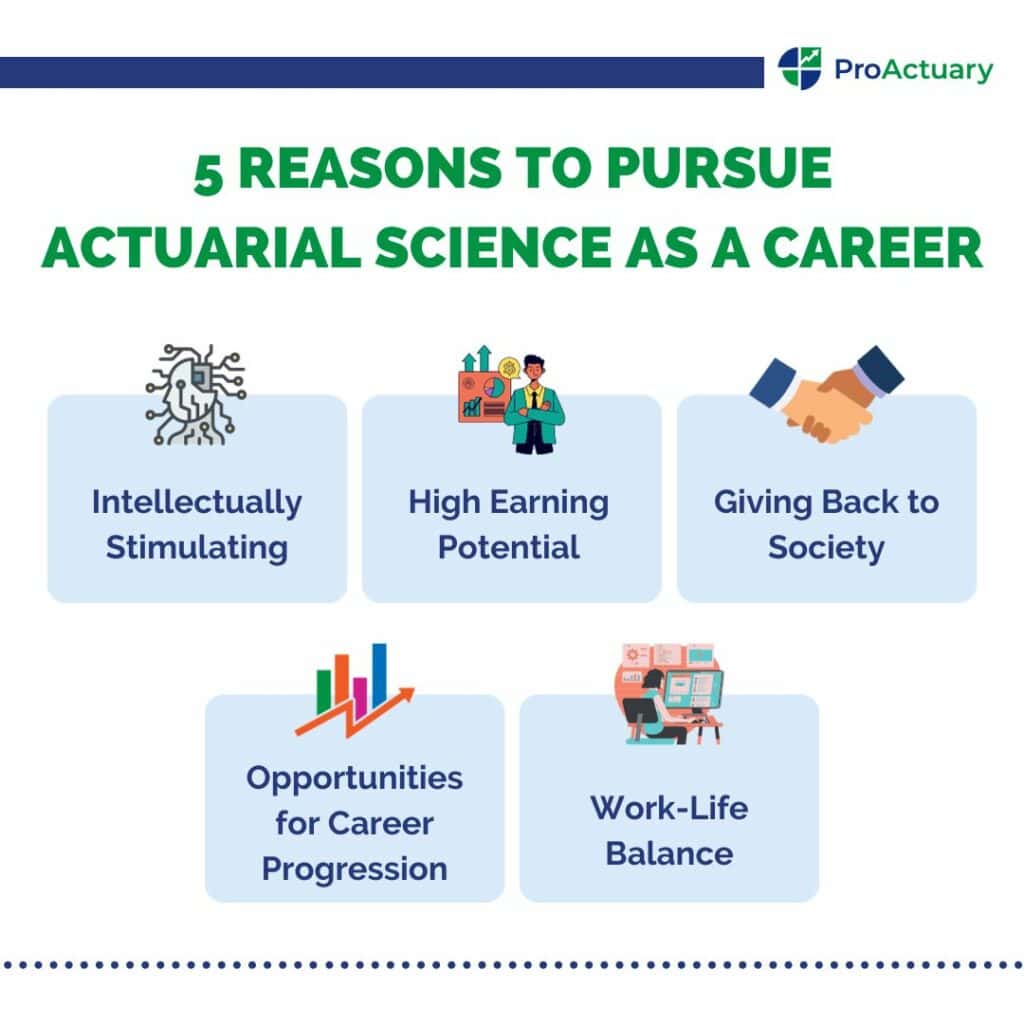
The Core Foundations of Actuarial Science in the Financial Sector
At its heart, actuarial science is the study of financial contingency. While a regular accountant looks at the past to balance the books, an actuary looks at the future to ensure the books will balance regardless of what happens. This proactive approach to money management relies on several key pillars that allow professionals to quantify the cost of risk.
Risk Assessment and Probability Theory
The most fundamental tool of the actuary is probability. In the context of money and finance, risk assessment involves calculating the likelihood of a specific event occurring—such as a car accident, a terminal illness, or a stock market dip—and determining the financial impact of that event. By using historical data and complex algorithms, actuaries can predict with startling accuracy the frequency and severity of future claims or losses. This allows financial institutions to set aside the correct amount of capital (reserves) to ensure they can meet their obligations to customers and shareholders.
The Time Value of Money and Compound Interest
In the world of investing and long-term business finance, a dollar today is never worth the same as a dollar ten years from now. Actuarial science relies heavily on the “Time Value of Money” (TVM). Because many of the financial products managed by actuaries (like life insurance or retirement annuities) span decades, they must account for inflation, interest rates, and the power of compounding. Calculating the “Present Value” of a future liability is a core skill; if an insurance company expects to pay out $1 million in twenty years, they must know exactly how much they need to invest today, at what rate of return, to reach that goal.
Statistical Modeling for Financial Forecasting
Modern actuarial science has evolved beyond simple spreadsheets. It now utilizes sophisticated stochastic modeling—a form of financial forecasting that accounts for random variables. Instead of predicting a single outcome, these models run thousands of simulations to see a range of possible financial futures. This “Monte Carlo simulation” approach helps banks and insurance providers understand “tail risk”—the small but devastating possibility of extreme market events that could lead to insolvency.
Major Industries Driven by Actuarial Analysis
While many people associate actuarial science exclusively with insurance, its influence permeates almost every corner of the financial world. Any industry that deals with long-term financial commitments or high levels of uncertainty requires actuarial oversight to remain profitable and stable.
Insurance: The Bedrock of Actuarial Work
The insurance industry is the primary employer of actuaries. Whether it is Life, Health, or Property and Casualty (P&C) insurance, the business model depends on “pooling risk.” Actuaries analyze demographic data, health trends, and geographic risks to determine premium prices. If the premiums are too high, the company loses customers to competitors; if they are too low, the company may not have enough money to pay out claims. Actuaries find the “sweet spot” that ensures the financial health of the firm while providing value to the policyholder.
Pensions and Retirement Planning
Managing a pension fund is one of the most complex financial challenges in existence. It requires balancing the contributions of current workers against the future needs of retirees who may live for another 30 or 40 years. Actuaries in this field, known as pension actuaries, calculate “longevity risk”—the risk that retirees will live longer than expected, potentially exhausting the fund’s assets. They advise corporations and governments on how much to contribute to these funds today to prevent a financial shortfall in the future, making them central figures in the world of personal finance and social security.
Investment Banking and Asset Management

In recent years, the lines between actuarial science and investment banking have blurred. Actuaries are now frequently found in asset management, helping to design investment portfolios that match the specific liability profiles of large institutions. For example, if a company has high future liabilities, an actuary will help structure a “Liability-Driven Investment” (LDI) strategy. This ensures that the assets (stocks, bonds, real estate) are perfectly synced with the timing and magnitude of the money the company will eventually need to pay out.
The Strategic Role of Actuaries in Corporate Finance
Beyond the technical calculations, actuarial science provides a strategic framework for business finance. High-level executives rely on actuarial insights to make decisions about the growth, stability, and legal compliance of their organizations.
Capital Management and Solvency
For financial institutions, “solvency” is the ability to meet long-term debts and financial obligations. Governments around the world impose strict regulatory requirements (such as Solvency II in Europe) that dictate how much capital a financial firm must hold in reserve. Actuaries are responsible for calculating these requirements. They ensure that even in a worst-case economic scenario, the company has enough liquid cash to survive. This is a critical component of global financial stability, preventing the kind of “domino effect” seen during the 2008 financial crisis.
Enterprise Risk Management (ERM)
Enterprise Risk Management is a holistic approach to business finance. Instead of looking at risks in isolation (e.g., just looking at fire risk or just looking at market risk), ERM looks at how all risks across a corporation interact. Actuaries identify “correlations”—the ways in which different financial threats might happen at the same time. By providing a “risk dashboard” for the C-suite, actuaries help CEOs and CFOs understand the total risk appetite of the firm, allowing them to take calculated risks that drive profit without endangering the company’s survival.
Mergers and Acquisitions (M&A) Due Diligence
When one company looks to buy another, the “sticker price” rarely tells the whole story. Hidden liabilities, such as underfunded pension plans or pending insurance claims, can turn a profitable acquisition into a financial disaster. Actuaries play a vital role in the M&A process by conducting “due diligence.” They perform a deep dive into the target company’s books to value their future obligations. By providing an accurate valuation of these liabilities, actuaries prevent companies from overpaying and help negotiate fairer financial terms.
Path to Financial Success: The Career and Economic Outlook
Actuarial science is not just a field of study; it is one of the most lucrative and stable career paths in the world of finance. It offers a unique blend of high earning potential, job security, and the intellectual challenge of solving some of the world’s toughest money problems.
Professional Certification and Accreditation
Becoming an actuary is a marathon, not a sprint. It requires passing a series of rigorous professional exams hosted by organizations like the Society of Actuaries (SOA) or the Casualty Actuarial Society (CAS). These exams cover everything from advanced calculus and probability to financial economics and law. Because the barrier to entry is so high, those who reach “Fellowship” status are among the most respected and highly compensated professionals in the financial sector.
Salary Expectations and Economic Stability
From a “Money” perspective, actuary science is a high-ROI career. Entry-level actuaries often start with salaries significantly higher than the national average, and as they pass more exams, their earning potential increases exponentially. Furthermore, because risk management is a necessity in both good and bad economic times, actuaries enjoy a level of job security that is rare in other areas of high finance. Even during a recession, companies still need to manage risk and value their liabilities, making actuaries “recession-proof” assets.

The Future of Actuarial Science in a Digital Economy
As we move further into the age of Big Data and Artificial Intelligence, the field of actuarial science is expanding. Modern actuaries are becoming “data scientists of risk.” They are now incorporating non-traditional data—such as telematics from cars or real-time health data from wearables—into their financial models. This allows for even more precise pricing of financial products and better personal finance management for consumers. The integration of “InsurTech” and “FinTech” ensures that actuarial science will remain at the forefront of the financial industry for decades to come.
In conclusion, actuarial science is the fundamental discipline that allows our modern financial system to function. It provides the mathematical certainty required for banks to lend, for insurers to protect, and for individuals to save for a secure retirement. By mastering the intersection of math and money, actuarial science doesn’t just predict the future—it helps finance it.
aViewFromTheCave is a participant in the Amazon Services LLC Associates Program, an affiliate advertising program designed to provide a means for sites to earn advertising fees by advertising and linking to Amazon.com. Amazon, the Amazon logo, AmazonSupply, and the AmazonSupply logo are trademarks of Amazon.com, Inc. or its affiliates. As an Amazon Associate we earn affiliate commissions from qualifying purchases.