
Absorption, in its broadest scientific and technological sense, refers to the process by which matter takes up energy, substances, or particles. This fundamental phenomenon underpins countless technologies, from the efficiency of solar cells and the clarity of optical fibers to the performance of acoustic panels and the safety of medical imaging. Understanding “what absorption is measured in” is crucial for engineers, scientists, and innovators to design, optimize, and evaluate these technologies effectively. Unlike a single, universal metric, the measurement of absorption is highly context-dependent, varying significantly based on the type of energy or substance being absorbed and the material doing the absorbing. This article delves into the diverse world of absorption measurement within the technology sector, exploring key methodologies and the units that define them.
Understanding the Multifaceted Nature of Absorption in Technology
At its core, absorption involves a transfer of energy or matter from one medium to another. In technological applications, this often translates to a material’s ability to diminish, retain, or transform incoming energy (like light, sound, or heat) or to take in substances (like gases or liquids). The precise measurement of this process is vital for ensuring performance, safety, and efficiency across a spectrum of industries. Without standardized units and methodologies, comparing materials, optimizing designs, or troubleshooting failures would be impossible.
Consider a simple example: a smartphone screen. Its ability to absorb or reflect ambient light directly impacts visibility. Similarly, the phone’s internal components must dissipate heat, effectively “absorbing” and transferring thermal energy away from sensitive circuits. From macro-level engineering marvels to micro-scale material science, the quantification of absorption is a persistent and critical challenge, demanding specialized tools and an understanding of specific physical units. The journey to answer “what is absorption measured in” is therefore a journey through various scientific disciplines and their unique contributions to technological advancement.
Measuring Light and Electromagnetic Radiation Absorption
The interaction of light and other forms of electromagnetic (EM) radiation with matter is a cornerstone of modern technology, impacting everything from communication systems to display technologies and medical diagnostics. Measuring how materials absorb these waves is critical for their development and application.
Absorbance, Optical Density, and the Beer-Lambert Law
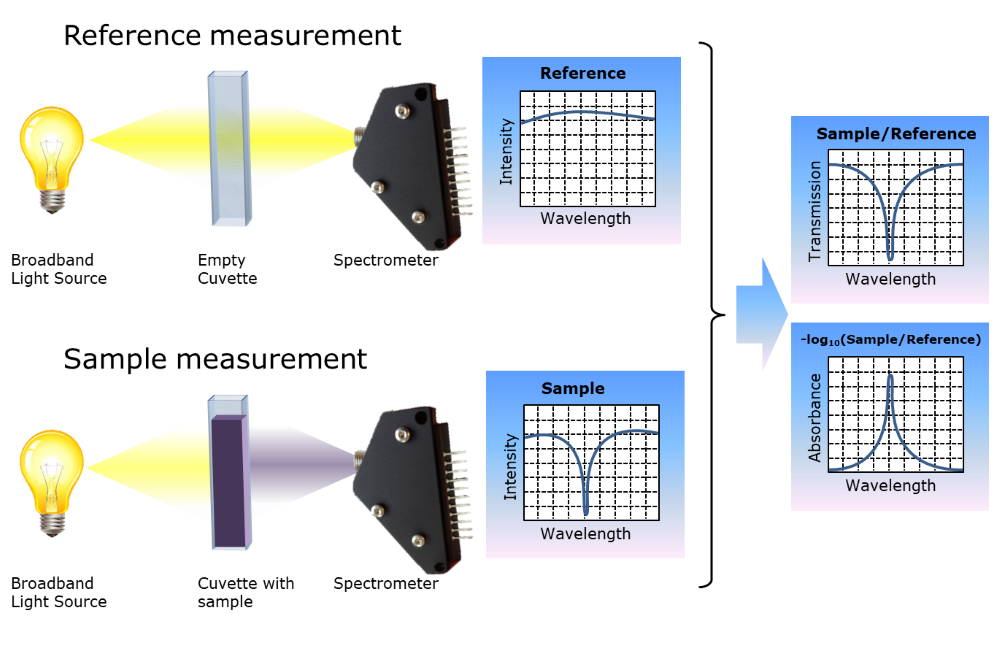
When light passes through a material, some of it is absorbed, reducing the intensity of the transmitted light. This phenomenon is quantified using several related terms:
-
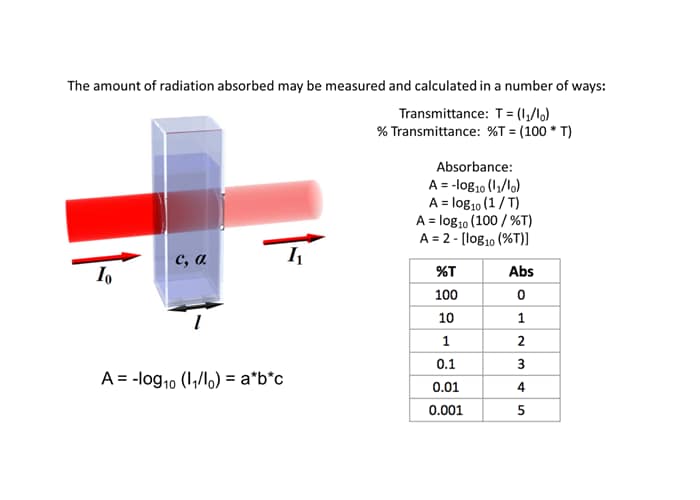
Absorbance (A): This is a logarithmic measure of how much light a sample absorbs at a specific wavelength. It is a unitless quantity, defined as A = log₁₀(I₀/I), where I₀ is the intensity of the incident light and I is the intensity of the transmitted light. A higher absorbance value indicates greater light absorption.
-
Optical Density (OD): Often used interchangeably with absorbance, particularly in fields like photonics and biology, optical density also represents the degree to which a medium is opaque to light. It is likewise unitless and calculated in the same manner as absorbance.
-
Molar Absorption Coefficient (ε): Also known as molar absorptivity, this value describes how strongly a chemical species absorbs light at a given wavelength per unit concentration and path length. It is measured in L⋅mol⁻¹⋅cm⁻¹ (liters per mole per centimeter) or M⁻¹cm⁻¹. The Beer-Lambert Law, A = εcl, directly links absorbance to concentration (c) and path length (l), making ε a crucial parameter for quantitative analysis in spectrophotometry.
These measurements are fundamental in developing LED displays, optical sensors, fiber optics, and various analytical instruments used in chemistry and biotechnology.
Absorption Coefficient and Spectral Analysis
Beyond solutions, solid materials also absorb light. The absorption coefficient (α) quantifies the rate at which light intensity decreases as it propagates through a material. It is typically measured in cm⁻¹ (inverse centimeters) or m⁻¹ (inverse meters), representing the fractional reduction in intensity per unit length. Materials with high absorption coefficients are opaque, while those with low coefficients are transparent.
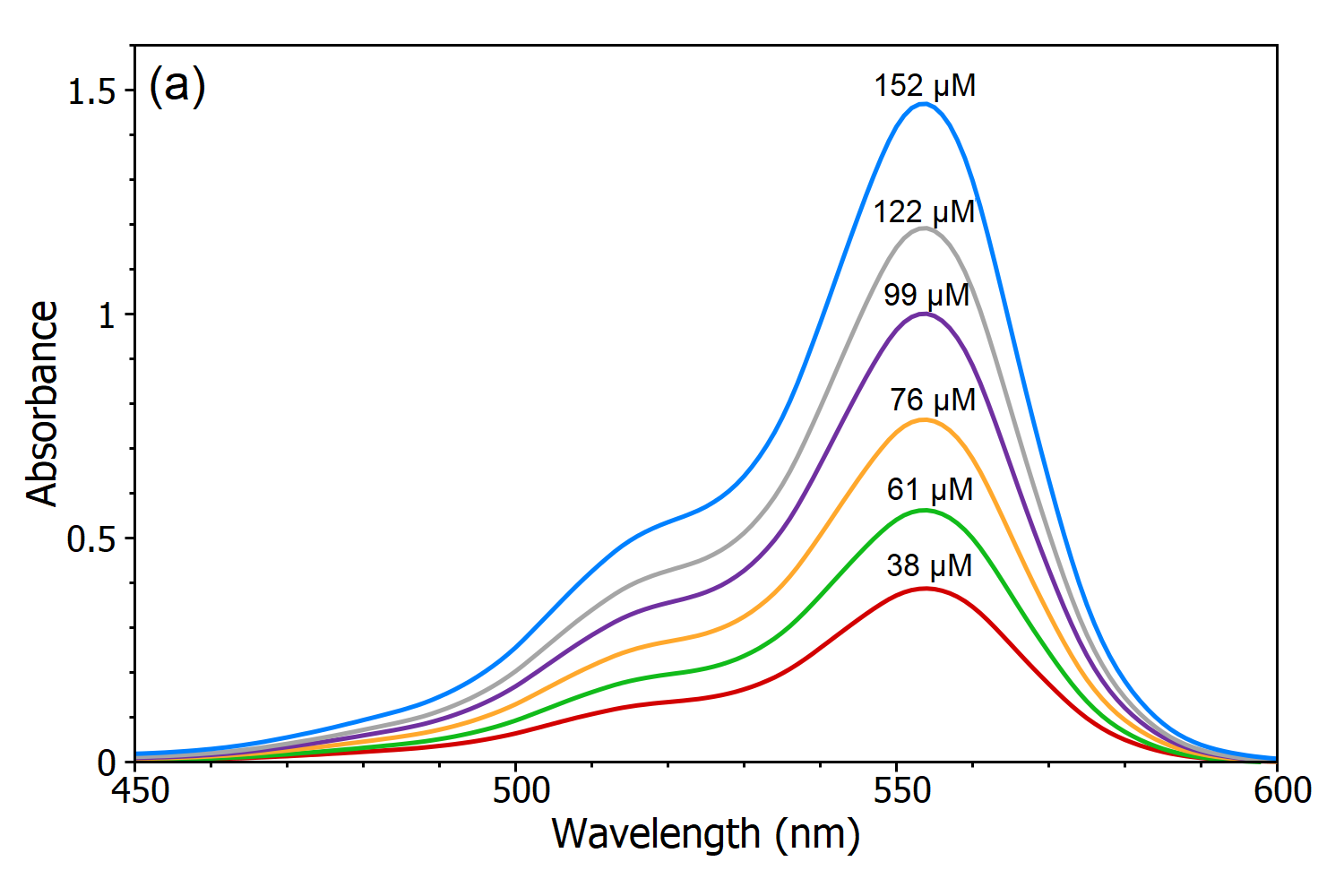
Spectral analysis involves measuring a material’s absorption across a range of wavelengths, yielding an absorption spectrum. This spectrum acts like a unique fingerprint for a substance, revealing its electronic and vibrational properties. Technologies like UV-Vis spectroscopy, infrared (IR) spectroscopy, and X-ray absorption spectroscopy rely on this principle to identify materials, determine their composition, and study their molecular structure, which is vital for semiconductor manufacturing, material science, and pharmaceutical development.
Specific Absorption Rate (SAR) for Radiofrequency Radiation
In the context of radiofrequency (RF) electromagnetic fields, particularly from devices like mobile phones or MRI machines, the absorption of energy by biological tissue is a critical safety concern. This is measured by the Specific Absorption Rate (SAR). SAR quantifies the rate at which energy is absorbed by a unit mass of tissue. It is measured in watts per kilogram (W/kg). Regulatory bodies like the FCC and international standards organizations set limits on SAR levels to protect users from potential thermal effects of RF exposure. Devices are tested rigorously to ensure compliance, highlighting the importance of this specific absorption metric in consumer electronics and medical technology.
Quantifying Sound Absorption and Acoustic Performance
Sound absorption is crucial in creating comfortable, functional, and aesthetically pleasing environments, from concert halls to recording studios, open-plan offices, and even vehicle interiors. Materials designed to absorb sound prevent echoes and reduce reverberation, improving speech intelligibility and overall acoustic quality.
Sound Absorption Coefficient (α) and Noise Reduction Coefficient (NRC)
The primary measure of a material’s ability to absorb sound is the sound absorption coefficient (α). This is a unitless value ranging from 0 to 1, representing the fraction of incident sound energy that a material absorbs rather than reflects. An α of 0 means the material reflects all sound, while an α of 1 means it absorbs all sound. This coefficient is typically measured at various frequencies (e.g., 125 Hz, 250 Hz, 500 Hz, 1000 Hz, 2000 Hz, 4000 Hz) because a material’s absorptive properties often vary with frequency.
To provide a single, representative value for practical applications, the Noise Reduction Coefficient (NRC) is widely used. The NRC is the arithmetic average of the sound absorption coefficients at four specific frequencies: 250 Hz, 500 Hz, 1000 Hz, and 2000 Hz. Like the α, NRC is a unitless value between 0 and 1, offering a quick comparison of the overall sound-absorbing capability of materials. Higher NRC values indicate better sound absorption. This metric is indispensable for architects and acoustical engineers selecting materials for interior spaces.
Sabins and Acoustic Design
While α and NRC describe a material’s inherent absorptive property, Sabins quantify the total sound absorption provided by a surface or an object within a room. One Sabin (named after Wallace Clement Sabine, the founder of architectural acoustics) is equivalent to the sound absorption provided by one square foot (or one square meter for metric Sabins) of a perfectly absorptive surface (α = 1).
-
Imperial Sabin: Square feet of perfect absorption.
-
Metric Sabin (or Square Meter Sabin): Square meters of perfect absorption.
The total Sabins in a room are calculated by multiplying the surface area of each material by its sound absorption coefficient and summing these values. This measure is fundamental in acoustic design, enabling engineers to predict and control the reverberation time in a space, ensuring optimal listening conditions.
Reverberation Time (RT60)
Though not a direct measure of absorption, Reverberation Time (RT60) is a critical acoustic parameter that is directly influenced by the amount of sound absorption present in a space. RT60 is defined as the time it takes for sound intensity to decay by 60 decibels (dB) after the sound source has stopped. It is measured in seconds (s). A longer RT60 indicates more reflections and less absorption, while a shorter RT60 means more absorption and a drier, less echoey sound. Optimizing RT60 is a primary goal in acoustic engineering for diverse spaces, from lecture halls to data centers, where controlling noise is essential for equipment performance and human comfort.
Assessing Energy and Material Absorption
Beyond light and sound, absorption extends to other forms of energy and even the uptake of physical substances by materials. These measurements are crucial for safety, material science, and environmental technologies.
Impact Absorption and Material Toughness
Materials designed to protect against impacts, like helmets, crumple zones in vehicles, or protective casings for electronics, rely on their ability to absorb mechanical energy during a collision. While there isn’t a single universal “absorption unit” for impact, the material’s performance is often quantified by the energy absorbed during a specific test.
-
Joules (J): Energy absorption is fundamentally measured in joules. Tests like the Charpy or Izod impact tests measure the energy absorbed by a material specimen before fracture, providing insights into its toughness and ductility.
-
Force-Displacement Curves: Engineers also analyze force-displacement curves during impact events. The area under this curve represents the energy absorbed by the material or structure, often expressed in newton-meters (N·m), which is equivalent to joules. This is crucial for designing structures that deform in a controlled manner to dissipate impact energy.
These measurements are vital in automotive safety, aerospace engineering, and the development of advanced composites for protective gear.
Thermal Absorption and Heat Transfer
Materials absorb heat, increasing their internal energy and temperature. Understanding and quantifying this thermal absorption is vital for thermal management in electronics, energy harvesting (e.g., solar thermal), and insulation.
-
Specific Heat Capacity (c): This property quantifies the amount of heat energy required to raise the temperature of a unit mass of a substance by one degree Celsius (or Kelvin). It is measured in Joules per kilogram per Kelvin (J⋅kg⁻¹⋅K⁻¹) or Joules per gram per degree Celsius (J⋅g⁻¹⋅°C⁻¹). A high specific heat capacity means a material can absorb a lot of heat without a significant temperature increase, making it useful for thermal storage.
-
Thermal Absorptivity (αth): This is a unitless ratio (between 0 and 1) representing the fraction of incident thermal radiation absorbed by a surface. A value of 1 means all incident thermal radiation is absorbed, while 0 means none is. This is crucial for designing efficient solar collectors and managing radiant heat.
-
Thermal Conductivity (k): While not directly an absorption measure, thermal conductivity (measured in Watts per meter per Kelvin, W⋅m⁻¹⋅K⁻¹) describes how readily heat flows through a material. Materials with low thermal conductivity are good insulators, effectively “absorbing” and slowing the transfer of heat.
These metrics are paramount in designing efficient heat sinks for microprocessors, optimizing building insulation, and developing renewable energy technologies.
Radiation Absorption (Ionizing Radiation)
In fields like nuclear technology, medical imaging, and radiation safety, the absorption of ionizing radiation (e.g., X-rays, gamma rays, alpha, beta particles) by matter, especially biological tissue, is measured with specific units to quantify the energy deposited.
-
Gray (Gy): The Gray is the SI unit for absorbed dose, representing the amount of energy absorbed per unit mass of matter. One Gray is defined as one Joule of absorbed energy per kilogram of material (J/kg). This unit is used to quantify the physical dose received by an object or patient during radiotherapy or diagnostic imaging.
-
Sievert (Sv): While Gray measures the physical energy absorbed, the Sievert is a unit for equivalent dose or effective dose, accounting for the biological effect of different types of radiation on human tissue. It is also dimensionally J/kg, but factors in a radiation weighting factor (WR) and tissue weighting factor (WT). It quantifies the potential for biological harm, making it critical in radiation protection and dosimetry.
These units are essential for ensuring the safety of workers in nuclear facilities, optimizing medical radiation treatments, and developing advanced radiation detection technologies.
The Future of Absorption Measurement and Its Tech Implications
As technology advances, so too do the methods and precision with which absorption is measured. The drive for smaller, more efficient, and more powerful devices necessitates an ever-deeper understanding of how materials interact with energy and matter at various scales.
The future of absorption measurement lies in several key areas:
-
Advanced Metrology and Nanosensors: The development of highly sensitive, miniaturized sensors and quantum metrology techniques will allow for unprecedented precision in measuring absorption at the nanoscale. This is crucial for quantum computing, advanced material science, and biomedical diagnostics, where even minute variations in absorption can have significant impacts.
-
AI-driven Absorption Analysis: Artificial intelligence and machine learning algorithms are increasingly being used to analyze complex absorption spectra, predict material properties, and optimize designs based on vast datasets. This can accelerate the discovery of new materials with tailored absorption characteristics for specific applications, from stealth technology to drug delivery systems.
-
In-situ and Real-time Monitoring: The ability to measure absorption in real-time and within operational environments (in-situ) will become more prevalent. This will allow for dynamic adjustments in processes, predictive maintenance, and continuous performance optimization in areas like chemical reactors, environmental monitoring, and semiconductor fabrication.
-
Multi-modal Absorption Sensing: Combining different types of absorption measurements (e.g., optical, thermal, acoustic) into integrated sensing platforms will provide a more comprehensive understanding of material behavior and system performance. This holistic approach will be invaluable for complex systems like autonomous vehicles, smart infrastructure, and advanced robotics.
In conclusion, “what is absorption measured in” is a question with a multitude of answers, each tailored to a specific physical phenomenon and technological application. From unitless coefficients to highly specific units like W/kg and J/kg, these measurements are the bedrock upon which much of modern technology is built. As we push the boundaries of innovation, the precision and ingenuity in measuring absorption will continue to be a driving force, enabling the creation of safer, more efficient, and more powerful technologies that shape our world.
aViewFromTheCave is a participant in the Amazon Services LLC Associates Program, an affiliate advertising program designed to provide a means for sites to earn advertising fees by advertising and linking to Amazon.com. Amazon, the Amazon logo, AmazonSupply, and the AmazonSupply logo are trademarks of Amazon.com, Inc. or its affiliates. As an Amazon Associate we earn affiliate commissions from qualifying purchases.