
In the vast and intricate world of physics and engineering, certain fundamental units act as the bedrock upon which our understanding of the universe, and consequently, our technology, is built. Among these critical measures is the Weber (Wb), a unit that might not be as commonly known as the Volt or the Ampere, yet it is utterly indispensable for comprehending the invisible forces that power our modern world: magnetic fields. At its heart, the Weber unit quantifies magnetic flux – a concept that describes the total magnetic field passing through a given area. Understanding the Weber isn’t just an academic exercise; it’s a deep dive into the principles that enable everything from the motors in our electric vehicles to the data stored on our hard drives, and even the sophisticated imaging techniques used in medicine. This article will demystify the Weber unit, exploring its definition, its historical context, and its profound impact across the technological landscape.
The Foundation: Understanding Magnetic Flux
Before we can fully appreciate the Weber unit, we must first grasp the concept it measures: magnetic flux. Magnetic fields are ubiquitous, generated by moving electric charges, permanent magnets, and even the Earth itself. These fields exert forces on other magnetic materials and moving charges, forming the basis of countless technological applications. Magnetic flux provides a way to quantify the “amount” of magnetic field passing through a particular surface, offering a critical metric for engineers and physicists alike.
Defining Magnetic Flux: The Invisible Influence
Magnetic flux, denoted by the Greek letter $Phi_B$ (phi-B), is essentially a measure of the total number of magnetic field lines passing perpendicularly through a given area. Imagine a stream of water flowing through a net; the magnetic flux is analogous to the total amount of water passing through the net’s opening. The stronger the magnetic field, or the larger the area it passes through, the greater the magnetic flux. However, it’s crucial to consider the orientation: only the component of the magnetic field perpendicular to the surface contributes to the flux. If the magnetic field lines run parallel to the surface, no flux passes through it. This directional dependency is key to understanding how magnetic fields are manipulated in various devices.
Visualizing Flux: Field Lines and Area
To visualize magnetic flux, we often refer to magnetic field lines, which are conceptual lines used to represent the direction and strength of a magnetic field. Where these lines are closer together, the field is stronger; where they are farther apart, it is weaker. When we talk about magnetic flux through an area, we are effectively counting how many of these field lines pierce that area. For a uniform magnetic field (B) passing perpendicularly through a flat area (A), the magnetic flux is simply the product: $PhiB = B cdot A$. If the field is not perpendicular, we use the cosine of the angle between the field vector and the area vector (which is normal to the surface): $PhiB = B cdot A cdot cos(theta)$. This mathematical representation allows us to precisely calculate the magnetic influence over any given region, laying the groundwork for designing and optimizing electromagnetic systems.
Maxwell’s Contribution: The Equations that Govern
The concept of magnetic flux is not an isolated idea but is deeply embedded within James Clerk Maxwell’s seminal equations, which unify electricity and magnetism. Specifically, Faraday’s Law of Induction, one of Maxwell’s four equations, states that a changing magnetic flux through a circuit induces an electromotive force (EMF), or voltage. This principle is the cornerstone of how electric generators produce electricity and how transformers work. Gauss’s Law for Magnetism, another of Maxwell’s equations, states that the net magnetic flux through any closed surface is always zero, implying that magnetic monopoles do not exist (i.e., magnetic field lines always form closed loops, having no beginning or end). These foundational laws underscore the absolute importance of magnetic flux in describing the fundamental behavior of electromagnetic phenomena.
The Weber Unit: A Standard of Measurement
With a solid understanding of magnetic flux, we can now turn our attention to its standard unit of measurement: the Weber. Named in honor of a pioneering German physicist, the Weber provides a quantifiable metric for magnetic flux, enabling consistent calculations and designs across scientific and engineering disciplines.
Wilhelm Eduard Weber: The Legacy Behind the Name
The Weber unit bears the name of Wilhelm Eduard Weber (1804–1891), a brilliant German physicist whose groundbreaking work significantly advanced the understanding of electricity and magnetism. Alongside his colleague Carl Friedrich Gauss, Weber conducted pioneering research on terrestrial magnetism and developed early electromagnetic telegraphs. His contributions to the absolute system of electrical and magnetic units were particularly significant, laying much of the groundwork for the modern SI (International System of Units). Naming the unit of magnetic flux after him is a fitting tribute to his enduring legacy in electromagnetism.
Deriving the Weber: Volts, Seconds, and Teslas
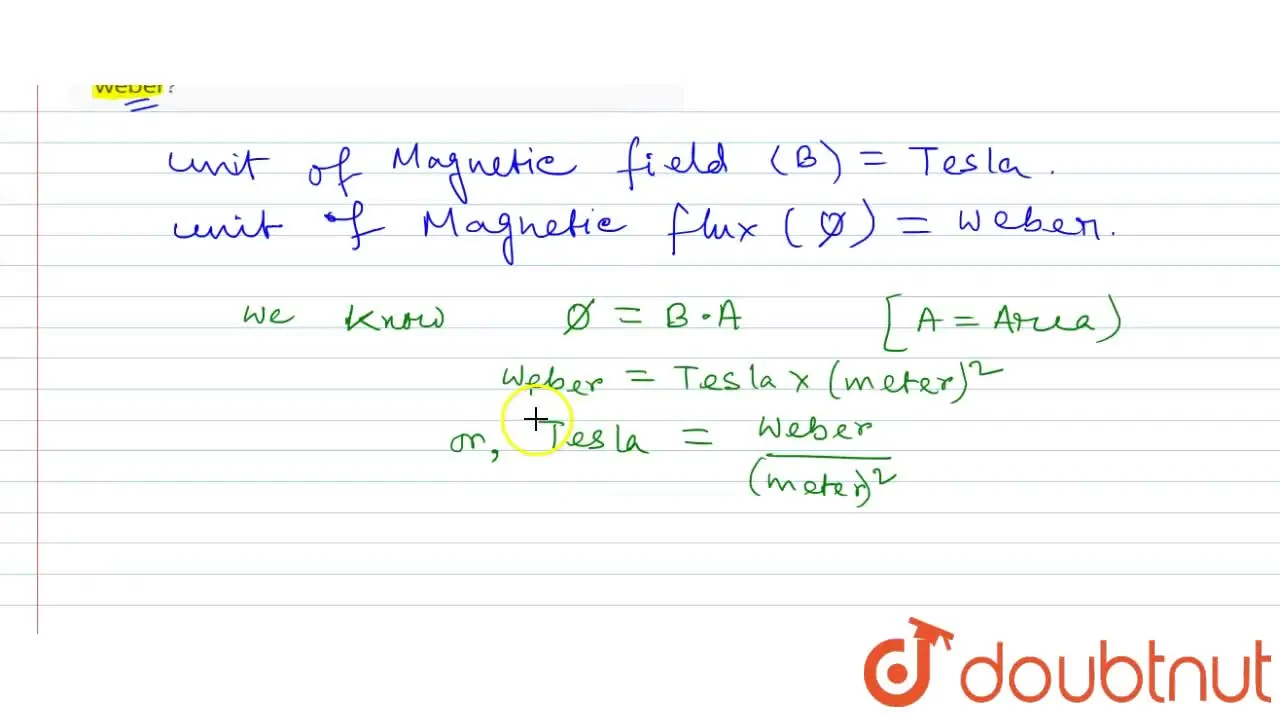
In the International System of Units (SI), the Weber (Wb) is defined as the magnetic flux that, when linking a circuit, would produce an electromotive force of one volt if it were reduced to zero at a uniform rate in one second. Mathematically, this means 1 Weber = 1 Volt-second (1 Wb = 1 V·s). This definition highlights its direct connection to Faraday’s Law of Induction. Another way to express the Weber is in terms of the Tesla (T), which is the SI unit of magnetic field strength (magnetic flux density), and the square meter (m²). Since magnetic flux is often calculated as the product of magnetic field strength and area, 1 Weber can also be expressed as 1 Tesla-meter squared (1 Wb = 1 T·m²). These equivalent definitions underscore the Weber’s fundamental role in relating magnetic fields to electrical phenomena and spatial dimensions.
Magnitude and Scale: From Tiny Sensors to Powerful Magnets
The scale of magnetic flux measured in Webers can vary enormously depending on the application. For instance, the magnetic flux through a tiny magnetic sensor in a smartphone might be in the microwebers or nanoweber range, reflecting a very small magnetic field over a minuscule area. Conversely, the massive superconducting magnets used in particle accelerators or Magnetic Resonance Imaging (MRI) machines can generate flux densities leading to magnetic fluxes measured in tens or even hundreds of Webers over their effective areas. Understanding these scales is crucial for engineers who design devices ranging from sensitive data storage components to industrial power generators, ensuring that magnetic effects are precisely controlled and optimized for performance.
Why Magnetic Flux and the Weber Unit Matter in Technology
The principles of electromagnetism, quantified by units like the Weber, are not merely abstract physical concepts; they are the invisible forces that underpin virtually every aspect of our technologically advanced society. From generating electricity to storing information, the manipulation and measurement of magnetic flux are indispensable.
Electromagnetism’s Cornerstone: Powering Our World

The interaction between electricity and magnetism is the driving force behind modern civilization. Most of the electricity we consume is generated through the principle of electromagnetic induction, which directly involves changes in magnetic flux. Without a robust understanding of magnetic flux and its measurement in Webers, the design and optimization of power systems would be impossible. The efficient conversion of mechanical energy into electrical energy, and vice versa, relies entirely on precisely controlled magnetic fields and the flux they generate.
Electric Motors and Generators: The Engine of Modernity
Perhaps the most ubiquitous technological application of magnetic flux is found in electric motors and generators. In a generator, mechanical energy (e.g., from rotating turbines powered by steam, wind, or water) causes a coil of wire to rotate within a magnetic field. As the coil moves, the magnetic flux passing through its area changes continuously. According to Faraday’s Law, this changing flux induces an electric current in the coil, generating electricity. Conversely, in an electric motor, an electric current flows through a coil placed in a magnetic field, creating a magnetic force (Lorentz force) that causes the coil to rotate, converting electrical energy into mechanical energy. The efficiency and performance of both motors and generators are directly tied to how effectively magnetic flux is created, managed, and converted, making the Weber unit a critical design parameter.
Transformers: Efficient Energy Transfer
Transformers are passive electrical devices that transfer electrical energy between two or more circuits through electromagnetic induction, without changing frequency. They are crucial for transmitting electricity over long distances at high voltages (reducing current and thus power loss) and then stepping it down to lower voltages for safe use in homes and businesses. The core principle of a transformer relies on mutual induction: an alternating current in the primary coil generates a changing magnetic flux in the transformer’s core, which then links with the secondary coil, inducing an alternating voltage across it. The design of the core and the winding configurations are all optimized to maximize this magnetic flux linkage, making flux density and the total flux (measured in Webers) central to transformer engineering.
Data Storage and Sensing: Recording and Detecting
Magnetic flux plays a vital role in data storage technologies and various sensors. Traditional hard disk drives (HDDs) store data by magnetizing tiny regions on a rapidly spinning platter. The read/write heads detect and alter the magnetic flux emanating from these regions, translating it into binary data. Similarly, magnetic sensors, such as Hall effect sensors, detect the presence and strength of magnetic fields by measuring the voltage induced by magnetic flux. These sensors are found everywhere, from anti-lock braking systems (ABS) in cars to compasses in smartphones, enabling detection and control based on ambient or applied magnetic fields.
Medical Imaging: MRI and Beyond
In the medical field, Magnetic Resonance Imaging (MRI) is a powerful diagnostic tool that produces detailed images of organs and soft tissues within the body. MRI machines utilize extremely strong, precisely controlled magnetic fields to align the protons within the body’s water molecules. Radiofrequency pulses then perturb these aligned protons, and as they relax back to their alignment, they emit signals that are detected and translated into images. The creation and manipulation of these powerful magnetic fields, and the resulting magnetic flux through the patient’s body, are at the core of MRI technology, demonstrating a life-saving application of electromagnetism.
Advanced Applications and Future Frontiers
As technology continues to evolve, our understanding and mastery of magnetic flux and the Weber unit open doors to even more sophisticated and revolutionary applications, pushing the boundaries of what’s possible.
Quantum Technologies: Superconducting Magnets and Qubits
The realm of quantum technologies heavily relies on precise control of magnetic fields. Superconducting magnets, which can generate incredibly strong magnetic fields with zero electrical resistance, are essential components in various cutting-edge applications, including high-energy particle accelerators and potentially in future fusion reactors. These magnets are designed to maximize magnetic flux within a specific volume. Furthermore, in the nascent field of quantum computing, the manipulation of qubits often involves magnetic fields to control quantum states, where even minuscule variations in magnetic flux can have profound effects on computational accuracy and stability.
Wireless Power Transfer: Inductive Charging
The convenience of wireless power transfer, seen in inductive charging pads for smartphones and electric vehicles, is another direct application of magnetic flux. When a current passes through a transmitting coil, it generates a varying magnetic flux. If a receiving coil is placed within this flux, an electromotive force is induced in the receiving coil, transferring energy without direct physical contact. Optimizing the efficiency of this energy transfer involves maximizing the magnetic flux linkage between the coils, a design challenge directly addressed by understanding and measuring flux in Webers.
Maglev Trains: Levitating with Magnetism
Magnetic levitation (Maglev) trains represent a dramatic application of magnetic principles for transportation. These trains float above the tracks, propelled by magnetic forces, virtually eliminating friction and allowing for incredibly high speeds. Both electrodynamic suspension (EDS) and electromagnetic suspension (EMS) systems rely on powerful, precisely controlled magnetic fields to create the lift and propulsion. The intricate design of these systems involves managing immense magnetic flux to ensure stable levitation and efficient movement, showcasing how the Weber unit guides the development of advanced transport solutions.
Fusion Energy Research: Containing Plasma
The quest for clean, abundant energy through nuclear fusion also heavily depends on magnetic flux. Devices like tokamaks, used in projects such as ITER (International Thermonuclear Experimental Reactor), employ powerful superconducting magnets to create strong magnetic fields. These fields are designed to contain and shape superheated plasma—a state of matter hotter than the sun’s core—preventing it from touching the reactor walls. The stability and success of plasma confinement are directly linked to the configuration and strength of these magnetic fields, and thus to the controlled generation and distribution of magnetic flux measured in Webers.

Conclusion: The Unseen Force Driving Innovation
The Weber unit, as the measure of magnetic flux, stands as a testament to the profound and pervasive influence of electromagnetism in our modern world. From the fundamental principles elucidated by Weber, Faraday, and Maxwell to the cutting-edge technologies that define our present and shape our future, magnetic flux is a silent yet powerful driver of innovation. Whether it’s the gentle hum of an electric motor, the silent transfer of data, the life-saving clarity of an MRI scan, or the audacious promise of fusion energy, the precise manipulation and quantification of magnetic flux, expressed in Webers, are absolutely indispensable. As we continue to push the boundaries of technology, our understanding and mastery of this invisible force will undoubtedly unlock even more revolutionary advancements, further cementing the Weber unit’s vital role in the tapestry of technological progress.
aViewFromTheCave is a participant in the Amazon Services LLC Associates Program, an affiliate advertising program designed to provide a means for sites to earn advertising fees by advertising and linking to Amazon.com. Amazon, the Amazon logo, AmazonSupply, and the AmazonSupply logo are trademarks of Amazon.com, Inc. or its affiliates. As an Amazon Associate we earn affiliate commissions from qualifying purchases.