
In the vast and intricate world of engineering, precision and clarity are paramount. Every calculation, every design specification, and every material property relies on a shared understanding of units of measurement. Among these, certain units, while not universally known, play a critical role in specific disciplines. One such unit is the “kip.” Far from a niche curiosity, the kip is a workhorse in fields like structural and mechanical engineering, where it simplifies complex load calculations and ensures the safety and integrity of everything from skyscrapers to critical machinery. Understanding the kip unit is not just about memorizing a conversion factor; it’s about grasping a fundamental concept that underpins significant technological advancements and everyday infrastructure.

This article delves into the kip unit, exploring its definition, origin, and, crucially, its indispensable role within modern technological applications, particularly in engineering design and analysis. We’ll uncover why this particular unit remains relevant in an increasingly metric world and how contemporary engineering software and digital tools interact with it to deliver robust and reliable technical solutions.
Understanding the Kip Unit: A Foundation in Engineering
The kip unit, though seemingly unassuming, is a cornerstone for engineers calculating immense forces and weights. Its existence stems from a practical need within specific industrial contexts, reflecting a nuanced approach to managing large numerical values efficiently.
What is a Kip? Definition and Origin
At its core, a “kip” is an abbreviation for “kilopound,” representing 1,000 pounds-force (lbf). The term itself is a portmanteau of “kilo” (from the Greek χίλιοι, meaning a thousand) and “pound.” This unit primarily expresses force or weight. For instance, if a structural beam is designed to withstand a load of 50,000 pounds, an engineer might simply refer to this as 50 kips.
The origin of the kip unit can be traced back to American engineering practices, particularly during the early to mid-20th century. As structures grew larger and loads became heavier, expressing forces in thousands of pounds became cumbersome. Writing “50,000 lbf” repeatedly in design documents and calculations was not only lengthy but also increased the potential for transcription errors. The introduction of the kip provided a concise and practical alternative, streamlining communication and calculation for engineers working with substantial loads. It’s a unit born out of necessity, driven by the practical demands of an industrializing nation building on a grand scale.
Why Not Just Pounds? The Practicality of Kips
The immediate question that often arises is: why use kips when pounds-force already exist? The answer lies in convenience, readability, and error reduction, especially when dealing with large-scale projects common in civil and structural engineering.
Consider a multi-story building. The cumulative weight of its floors, occupancy loads, and environmental forces (like wind or snow) can quickly ascend into hundreds of thousands, if not millions, of pounds. Expressing these loads as “2,500,000 lbf” throughout an engineering report or a set of blueprints is unwieldy. By contrast, “2,500 kips” is far more manageable, less prone to misreading (e.g., miscounting zeros), and quicker to process mentally. This practical advantage significantly contributes to efficiency in design, analysis, and peer review processes.
Furthermore, many engineering material properties and design specifications are naturally expressed in terms of kips or kips per square inch (ksi) for stress. For example, the yield strength of steel might be stated as 50 ksi (50,000 psi), and the capacity of a structural column might be rated in kips. This standardization within specific industry segments makes the kip unit an integral part of the language of structural and mechanical design.
Common Applications in Engineering Design
The kip unit finds its most prevalent use in domains where large forces and stresses are routinely encountered. These include:
-
Structural Engineering: This is perhaps the primary domain for kips. When designing buildings, bridges, dams, or any large-scale infrastructure, engineers calculate dead loads (weight of the structure itself), live loads (occupants, furniture), wind loads, seismic loads, and snow loads in kips. Beam capacities, column compression strengths, and foundation bearing pressures are frequently specified in kips or kips per unit area.
-
Mechanical Engineering: While less common than in structural engineering, kips are still used for heavy machinery design, industrial equipment, and crane capacities, where large forces are involved. For example, the lifting capacity of a large crane might be rated in kips.
-
Geotechnical Engineering: When assessing the bearing capacity of soil for foundations or analyzing the stability of retaining walls, forces and pressures are often expressed using kips.
-
Material Science: The strength of materials, such as the tensile strength or yield strength of steel, is often quoted in kips per square inch (ksi), which is 1,000 pounds per square inch (psi). This directly relates to how much force a material can withstand before deforming or failing.
In essence, wherever engineers need to quantify substantial forces and make critical safety calculations, the kip unit provides a clear, concise, and industry-standard means of expression.
Kip Units in Structural and Mechanical Engineering
The practical application of the kip unit is best illustrated through its pervasive use in the design and analysis of physical systems, where engineers translate theoretical concepts into tangible, resilient structures and machines.
Designing with Kips: Buildings, Bridges, and Beyond
In the realm of structural engineering, kips are fundamental to the entire design lifecycle. From the initial conceptualization to the final construction drawings, every element’s load-bearing capacity and the forces it must resist are quantified using this unit.
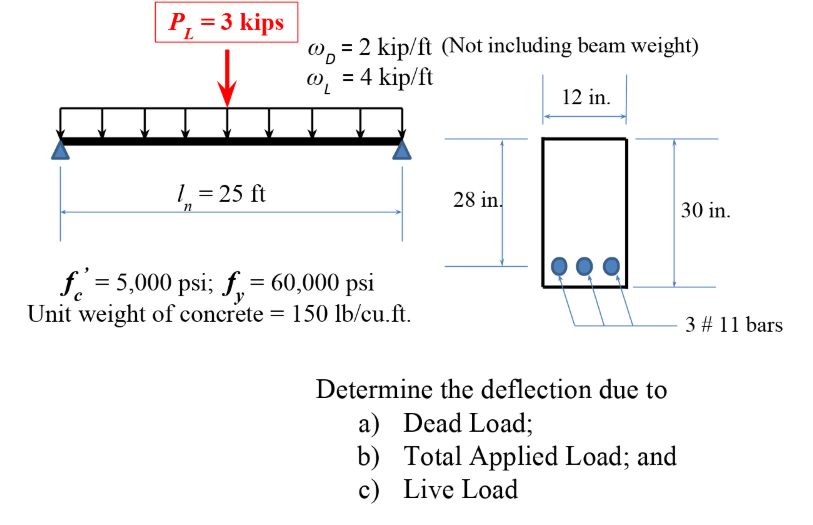
For instance, when designing a skyscraper, engineers calculate the total weight (dead load) of the concrete slabs, steel framework, curtain walls, and mechanical systems. They also factor in live loads, which include people, furniture, and movable partitions. Wind tunnel tests provide data on lateral forces, and seismic analyses determine earthquake resistance. All these forces are aggregated and distributed throughout the structure, with individual beams, columns, and foundations designed to safely resist these cumulative loads, typically specified in kips. A column might be designed to carry 800 kips of axial load, while a floor beam might support a distributed load of 5 kips per linear foot.
Similarly, in bridge design, the weight of the deck, girders, and piers, combined with traffic loads and environmental forces, dictates the structural requirements. The tensile forces in suspension cables, the compressive forces in arch members, and the shear forces in plate girders are meticulously calculated and expressed in kips to ensure the bridge’s stability and longevity. This precise communication through a standardized unit like the kip is critical for coordination among various engineering teams and ensuring adherence to safety codes.
Material Science and Load Bearing Capacities
The kip also plays a crucial role in specifying material properties and ensuring that chosen materials can adequately resist expected loads. Material strengths are frequently reported in “ksi” (kips per square inch), which is 1,000 pounds per square inch.
For example, A36 steel, a common structural steel, has a specified yield strength of 36 ksi. This means it can withstand 36,000 pounds of force for every square inch of its cross-section before it begins to yield (permanently deform). When an engineer designs a steel beam, they use these ksi values in conjunction with the calculated kips of force the beam will experience. By knowing the applied load in kips and the material’s strength in ksi, they can determine the required cross-sectional area of the beam to prevent failure. This direct relationship between applied force (kips) and material resistance (ksi) is indispensable for optimizing designs, ensuring safety, and managing costs by selecting appropriate materials.
Machine Design and Industrial Applications

While less pervasive than in structural design, kips are also utilized in mechanical engineering, particularly in the design of heavy machinery, industrial equipment, and large-scale mechanical systems. For instance, the lifting capacity of industrial cranes, the thrust of large hydraulic cylinders, or the bearing capacity of heavy-duty axles might be specified in kips.
In the design of industrial presses, stamping machines, or forging equipment, the massive forces involved are often quantified in kips to provide a clear and concise measure of their operational power. Engineers designing these systems must ensure that all components – from the structural frame to the hydraulic components and mechanical linkages – are capable of safely handling these immense forces, making the kip a practical unit for expressing and comparing the performance metrics of such robust machinery.
The Role of Kips in Modern Engineering Software and Tools
The digital revolution has transformed engineering, introducing sophisticated software tools that automate complex calculations and simulations. Yet, despite the advanced nature of these tools, the underlying principles of units and measurement, including the kip, remain fundamental.
CAD/CAE Systems and Unit Management
Computer-Aided Design (CAD) and Computer-Aided Engineering (CAE) systems are the backbone of modern engineering. Software like AutoCAD, Revit, SAP2000, ETABS, and SolidWorks allow engineers to create detailed 3D models, perform structural analyses, and simulate real-world conditions. These powerful platforms inherently support various unit systems, including the U.S. customary system (which uses kips).
When an engineer inputs loads, material properties, or boundary conditions into a structural analysis software, they typically specify these values in kips, kips per linear foot, or kips per square foot. The software then processes these inputs according to the chosen unit system. Maintaining consistency in unit management within these digital environments is crucial. A mismatch or incorrect conversion can lead to erroneous results, potentially compromising the safety and integrity of a design. Modern software often includes robust unit conversion features, but the responsibility ultimately lies with the engineer to ensure that inputs and outputs are correctly interpreted.
Finite Element Analysis (FEA) and Load Inputs
Finite Element Analysis (FEA) is a computational method used extensively in engineering to simulate how a product reacts to real-world forces, heat, vibration, and other physical effects. In structural FEA, engineers apply various types of loads to a discretized model of the structure. These loads—whether concentrated forces, distributed pressures, or moments—are frequently entered in kips or related derived units.
For example, an engineer might model a complex connection in a steel truss and apply a series of axial and shear forces to its members. Each of these forces would be specified in kips. The FEA software then calculates the resulting stresses, strains, and deflections throughout the model. The output, such as stress contours or reaction forces, might also be presented in units derived from kips, like ksi for stress or kips for reaction forces at supports. Accurate input of these kip values is non-negotiable for obtaining reliable simulation results that guide design decisions and validate structural performance.
Ensuring Accuracy and Safety in Digital Design
The integration of kip units within engineering software directly impacts the accuracy and safety of modern designs. The software’s ability to perform millions of calculations quickly is invaluable, but the quality of its output is entirely dependent on the quality and consistency of its input.
Engineers must exercise diligence in specifying units for every parameter within the software. Many engineering failures, historically, have been attributed not to flawed calculations but to unit conversion errors (a famous example being the Mars Climate Orbiter). While the kip simplifies large numerical values, it also necessitates a clear understanding of when and how it should be applied. Software acts as a sophisticated calculator; it processes what it’s given. Therefore, a solid grasp of units like the kip, combined with careful data entry and validation, is essential to leverage these powerful technological tools to produce safe, efficient, and compliant designs. The digital age hasn’t obviated the need for fundamental unit understanding; it has amplified its importance by enabling faster, more complex calculations where small errors can have large consequences.
Global Standards, Conversion, and the Future of Engineering Units
While the kip remains a vital unit in American engineering practices, the global landscape of measurement is increasingly dominated by the International System of Units (SI). Navigating this duality requires engineers to be proficient in conversions and adaptable to various project requirements.
Kips vs. SI Units: Navigating International Projects
The SI system, also known as the metric system, uses the Newton (N) as its base unit for force and the Pascal (Pa) for pressure (Newtons per square meter). For large forces, kilonewtons (kN) or meganewtons (MN) are commonly used. For pressure, megapascals (MPa) are typical.
-
1 kip ≈ 4.448 kilonewtons (kN)
-
1 ksi ≈ 6.895 megapascals (MPa)
Engineers working on international projects or collaborating with global teams frequently encounter both unit systems. A structural design project in the United States might use kips for all load calculations, while the same project executed by an overseas firm might use kilonewtons. This necessitates a clear understanding of conversion factors and a meticulous approach to unit management. Many global firms maintain internal standards for unit conversion or require projects to be conducted entirely in one system to avoid errors. The ability to seamlessly transition between kips and SI units is a critical skill for today’s global engineer, emphasizing versatility in technical communication.
Automated Conversion Tools and Best Practices
To mitigate the risks associated with manual unit conversions, modern engineering software and digital tools often include integrated unit conversion functionalities. Engineers can typically specify their preferred input and output units, and the software handles the underlying conversions. Dedicated online calculators and mobile apps also provide quick and reliable conversion services.
However, relying solely on automated tools without understanding the underlying conversions is risky. Best practices dictate that engineers:
-
Standardize Early: Agree on a primary unit system for a project at its outset.
-
Verify Inputs: Double-check all unit inputs into software.
-
Validate Outputs: Ensure that the units of the results are consistent and make sense.
-
Document Conversions: Clearly document any unit conversions made throughout the project.
-
Utilize Redundancy: Where critical, perform checks with both systems or use different tools to cross-verify.
These practices help prevent costly and potentially dangerous errors stemming from unit mismatches, reinforcing that technology is an aid, not a replacement, for fundamental engineering knowledge.
The Evolving Landscape of Engineering Measurement
While there’s a slow but steady global push towards complete SI adoption, the kip unit, like the pound, will likely remain relevant in the U.S. and other regions that adhere to the U.S. customary system for the foreseeable future, particularly in established industries like construction and infrastructure. The sheer volume of existing design codes, material specifications, and accumulated knowledge expressed in these units means a complete transition would be a monumental undertaking.
Therefore, the future of engineering measurement is likely to be bimodal. Engineers will continue to operate proficiently in both SI and customary units, with an increasing reliance on smart digital tools to facilitate conversions and ensure consistency. The kip unit, born out of a practical need to simplify large numbers, stands as a testament to this ongoing evolution, representing a crucial bridge between traditional engineering practices and the advanced digital methodologies of today. Its continued presence underscores the importance of historical context in engineering and the enduring value of precision in technological design.
aViewFromTheCave is a participant in the Amazon Services LLC Associates Program, an affiliate advertising program designed to provide a means for sites to earn advertising fees by advertising and linking to Amazon.com. Amazon, the Amazon logo, AmazonSupply, and the AmazonSupply logo are trademarks of Amazon.com, Inc. or its affiliates. As an Amazon Associate we earn affiliate commissions from qualifying purchases.