
The digital realm, for all its perceived permanence, is surprisingly fragile. Websites flicker into existence and vanish just as quickly, content is updated or deleted without a trace, and the very fabric of our online history can unravel in a blink. In this ephemeral landscape, the concept of a “web archive” emerges as a critical technological solution, a digital time capsule designed to capture and preserve the vast, ever-changing expanse of the World Wide Web.
At its core, a web archive is a systematic process of collecting portions of the World Wide Web and ensuring the material is preserved in an archive for future researchers, historians, and the general public. It’s not merely a snapshot but a comprehensive attempt to capture the look, feel, and functionality of websites as they existed at specific points in time. This monumental task involves sophisticated technical infrastructure, dedicated software, and a deep understanding of data preservation challenges, all firmly rooted in the domain of technology.
The Impermanence of the Web: Why Web Archiving Matters
The internet, despite being a primary source of information, culture, and commerce, is remarkably susceptible to loss. Unlike physical archives where documents might degrade slowly over centuries, digital content can vanish instantaneously due to a server crash, a website redesign, a domain expiration, or even a simple human error. This inherent impermanence underscores the crucial importance of web archiving from a technological preservation standpoint.
The Ephemeral Nature of Digital Content
Every day, countless web pages are created, modified, or deleted. Think of news articles, social media posts, government reports, scientific data, or even personal blogs. Without active preservation efforts, this digital heritage is lost. This isn’t just about nostalgia; it’s about ensuring the foundational records of our digital age remain accessible for future generations. The challenges are multi-faceted: content management systems constantly evolve, dynamic content (like user comments, live feeds, or interactive elements) is difficult to capture, and the sheer volume of data makes comprehensive archiving a gargantuan task. The tech world understands that without intervention, a significant portion of human experience and knowledge could become inaccessible, creating “digital dark ages.”
Link Rot and Content Drift
Two pervasive technical issues plague the web: link rot and content drift. Link rot occurs when a hyperlink points to a resource that has moved or no longer exists, resulting in a “404 Not Found” error. This breaks the interconnectedness of information and makes it impossible to retrieve cited sources. Content drift, on the other hand, happens when the content at a stable URL changes over time. While the link might still work, the information originally present at that URL is altered or entirely replaced. Web archives combat both these issues by preserving static versions of web pages, ensuring that specific historical content remains retrievable, verifiable, and available, irrespective of future changes to the live web. This technological fix is vital for academic integrity, legal compliance, and historical accuracy.
Preserving Digital Heritage and Memory
From a technological and cultural perspective, the web is arguably the largest and most diverse repository of human knowledge ever created. It contains records of major global events, scientific breakthroughs, artistic expressions, political discourse, and everyday life. Web archives are the digital libraries of the 21st century, tasked with preserving this collective memory. National libraries, universities, and dedicated archival institutions around the world leverage web archiving technologies to ensure that national digital heritage – from government websites and national news outlets to cultural blogs and social movements – is not lost to the sands of time. This preservation is not passive; it requires active technological maintenance, migration of formats, and continuous development of new tools to ensure long-term accessibility.
How Web Archives Work: Mechanisms and Technologies
The process of web archiving is a complex interplay of sophisticated software, robust infrastructure, and standardized protocols. It’s far more intricate than simply “copy-pasting” web pages.
Web Crawlers and Data Harvesting
The heart of any web archiving operation is the “web crawler” or “robot” – a piece of software that systematically browses the World Wide Web, typically for the purpose of web indexing or, in this case, preservation. These crawlers start from a seed URL, follow hyperlinks, and download content. Advanced crawlers are designed to handle various web technologies, including JavaScript, CSS, images, videos, and embedded objects, attempting to render a page as accurately as possible. Tools like Heritrix (used by the Internet Archive) are open-source, highly configurable crawlers specifically built for archival purposes, demonstrating the specialized technological demands of this field. The challenge lies in efficiently traversing billions of pages while respecting website policies (like robots.txt files) and avoiding infinite loops or “spider traps.”
Data Formats and Standards (e.g., WARC)
Once content is harvested, it needs to be stored in a standardized, interoperable, and future-proof format. The most widely adopted technical standard for web archives is the WARC (Web ARChive) file format. A WARC file is a concatenation of one or more records, each consisting of a header and an opaque data block. It captures not just the HTML content but also associated resources like images, stylesheets, scripts, and even HTTP transaction headers, providing a more complete and contextually rich record of the original web page. This standardization is crucial for ensuring that archived content can be read and rendered by different tools and systems years or decades into the future, mitigating the risk of format obsolescence – a major concern in digital preservation technology.
Storage, Indexing, and Retrieval
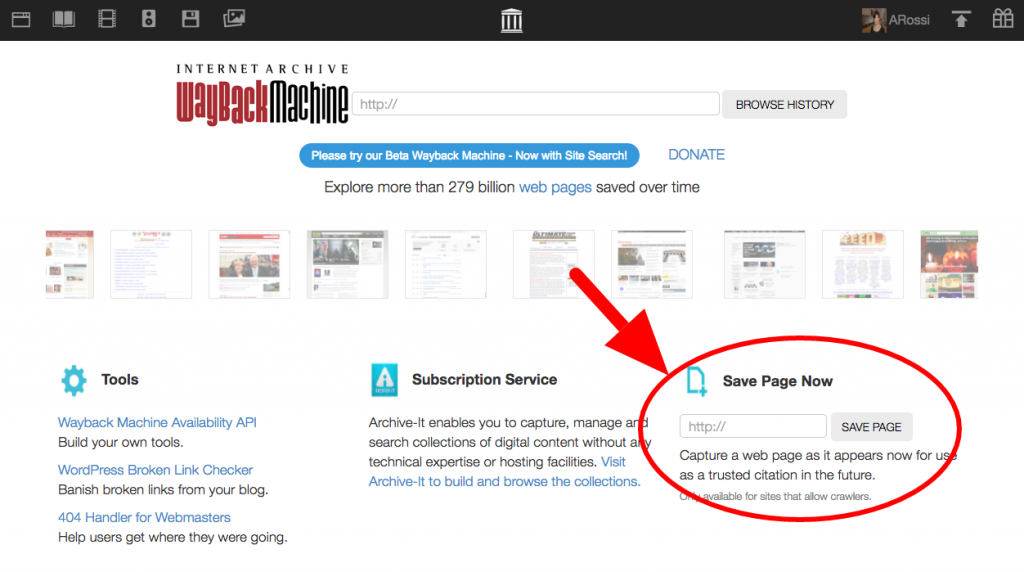
The sheer volume of data involved in web archiving necessitates massive, redundant, and highly available storage solutions. Petabytes, and increasingly exabytes, of data are managed using distributed storage systems, often leveraging cloud infrastructure or dedicated data centers. Alongside storage, robust indexing systems are vital. Archived content is indexed to allow for efficient searching and retrieval, much like a traditional library catalog. This involves metadata extraction (e.g., URL, timestamp, content type, keywords) and full-text indexing. When a user requests an archived page (e.g., via the Internet Archive’s Wayback Machine), the retrieval system reconstructs the page from the stored WARC files, often rewriting relative URLs to point to other archived assets, providing a seamless browsing experience of the past web. This complex reconstruction is a significant technological feat.
Challenges in Capturing Dynamic Content
One of the most persistent technological challenges in web archiving is the capture of dynamic and interactive content. Modern websites heavily rely on JavaScript, AJAX, APIs, and user-generated content, which render parts of a page after the initial HTML is loaded or change based on user interaction. Traditional crawlers that only fetch static HTML can miss this content. Archivists are continuously developing more sophisticated tools, often employing headless browsers or specialized JavaScript execution environments, to capture the state of a page after client-side scripts have run. Similarly, archiving streaming media, social media feeds with real-time updates, and complex web applications remains an area of active research and development within the tech community.
Types and Applications of Web Archiving
Web archiving isn’t a monolithic activity; it serves diverse purposes across various sectors, each leveraging distinct technological approaches and tools.
National Libraries and Archival Institutions
These institutions are at the forefront of preserving national digital heritage. Examples include the Library of Congress in the U.S., the British Library, the National Library of Australia, and various national archives globally. They undertake large-scale, systematic archiving of government websites, national news sites, cultural portals, and significant societal events. Their efforts often involve collaboration with international bodies and the development of open-source archival tools to ensure the longevity and accessibility of their collections. This is a public service driven by technological expertise.

Corporate and Organizational Archiving
Businesses and organizations increasingly recognize the need to archive their own web presence for legal, compliance, and historical reasons. Websites often contain critical business records, marketing campaigns, public statements, and intellectual property. Industries subject to strict regulations (e.g., finance, healthcare) must maintain immutable records of their online communications. Corporate archiving solutions provide tools for selective, often automated, capture of specific domains or subdomains, ensuring that a verifiable record exists for auditing, litigation support, or internal historical reference. This protects against brand reputation damage and provides irrefutable evidence.
Academic Research and Historical Analysis
Historians, social scientists, and media scholars rely heavily on web archives to study past events, understand social trends, analyze political discourse, and track the evolution of online platforms. Researchers use web archives to reconstruct past narratives, verify sources, and conduct longitudinal studies of digital phenomena. The availability of vast archived datasets opens up new avenues for computational research, employing data mining and natural language processing techniques on historical web content, directly impacting how research is conducted and verified in the digital age.
Legal and Regulatory Compliance
In many jurisdictions, specific types of digital communications, including website content, must be preserved for regulatory compliance or as potential evidence in legal disputes. This applies to financial disclosures, drug advertising, political campaigns, and more. Web archiving provides the technological framework to create legally defensible, tamper-proof records of web content, complete with metadata (like capture date and cryptographic hashes) that can prove authenticity and integrity in a court of law. This is a critical application where technology intersects directly with legal requirements.
Key Players and Tools in Web Archiving
The field of web archiving is supported by a robust ecosystem of organizations, open-source projects, and commercial providers, each contributing to the technological infrastructure that makes preservation possible.
The Internet Archive (Wayback Machine)
Undoubtedly the most famous and largest web archive in the world, the Internet Archive’s Wayback Machine has been archiving the web since 1996. It boasts hundreds of billions of archived web pages and is a de facto public utility for recalling lost websites. Its influence extends beyond simple storage; it develops and maintains key open-source tools like Heritrix (the web crawler) and OpenWayback (the replay software), driving innovation and standardization in the field. It’s a monumental example of how a non-profit organization can build and maintain a massive, public-facing technological infrastructure.
National Archiving Initiatives and Libraries
Beyond the Internet Archive, national libraries and archives globally have their own dedicated web archiving programs. The Library of Congress, for instance, archives U.S. government websites and major cultural events. These institutions often collaborate to share best practices, develop joint projects, and contribute to the broader body of knowledge in digital preservation technology. Their work ensures that specific national and cultural digital legacies are preserved with governmental or institutional backing.
Open-Source Tools and Commercial Solutions
The web archiving landscape is rich with both open-source technologies and commercial offerings. Open-source tools like Heritrix, Archive-It (a subscription service built on Internet Archive technology), Webrecorder.io (for interactive archiving), and numerous smaller utilities empower individuals and institutions to perform their own archiving. Commercial solutions from companies like Smarsh, PageFreezer, and Hanzo offer enterprise-grade web archiving services, often tailored for specific compliance needs, featuring advanced crawling, automated capture, and robust e-discovery functionalities. These offerings highlight the commercialization and professionalization of web archiving technology.
The Future of Web Archiving: Challenges and Innovations
As the web continues to evolve at an unprecedented pace, so too must the technologies and methodologies of web archiving. The future holds both significant challenges and exciting innovations.
Scaling to the Ever-Growing Web
The sheer scale of the web presents an existential challenge. Every minute, gigabytes of new content are published. Archivists face a constant battle against this exponential growth, requiring ever more efficient crawling algorithms, massive storage capacities, and intelligent filtering mechanisms to decide what to archive and how frequently. Cloud computing and distributed processing are becoming increasingly vital technological allies in this fight.
Archiving Social Media and Interactive Content
Social media platforms, with their constantly updating feeds, user interactions, and proprietary APIs, pose unique archiving dilemmas. Traditional crawlers struggle to capture the full context and dynamic nature of platforms like X (formerly Twitter), Facebook, or TikTok. Future innovations will likely involve more sophisticated client-side rendering, API-driven capture where permissible, and potentially new archival formats designed specifically for highly interactive and data-stream-driven content. This demands a shift in archival technology from static page capture to dynamic session recording.
Ethical Considerations and Access
Technological capabilities also bring ethical responsibilities. Who decides what gets archived? How do we balance preservation with privacy concerns, especially for personal data found on the open web? What about “right to be forgotten” principles versus historical record preservation? Future web archiving will increasingly grapple with these ethical dilemmas, requiring careful policy development alongside technological advancements in data anonymization, access controls, and user consent mechanisms. The technology must serve ethical guidelines.

AI and Machine Learning in Archival Processes
Artificial intelligence and machine learning are poised to revolutionize web archiving. AI can enhance crawling efficiency by intelligently identifying significant content, prioritizing updates, and filtering out noise. Machine learning algorithms can improve indexing and retrieval, allowing for more nuanced search queries and content analysis within vast archives. Furthermore, AI could assist in quality assurance, automatically detecting broken captures or incomplete records, ensuring higher fidelity in the archived content. This integration represents a powerful technological leap for the field.
In conclusion, a web archive is far more than just a backup; it is a complex, technologically driven endeavor to preserve the digital memory of humanity. From sophisticated crawlers and standardized data formats to massive storage infrastructures and intelligent retrieval systems, the field of web archiving stands as a testament to the ingenuity required to safeguard our increasingly digital world. As the web continues its rapid evolution, the technologies and strategies employed by web archivists will remain at the vanguard of digital preservation, ensuring that the rich tapestry of our online existence remains accessible for generations to come.
aViewFromTheCave is a participant in the Amazon Services LLC Associates Program, an affiliate advertising program designed to provide a means for sites to earn advertising fees by advertising and linking to Amazon.com. Amazon, the Amazon logo, AmazonSupply, and the AmazonSupply logo are trademarks of Amazon.com, Inc. or its affiliates. As an Amazon Associate we earn affiliate commissions from qualifying purchases.