
The W-4 form is an unassuming yet incredibly powerful document in the landscape of personal finance and employment. For anyone receiving a paycheck, understanding its purpose and proper use is fundamental to managing your tax obligations effectively. Officially titled “Employee’s Withholding Certificate,” the W-4 form serves as the primary mechanism through which you, the employee, communicate your tax situation to your employer, enabling them to withhold the correct amount of federal income tax from your wages. Its accurate completion is paramount to avoiding financial surprises at tax time, whether that’s an unexpected tax bill or an unnecessarily large refund.
The Fundamental Purpose of the W-4 Form
At its core, the W-4 form dictates how much federal income tax your employer should deduct from each paycheck. This process, known as tax withholding, is the government’s way of collecting income tax throughout the year, rather than as one lump sum at tax season.
Withholding Accuracy: The Core Function
The primary objective of the W-4 is to ensure that the amount of federal income tax withheld from your pay closely matches your actual tax liability for the year. The Internal Revenue Service (IRS) encourages taxpayers to adjust their withholding so that they neither overpay nor underpay significantly.
- Over-withholding: If too much tax is withheld, you’ll likely receive a tax refund when you file your annual return. While a refund might feel like a bonus, it essentially means you’ve given the government an interest-free loan throughout the year. That money could have been in your pocket, earning interest, paying down debt, or contributing to your financial goals.
- Under-withholding: Conversely, if too little tax is withheld, you could owe a substantial amount to the IRS when you file. Depending on the amount and circumstances, you might also face penalties for underpayment, adding an extra burden to your financial obligations.
The W-4 form empowers you to strike this delicate balance, aiming for a withholding amount that gets you as close to a zero balance as possible when you file your taxes.
A Bridge Between Employee and Employer
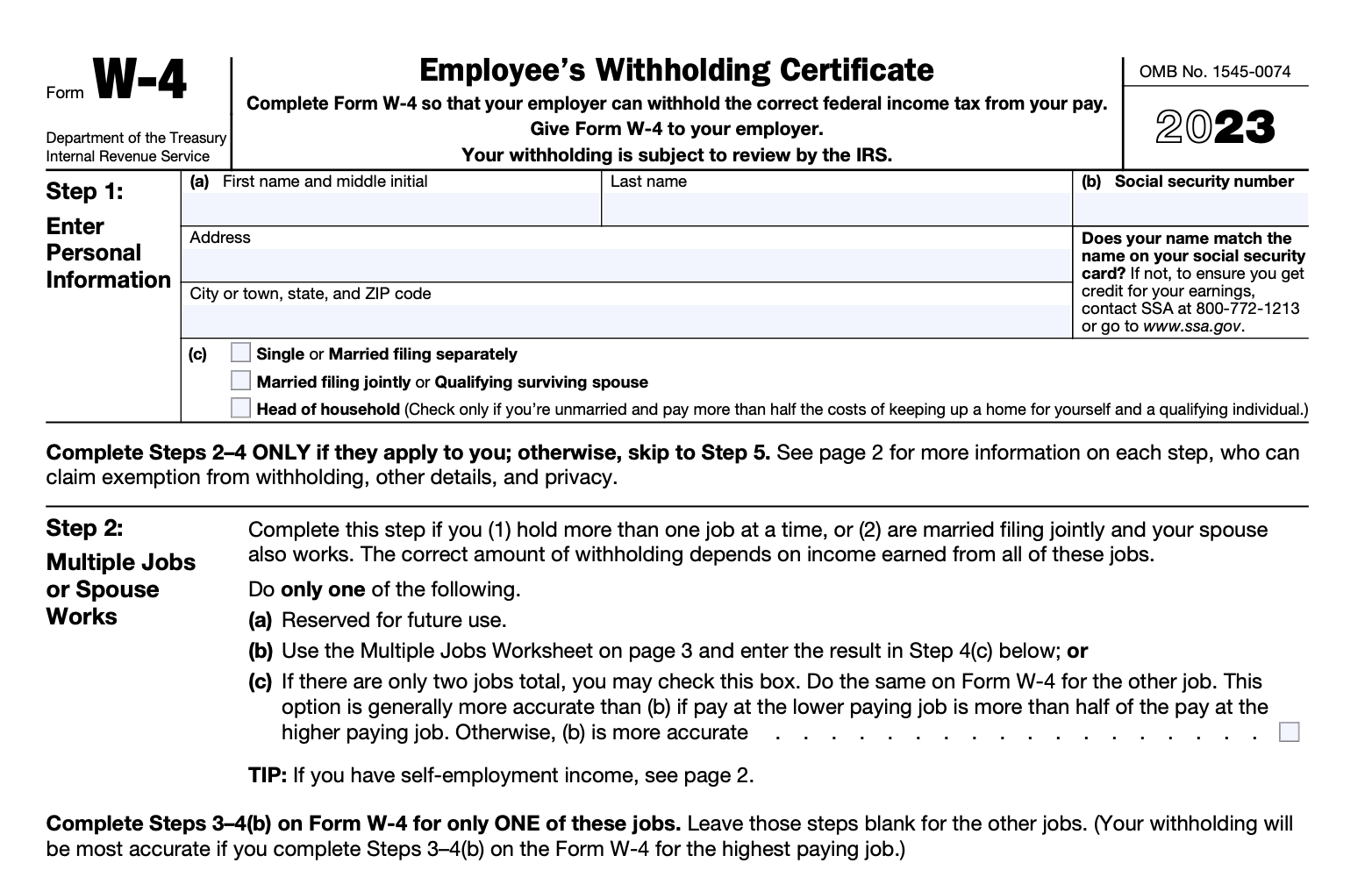
The W-4 acts as a critical communication bridge. It translates your personal financial and family situation – such as your filing status, whether you have multiple jobs, or if you claim dependents – into actionable instructions for your employer’s payroll department. Without this form, employers would have no standardized way to determine how much tax to deduct from each employee’s pay, leading to chaos and widespread tax imbalances. Each section of the W-4 is designed to capture specific information that influences the calculation of your withholding.
Key Sections and Their Significance
The W-4 form was revised in 2020 to simplify the process and improve accuracy, especially for individuals with multiple jobs or significant deductions. It moved away from the concept of “allowances” to a more direct, dollar-based approach.
Step 1: Personal Information
This initial section is straightforward, requiring your name, address, and Social Security number. Crucially, it asks for your filing status:
- Single or Married Filing Separately: Your tax liability is determined by the single tax brackets.
- Married Filing Jointly or Qualifying Widow(er): Your combined income is subject to married filing jointly tax brackets.
- Head of Household: This status typically applies to unmarried individuals who pay more than half the cost of keeping up a home for themselves and a qualifying person. This status provides more favorable tax rates than single filing.
Selecting the correct filing status is fundamental because it directly impacts the tax brackets used to calculate your withholding.
Step 2: Multiple Jobs or Spouse Works
This step is arguably the most critical for households with more than one income source, whether you hold multiple jobs yourself or you’re married and your spouse also works. Failing to complete this step accurately is a leading cause of under-withholding and unexpected tax bills. The reason is simple: standard withholding calculations often assume a single source of income for an individual, applying deductions and credits accordingly. When there are multiple incomes, these standard assumptions can lead to insufficient tax being withheld overall.
The W-4 offers three methods to address multiple jobs:
- Use the IRS Tax Withholding Estimator: This online tool is the most accurate method. It walks you through various income and deduction scenarios to provide the most precise withholding recommendation.
- Check Box 2c: If you have two equally-paying jobs, or if your spouse also works and both incomes are similar, checking this box instructs both employers to withhold at a higher, “single rate with no adjustments” level. While this option is simple, it may lead to over-withholding if not carefully calibrated.
- Use the Multiple Jobs Worksheet: Located on page 3 of the W-4, this worksheet provides a more detailed calculation for adding an additional amount to be withheld, particularly useful when incomes are not similar.
Step 3: Claim Dependents
This section allows you to account for tax credits related to dependents, primarily the Child Tax Credit and the Credit for Other Dependents.
- Child Tax Credit: For qualifying children under age 17 at the end of the year, you can multiply the number of children by $2,000.
- Credit for Other Dependents: For other qualifying dependents (e.g., older children, relatives), you can multiply the number of these dependents by $500.
Entering these amounts directly reduces the total amount of tax to be withheld over the year, effectively increasing your take-home pay. It’s important to be accurate here, as claiming dependents you aren’t eligible for could lead to under-withholding.
Step 4: Other Adjustments
This flexible section allows for further customization of your withholding based on specific financial circumstances.
Other Income (Not from Jobs)
If you have significant taxable income from sources not subject to withholding – such as interest, dividends, capital gains, or self-employment income – you can enter an estimate of this income here. Your employer will then factor this into your withholding, helping to cover the tax liability on that additional income.
Deductions
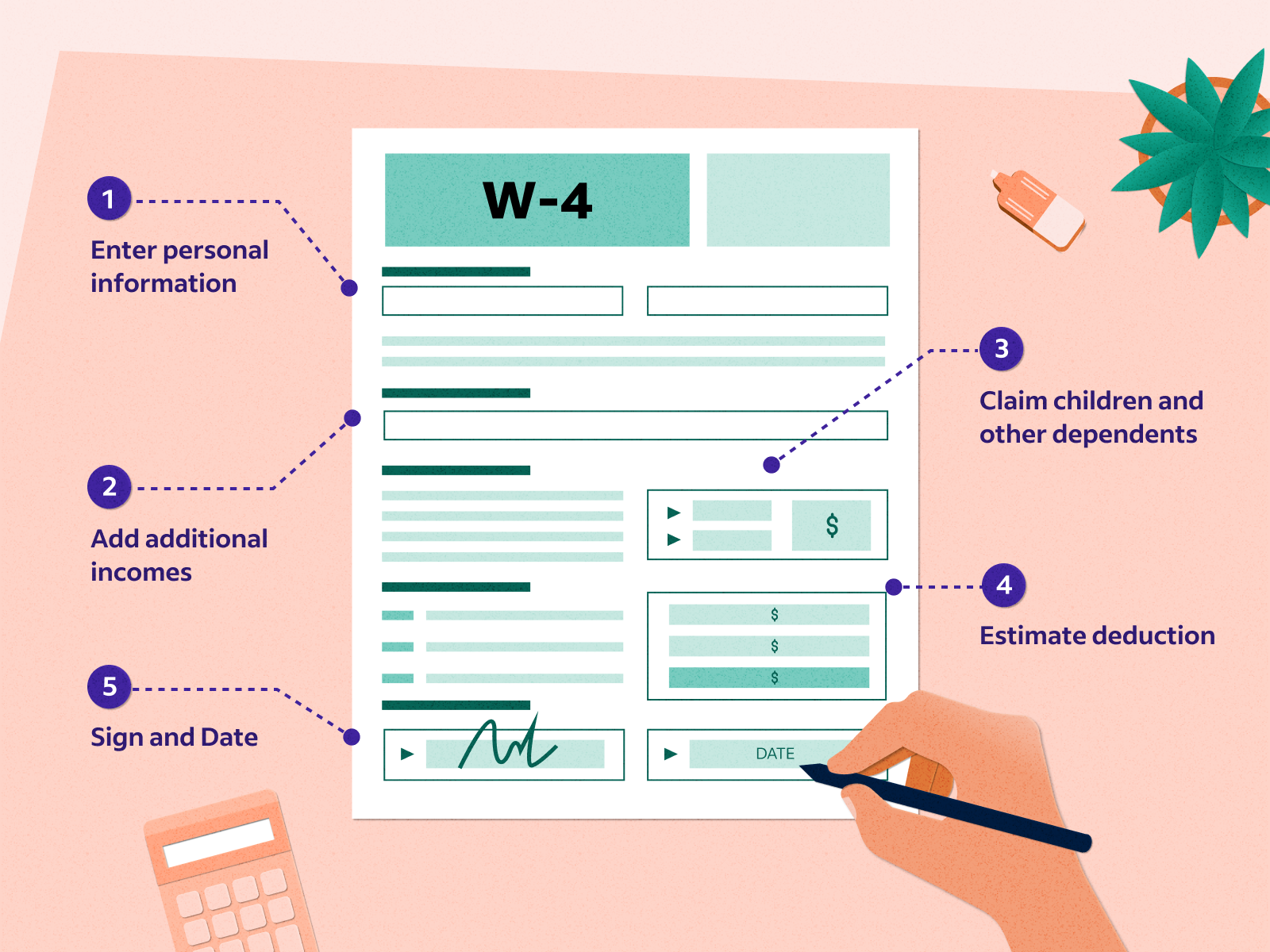
This section is for those who anticipate taking deductions that will exceed their standard deduction. If you plan to itemize deductions (e.g., for mortgage interest, state and local taxes, charitable contributions) or claim other specific deductions (like student loan interest), you can use the “Deductions Worksheet” on page 3 of the W-4 to estimate this amount. Entering a higher deduction amount here will reduce your overall withholding.
Extra Withholding
This line allows you to specify an additional dollar amount you want withheld from each paycheck. This can be particularly useful if:
- You consistently owe taxes each year.
- You prefer a smaller refund or even owing a small amount, rather than getting a large refund.
- You have volatile income from other sources (like stock sales) and want to proactively cover potential tax liability.
- You just want to be extra conservative to avoid an unexpected tax bill.
When and Why You Might Need to Adjust Your W-4
Your W-4 form is not a set-it-and-forget-it document. Your financial life is dynamic, and certain life events can significantly alter your tax situation, necessitating an adjustment to your W-4.
Life Changes Impacting Your Finances
- Marriage or Divorce: A change in marital status impacts your filing status and potentially your combined household income and deductions.
- Birth or Adoption of a Child: This will likely make you eligible for the Child Tax Credit or Credit for Other Dependents, reducing your tax liability.
- Change in Employment: Starting a new job, taking on a second job, or your spouse starting or stopping work will directly affect your total taxable income and potentially push you into different tax brackets.
- Significant Change in Income: A substantial raise, bonus, or reduction in pay warrants a review.
- Purchasing a Home: New deductions for mortgage interest and property taxes might allow you to reduce your withholding.
- Retirement: Moving from employment income to fixed income sources often changes your overall tax picture.
Optimizing Your Tax Situation
Beyond specific life events, you might adjust your W-4 simply to optimize your financial flow.
- Avoiding a Large Refund: If you consistently receive a large refund, it means you’re overpaying taxes throughout the year. Adjusting your W-4 can put that money back in your pocket sooner, allowing you to invest it, save it, or use it to pay down high-interest debt.
- Avoiding an Unexpected Tax Bill: If you’ve owed taxes in previous years, increasing your withholding can help prevent a repeat performance and potential underpayment penalties.
- Using the IRS Tax Withholding Estimator: The IRS encourages all taxpayers to use their online estimator tool at least once a year, or whenever they experience a significant life change, to ensure their withholding is on track.
Employer Responsibilities and W-4 Compliance
While the W-4 is primarily completed by the employee, employers have crucial responsibilities related to its administration.
Calculating Withholding
Once an employee submits a W-4, the employer uses the information provided, along with IRS Publication 15 (Circular E), Employer’s Tax Guide, to calculate the amount of federal income tax to withhold from each paycheck. Most employers rely on sophisticated payroll software that automates these complex calculations, ensuring accuracy based on the W-4 data, pay frequency, and current tax laws.
Record Keeping and Compliance
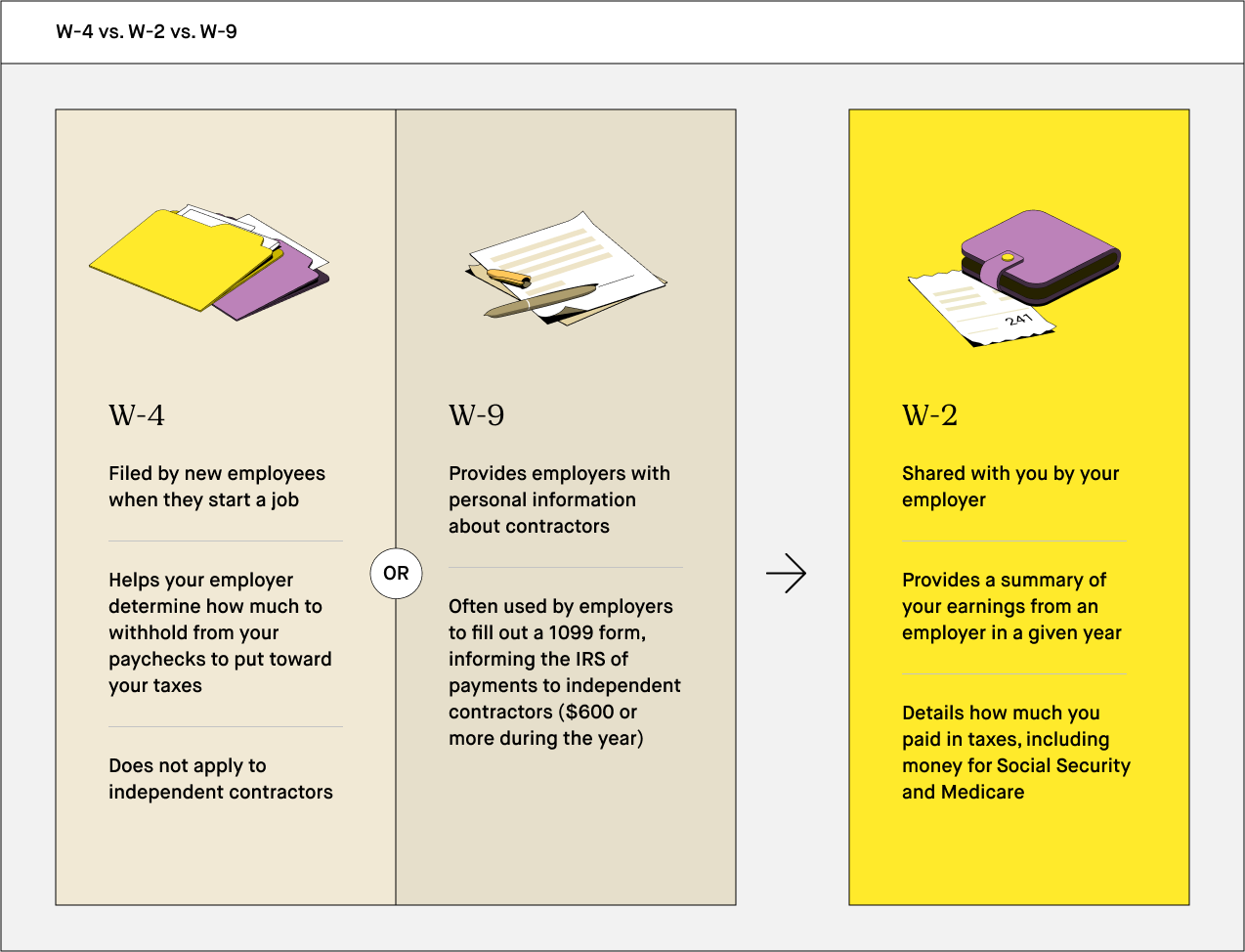
Employers are required to keep W-4 forms on file for their employees. These forms serve as official documentation of the employee’s withholding elections. Employers are also responsible for accurately reporting the total wages paid and federal income tax withheld on Form W-2, which they provide to employees and the IRS at the end of each year. Failure to properly maintain W-4s or correctly withhold taxes can lead to penalties for the employer.
Common Misconceptions and Best Practices
Despite its critical role, the W-4 is often misunderstood, leading to less-than-optimal financial outcomes for many.
Misconception: “Allowances” on the New W-4
Prior to 2020, the W-4 used a system of “allowances.” Many people still incorrectly refer to these. The current W-4 eliminates allowances, moving to direct entries for dependent credits and other adjustments, which simplifies the form and aims for greater accuracy.
Misconception: Claiming “0” or “Single” is Always Best
While claiming “single” and entering zero in steps 3 and 4 (which implies no dependents or other adjustments) will result in the maximum amount of tax being withheld, leading to a large refund, it’s not necessarily the “best” strategy for everyone. As discussed, this means you’re giving the government an interest-free loan. The goal should be to get your withholding as close to your actual tax liability as possible, putting more money in your pocket throughout the year.
Best Practice: Review Annually
Make it a habit to review your W-4 at the beginning of each year or whenever a major life event occurs. Even small changes in your financial situation can accumulate and significantly impact your tax liability. Using the IRS Tax Withholding Estimator is a highly recommended practice for this annual review.
Best Practice: Seek Professional Advice
For complex financial situations, such as significant investment income, self-employment, or intricate deduction scenarios, consulting a tax professional is highly advisable. They can help you navigate the nuances of tax law and ensure your W-4 is configured to minimize your tax burden and optimize your cash flow.
In conclusion, the W-4 form is an essential financial tool that empowers you to manage your federal income tax withholding proactively. By understanding its purpose, accurately completing its sections, and reviewing it regularly, you can ensure that your paychecks reflect your true financial picture, helping you to avoid tax-time surprises and keep more of your hard-earned money working for you.
aViewFromTheCave is a participant in the Amazon Services LLC Associates Program, an affiliate advertising program designed to provide a means for sites to earn advertising fees by advertising and linking to Amazon.com. Amazon, the Amazon logo, AmazonSupply, and the AmazonSupply logo are trademarks of Amazon.com, Inc. or its affiliates. As an Amazon Associate we earn affiliate commissions from qualifying purchases.