
VST instruments, or Virtual Studio Technology instruments, represent a cornerstone of modern digital music production. They are software components that emulate the sound of traditional musical instruments or create entirely new sonic textures, all within a digital audio workstation (DAW). This technology has democratized music creation, making sophisticated sound design and instrumental performance accessible to a wider audience than ever before. Understanding VST instruments is crucial for anyone looking to delve into electronic music production, sound design, or even augment traditional music-making workflows.
The Foundation: Understanding VST Technology
At its core, VST is an audio plug-in interface specification developed by Steinberg. While the acronym VST initially stood for Virtual Studio Technology, it now encompasses both instruments (VSTi) and effects (VSTfx). For the purposes of this discussion, we will focus primarily on VST instruments. These software synthesizers, samplers, and emulators are not standalone applications but rather components that load and operate within a host application – the DAW. This modular approach is key to their flexibility and widespread adoption.
The VST Standard: A Universal Language for Sound
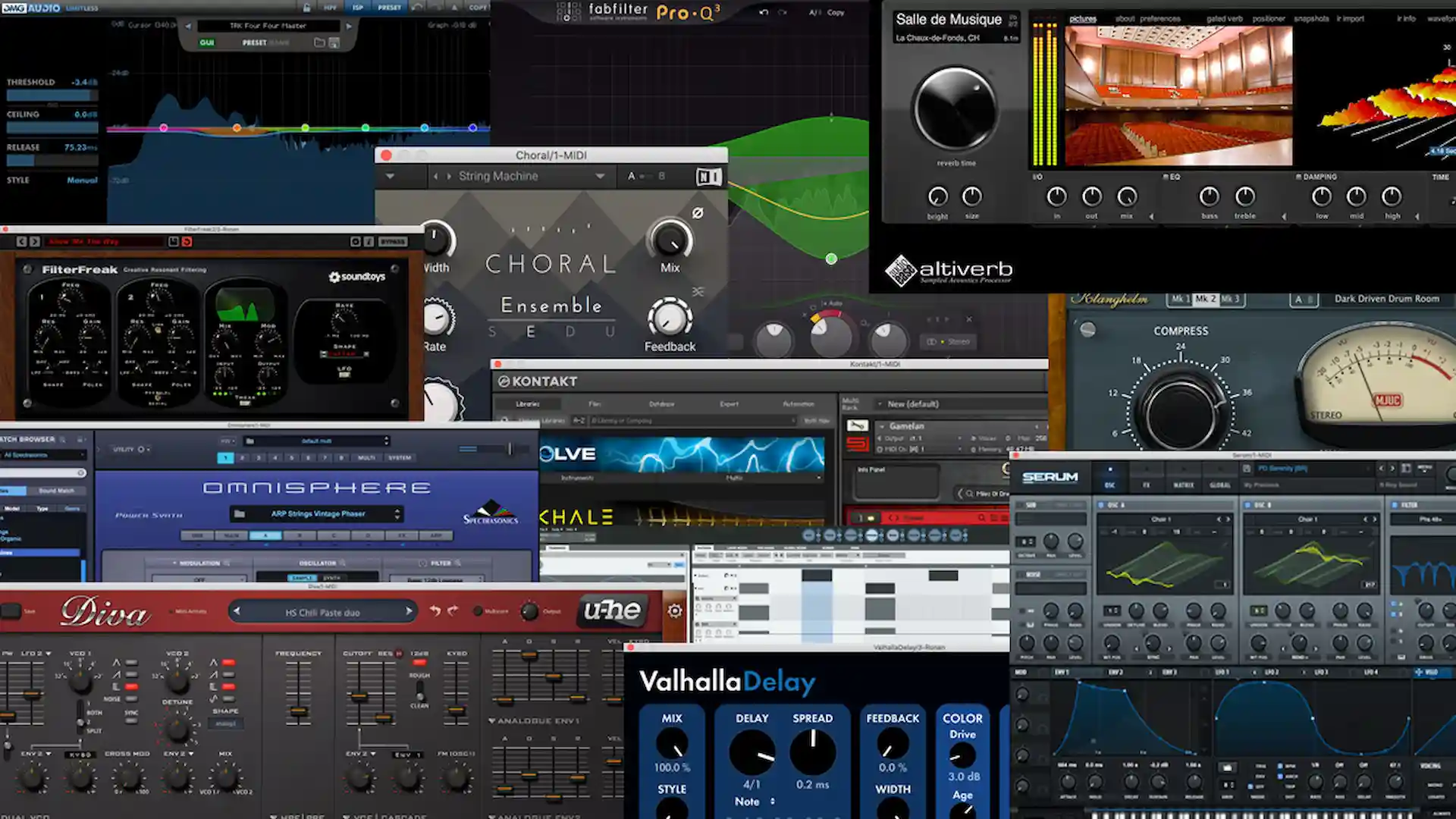
The VST standard provides a framework that allows different software developers to create audio processing tools that can be seamlessly integrated into a variety of DAWs. This standardization means that a VST instrument created for Ableton Live, for instance, will often work in Logic Pro X, FL Studio, Cubase, or Pro Tools, provided the DAW supports the VST standard. This interoperability is a significant advantage, fostering a rich ecosystem of third-party developers and a vast library of available sounds. The VST standard has gone through several iterations, with VST3 being the latest, offering improved performance, increased efficiency, and enhanced features like dynamic I/O.
Host Applications: The Digital Audio Workstation (DAW)
A VST instrument cannot function in isolation. It requires a host application, commonly known as a Digital Audio Workstation (DAW). The DAW serves as the central hub for music production, providing tools for recording, editing, mixing, and mastering audio. When you load a VST instrument into your DAW, you are essentially telling the DAW to instantiate a virtual instrument that you can then play, sequence, and manipulate. The DAW routes MIDI data to the VST instrument, which then generates audio that is processed and mixed within the DAW’s environment. Popular DAWs that support VST instruments include Ableton Live, FL Studio, Cubase, Logic Pro X (which uses its own AU format but can often host VSTs through wrappers or conversion), and Reaper.
The Power of Plug-ins: Flexibility and Expandability
The plug-in architecture of VST instruments is what gives them their immense power. Instead of being locked into the built-in sounds of a DAW, producers can choose from an almost limitless array of VST instruments developed by countless companies. This allows for immense sonic diversity and the ability to tailor the production process to specific musical genres or creative visions. Whether you need a classic analog synthesizer sound, a hyper-realistic orchestral string section, or an avant-garde soundscape, there is likely a VST instrument available to fulfill that need. This constant innovation and expansion are a driving force in the evolution of music production technology.
Types of VST Instruments: A Sonic Palette
VST instruments are incredibly diverse, offering a wide spectrum of sonic possibilities. They can be broadly categorized based on their underlying synthesis or sampling technology, each offering unique characteristics and applications. Understanding these different types is essential for choosing the right VST instrument for your specific needs.
Synthesizers: Sculpting Sound from Scratch
Synthesizers are perhaps the most iconic type of VST instrument. They generate sound electronically, using various synthesis techniques to create waveforms and then shaping them through filters, envelopes, and other modulation sources.
Subtractive Synthesis: The Classic Approach
Subtractive synthesis starts with a basic waveform (like a sine, saw, or square wave) and then “subtracts” harmonics using filters to sculpt the sound. This is a fundamental technique used in many analog synthesizers and is faithfully replicated in numerous VST synths, offering warm, familiar tones.
Additive Synthesis: Building Complexity
Additive synthesis builds complex timbres by combining multiple simple waveforms (harmonics) at different amplitudes. This method allows for very intricate and evolving sounds, often used for creating rich, bell-like, or metallic textures.
FM Synthesis: Dynamic and Metallic Timbres
Frequency Modulation (FM) synthesis involves using one oscillator to modulate the frequency of another. This technique is known for producing bright, metallic, and often complex harmonic sounds, famously associated with instruments like the Yamaha DX7.
Wavetable Synthesis: Evolving Textures
Wavetable synthesis uses a series of digital audio waveforms (wavetables) that can be “scanned” through over time. This allows for incredibly dynamic and evolving timbres, where the harmonic content shifts continuously, creating otherworldly and complex textures.
Granular Synthesis: Fragmented Sonic Landscapes
Granular synthesis breaks down audio into tiny “grains” and then reassembles them in various ways. This technique is excellent for creating ethereal textures, drones, glitchy effects, and atmospheric soundscapes by manipulating the size, density, and position of these grains.
Samplers: Bringing Real-World Sounds into the Digital Realm
Samplers are VST instruments that play back pre-recorded audio samples. These samples can be anything from individual notes of an acoustic instrument to spoken words, environmental sounds, or even synthesized audio.
High-Quality Sample Libraries: Orchestral and Beyond
Many VST samplers are designed to faithfully reproduce the sounds of real-world instruments. Companies create extensive libraries of meticulously recorded orchestral instruments, pianos, drums, guitars, and more, allowing producers to access high-fidelity sounds without owning the physical instruments. These libraries often include multiple articulations (e.g., legato, staccato, pizzicato) for realistic performance.
Kontakt and Beyond: The Power of Advanced Samplers
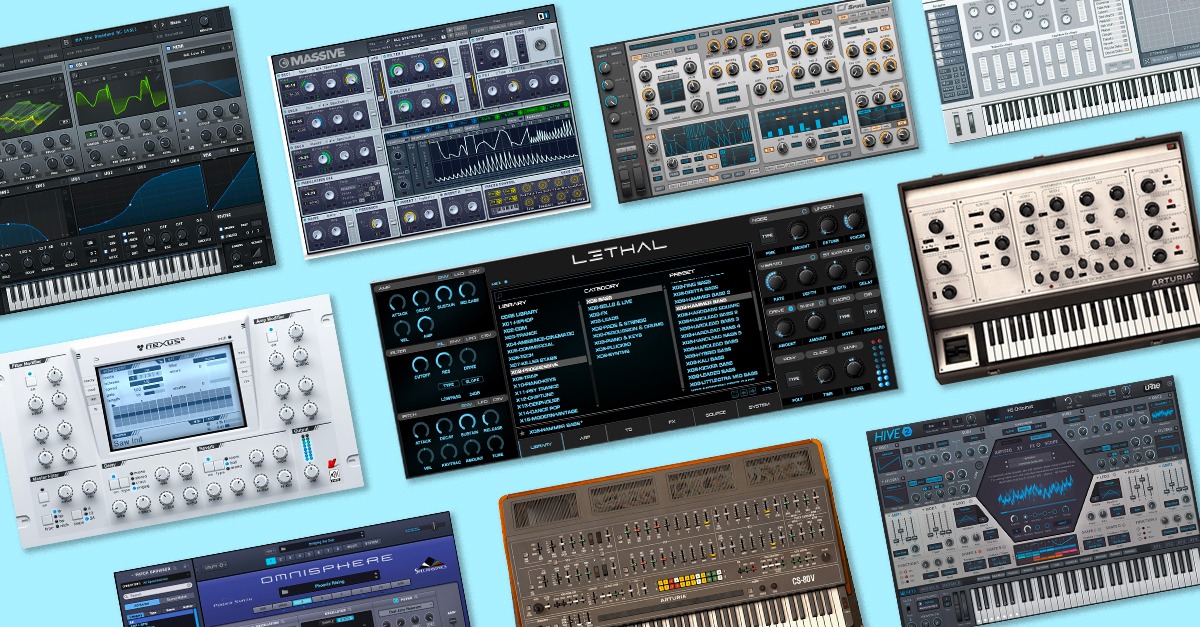
Native Instruments’ Kontakt is a prime example of a highly advanced sampler platform that hosts a vast array of sampled instrument libraries. These samplers often go beyond simple playback, offering sophisticated scripting, built-in effects, and advanced modulation capabilities to shape the sampled sounds in unique ways.
Physical Modeling: Simulating Acoustic Behavior
Physical modeling synthesizers attempt to mathematically simulate the acoustic properties of real instruments. Instead of relying on pre-recorded samples or abstract synthesis techniques, they model the physics of sound production, such as the vibration of strings, the resonance of an air column, or the impact of a hammer on a surface. This can lead to incredibly realistic and expressive instrument emulations.
Drum Machines and Beat Production VSTs
Specialized VST instruments are dedicated to drum sounds and beat creation. These can range from emulations of classic hardware drum machines (like the Roland TR-808 or LinnDrum) to advanced samplers with extensive drum kits and pattern sequencers. They often include features for layering sounds, applying processing, and arranging beats within their interface.
Using VST Instruments in Your Production Workflow
Integrating VST instruments into your music production workflow can significantly enhance your creative output. The process involves selecting, loading, playing, and processing these virtual instruments to craft your desired sounds.
Selection and Installation: Building Your Sonic Arsenal
The first step is choosing and acquiring VST instruments. This often involves browsing online marketplaces, reading reviews, and listening to demo tracks. Once purchased, VST instruments are typically installed as separate files that need to be placed in designated folders on your computer. Your DAW will then scan these folders and make the VST instruments available within its plug-in browser. It’s important to note that VSTs are often platform-specific (Windows or macOS) and may have different versions (VST2, VST3, AU, AAX).
Loading and Playing: Bringing Your Ideas to Life
Within your DAW, you’ll find a section dedicated to loading instruments. You select the desired VST instrument from the list, and it will appear as a new track or instrument slot. You can then play the VST instrument in real-time using a MIDI keyboard or by drawing notes into your DAW’s piano roll editor. The MIDI data you send to the VST instrument dictates which notes are played, their duration, velocity (how hard they are hit, affecting volume and timbre), and other performance nuances.
MIDI Control and Automation: Adding Expressiveness
MIDI (Musical Instrument Digital Interface) is the language that allows your VST instruments to receive instructions. Beyond just notes, MIDI can carry information for pitch bend, modulation wheels, sustain pedals, and more. Furthermore, you can “automate” most parameters of a VST instrument within your DAW. This means you can create dynamic changes over time – for example, slowly opening a filter, increasing vibrato, or morphing between different sound characteristics. This automation is crucial for adding life, movement, and expressiveness to your tracks.
Layering and Combining: Creating Richer Textures
One of the most powerful techniques is layering multiple VST instruments. You might layer a warm analog synth pad with a brighter digital synth lead, or combine a sampled acoustic piano with a subtle granular texture. This allows for the creation of unique, complex, and richer sonic palettes that would be impossible to achieve with a single instrument. Many DAWs allow you to group instruments or route them through bus channels for unified processing.
The Impact and Future of VST Instruments
VST instruments have revolutionized music production, breaking down barriers and democratizing access to high-quality sounds and sophisticated creative tools. Their influence continues to grow, and the future promises even more exciting developments.
Democratization of Music Production
Before VSTs, achieving professional-sounding instrumental parts often required expensive hardware synthesizers, samplers, and extensive studio time. VST instruments have made these capabilities accessible to anyone with a computer and a DAW. This has fostered a new generation of musicians and producers, enabling independent artists to create and release music that rivals major label productions. The sheer variety and affordability of VST instruments mean that virtually any sonic idea can be realized without breaking the bank.
Innovation and Evolving Technologies
The field of VST instrument development is constantly evolving. We are seeing increasingly sophisticated algorithms for synthesis and sampling, AI-powered sound design tools, and tighter integration with hardware controllers. The pursuit of greater realism in sampled instruments, more intuitive control over complex synthesis engines, and the exploration of entirely new sonic paradigms continue to drive innovation. As computing power increases, so too does the complexity and fidelity of the virtual instruments we can create and use.
The Future Landscape: AI, Cloud, and Beyond
The future of VST instruments is likely to be shaped by several emerging trends. Artificial intelligence is already beginning to play a role in sound design, assisting with patch generation, sound morphing, and even auto-composition. Cloud-based VSTs could offer streaming access to vast libraries of instruments and processing power without requiring extensive local storage or high-end hardware. Furthermore, we may see even more specialized VSTs designed for niche genres or specific creative tasks. The ongoing development of audio processing algorithms and increased computational power will undoubtedly lead to virtual instruments that are more realistic, more expressive, and more inspiring than ever before.
aViewFromTheCave is a participant in the Amazon Services LLC Associates Program, an affiliate advertising program designed to provide a means for sites to earn advertising fees by advertising and linking to Amazon.com. Amazon, the Amazon logo, AmazonSupply, and the AmazonSupply logo are trademarks of Amazon.com, Inc. or its affiliates. As an Amazon Associate we earn affiliate commissions from qualifying purchases.