
In the landscape of automotive engineering, few engine families have achieved the ubiquity, longevity, and cult-like status of the Nissan VQ series. When enthusiasts refer to a “VQ car,” they are not just discussing a specific model of vehicle, but rather a lineage of machines powered by one of the most decorated V6 engines in history. From the sleek lines of the Nissan Z-cars to the executive luxury of the Infiniti G-series, the VQ engine has served as the heartbeat of Nissan’s global lineup for nearly three decades.

Understanding what defines a VQ car requires a deep dive into the mechanical innovations, the technical specifications, and the distinct performance characteristics that have earned this engine family a spot on the Ward’s 10 Best Engines list for fourteen consecutive years.
The Engineering Genesis: Defining the VQ Series
The VQ engine series debuted in 1994 as a replacement for the aging VE and VG engines. It was designed from the ground up to be a modern, lightweight, and high-performance power plant that could be adapted across various vehicle platforms. At its core, a VQ car is defined by its V6 configuration, featuring a 60-degree V-angle—a design choice that is fundamentally rooted in the pursuit of mechanical balance and smoothness.
Modular Architecture and Materials
One of the most significant technological leaps represented by the VQ series was its modular design. Nissan engineers utilized high-pressure die-cast aluminum blocks and heads, a departure from the heavy cast-iron blocks common in earlier eras. This shift significantly reduced the front-end weight of VQ cars, drastically improving weight distribution and handling dynamics.
The engine also introduced a micro-finishing process for the camshafts and crankshaft journals. By reducing friction to a microscopic degree, the VQ achieved higher efficiency and a faster-revving nature compared to its competitors. This commitment to reducing internal resistance allowed the VQ to deliver power more linearly, a trait that became a hallmark of the driving experience in VQ-equipped vehicles.
The 60-Degree Advantage
Engineering a V6 involves a constant battle against vibration. While 90-degree V6 engines are common because they can be produced on the same assembly lines as V8s, they often require heavy balance shafts to remain smooth. The VQ’s 60-degree angle is inherently balanced, allowing for a more compact design and a higher redline. This mechanical harmony is why a VQ car often feels more refined at high RPMs than many of its domestic or European counterparts of the same era.
Performance Milestones and Technological Breakthroughs
As the VQ evolved, it became a pioneer for several technologies that are now industry standards. The transition from the original VQ30DE to the legendary VQ35DE and the later VQ37VHR marked a series of technical milestones that redefined what enthusiasts expected from a naturally aspirated V6.
VVEL and Variable Valve Timing
With the introduction of the VQ37VHR (the “HR” standing for High Response), Nissan implemented Variable Valve Event and Lift (VVEL) technology. Unlike traditional throttles that use a butterfly valve to control air intake, VVEL adjusts the intake valve lift directly. This allows the engine to breathe more efficiently, improving fuel economy while providing nearly instantaneous throttle response.
For the driver of a VQ car, this technology translates to a wide powerband. Whether cruising at highway speeds or pushing through a technical corner on a track, the engine’s ability to optimize its breathing across the entire rev range ensures that power is always available.
Friction Reduction and Efficiency
Beyond valve timing, the VQ series pushed the boundaries of internal coatings. Later iterations utilized Hydrogen-free Diamond-Like Carbon (DLC) coatings on the valve lifters. This aerospace-grade technology reduced friction by approximately 40% compared to previous models. Furthermore, the use of a cross-flow cooling system ensured that the engine could maintain peak performance under high thermal stress, a critical factor for the VQ cars that found themselves in endurance racing and drift competitions.
The Cultural and Technical Impact of the VQ Platform
While the engineering specs tell part of the story, the identity of a VQ car is also shaped by its sensory experience. There is a distinct “personality” associated with these vehicles that has helped them maintain a massive following in the digital age of automotive social media.
The Iconic “Trumpet” Exhaust Note
Perhaps no feature identifies a VQ car more quickly than its exhaust note. Due to the equal-length headers and the specific firing order of the V6, VQ engines produce a high-pitched, metallic “wail” at high RPMs. Often described as a “trumpet” sound, this acoustic signature is polarizing but undeniably unique. It has become a digital calling card for the VQ community, making these cars instantly recognizable in any urban or track environment.
Versatility Across Segments
The VQ engine is a master of disguise. Its technical flexibility allowed Nissan to use it in vastly different applications:
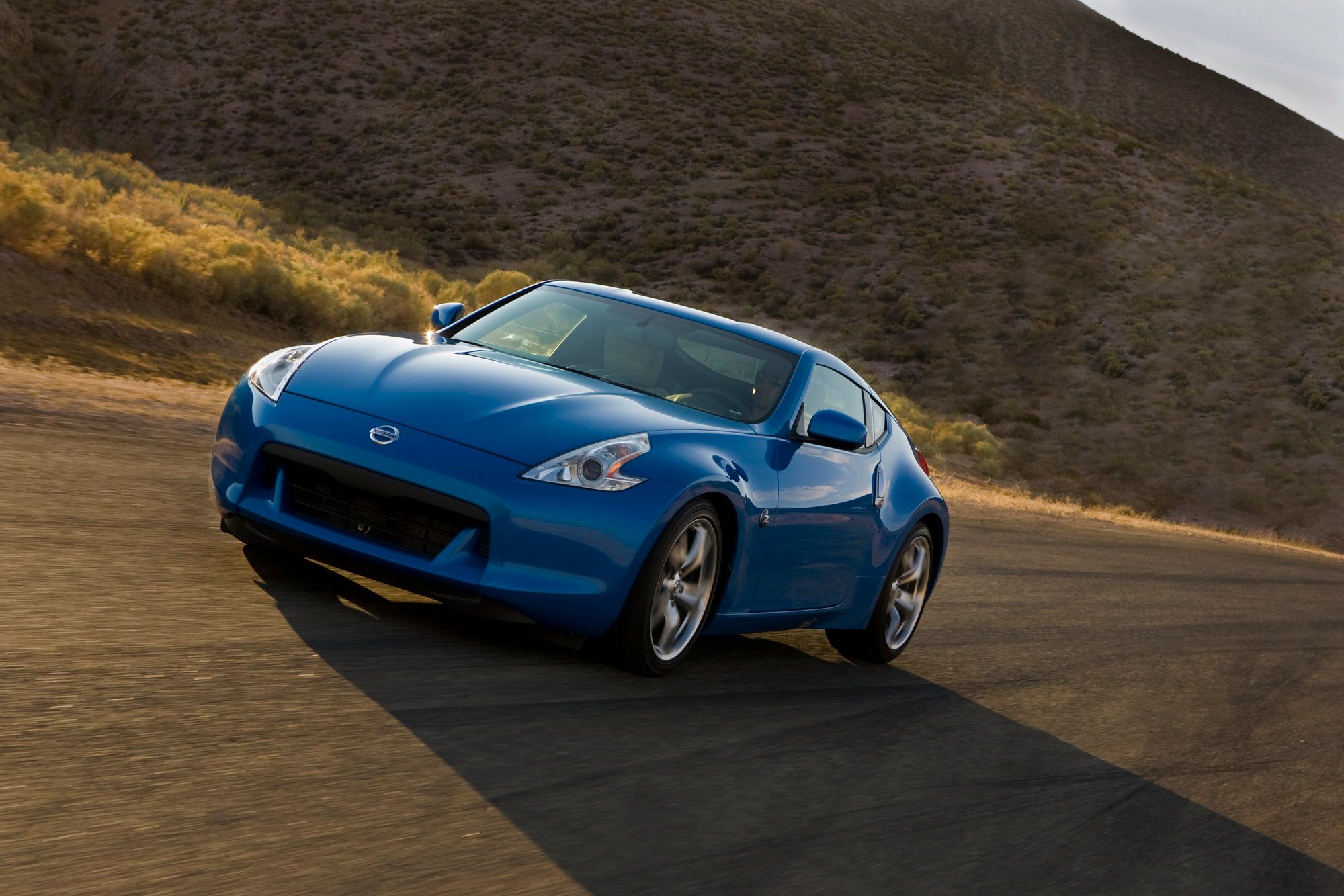
- The Sports Cars: In the Nissan 350Z and 370Z, the VQ was tuned for raw power and high-revving performance, paired with short-ratio manual transmissions.
- The Luxury Cruisers: In the Infiniti G35, G37, and Q50, the engine was recalibrated for smoothness and mid-range torque, providing a refined “executive” feel.
- The Utility Workhorses: In the Nissan Pathfinder and Frontier, the VQ demonstrated its durability, proving that the same architecture providing 330 horsepower in a coupe could also handle the torque requirements of towing and off-roading.
Reliability, Maintenance, and the Tuning Ecosystem
For many owners, a VQ car represents the perfect entry point into performance motoring because of its reputation for “bulletproof” reliability—with a few technical caveats. Understanding the maintenance requirements is part of the VQ ownership experience.
Common Technical Challenges
Despite its strengths, the VQ series has specific engineering quirks that enthusiasts must monitor. Earlier VQ35DE engines were known for “oil consumption” issues, often linked to the design of the piston rings or PCV system. In the later VQ35HR and VQ37VHR models, the “gallery gasket” became a known failure point. These internal gaskets, made of a paper-like material in earlier versions, could fail and cause a drop in oil pressure. The tech community responded by developing aftermarket metal-reinforced gaskets, a common “preventative tech” upgrade for high-mileage VQ cars.
Aftermarket Integration and Forced Induction
The VQ engine is a favorite in the tuning world because of its overbuilt nature. The bottom end of a VQ35 or VQ37 can often handle significant amounts of boost from turbochargers or superchargers without requiring internal reinforcement.
The software side of VQ tuning is equally robust. Platforms like EcuTek and Uprev allow tuners to access the Nissan ECU to Map-switch on the fly, implement “arc features” like launch control and flat-foot shifting, and optimize the VVEL system for forced induction. This digital accessibility has kept the VQ car relevant in an era where modern software often locks enthusiasts out of their own vehicles.

The Evolution into the Modern Era
As the automotive industry shifts toward electrification and smaller-displacement turbocharged engines, the era of the high-displacement, naturally aspirated V6 is drawing to a close. However, the technology developed for the VQ series didn’t disappear; it evolved.
The successor to the VQ, the VR series (found in the Nissan GT-R and the new Nissan Z), takes many of the lessons learned from the VQ and adds twin-turbocharging and direct injection. Yet, for many, the VR lacks the raw, linear character of a naturally aspirated VQ37VHR singing at 7,500 RPM.
A VQ car is more than just a vehicle with a specific engine code. It is a testament to an era of engineering where mechanical simplicity met high-tech precision. It represents a period when Nissan focused on creating a “Global V6” that could do everything from power a family minivan to win championships on the drift circuit. Whether you value it for its metallurgical innovations, its distinctive sound, or its legendary durability, the VQ car remains a cornerstone of modern automotive technology, continuing to influence how we think about power, sound, and performance in the internal combustion engine.
aViewFromTheCave is a participant in the Amazon Services LLC Associates Program, an affiliate advertising program designed to provide a means for sites to earn advertising fees by advertising and linking to Amazon.com. Amazon, the Amazon logo, AmazonSupply, and the AmazonSupply logo are trademarks of Amazon.com, Inc. or its affiliates. As an Amazon Associate we earn affiliate commissions from qualifying purchases.