
A vesting period is a fundamental concept within the realm of compensation and ownership, particularly relevant in business and finance. It represents a predetermined timeframe during which an individual must remain employed or meet specific conditions before they gain full ownership of certain assets, typically stock options, restricted stock units (RSUs), or even employee benefits like retirement contributions. Understanding vesting periods is crucial for both employees seeking to maximize their compensation and employers aiming to incentivize loyalty and performance.
The Purpose and Mechanics of Vesting
At its core, a vesting period serves as a strategic tool to align the interests of employees with those of the company. By delaying full ownership, companies encourage long-term commitment, reducing employee turnover and fostering a sense of shared success. It’s not merely about delaying gratification; it’s about building a stable workforce and ensuring that those who contribute to the company’s growth ultimately share in its rewards.

Why Companies Implement Vesting Periods
The primary drivers behind implementing vesting periods are multifaceted. Firstly, retention is paramount. High employee turnover is costly, involving recruitment expenses, training time, and lost productivity. Vesting schedules act as a golden handcuff, making it financially disadvantageous for employees to leave before their allocated rewards fully materialize. This incentivizes them to stay and contribute to the company’s long-term objectives.
Secondly, vesting periods promote alignment of interests. When employees hold equity in the company they work for, their personal financial well-being becomes directly tied to the company’s success. This fosters a sense of ownership and encourages employees to act in ways that benefit the company, such as improving performance, driving innovation, and contributing to a positive work environment.
Thirdly, vesting can be used as a tool for performance management. While not always the sole factor, some vesting schedules are tied to specific performance milestones or the achievement of certain company goals. This can motivate employees to focus on key performance indicators (KPIs) and contribute directly to the company’s strategic objectives.
How Vesting Periods Work in Practice
The mechanics of vesting can vary significantly depending on the specific award and the company’s policies. However, common structures include:
-
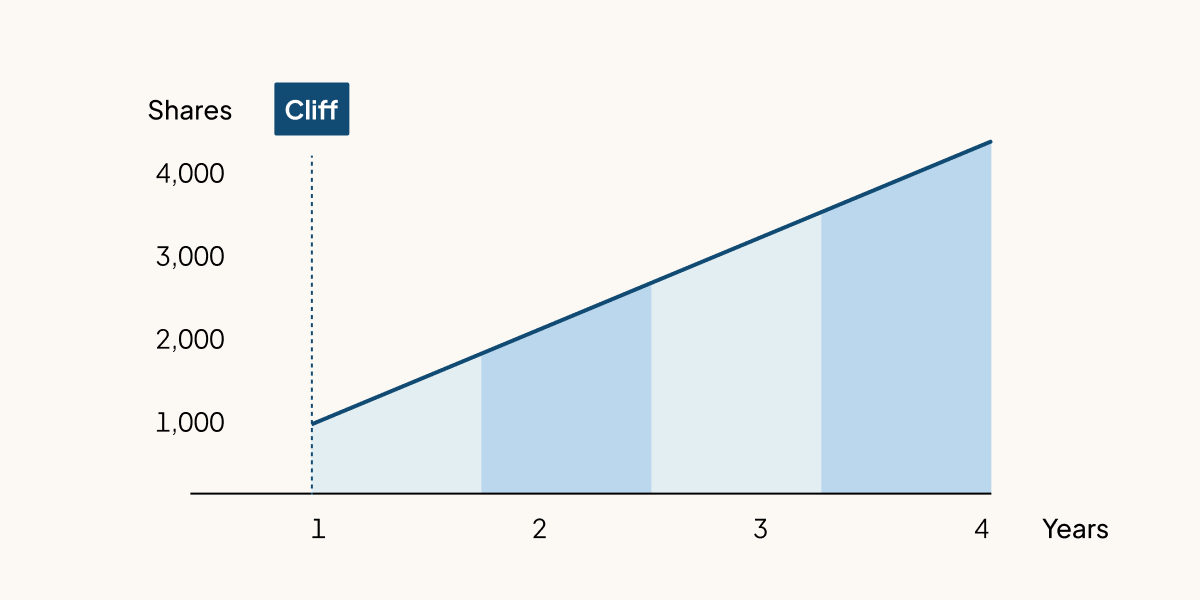
Cliff Vesting: This is perhaps the most straightforward and commonly encountered vesting schedule. With cliff vesting, an employee receives no ownership of the awarded assets until a specified period has passed. For example, a common cliff is one year. If an employee leaves before the one-year mark, they forfeit all unvested equity. Upon reaching the cliff date, a significant portion or all of the award vests. This structure provides a clear incentive to stay for at least the initial period.
-
Graduated Vesting (or Graded Vesting): This method allows for a more gradual acquisition of ownership over time. Instead of a single cliff, portions of the award vest at regular intervals. For instance, an award might vest 25% per year over four years. This means that after one year, 25% of the award is vested, after two years, 50% is vested, and so on. This provides a steadier sense of reward and can be more appealing to employees who might not see a large immediate payout with cliff vesting.
-
Time-Based Vesting: This is the most prevalent form of vesting, where ownership is contingent solely on the passage of time and continued employment. Both cliff and graduated vesting are forms of time-based vesting. The duration of the vesting period is typically determined by the company’s compensation strategy and the industry standard. For stock options and RSUs, common vesting periods range from 3 to 5 years, often with a one-year cliff.
-
Performance-Based Vesting: In some cases, vesting is contingent not only on time but also on the achievement of specific performance targets. These targets can be individual, team-based, or company-wide. For example, an employee might receive stock options that vest only if the company achieves a certain revenue growth or profitability milestone within a given timeframe. This adds an extra layer of incentive for high performance and aligns employee rewards directly with the company’s financial success.
Common Scenarios for Vesting Periods
Vesting periods are integral to several types of employee compensation and equity grants:
-
Stock Options: These give employees the right to purchase company stock at a predetermined price (the exercise price) within a specified period. Vesting periods dictate when these options become exercisable. Without vesting, employees could be granted options and immediately exercise them, potentially cashing out before contributing significantly to the company’s growth.
-
Restricted Stock Units (RSUs): RSUs are promises to grant an employee a certain number of shares of company stock at a future date, provided certain conditions (vesting requirements) are met. Once vested, the employee receives the actual shares. RSUs are often favored by public companies as they represent actual stock rather than just the right to buy it.
-
Employee Stock Purchase Plans (ESPPs): While not always involving a strict vesting period in the same sense as options or RSUs, ESPPs often have purchase periods and offer discounts on stock purchased. However, the concept of earning the right to purchase or benefit from these plans over time can echo the principles of vesting.
-
Retirement Contributions: In some employer-sponsored retirement plans, such as 401(k)s, employer contributions are subject to vesting. This means that while the employee’s own contributions are always theirs, employer contributions might not be fully owned by the employee until they have worked for the company for a specified period. This is another example of incentivizing long-term employment.
Understanding Vesting Schedules and Their Impact
The specific structure of a vesting schedule can have a profound impact on an employee’s financial planning and overall perception of their compensation package. It’s not just about the number of shares or options granted, but also about when those grants become truly valuable.
Analyzing Your Vesting Schedule
When presented with an offer that includes a vesting component, whether it’s stock options, RSUs, or retirement contributions, it’s crucial to thoroughly analyze the associated vesting schedule. This involves understanding:
-
The Vesting Commencement Date: This is the date from which the vesting period begins to count. It’s not always the same as your start date, so clarifying this is important.
-
The Cliff Period: If there’s a cliff, know exactly when it ends and what percentage of your award vests at that point. This is often the most critical milestone.
-
The Vesting Frequency: How often do portions of your award vest? Is it monthly, quarterly, annually, or on a different schedule? Understanding this helps in projecting when you’ll have access to your vested assets.
-
The Total Vesting Period: What is the entire duration over which your award will vest? This gives you a long-term perspective on your compensation.
-
Vesting upon Termination: What happens to your unvested awards if your employment is terminated, either voluntarily or involuntarily? Some companies have provisions for accelerated vesting in certain circumstances, such as a change of control or termination without cause. Understanding these clauses is vital.
The Psychological and Financial Ramifications
The psychological impact of vesting periods can be significant. For employees, the promise of future wealth tied to their tenure can be a powerful motivator. However, it can also create a sense of dependency on the employer and may influence career decisions. Some individuals might stay in roles they are unhappy with simply to avoid forfeiting unvested equity.
Financially, vesting schedules dictate the timing of potential wealth realization. For stock options, the value of vested options depends on the company’s stock price at the time of exercise relative to the exercise price. For RSUs, the value is more directly tied to the stock price at the time of vesting. Understanding these dynamics is crucial for financial planning, especially for individuals looking to make significant financial decisions based on their potential equity gains.
Navigating Career Decisions with Vesting in Mind
When making career decisions, it’s essential to weigh the potential benefits of new opportunities against the value of unvested equity in your current role. If you are close to a significant vesting milestone, leaving before it occurs can result in a substantial financial loss. Conversely, if you are contemplating a move, understanding the terms of equity grants at potential new employers is just as important as evaluating salary and benefits.
It’s also worth noting that some companies may offer sign-on bonuses or new equity grants to offset the loss of unvested equity from a previous employer. These negotiations can be complex and require careful consideration of the long-term implications.
Vesting in Different Business Contexts
The application and significance of vesting periods extend across various business structures, from early-stage startups to established public corporations. The core principle remains the same – incentivizing commitment and aligning interests – but the specific implementations and implications can differ.
Startups and Early-Stage Companies
In the fast-paced and often volatile environment of startups, vesting periods are particularly critical. Equity is frequently a significant component of compensation, especially when cash salaries may be lower than in more mature companies.
-
Founder Vesting: Founders themselves often agree to vesting schedules for their own equity. This prevents a founder from leaving early with a substantial stake, which could destabilize the company and harm investors. Typical founder vesting might be 4 years with a 1-year cliff, aligning with early employee vesting.
-
Employee Equity Grants: For early employees, stock options or RSUs with vesting periods are powerful tools to attract and retain talent. The prospect of significant wealth creation through equity appreciation is a major draw, especially in a high-growth potential startup. The longer vesting periods and cliffs in startups can be more pronounced, reflecting the higher risk and longer time horizon for potential success.
-
Investor Confidence: Investors scrutinize founder and employee vesting schedules as a sign of commitment and good governance. Well-structured vesting demonstrates that the team is invested in the long-term success of the venture.
Public Companies and Mature Corporations
In larger, publicly traded companies, vesting periods are still a standard practice for executive compensation, employee stock options, and RSUs. However, the focus might shift slightly.
-
Executive Compensation: For top executives, vesting schedules are often tied to longer-term performance goals and multi-year strategic objectives. This ensures that their incentives are aligned with the sustained success and shareholder value of the company.
-
Broad-Based Equity Awards: Many public companies offer RSUs or stock options to a wider employee base as part of their compensation packages. These typically follow more standardized vesting schedules, often 3-5 years with a 1-year cliff, to ensure employee retention and a sense of ownership across the organization.
-
Liquidity and Tax Implications: For employees in public companies, vested stock or options become more liquid, offering clearer pathways to realizing financial gains. Understanding the tax implications of exercising options or receiving vested RSUs becomes a significant part of financial planning. The timing of vesting can also influence tax liabilities.
Mergers and Acquisitions (M&A) and Vesting
Mergers and acquisitions can significantly impact vested and unvested equity. The terms of the acquisition agreement will dictate what happens to outstanding stock options and RSUs.
-
Accelerated Vesting: In many M&A deals, acquiring companies will accelerate the vesting of unvested equity for employees of the target company. This is often done to incentivize continued employment during the transition period and to reward employees for their contribution to the company’s sale. The terms of acceleration can vary – some might vest immediately, while others might vest over a shorter period.
-
Exchange of Awards: Sometimes, unvested options or RSUs in the target company are converted into equivalent awards in the acquiring company, subject to the acquiring company’s vesting schedule. This ensures that employees still have an incentive to contribute to the success of the combined entity.
-
Severance Packages: If employment is terminated as a result of an M&A transaction, severance packages often include provisions for accelerated vesting of some or all unvested equity, as a form of compensation for the loss of employment.
The Future of Vesting and Evolving Compensation Models
As the landscape of work continues to evolve, so too do the approaches to compensation and employee incentives. Vesting periods, while a long-standing practice, are not immune to these changes. The rise of remote work, the gig economy, and a greater emphasis on employee well-being are all influencing how companies think about rewarding their workforce.
Adapting to the Modern Workforce
The traditional concept of a 4-year vesting schedule with a 1-year cliff, while still prevalent, might not be universally optimal for all companies or all employee demographics.
-
Shorter Vesting Periods: Some innovative companies are experimenting with shorter vesting periods, perhaps 2-3 years, to provide employees with earlier access to their equity. This can be particularly appealing to younger employees or those in industries with higher employee mobility.
-
Flexible Vesting: The idea of more flexible vesting, where employees might have some control over their vesting schedule based on achieving certain personal or professional goals, is also being explored. This could involve linking vesting to skill development, project completion, or even contributions to company culture.
-
Focus on Well-being and Flexibility: In an era where work-life balance and employee well-being are paramount, compensation models that offer more immediate tangible benefits might gain traction. This doesn’t necessarily mean eliminating vesting, but perhaps integrating it with other benefits that provide immediate value.
The Role of Technology in Vesting Management
Technology plays an increasingly vital role in managing and administering vesting schedules, especially in companies with large workforces and complex equity plans.
-
Equity Management Platforms: Specialized software platforms are now widely used to track equity grants, manage vesting schedules, automate calculations, and facilitate communication with employees about their awards. These tools provide transparency and efficiency, reducing administrative burdens and potential errors.
-
Data Analytics and Predictive Modeling: Advanced analytics can help companies model the financial implications of different vesting structures, understand employee retention patterns, and predict the impact of vesting schedules on employee behavior. This data-driven approach allows for more strategic design of compensation plans.
-
Blockchain and Future Innovations: While still nascent, some are exploring the potential of blockchain technology to create more secure, transparent, and efficient ways to manage equity and vesting. This could lead to smart contracts that automatically execute vesting events, further streamlining the process.

Beyond Traditional Equity: Exploring Alternatives
While equity and stock-based compensation with vesting periods have been the gold standard for many years, companies are increasingly looking at alternative ways to incentivize and retain employees, especially in light of evolving workforce expectations.
-
Performance Bonuses and Profit Sharing: More emphasis on cash-based incentives, such as performance bonuses directly tied to individual or team achievements, and profit-sharing plans that distribute a portion of company profits to employees, can offer more immediate and tangible rewards.
-
Employee Stock Ownership Plans (ESOPs): While ESOPs also involve ownership, their structure can differ from traditional stock grants, often focusing on broader employee participation.
-
Enhanced Benefits and Perks: Companies are recognizing that beyond financial compensation, providing robust health and wellness programs, generous paid time off, professional development opportunities, and flexible work arrangements can be powerful retention tools.
Ultimately, the vesting period remains a cornerstone of employee compensation and incentive strategies, particularly in the realm of equity. Its purpose—to align interests, reward loyalty, and foster a sense of shared ownership—is timeless. However, as the business landscape shifts, so too will the methods of implementation and the accompanying compensation philosophies, ensuring that companies can continue to attract, motivate, and retain the talent they need to thrive.
aViewFromTheCave is a participant in the Amazon Services LLC Associates Program, an affiliate advertising program designed to provide a means for sites to earn advertising fees by advertising and linking to Amazon.com. Amazon, the Amazon logo, AmazonSupply, and the AmazonSupply logo are trademarks of Amazon.com, Inc. or its affiliates. As an Amazon Associate we earn affiliate commissions from qualifying purchases.