
The universe, in all its complex simplicity, operates on a principle of cause and effect. From the smallest atomic interactions to the grandest cosmic phenomena, everything is interconnected, and changes in one element inevitably ripple through others. In the realm of scientific inquiry, particularly when designing and executing a science project, understanding this fundamental relationship is paramount. This understanding is encapsulated in the concept of a “variable.” Far from being a mere academic term confined to school laboratories, variables are the very backbone of experimentation, analysis, and problem-solving, reaching into every domain from cutting-edge technology to shrewd financial strategies and impactful brand development.
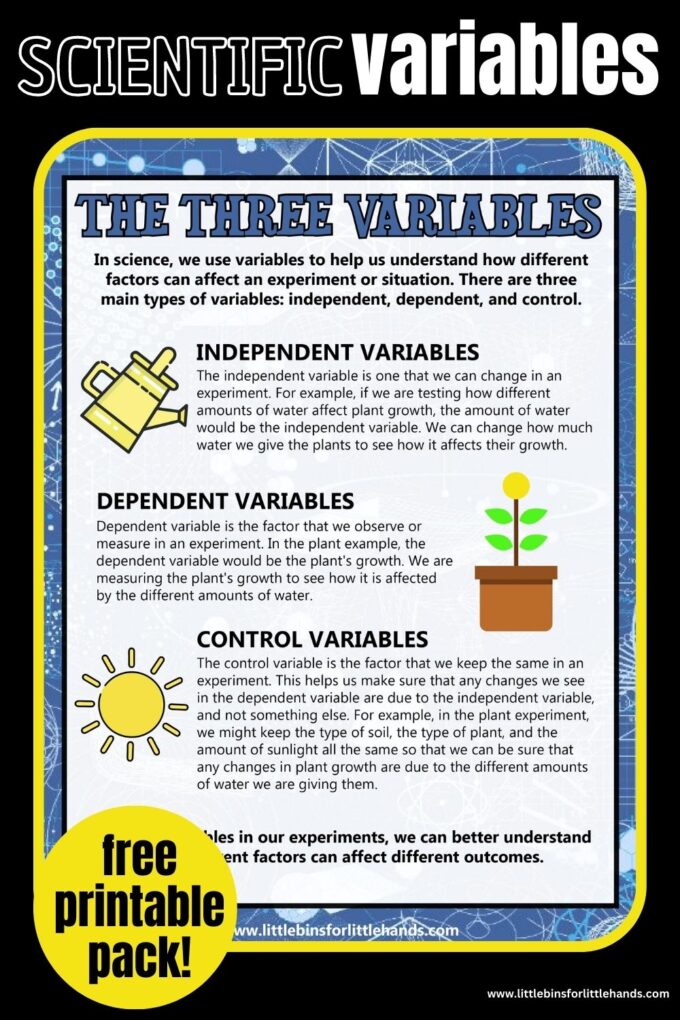
At its core, a variable is anything that can be changed, measured, or controlled in an experiment. It is an element, factor, or condition that can vary or be varied. Imagine a scientist trying to understand why certain plants grow taller than others. What factors might influence this growth? Sunlight, water, soil type, fertilizer – each of these is a potential variable. By systematically manipulating and observing these elements, the scientist can uncover the specific relationships that govern plant growth. This structured approach, powered by the careful identification and management of variables, is what transforms mere observation into actionable knowledge.
The Core of Scientific Inquiry: Understanding Variables
To conduct any meaningful experiment, whether it’s testing the strength of a homemade bridge or evaluating the effectiveness of a new learning app, you must first define what you are trying to change, what you expect to observe, and what you need to keep constant. This categorization is crucial for isolating effects and drawing valid conclusions.
Independent Variables: The Cause You Control
The independent variable is the element that the experimenter intentionally changes or manipulates. It’s the “cause” in the cause-and-effect relationship you’re investigating. Think of it as the input you provide to see what output you get. For instance, if you’re testing how different amounts of sunlight affect plant growth, the amount of sunlight is your independent variable. You decide to expose one plant to 4 hours of sun, another to 8 hours, and a third to 12 hours. You are controlling this factor directly. It is independent because its value does not depend on any other variable in the experiment; it’s set by you. In a digital context, this could be the specific feature you enable in an A/B test, the advertising budget you allocate, or the training data you feed into an AI model.
Dependent Variables: The Effect You Measure
The dependent variable is the element that is observed and measured in response to changes in the independent variable. It’s the “effect” that you are interested in. Its value depends on the changes you make to the independent variable. Following the plant growth example, the height of the plant would be the dependent variable. You measure how tall each plant grows after being exposed to different amounts of sunlight. The plant’s height “depends” on how much sun it received. If you’re A/B testing a website, the dependent variable might be the click-through rate or conversion rate. In a financial investment scenario, it could be the return on investment. The key is that the dependent variable is what you hope to see change, and its variation helps you understand the impact of your independent variable.
Controlled Variables: Keeping It Fair
Controlled variables, also known as constant variables, are all the elements that an experimenter keeps the same throughout the experiment. These are factors that could affect the dependent variable but are not the focus of the current investigation. Their purpose is to ensure that any observed changes in the dependent variable are indeed due to the manipulation of the independent variable, and not some other extraneous factor. In our plant growth experiment, controlled variables would include the type of soil, the amount of water given to each plant, the temperature of the room, the type of plant, and the size of the pot. If you changed the soil type for one plant and the amount of sunlight, you wouldn’t know if the growth difference was due to the sun or the soil. By controlling these variables, you isolate the effect of the independent variable, ensuring the experiment is fair and the results are reliable. This principle extends to all forms of experimentation, from comparing the performance of two different software algorithms to evaluating the impact of a new marketing campaign – all extraneous factors must be kept constant to attribute observed outcomes accurately.
Beyond the Lab Bench: Variables in the Digital Age (Connecting to Tech)
The abstract concept of variables, so fundamental to science projects, finds incredibly tangible and impactful applications in the world of technology. From developing cutting-edge software to refining AI algorithms and enhancing digital security, the systematic manipulation and measurement of variables are at the heart of innovation.
Software Development and Experimentation
In software development, variables are constantly at play. When a company designs a new app or updates an existing feature, they often employ A/B testing. Here, the independent variable might be the new user interface design (UI), a different button color, or a revised onboarding flow. The dependent variables are user engagement metrics like click-through rates, time spent in the app, conversion rates, or user satisfaction scores. By carefully controlling other factors (like user demographics or time of day), developers can determine which version of the software performs better, making data-driven decisions that enhance user experience and product success. This iterative process, driven by variable analysis, is essential for staying competitive in the fast-paced tech landscape. AI tools themselves often have configurable parameters, which act as independent variables that, when tuned, affect the AI’s performance (dependent variable) in tasks like image recognition or natural language processing.
Data Science and Analytics
Data science is inherently built on the concept of variables. Data scientists analyze vast datasets, looking for relationships between different pieces of information. For instance, they might investigate how different marketing channels (independent variables) influence customer acquisition rates (dependent variable). Or, how varying network conditions (independent) impact streaming quality (dependent). Predictive modeling, a cornerstone of data science, seeks to understand how changes in certain input variables can predict future outcomes. This applies to technology trends, where understanding variables like adoption rates of new gadgets or software updates can help predict market shifts. Digital security also benefits from this understanding; by analyzing independent variables like network traffic patterns or login attempts, security experts can identify anomalies (dependent variables) that might indicate a cyber threat.
Digital Security and Productivity
In the realm of digital security, understanding variables is crucial for both offense and defense. Security researchers often act as scientists, meticulously testing systems. An independent variable might be a specific type of malicious input or an attack vector; the dependent variable would be the system’s vulnerability or its response. Conversely, for defense, monitoring variables like login frequency, data transfer volumes, or unusual access patterns helps detect security breaches. For productivity, whether through apps or gadgets, users often unknowingly perform mini-experiments. Trying out different project management software features (independent variables) to see which one optimizes workflow or task completion time (dependent variables) is a practical application of variable thinking.

Variables in Strategic Thinking: From Brands to Budgets (Connecting to Brand & Money)
The logical framework provided by variables extends far beyond the scientific method into the strategic decision-making processes vital for brand building and financial management. Businesses, marketers, investors, and even individuals leverage variable analysis to optimize outcomes and achieve objectives.
Brand Strategy and Marketing Campaigns
For brand strategists, understanding variables is essential for crafting effective campaigns and building a strong corporate identity. Consider a marketing campaign: the independent variables could be the type of advertising (social media, print, TV), the messaging used, the target audience segment, or the budget allocated. The dependent variables would be brand awareness, customer engagement, lead generation, sales conversion rates, or shifts in brand perception. Through careful A/B testing of different ad creatives or landing page designs (independent variables), brands can measure which elements resonate most with their audience (dependent variable) and optimize their strategy for maximum impact and a stronger reputation. Case studies in branding often dissect the independent variables (e.g., a specific rebranding effort, a celebrity endorsement) that led to particular outcomes (dependent variables like increased market share or improved public image).
Personal Branding and Online Influence
Even in the evolving landscape of personal branding, variables are at play. Individuals seeking to build their online influence might experiment with different types of content (e.g., short-form videos vs. long-form articles – independent variables), posting schedules, or engagement strategies. The dependent variables would be follower growth, content reach, audience interaction rates, or the perception of their expertise. Understanding which variables contribute most effectively to their personal brand allows them to refine their approach, becoming more strategic in their digital presence and reputation management. This iterative process of testing and measuring is a constant “science project” for anyone navigating the digital sphere.
Financial Planning and Investment Strategies
In the world of money, variables are the cornerstone of smart financial planning and investment. For personal finance, independent variables could include your monthly savings rate, investment portfolio allocation (e.g., stocks vs. bonds), or diversification strategies. The dependent variables would be your net worth growth, retirement fund balance, or the speed at which you achieve financial independence. Similarly, in investing, economic indicators (inflation rates, interest rates), company earnings reports, or market trends can be seen as independent variables that significantly influence investment returns (dependent variable). Individuals running side hustles often act as micro-entrepreneurs conducting experiments: testing different service offerings, pricing models, or marketing channels (independent variables) to see which yields the highest income or profit margin (dependent variable). Financial tools, from budgeting apps to investment simulators, empower users to manipulate these variables in a controlled environment to understand potential outcomes before making real-world decisions.
Business Finance and Operational Efficiency
For businesses, financial health is intimately tied to understanding and managing numerous variables. In operational efficiency, changes to a supply chain (e.g., sourcing from a new vendor – independent variable) might affect production costs or delivery times (dependent variables). Altering pricing models or introducing new product lines (independent variables) directly impacts sales revenue and profitability (dependent variables). Business finance professionals continuously analyze these relationships, using financial models to simulate how different variables interact and influence the bottom line. This meticulous approach, mirroring the scientific method, allows businesses to make informed decisions that drive growth, mitigate risk, and enhance long-term financial stability.
Practical Application: Designing Your Science Project with Variables in Mind
Whether you’re a student embarking on your first science fair project, a tech innovator refining an AI algorithm, a marketing professional optimizing a campaign, or an investor crafting a portfolio, the principles of variables remain consistent and essential.
Formulating a Testable Hypothesis
The journey of any experiment begins with a clear, testable hypothesis. A hypothesis is an educated guess about the relationship between your variables. It typically follows an “If… then…” structure. For example: “If I increase the amount of sunlight a plant receives (independent variable), then its height will increase (dependent variable).” Formulating such a hypothesis forces you to clearly define your independent and dependent variables and to consider what outcome you expect.
Data Collection and Analysis
Once your variables are defined and your hypothesis is set, you proceed with data collection. This involves systematically changing your independent variable, keeping your controlled variables constant, and accurately measuring your dependent variable. The data you collect will then need to be organized, analyzed, and interpreted. Did the changes in your independent variable lead to the expected changes in your dependent variable? Were there any anomalies? Statistical analysis often comes into play here, helping to determine if the observed changes are significant or merely due to random chance.
Troubleshooting and Iteration
No experiment is perfect on the first try. Understanding variables is also crucial for troubleshooting. If your results don’t support your hypothesis, or if your experiment yields unexpected outcomes, revisiting your variables is the first step. Perhaps a controlled variable wasn’t as controlled as you thought, or your independent variable wasn’t manipulated effectively. This iterative process of refinement, where you adjust variables based on initial results and re-test, is the essence of scientific discovery and continuous improvement in any field. It allows for learning from failure and evolving strategies, whether you’re perfecting a gadget, tuning an AI, or adjusting your brand’s market message.
In conclusion, the concept of a variable in a science project is not an isolated academic curiosity but a foundational principle that underpins rigorous inquiry and effective problem-solving across all domains. From the foundational definitions of independent, dependent, and controlled variables, we see their indispensable role in technology, where they guide software development and data science; in branding, informing marketing strategies and personal influence; and in finance, shaping investment decisions and business operations. Mastering the identification, manipulation, and measurement of variables empowers individuals and organizations to move beyond speculation, making informed, data-driven decisions that drive progress and unlock innovation in an increasingly complex world.
aViewFromTheCave is a participant in the Amazon Services LLC Associates Program, an affiliate advertising program designed to provide a means for sites to earn advertising fees by advertising and linking to Amazon.com. Amazon, the Amazon logo, AmazonSupply, and the AmazonSupply logo are trademarks of Amazon.com, Inc. or its affiliates. As an Amazon Associate we earn affiliate commissions from qualifying purchases.