
In the landscape of modern finance, few entities are as misunderstood or as significant as the university endowment. To the casual observer, an endowment often appears to be a massive, untouched “rainy day fund” or a simple savings account held by prestigious institutions like Harvard, Yale, or Stanford. However, in the world of institutional investing and business finance, a university endowment is a complex, perpetual financial engine designed to support the institution’s mission not just for years, but for centuries.
At its core, a university endowment is a collection of donated funds and property that are invested to generate income for the institution. Unlike a standard corporate budget, which relies on annual revenue, an endowment provides a permanent source of capital. Understanding how these funds are structured, managed, and spent is essential for anyone interested in the intersection of finance, philanthropy, and education.

The Mechanics of an Endowment: How the Capital is Structured
The financial structure of a university endowment is built on the principle of “intergenerational equity.” This concept dictates that a university must manage its resources so that students 50 or 100 years from now benefit from the institution’s wealth just as much as students do today. This necessitates a sophisticated legal and financial framework.
The Core Principle: Principal vs. Earnings
The most important distinction in endowment management is between the “principal” (the original gift) and the “investment return” (the profit made from investing that gift). In most cases, the principal is legally required to remain intact. This is known as “permanently restricted” capital. The university is permitted to spend only a portion of the investment earnings, ensuring that the original fund continues to grow or at least keeps pace with inflation.
Restricted vs. Unrestricted Funds
Not all endowment money can be used for any purpose. Endowments are typically categorized by the donor’s intent:
-
Restricted Endowments: These are funds earmarked for a specific purpose, such as a named professorship in the physics department or a scholarship for students from a specific geographic region. The university’s finance office is legally bound to honor these stipulations.
-
Unrestricted Endowments: These provide the university with the most flexibility, allowing the administration to direct funds toward the areas of greatest need, whether that is faculty salaries, campus maintenance, or technological upgrades.
-
Quasi-Endowments: These are funds treated like an endowment by the university’s board of trustees rather than by a donor’s request. The board can choose to “un-endow” these funds if a financial emergency arises.
The Role of Philanthropy and the “Gift of Gifting”
Endowments grow through two primary channels: investment returns and new donations. For major universities, fundraising is a constant activity. Large-scale capital campaigns target alumni and philanthropic organizations to create new endowed chairs or fund specific research centers. In the context of “Money” and wealth management, these gifts represent a transfer of private wealth into a tax-exempt institutional environment, where the capital can be deployed for the public good.
Investment Strategies: How Universities Grow Their Wealth
University endowments are some of the most sophisticated investors in the global financial market. Because they have an infinite time horizon—meaning they don’t need to “retire” or cash out in 20 years—they can take risks and pursue strategies that are unavailable to the average individual investor.
The “Yale Model” and Asset Allocation
For decades, the standard for endowment management was the “60/40 rule”—60% in stocks and 40% in bonds. This changed with the late David Swensen, the former Chief Investment Officer of Yale University. Swensen pioneered the “Yale Model,” which shifted the focus away from traditional public equities and toward “alternative investments.”
This model emphasizes diversification across non-traditional asset classes that may be illiquid but offer higher potential returns. Today, major endowments typically allocate significant portions of their portfolios to:
-
Private Equity and Venture Capital: Investing in startups and private companies before they go public.
-
Hedge Funds: Utilizing diverse strategies to manage risk and seek “alpha” (market-beating returns).
-
Real Assets: Physical holdings such as timberland, real estate, and energy commodities.
Risk Management and Long-term Horizons
The primary advantage of an endowment is its ability to weather short-term market volatility. While an individual might panic during a stock market crash because they need their money for retirement, a university can afford to wait. This long-term perspective allows endowment managers to harvest “illiquidity premiums”—the extra return earned for tying up money in investments that cannot be easily sold.
The Outsourced CIO (OCIO) Trend
While massive institutions like Harvard have their own internal management companies (e.g., Harvard Management Company), many smaller or mid-sized universities use an “Outsourced Chief Investment Officer” (OCIO) model. In this setup, the university hires a specialized financial firm to manage the endowment’s assets. This allows smaller institutions to access the same high-level alternative investments and sophisticated risk-management tools used by the Ivy League.
The Purpose and Impact: Where the Money Goes
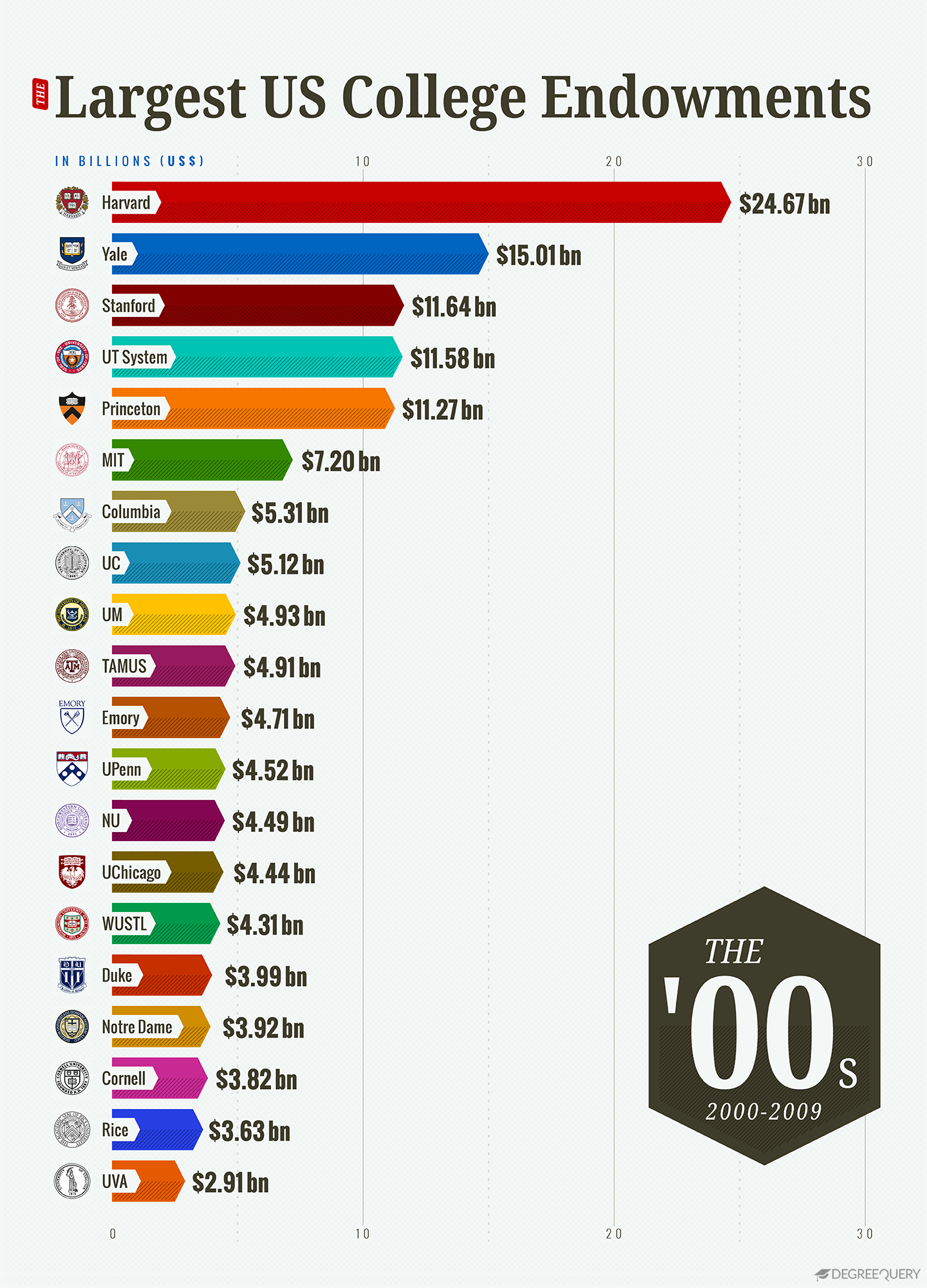
A common misconception is that a $40 billion endowment means the university is “hoarding” cash. In reality, the endowment is a working asset that funds a significant portion of the university’s annual operating budget.
Funding Scholarships and Financial Aid
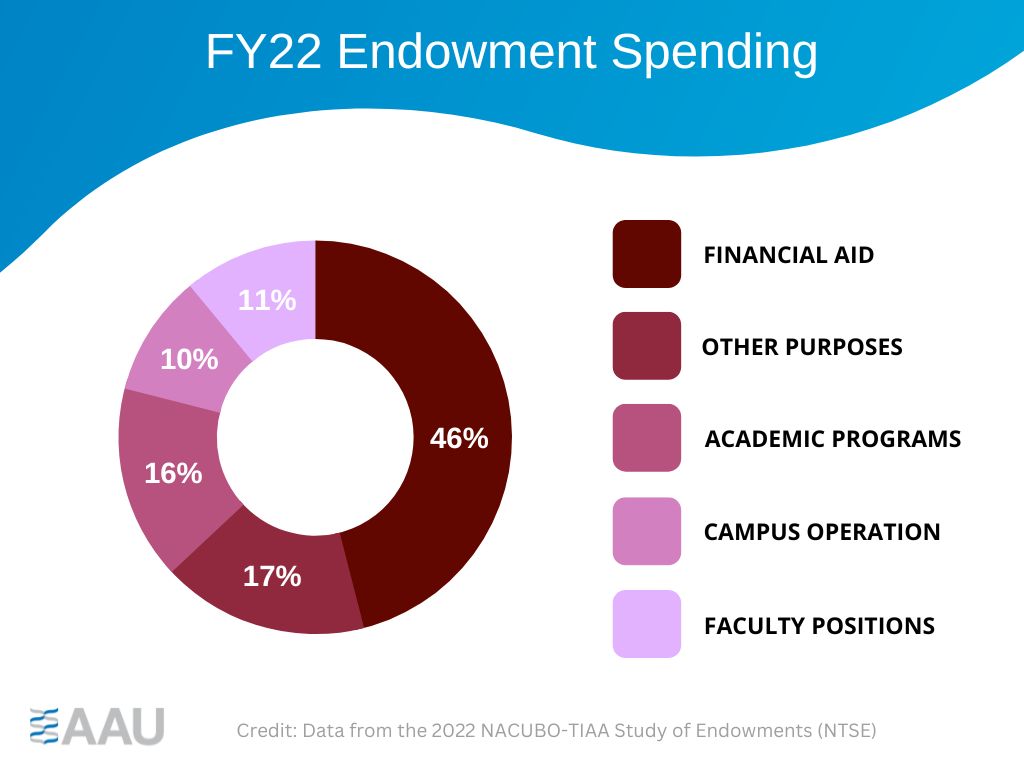
One of the most visible impacts of a healthy endowment is the ability to provide “need-blind” admission. For institutions like Princeton or Harvard, the endowment covers a massive portion of student tuition costs, allowing the university to admit students regardless of their ability to pay. In the world of personal finance, this represents a massive subsidy for education, reducing the debt burden on the next generation of the workforce.
Research and Faculty Recruitment
In the competitive market for global talent, endowments allow universities to attract top-tier researchers and professors. Endowed chairs provide permanent funding for a professor’s salary and research budget, ensuring that the institution remains at the forefront of innovation. This, in turn, fuels the broader economy through patentable inventions, medical breakthroughs, and technological advancements.
Operational Stability and Infrastructure
Endowments provide a “buffer” against economic downturns. When state funding for public universities is cut or when tuition revenue fluctuates, the endowment provides a steady stream of income. It funds the “hidden” costs of education: library subscriptions, laboratory equipment, high-speed digital infrastructure, and the maintenance of historic buildings. Without this financial cushion, universities would be forced to raise tuition more aggressively or cut essential services.
Challenges and Controversies in Endowment Management
Despite their benefits, university endowments are often the subject of intense public and political scrutiny. The management of billions of dollars in tax-exempt capital naturally invites questions about ethics, transparency, and social responsibility.
The Spending Rate Dilemma
One of the most debated topics is the “spending rate.” Most universities aim to spend between 4% and 5% of their endowment’s value each year. Critics often argue that during times of crisis—such as a global pandemic or a period of skyrocketing tuition—universities should spend more. However, finance officers argue that spending more today compromises the fund’s ability to support future generations, especially when accounting for inflation and the need to reinvest to maintain the fund’s purchasing power.
Ethical Investing and Divestment Pressures
In recent years, student bodies and faculty have increasingly pressured endowment boards to align their investment portfolios with their institutional values. This has led to the “divestment” movement, where universities are urged to pull money out of fossil fuels, private prisons, or companies involved in international conflicts. This creates a tension between the “fiduciary duty” of the investment office (to maximize returns) and the “social mission” of the university.
The “Endowment Tax” and Public Scrutiny
In 2017, the U.S. government introduced a 1.4% excise tax on the investment income of certain wealthy private universities. This marked a significant shift in the tax-exempt status of higher education. The debate continues as to whether massive endowments should be treated more like private foundations or charitable trusts, with some politicians suggesting that universities should be mandated to spend a higher percentage of their wealth on tuition reduction in exchange for their tax-advantaged status.
Conclusion: The Future of Institutional Wealth
University endowments are far more than just “bank accounts” for the academic elite; they are sophisticated financial instruments that bridge the gap between private wealth and public education. By utilizing long-term investment strategies, alternative asset classes, and disciplined spending rules, these funds ensure that the world’s leading centers of learning remain stable and innovative for the long haul.
In the evolving world of business finance, the university endowment serves as a masterclass in perpetual wealth management. While they face ongoing challenges regarding transparency and social ethics, their role in funding the scholarships, research, and infrastructure of the future remains undisputed. For the student, the donor, and the investor, understanding the endowment is the key to understanding how higher education remains one of the most resilient sectors in the global economy.
aViewFromTheCave is a participant in the Amazon Services LLC Associates Program, an affiliate advertising program designed to provide a means for sites to earn advertising fees by advertising and linking to Amazon.com. Amazon, the Amazon logo, AmazonSupply, and the AmazonSupply logo are trademarks of Amazon.com, Inc. or its affiliates. As an Amazon Associate we earn affiliate commissions from qualifying purchases.