
In the realm of visual communication, a brand’s ability to project depth, stability, and sophistication often hinges on its mastery of spatial design. While many contemporary brands opt for the safety of “flat design,” the most influential corporate identities leverage the principles of linear perspective to create a sense of realism and authority. At the heart of this visual strategy is a fundamental concept known as two-point perspective.
Two-point perspective is a technique in graphic design and architectural branding that uses two vanishing points on a horizon line to represent three-dimensional objects on a two-dimensional surface. Unlike one-point perspective, which views an object head-on, two-point perspective views it from an angle, showcasing two sides of the object simultaneously. From a brand strategy standpoint, this technique is more than a mere drawing exercise; it is a powerful tool used to communicate scale, forward-thinking dynamism, and structural integrity.
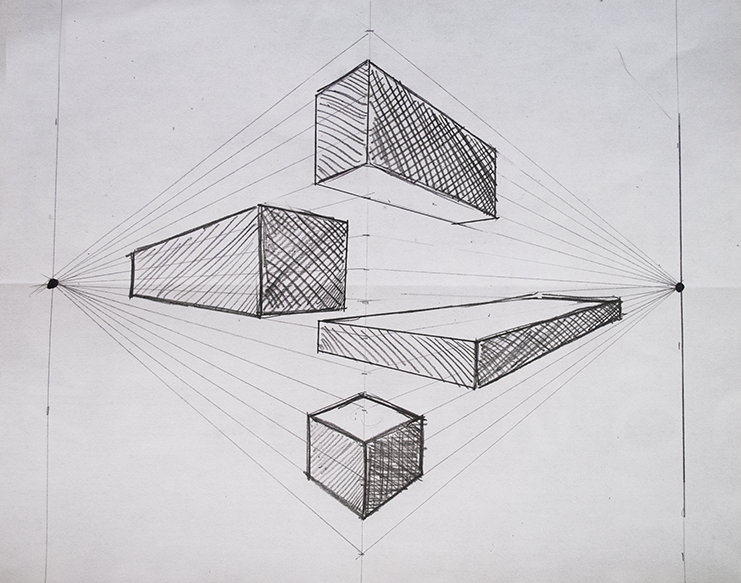
The Fundamentals: How Two-Point Perspective Shapes Brand Perception
To understand how two-point perspective functions within a brand’s visual language, one must first deconstruct its geometric mechanics. Every visual asset—from a corporate logo to a flagship store’s architectural rendering—relies on the viewer’s psychological interpretation of space.
Defining the Vanishing Points in Design
In two-point perspective, all parallel lines that define the sides of an object converge at two distinct points on the horizon line. In the context of brand design, these vanishing points represent the “boundaries” of the brand’s visual universe. By manipulating the distance between these points, designers can make a brand appear either grounded and solid or soaring and aspirational. A narrow distance between vanishing points creates a dramatic, distorted effect that can make a brand feel edgy and disruptive. Conversely, wider points create a naturalistic, trustworthy view that suggests longevity and reliability.
The Psychology of Space and Scale
The choice to use two-point perspective over other methods is a strategic decision rooted in psychology. One-point perspective can often feel confrontational or overly simplistic. Three-point perspective, with its third vanishing point high above or low below, can feel overwhelming or dizzying. Two-point perspective hits the “Goldilocks zone” of brand identity: it provides enough depth to feel premium and professional, yet maintains a level of realism that feels accessible to the consumer. It mimics how we actually see buildings and products in the real world—at an angle, revealing their multifaceted nature.
Two-Point Perspective in Architectural and Retail Branding
For global brands, the physical environment is an extension of their corporate identity. Whether it is a luxury fashion boutique in Milan or a high-tech flagship store in Silicon Valley, the way a building is presented in marketing collateral and physical space relies heavily on perspective.
Designing Physical Brand Touchpoints
When a brand develops its “Brand House” or corporate headquarters, two-point perspective is the standard for conceptual renderings. It allows stakeholders to visualize the corner of a building, which is the most dynamic way to view architecture. In retail design, utilizing this perspective helps in planning customer flow and sightlines. By focusing on the “corner” view, a brand emphasizes its presence in a three-dimensional landscape, suggesting that the brand is not just a name on a sign, but an immersive destination.
Creating a Sense of Monumentality
Large-scale corporations—particularly those in the finance, automotive, and tech hardware sectors—frequently use two-point perspective to evoke a sense of “monumentality.” When a product, such as a new electric vehicle or a luxury watch, is photographed or rendered from a low angle using two-point perspective, it takes on a heroic quality. This visual “upward” look, combined with the converging lines of the side planes, makes the brand’s offerings feel larger than life. It signals to the consumer that the brand is a pillar of its industry.
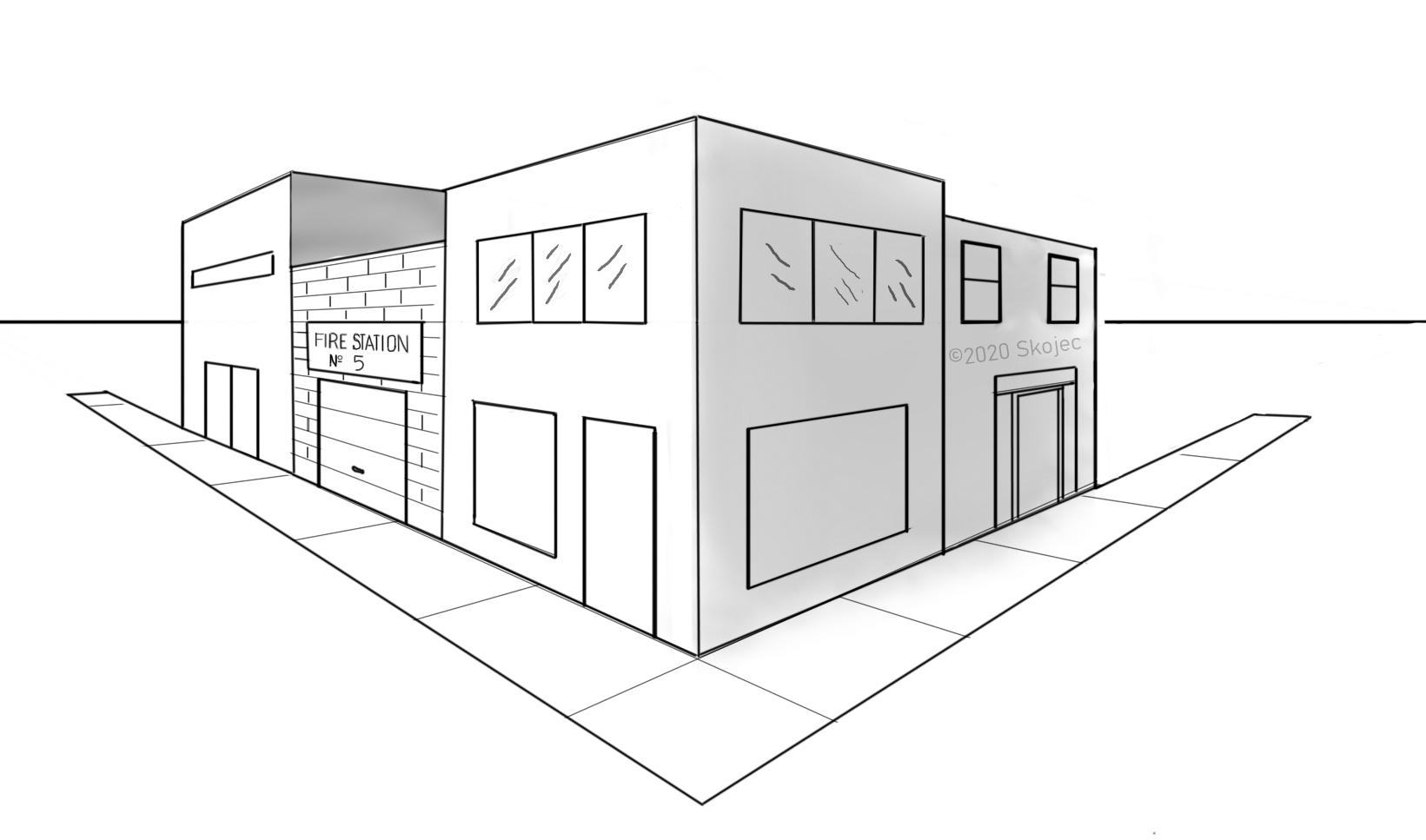
Digital Brand Strategy: Implementing Perspective in 2D and 3D Assets
As branding migrates further into digital ecosystems, the use of perspective has evolved. We are currently seeing a transition from the “Flat Design” era (characterized by 2D, shadowless shapes) toward “Neumorphism” and “Glassmorphism,” both of which rely on subtle applications of perspective to create depth in user interfaces.
Logo Evolution and Dimensionality
While a primary brand logo must be legible in a flat format, many modern brand identity systems include a “dimensional” version of the mark. This is particularly prevalent in the entertainment and software industries. By applying a two-point perspective to a logo, designers can give the mark weight and substance. This transformation suggests that the brand is multifaceted—that it has depth beyond the surface-level service it provides. When the lines of a logo converge toward two points, it creates a sense of motion, as if the brand is moving through space toward the consumer.
User Experience (UX) and Spatial UI
In the digital space, two-point perspective is frequently used in “hero” images on websites and within app interfaces to showcase hardware or software in a realistic environment. For instance, a fintech app might show a credit card floating in a two-point perspective. This isn’t just an aesthetic choice; it’s a strategy to make the digital product feel “tangible.” By grounding digital assets in the rules of physical perspective, brands reduce the cognitive load on the user, making the digital experience feel more intuitive and “real.”
Consistency and Cohesion: The Strategic Role of Perspective in Global Identity
A brand’s visual identity is only as strong as its consistency. If one marketing campaign uses flat, isometric graphics while another uses dramatic two-point perspective, the brand message becomes fragmented. A coherent brand strategy requires a dedicated “Spatial Style Guide.”
Building a Visual Language System
Strategic brand designers often establish a “standard angle of view” for all product photography and 3D renders. For many premium brands, this is a 3/4 view based on two-point perspective. By standardizing this, every touchpoint—from the Instagram feed to the annual financial report—feels like it belongs to the same visual family. This consistency builds brand equity; over time, the consumer begins to recognize the “posture” of the brand before they even read the copy.
Case Studies in Effective Perspective Branding
Consider the branding strategies of major architectural firms or high-end consumer electronics companies. They rarely show their products or projects from a direct front-on view. Instead, they utilize two-point perspective to highlight the sleekness of an edge or the depth of a material.
- The Automotive Industry: Car commercials almost exclusively use two-point perspective tracking shots. This emphasizes the length and aerodynamic profile of the vehicle, linking the brand to concepts of speed and elegance.
- Real Estate Development: In high-end property branding, the two-point perspective is used to sell a lifestyle. By showing the corner of a penthouse overlooking a city, the brand communicates a “panoramic” success that a flat view simply cannot capture.

Conclusion: The Future of Perspective in Brand Strategy
As we move toward a future defined by Augmented Reality (AR) and Virtual Reality (VR), the concept of two-point perspective will become even more integral to brand strategy. In these immersive environments, brands will no longer be limited to 2D surfaces. They will exist as three-dimensional entities that users can walk around and interact with.
However, the core principle remains: how a brand chooses to position itself in space defines how it is perceived in the mind. By mastering two-point perspective, brand strategists can move beyond the “flatness” of the competition. They can create a visual identity that possesses depth, weight, and a clear direction. Whether through the lines of a logo, the angle of a flagship store, or the rendering of a digital asset, two-point perspective is the bridge between a simple graphic and a monumental brand presence. It is the art of seeing the brand from the best possible angle, ensuring that every vanishing point leads the consumer back to the brand’s core values.
aViewFromTheCave is a participant in the Amazon Services LLC Associates Program, an affiliate advertising program designed to provide a means for sites to earn advertising fees by advertising and linking to Amazon.com. Amazon, the Amazon logo, AmazonSupply, and the AmazonSupply logo are trademarks of Amazon.com, Inc. or its affiliates. As an Amazon Associate we earn affiliate commissions from qualifying purchases.