
Understanding the Troffer: Design and Purpose
A troffer light fixture represents a ubiquitous and essential component of modern architectural illumination, primarily designed for grid ceilings. Its fundamental purpose is to integrate seamlessly into a suspended ceiling system, providing efficient, uniform, and often glare-controlled lighting across large indoor spaces. The term “troffer” itself is thought to be a portmanteau of “trough” and “coffer,” referencing its characteristic trough-like housing that recesses into the ceiling plenum.
Defining the Core Structure
At its core, a troffer consists of a metal housing, typically made from steel, which encloses the light source and associated electrical components. This housing is engineered to fit standard ceiling grid sizes, commonly 2×4 feet or 2×2 feet, although other dimensions exist. The fixture is designed for flush mounting, ensuring that its luminous surface is level with the ceiling tiles, creating a clean and unobtrusive aesthetic.
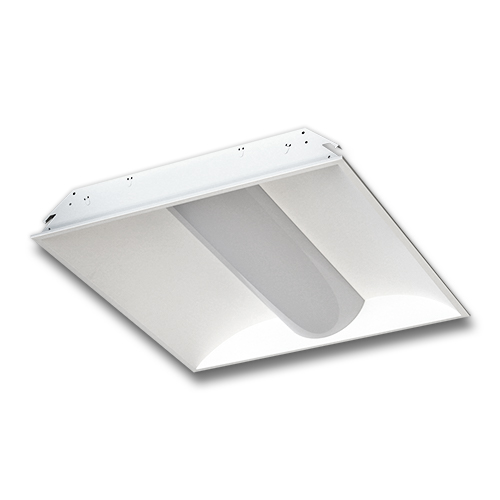
Internally, the troffer houses the light source, which historically consisted of fluorescent tubes but is now predominantly LED arrays. It also contains critical optical components such as diffusers, lenses, or parabolic louvers, which are crucial for light distribution and glare management. Ballasts or LED drivers are integral, regulating the electrical current to the light source, ensuring stable operation and optimal lifespan. The entire assembly is designed to be accessible for maintenance, allowing for convenient replacement of light sources or drivers when necessary.
Common Applications and Environments
Troffer light fixtures are pervasive in environments where consistent, high-quality general illumination is paramount. Their modular design and performance characteristics make them ideal for a wide array of commercial, institutional, and industrial settings.
- Office Buildings: From open-plan offices to conference rooms, troffers provide the necessary ambient lighting for productivity, minimizing shadows and ensuring visual comfort for tasks involving computer screens and paperwork.
- Retail Spaces: Large retail floors and showrooms benefit from troffers’ ability to provide bright, even illumination, enhancing product visibility and creating an inviting shopping environment.
- Educational Institutions: Classrooms, libraries, and common areas in schools and universities rely on troffers for durable, low-maintenance lighting that supports learning and concentration.
- Healthcare Facilities: Hospitals, clinics, and laboratories utilize troffers for their clean aesthetic and ability to deliver consistent light levels critical for medical procedures and patient care.
- Manufacturing and Industrial Facilities: While sometimes requiring more rugged fixtures, many light manufacturing and assembly areas benefit from the efficient, broad illumination provided by troffers in administrative or cleanroom settings.
The adaptability of troffers to various ceiling types and their capacity to deliver controlled light distribution underscore their enduring relevance in modern building design and technology.
The Technological Evolution of Troffers
The trajectory of the troffer light fixture mirrors broader advancements in lighting technology, particularly the shift towards greater energy efficiency, improved light quality, and enhanced control capabilities. This evolution has been primarily driven by innovations in light sources and associated electronic components.
From Fluorescent Tubes to Advanced LED Panels
Historically, troffers were synonymous with fluorescent lighting. Early models utilized T12 fluorescent lamps, later progressing to more efficient T8 and T5 lamps. These systems required magnetic or electronic ballasts to regulate current and initiate lamp ignition. While a significant improvement over incandescent bulbs, fluorescent troffers had inherent limitations, including:
- Energy Consumption: Despite being more efficient than incandescent, fluorescent lights still consumed considerable power.
- Lifespan: Lamp replacement, while infrequent, was a routine maintenance task.
- Light Quality: Color rendering index (CRI) could be inconsistent, and flicker was sometimes an issue with older ballasts.
- Environmental Concerns: Fluorescent lamps contain mercury, posing disposal challenges.
The advent of Light Emitting Diode (LED) technology revolutionized the troffer. Modern LED troffers replace fluorescent tubes with integrated LED arrays, often in the form of flat panels or linear modules. This transition brought about several transformative benefits:
- Superior Energy Efficiency: LEDs consume significantly less power than fluorescent lamps, leading to substantial energy cost savings and reduced carbon footprints.
- Extended Lifespan: LED fixtures boast dramatically longer operational lifespans, often rated for 50,000 to 100,000 hours, drastically reducing maintenance and replacement costs.
- Enhanced Light Quality: LEDs offer superior CRI values, producing light that renders colors more accurately. They also provide flicker-free operation and a wider range of correlated color temperatures (CCTs), from warm white to cool daylight.
- Instant On/Off and Dimming: Unlike fluorescent lamps that can warm up or have limited dimming capabilities, LEDs provide instant full brightness and are highly dimmable, allowing for sophisticated lighting control strategies.
- Compact Form Factor: The smaller size of LED components enables sleeker, more integrated designs.
- Environmental Friendliness: LEDs do not contain mercury and are often recyclable, aligning with sustainable building practices.
The evolution from fluorescent to LED represents a paradigm shift, transforming troffers from simple illumination devices into sophisticated, energy-saving technological assets.
Performance Metrics and Efficiency Gains
The technological leap to LED has fundamentally reshaped the performance metrics associated with troffer lighting. Key indicators of an LED troffer’s efficiency and quality include:
- Lumen Output (lm): This measures the total quantity of visible light emitted by the fixture. Modern LED troffers deliver high lumen output for their size and power consumption.
- Lumen Efficacy (lm/W): A critical measure of energy efficiency, efficacy indicates how many lumens are produced per watt of power consumed. High-performance LED troffers often exceed 100 lm/W, significantly outperforming fluorescent alternatives.
- Color Rendering Index (CRI): CRI quantifies how accurately a light source renders colors compared to natural light. A CRI of 80 or higher is generally considered good for commercial applications, with many LED troffers achieving 90+.
- Correlated Color Temperature (CCT): Measured in Kelvins (K), CCT describes the “warmth” or “coolness” of the light. Common CCTs for troffers range from 3000K (warm white) to 5000K (cool white/daylight), allowing for tailored environmental aesthetics.
- Lifespan (L70/L90): This metric defines the estimated hours of operation before the light output degrades to 70% or 90% of its initial value, respectively. LED troffers boast impressive L70 ratings, contributing to low total cost of ownership.
- Power Factor (PF): A high power factor (close to 1.0) indicates efficient use of electrical power. LED drivers typically achieve power factors >0.9, minimizing wasted energy in the electrical distribution system.
These metrics collectively demonstrate how LED technology has propelled troffer fixtures into an era of unprecedented efficiency, superior light quality, and reduced environmental impact, making them a cornerstone of green building initiatives and smart infrastructure.
Types of Troffer Fixtures and Their Technical Specifications
The versatility of troffer light fixtures extends beyond their light source, encompassing various mounting styles, optical designs, and integration capabilities that cater to diverse architectural and functional requirements.
Recessed, Surface-Mounted, and Suspended Variants
While troffers are predominantly known for their recessed installation, several mounting options exist, each with specific technical considerations:
- Recessed Troffers: These are the most common type, designed to fit flush within a suspended ceiling grid. They are ideal for spaces with ample plenum depth, providing a clean, integrated look. Installation involves placing the fixture into the T-bar grid and connecting it to the building’s electrical system. They often feature retention clips or tabs for secure attachment.
- Surface-Mounted Troffers: For buildings without a suspended ceiling grid or with limited plenum space, surface-mounted troffers are installed directly onto the ceiling surface. These fixtures typically have a housing that covers the entire fixture, including the sides, making them suitable for concrete ceilings or exposed structural elements. They often utilize external conduit for wiring.
- Suspended Troffers: Less common for traditional troffers but emerging with sleeker LED designs, suspended fixtures hang down from the ceiling by cables or rods. This style is often chosen for aesthetic reasons in modern offices or retail spaces with high ceilings, providing both direct and sometimes indirect lighting components. They require robust mounting points in the structural ceiling.
Each variant maintains the core functionality of a troffer but adapts its physical integration to the specific ceiling architecture, impacting installation complexity and overall visual outcome.
Optical Controls: Parabolic vs. Prismatic Lenses
The control of light distribution and glare is a critical function of any lighting fixture, and troffers achieve this through various optical designs:
- Parabolic Louvers (Parabolic Troffers): These fixtures utilize a grid of parabolic-shaped reflectors, typically made from anodized aluminum. The precise curves of these louvers are designed to direct light downward and away from typical viewing angles, effectively minimizing direct glare and creating a “dark light” appearance from many angles. They are excellent for spaces requiring strict glare control, such as offices with computer screens, where reflections can be distracting. The technical challenge lies in precisely engineering the parabolic curves to achieve uniform light distribution without “hot spots” while maximizing efficiency.
- Prismatic Lenses/Diffusers (Prismatic Troffers): These fixtures employ a flat or slightly curved lens with a prismatic pattern molded into its surface. The prisms refract and diffuse light, spreading it broadly and evenly across the space. Prismatic lenses are highly effective at diffusing LED point sources, creating a softer, more uniform glow and reducing harsh shadows. While providing good diffusion and some glare control, they may not offer the same level of precise beam control as parabolic louvers. They are widely used in general commercial and institutional settings where broad, uniform ambient light is prioritized.
- Frosted Diffusers: Simple frosted or opal diffusers are also common, particularly in modern LED panel troffers. These offer excellent light uniformity and aesthetic appeal, providing a soft, diffused light output. Their primary function is to hide the individual LED components and spread light broadly, though they may offer less precise glare control than parabolic or prismatic optics.
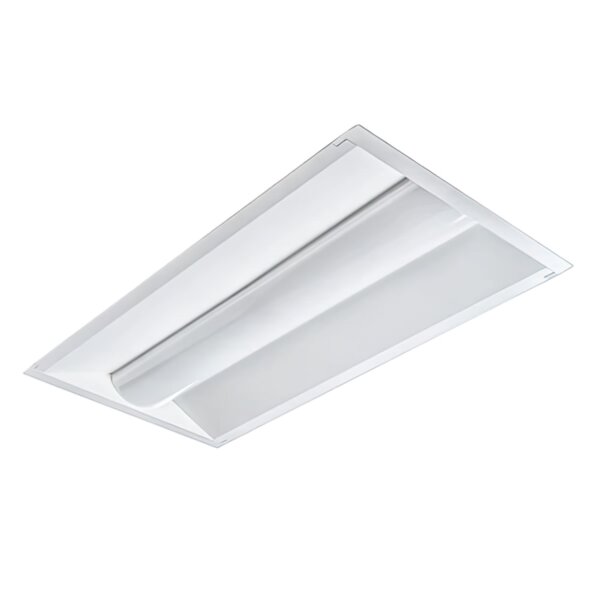
The choice of optical control is a key technical specification, directly influencing the quality of light, visual comfort, and the overall functionality of the troffer in its intended application.
Integration with Smart Lighting Systems
Modern LED troffers are increasingly designed for seamless integration with smart building and lighting control systems, transforming them from static light sources into dynamic, intelligent components of an interconnected infrastructure. This integration is facilitated by:
- Dimmable Drivers: Many LED troffers come with 0-10V dimming drivers as standard, allowing for precise control of light output. More advanced options include DALI (Digital Addressable Lighting Interface) drivers, which offer individual fixture control and addressability, enabling complex lighting scenes and energy management.
- Embedded Sensors: Troffers can incorporate occupancy sensors (PIR or ultrasonic) to turn lights on/off based on presence and daylight harvesting sensors to adjust brightness based on ambient natural light levels. This optimizes energy use and contributes to occupant comfort.
- Wireless Connectivity: Integration with wireless protocols like Bluetooth Mesh, Zigbee, or Wi-Fi allows for network-level control, enabling remote management, scheduling, and data collection without extensive wiring.
- Human-Centric Lighting (HCL): Advanced LED troffers support tunable white technology, allowing the CCT to be adjusted dynamically throughout the day to mimic natural daylight patterns, promoting circadian rhythm and well-being.
- IoT Integration: Beyond simple illumination, some troffers are being developed with embedded IoT sensors (e.g., for air quality, temperature, asset tracking) that leverage the fixture’s power and network connectivity to gather environmental data, expanding their utility beyond lighting.
This technological evolution signifies that troffers are no longer just light fixtures but integral nodes within sophisticated building management systems, contributing to energy efficiency, occupant comfort, and operational intelligence.
Installation, Maintenance, and Longevity Considerations
The practical aspects of deploying and maintaining troffer light fixtures are critical to their overall value proposition, encompassing ease of installation, operational lifespan, and adherence to safety and performance standards.
Ease of Installation and Retrofitting
Troffers are engineered for relatively straightforward installation, especially in suspended grid ceilings. Most recessed troffers are designed to drop directly into standard T-bar grids, with simple mechanical fastening mechanisms such as clips or tabs. Electrical connection involves wiring to a junction box within the fixture, which is typically accessible from below or above the ceiling. This modularity allows for rapid deployment in new constructions and efficient replacement during renovations.
The transition from fluorescent to LED has also spurred the development of various retrofit solutions. LED retrofit kits for existing fluorescent troffers allow for the reuse of the existing fixture housing, minimizing waste and installation time. These kits often involve replacing the fluorescent lamps and ballasts with LED tubes (requiring ballast bypass wiring) or converting the fixture to accept an LED panel. This streamlined approach significantly reduces the labor and material costs associated with upgrading lighting systems.
Operational Lifespan and Energy Savings
The longevity of a lighting fixture is a key technical and economic consideration. Modern LED troffers boast significantly longer operational lifespans compared to their fluorescent predecessors. While fluorescent lamps might last 10,000-20,000 hours, LED troffers are typically rated for 50,000 to 100,000 hours (L70), meaning they will still produce at least 70% of their initial light output after that duration. This extended lifespan dramatically reduces the frequency and cost of lamp replacement and maintenance labor.
Coupled with superior energy efficacy (lumens per watt), the extended lifespan translates into substantial energy savings over the lifetime of the fixture. Buildings that upgrade from fluorescent to LED troffers often experience a 50-70% reduction in lighting-related electricity consumption. This not only lowers operational costs but also contributes to achieving sustainability goals and complying with energy efficiency regulations. The robust thermal management systems within LED troffers are crucial for achieving these long lifespans, as excessive heat is the primary accelerator of LED degradation.
Safety Standards and Compliance
All lighting fixtures, including troffers, must comply with a range of safety and performance standards to ensure safe operation and reliable performance. Key certifications and regulations include:
- UL (Underwriters Laboratories) Listing: Products must meet UL safety standards for electrical components and fire safety, indicating they have been tested to prevent electrical shock and fire hazards.
- DLC (DesignLights Consortium) Qualification: For LED products, DLC qualification signifies that a fixture meets specific performance and energy efficiency criteria, often making it eligible for utility rebates. This program helps ensure product quality and enables significant energy savings.
- IES (Illuminating Engineering Society) Standards: IES publishes recommended practices and standards for lighting design and performance, including metrics for glare, light distribution, and light levels for various applications.
- FCC (Federal Communications Commission) Compliance: LED drivers can emit electromagnetic interference (EMI), so fixtures must comply with FCC regulations to ensure they do not interfere with other electronic devices.
- RoHS (Restriction of Hazardous Substances) Compliance: Increasingly, manufacturers adhere to RoHS directives, which restrict the use of certain hazardous materials in electrical and electronic products, aligning with environmental responsibility.
Adherence to these technical standards is not merely a legal requirement but a fundamental aspect of product quality and safety, ensuring that troffer light fixtures are reliable, efficient, and safe for occupants and the environment.
The Future of Troffer Lighting in Modern Spaces
The troffer light fixture, once a utilitarian device, is rapidly evolving into a sophisticated technological component at the forefront of smart building innovation. Its future lies in deeper integration with advanced control systems, expanded sensor capabilities, and adherence to sustainable design principles.
Advancements in Control and Connectivity
The next generation of troffers will feature even more granular and intuitive control. The proliferation of IoT protocols and enhanced wireless communication standards will enable:
- Fine-tuned Zonal Control: Individual troffers or small groups will be controllable, allowing for highly personalized lighting environments within a larger open-plan space. This goes beyond simple dimming to include precise color temperature tuning and even individual fixture addressing.
- Adaptive Lighting Algorithms: Leveraging machine learning, troffers will be able to ‘learn’ occupant preferences and adapt lighting levels and color temperatures automatically based on time of day, occupancy patterns, and external weather conditions, optimizing both comfort and energy use.
- Cloud-Based Management: Remote monitoring, diagnostics, and firmware updates for entire lighting systems will become standard, enabling predictive maintenance and continuous performance optimization.
- Cybersecurity Protocols: As troffers become networked devices, robust cybersecurity measures will be integrated to protect lighting systems from unauthorized access and ensure data integrity.
These advancements transform lighting from a static utility into a dynamic, responsive service that actively contributes to building intelligence.
Beyond Illumination: Integrated Sensor Technologies
The strategic placement and constant power supply of troffers make them ideal platforms for integrating a multitude of non-lighting sensors, turning them into multifunctional data collection hubs. This moves them beyond their primary role of illumination into broader building management:
- Environmental Monitoring: Sensors for air quality (VOCs, CO2, particulate matter), temperature, and humidity can be embedded, providing real-time data for HVAC optimization and occupant well-being.
- Occupancy Analytics: High-resolution occupancy sensors, potentially utilizing passive infrared or even anonymous video analytics, can provide detailed insights into space utilization, helping facility managers optimize layouts and allocate resources more effectively.
- Asset Tracking: Bluetooth Low Energy (BLE) beacons or other indoor positioning technologies integrated into troffers can facilitate precise asset tracking within large facilities, improving operational efficiency and security.
- Location-Based Services: In retail or large corporate environments, troffers could power indoor navigation systems, guiding visitors or employees to specific locations.
- Sound Sensing: Microphones could be integrated to monitor ambient noise levels, contributing to acoustic comfort management.
By leveraging the existing power infrastructure and ceiling real estate, troffers can minimize the need for separate sensor installations, streamlining building technology integration and reducing overall infrastructure costs.

Sustainability and Circular Economy Principles
The future design and lifecycle of troffer light fixtures will increasingly align with principles of sustainability and the circular economy:
- Modular and Repairable Designs: Future troffers will be designed for easier disassembly, repair, and component replacement (e.g., LED boards, drivers), extending their functional life and reducing electronic waste.
- Recyclable Materials: Greater emphasis will be placed on using recycled content in fixture housings and ensuring that components are easily separable for recycling at end-of-life.
- Reduced Embodied Carbon: Manufacturing processes will focus on minimizing energy consumption and material waste, reducing the embodied carbon footprint of the fixtures.
- Dynamic Response to Grid Demands: As part of a smart grid, troffers could dynamically adjust their power consumption in response to peak demand periods or renewable energy availability, becoming active participants in energy management.
- Light Pollution Mitigation: Advanced optical designs and smart controls will further reduce light trespass and skyglow, addressing environmental concerns related to outdoor lighting impacts from indoor sources visible through windows.
Ultimately, the troffer light fixture is transforming from a basic lighting element into a sophisticated, interconnected, and environmentally conscious technological node, playing a pivotal role in the intelligent, efficient, and sustainable buildings of tomorrow.
aViewFromTheCave is a participant in the Amazon Services LLC Associates Program, an affiliate advertising program designed to provide a means for sites to earn advertising fees by advertising and linking to Amazon.com. Amazon, the Amazon logo, AmazonSupply, and the AmazonSupply logo are trademarks of Amazon.com, Inc. or its affiliates. As an Amazon Associate we earn affiliate commissions from qualifying purchases.