
A third-degree felony in Florida represents a significant legal charge with profound and often devastating financial consequences that can ripple through an individual’s life for years, if not decades. Beyond the immediate threat of incarceration, the financial penalties, legal fees, loss of earning potential, and broader economic instability it engenders place it squarely within the purview of personal and business finance considerations. Understanding the nature of this charge is not just about comprehending the law, but about preparing for and mitigating its extensive financial fallout.
Defining a Third-Degree Felony: The Financial Baseline
In Florida, felonies are categorized by degrees, with a third-degree felony being the least severe felony but still a very serious offense, distinct from misdemeanors. Its financial implications are vast, stemming directly from the statutory penalties associated with it.
Statutory Penalties and Their Financial Foundation
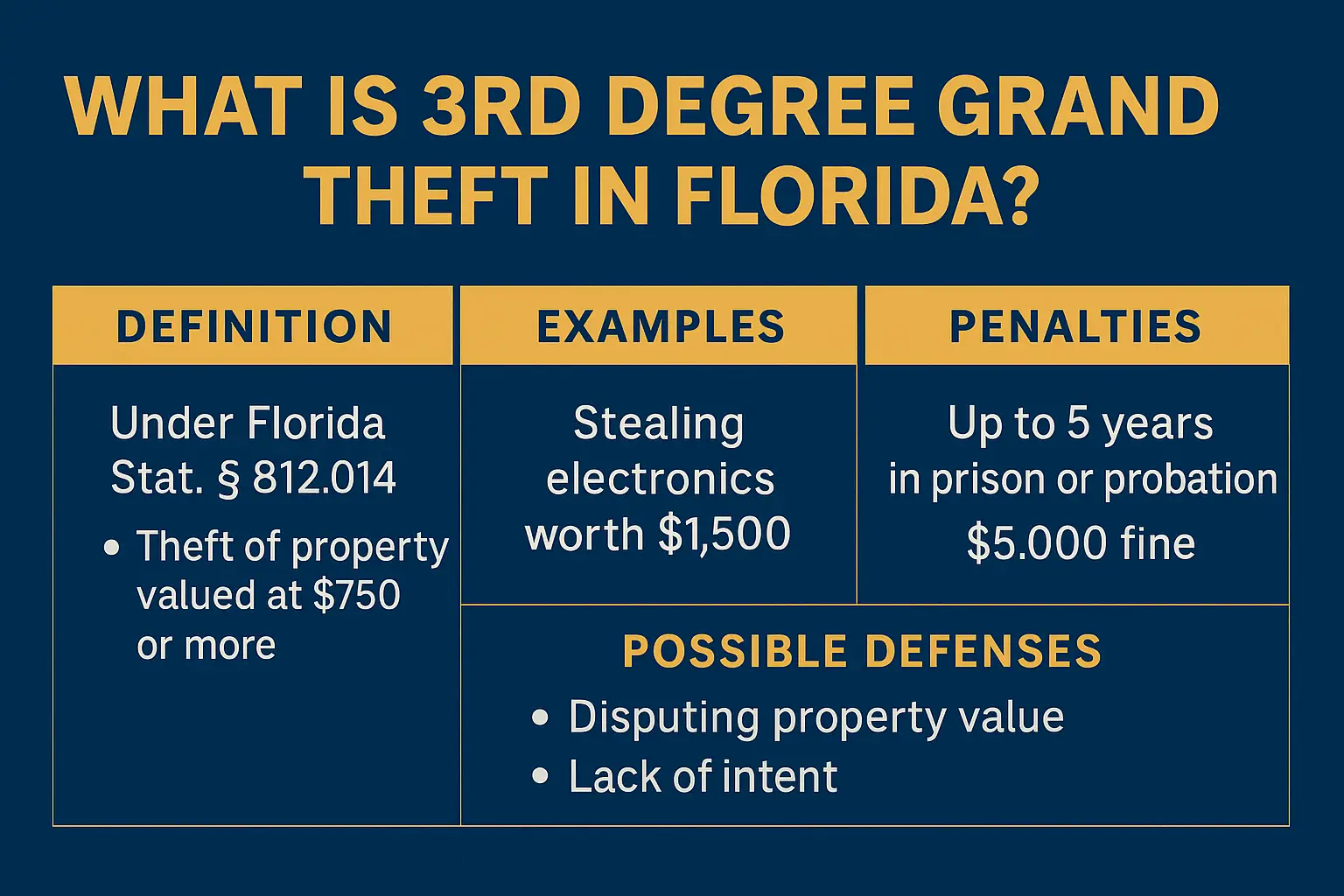
Florida Statute § 775.082 outlines the penalties for felonies. A third-degree felony is punishable by:
- Up to five years in state prison: While not directly a financial penalty, incarceration directly translates to a complete loss of income during the period of imprisonment, potentially jeopardizing housing, family support, and any ongoing financial obligations. This immediate cessation of income is perhaps the most direct and severe financial consequence.
- Up to five years of probation: Probation often comes with its own set of fees and costs, including monthly supervision fees, drug testing fees, and costs for mandated programs like anger management or substance abuse treatment. These can easily accumulate to hundreds or even thousands of dollars over the course of the probation period, draining financial resources.
- A fine of up to $5,000: This is a direct financial obligation that must be paid to the court. For many individuals, a $5,000 fine is a substantial sum, requiring payment plans that can burden personal finances for an extended period. This fine is often coupled with additional court costs, surcharges, and administrative fees, further escalating the financial burden.
These baseline penalties establish the immediate financial risk. However, the true financial impact extends far beyond these explicit costs, touching upon every aspect of an individual’s economic life.
Common Third-Degree Felony Offenses in Florida
Numerous offenses can be classified as third-degree felonies in Florida, illustrating the broad range of activities that can trigger these severe financial penalties. Examples include:
- Grand Theft (property valued between $750 and $20,000)
- Possession of certain controlled substances
- Aggravated Assault (without intent to kill)
- Felony Battery
- Fraudulent use of a credit card (over $100 in 6 months)
- Burglary of an unoccupied dwelling or structure
- Criminal mischief (damages over $1,000)
- Driving Under the Influence (DUI) with serious bodily injury
Each of these charges, if resulting in conviction, carries the aforementioned financial penalties, underscoring the universal financial risk associated with a third-degree felony.
The Immediate Financial Blow: Fines, Fees, and Legal Costs
Beyond the potential loss of income from incarceration, the direct financial expenditures associated with a third-degree felony begin almost immediately upon arrest and continue through trial and, if convicted, during the penalty phase.
Court-Imposed Fines and Assessments
As mentioned, the maximum fine for a third-degree felony is $5,000. However, this is rarely the only financial obligation. Courts often levy additional fees, such as:
- Court costs: These cover administrative expenses of the justice system.
- Surcharges: Mandatory additions to fines that fund specific state programs.
- Investigative costs: If law enforcement incurred specific costs related to the investigation.
- Cost of prosecution: Contributions to the State Attorney’s office expenses.
- Public defender application fees/liens: If a public defender is used, there’s often an application fee, and the court may place a lien on future earnings to recoup costs.
- Drug screening fees: If probation involves mandatory drug testing.
- Mandatory program fees: For court-ordered classes (e.g., DUI school, shoplifting prevention, anger management).
These cumulative assessments can easily push the total financial obligation well beyond the $5,000 fine, potentially reaching tens of thousands of dollars, forcing individuals into long-term payment plans that strain household budgets.
The Burden of Legal Representation
Navigating the criminal justice system, especially for a felony charge, demands expert legal counsel. The cost of a private attorney is a significant upfront financial burden, but it’s often a critical investment to protect future financial stability.
- Retainer fees: Experienced criminal defense attorneys typically require a substantial retainer fee upfront, which can range from several thousands to tens of thousands of dollars for a felony case, depending on its complexity and anticipated duration.
- Hourly rates: If not on a fixed fee, attorneys charge hourly, and these costs can quickly escalate with court appearances, investigations, and negotiations.
- Investigative costs: Attorneys may need to hire private investigators, forensic experts, or other specialists, adding to the client’s expenses.
For those who cannot afford private counsel, a public defender may be appointed. While this mitigates the immediate legal fee burden, as noted, there can still be application fees and the potential for a lien on future earnings, meaning the cost is deferred rather than eliminated. The choice between a public defender and a private attorney often involves a difficult financial calculation concerning immediate costs versus the potential for a better outcome that could safeguard long-term earning potential.
Restitution and Victim Compensation
In many felony cases, especially those involving property crimes, fraud, or physical harm, the court will order the defendant to pay restitution to the victim(s). This is a direct financial obligation intended to compensate victims for their losses, including:
- Medical expenses
- Lost wages
- Property damage or loss
- Therapy costs
Restitution is non-negotiable and legally binding. It takes precedence over other financial obligations and failure to pay can result in probation violations, additional penalties, or even re-incarceration. The amount of restitution can vary wildly, from a few hundred dollars to hundreds of thousands, representing a potentially crippling financial debt that can follow an individual for decades.
Long-Term Financial Fallout: Impact on Earning Potential and Career
Perhaps the most insidious and long-lasting financial consequence of a third-degree felony conviction is its profound negative impact on an individual’s ability to earn a living and progress in their career.

Employment Barriers and Background Checks
A felony conviction creates a significant barrier to employment. Most employers conduct thorough background checks, and the discovery of a felony can instantly disqualify an applicant, regardless of their qualifications or experience.
- Restricted industries: Certain industries, particularly those involving finance, healthcare, government, or childcare, have strict licensing requirements and often prohibit individuals with felony convictions from working.
- Loss of professional licenses: Many professions require state licenses (e.g., nursing, teaching, real estate, accounting). A felony conviction can lead to the revocation or inability to obtain such licenses, effectively ending a career path.
- General employer reluctance: Even in less regulated fields, employers may be hesitant to hire someone with a felony record due to perceived risks, liability concerns, or company policy. This often forces individuals into lower-paying, less stable jobs, if they can find work at all.
Diminished Earning Capacity and Wage Stagnation
The cumulative effect of employment barriers is a significantly diminished earning capacity. Individuals with felony convictions often:
- Experience longer periods of unemployment or underemployment.
- Are relegated to entry-level positions regardless of prior experience or education.
- Earn substantially less than their non-felon counterparts. Studies consistently show a significant wage gap, with felons earning 20-40% less on average over their lifetimes.
- Face limited opportunities for promotion or career advancement, leading to wage stagnation.
This reduced income stream makes it incredibly difficult to pay off fines, restitution, and other financial obligations, let alone save for retirement or future investments, perpetuating a cycle of financial instability.
Broader Financial Ramifications: Housing, Credit, and Social Services
A third-degree felony conviction casts a long shadow over nearly all aspects of financial life, extending beyond direct employment to housing, credit, and even access to public assistance.
Housing Difficulties and Rental Market Challenges
Finding stable housing becomes a major financial hurdle. Landlords frequently conduct background checks, and a felony conviction can result in:
- Denial of rental applications: Many property management companies and individual landlords have strict policies against renting to individuals with felony records.
- Limited housing options: This forces individuals into less desirable, often more expensive housing, or into situations where they are reliant on others for shelter, reducing their financial independence.
- Higher deposits or co-signer requirements: If approved, a landlord might demand a larger security deposit or require a financially stable co-signer, adding to the upfront costs.
Impact on Creditworthiness and Loan Access
While not directly impacting credit scores, a felony conviction can indirectly cripple financial standing and access to credit:
- Difficulty obtaining loans: Banks and lenders consider employment stability and income when evaluating loan applications. The employment struggles associated with a felony make it harder to qualify for mortgages, car loans, or even personal loans.
- Higher interest rates: If a loan is obtained, the perceived higher risk may result in significantly higher interest rates, increasing the overall cost of borrowing.
- Inability to secure business loans: For those aspiring to entrepreneurship, a felony record can make it nearly impossible to secure capital to start a business, further limiting avenues for financial recovery.
- Banking restrictions: Some financial institutions may have policies regarding accounts for individuals with certain criminal histories, potentially limiting access to basic banking services.
Eligibility for Public Assistance and Government Benefits
In Florida and federally, a felony conviction can affect eligibility for various forms of public assistance and government benefits, which are crucial safety nets for individuals experiencing financial hardship.
- Food assistance (SNAP): While federal lifetime bans on SNAP benefits for drug felons have been modified, states still have discretion. Florida has opted out of the ban, but specific conditions or other felony types might still affect eligibility.
- Housing assistance (Section 8): Federal housing programs often have restrictions or outright bans for individuals with certain felony convictions, particularly those related to drugs or violent crimes.
- Student financial aid: Felony convictions can impact eligibility for federal student loans and grants, making it harder to pursue higher education as a path to improved financial standing.
These restrictions can exacerbate financial difficulties, making it harder for individuals and families to meet basic needs and rebuild their lives.
Mitigating the Financial Catastrophe: Proactive Steps and Resources
While the financial consequences of a third-degree felony are severe, proactive measures and strategic planning can help mitigate some of the damage and aid in financial rebuilding.
Importance of Early Legal Counsel
The most critical step in mitigating financial fallout is securing experienced legal counsel as early as possible. A skilled attorney can:
- Negotiate reduced charges: Potentially lowering the charge from a felony to a misdemeanor, which significantly reduces financial penalties and long-term employment barriers.
- Seek alternative sentencing: Advocating for options like diversion programs, house arrest, or community service instead of prison, thus preserving income-earning potential.
- Challenge evidence: Potentially leading to an acquittal or dismissal of charges, completely avoiding the financial devastation.
- Advise on financial implications: A good attorney will discuss potential fines, restitution, and the long-term economic impact, allowing for early financial planning.
- Minimize restitution: By carefully reviewing victim claims and negotiating appropriate amounts.
Investing in strong legal representation at the outset can save hundreds of thousands of dollars in lost income, fines, and other costs over a lifetime.
Exploring Diversion Programs and Plea Bargains
For first-time offenders, Florida offers various diversion programs. Successful completion can result in charges being dropped or reduced, allowing for potential expungement or sealing of records, which significantly lessens the financial burden by improving employment prospects. Plea bargains, while often requiring some admission of guilt, can also lead to reduced charges or more lenient sentences, thereby mitigating the financial hit. These are crucial tools for financial damage control.

Financial Planning and Rebuilding Post-Conviction
For those with a conviction, strategic financial planning becomes paramount:
- Budgeting and debt management: Prioritizing court-ordered fines and restitution while managing other expenses.
- Vocational training and education: Seeking out programs that lead to jobs accessible to individuals with felony records, focusing on skills in demand.
- Entrepreneurship: Starting a small business can be an avenue for income when traditional employment is difficult, though securing capital remains a challenge.
- Utilizing community resources: Seeking assistance from organizations focused on re-entry and employment for ex-offenders.
- Legal options for record sealing/expungement: Where eligible, pursuing these options can eventually open up more employment and housing opportunities, gradually reversing the financial damage.
In conclusion, a third-degree felony in Florida is not merely a legal problem; it is a profound financial crisis. Its implications extend from immediate fines and legal fees to decades of reduced earning potential, limited housing, and diminished access to credit. Understanding these financial risks is the first step toward safeguarding one’s economic future or assisting someone facing such a challenge.
aViewFromTheCave is a participant in the Amazon Services LLC Associates Program, an affiliate advertising program designed to provide a means for sites to earn advertising fees by advertising and linking to Amazon.com. Amazon, the Amazon logo, AmazonSupply, and the AmazonSupply logo are trademarks of Amazon.com, Inc. or its affiliates. As an Amazon Associate we earn affiliate commissions from qualifying purchases.