
The concept of “theory” is often misunderstood, particularly in casual conversation where it can be dismissed as mere speculation or a hunch. However, in a professional and academic context, especially within the realm of technology, a theory carries significant weight. It represents a structured framework of understanding, a well-substantiated explanation for observed phenomena that has been rigorously tested and validated. In the tech industry, theories are the bedrock upon which innovation is built, the guiding principles that drive the development of new software, AI tools, and digital security measures.
The Foundational Pillars of Technological Understanding
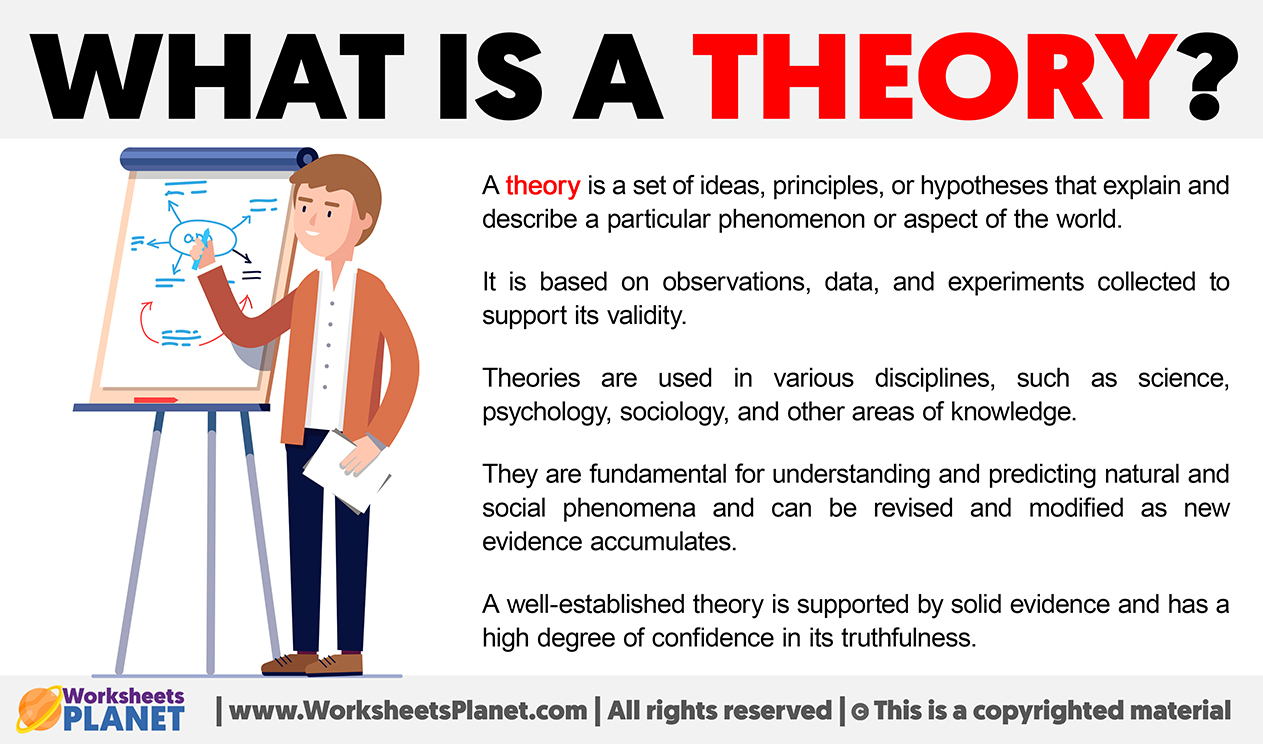
At its core, a theory in technology is not an arbitrary guess. It’s a comprehensive and coherent set of propositions or statements that explain a particular aspect of the technological world. This explanation is derived from empirical evidence, logical reasoning, and repeated observation. Unlike a hypothesis, which is a tentative, testable prediction, a theory is a well-established explanation that has survived repeated scrutiny and experimentation.
From Hypothesis to Theory: The Scientific Method in Action
The journey from a nascent idea to a robust theory in technology is a testament to the power of the scientific method. It begins with observation – noticing a pattern, a problem, or an anomaly within a technological system. This observation sparks a question, leading to the formulation of a hypothesis: a specific, testable prediction about how something works or why a certain outcome occurs.
For instance, an early hypothesis in the field of artificial intelligence might have been: “If we feed a neural network a sufficiently large and diverse dataset of images, it will learn to accurately classify new, unseen images of cats.” This hypothesis is then subjected to rigorous testing. Researchers design experiments, collect data, and analyze the results. If the hypothesis is repeatedly supported by evidence, and the underlying principles are consistently observed across various scenarios, it begins to contribute to the development of a broader theory.
The Role of Empirical Evidence and Validation
The key differentiator of a scientific theory is its reliance on empirical evidence. This means that the explanations offered by the theory are grounded in observable facts and data, gathered through experimentation and measurement. In technology, this could involve running simulations, conducting user studies, analyzing performance metrics of software, or observing the behavior of complex algorithms.
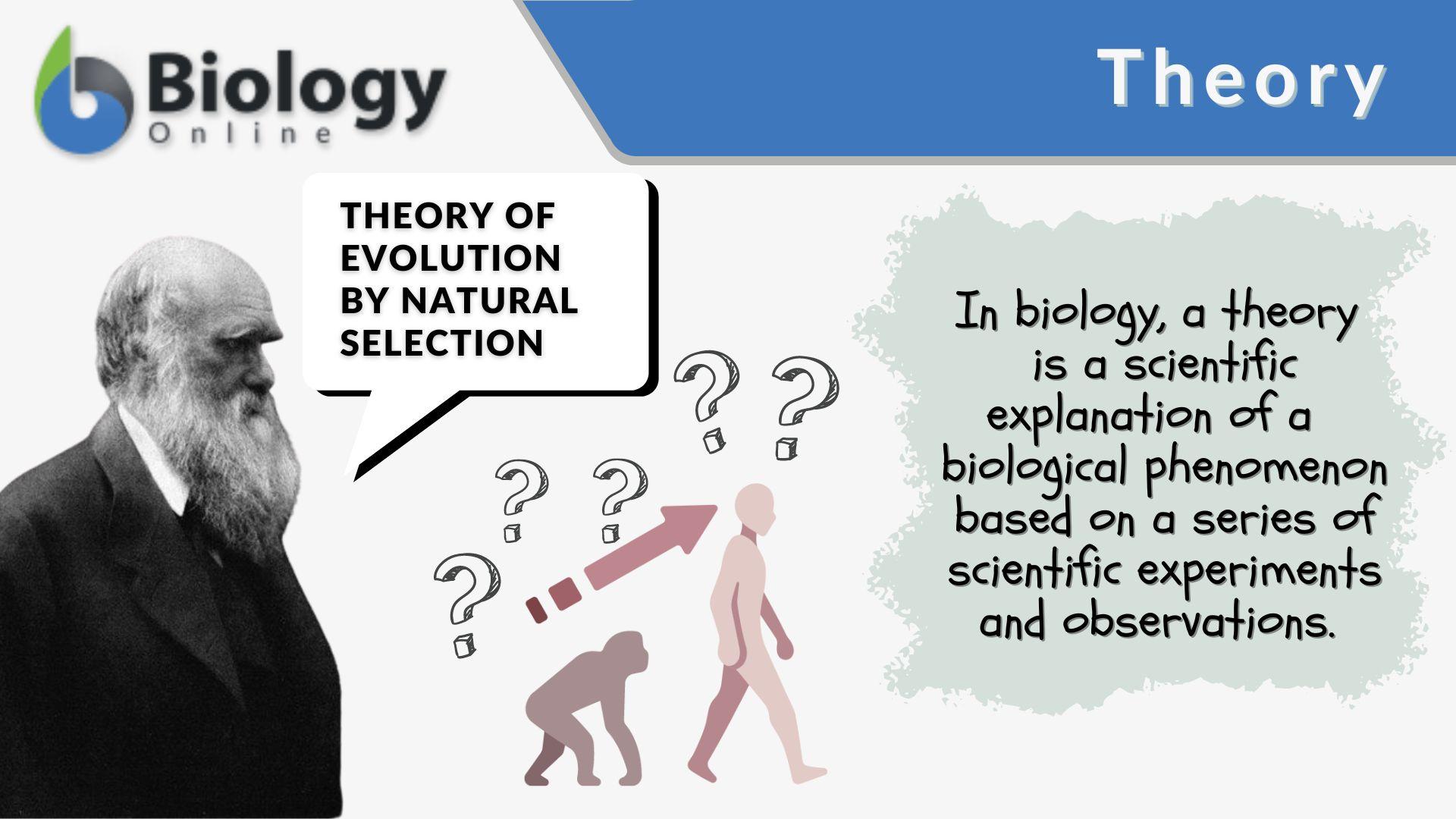
Validation is an ongoing process. A theory is not considered “proven” in an absolute sense, but rather it gains strength and credibility as it successfully explains more phenomena and withstands challenges. When new evidence emerges that contradicts a theory, it doesn’t necessarily invalidate it entirely. Instead, it prompts refinement, modification, or even the development of a new, more encompassing theory. This iterative process of hypothesis, testing, and validation is what distinguishes scientific theories from mere opinions or beliefs.
Examples in Modern Tech
Consider the foundational theories that underpin modern computing. The Turing Machine theory, proposed by Alan Turing, laid the theoretical groundwork for computation itself, defining what is computable and the fundamental principles of algorithms. This abstract concept directly informs the design and operation of all digital computers we use today.
In the realm of AI, Bayesian inference is a powerful theoretical framework that allows machines to learn and make predictions under uncertainty. It provides a mathematical basis for updating beliefs based on new evidence, a critical component in machine learning algorithms used for everything from spam filtering to medical diagnosis.
Theories also guide the development of robust digital security. Concepts like cryptographic theory provide mathematical underpinnings for secure communication and data protection. The development of encryption algorithms, digital signatures, and secure protocols are all direct applications of these established theoretical principles. Without a deep understanding of these theories, the security of our online interactions and sensitive data would be compromised.
Theories as Frameworks for Innovation and Problem-Solving
Beyond explaining existing phenomena, theories in technology serve as powerful frameworks for driving innovation and solving complex problems. They provide a conceptual roadmap, guiding researchers and developers towards new discoveries and more effective solutions.
Guiding Research and Development
A well-established theory acts as a beacon for future research. It identifies areas where our understanding is incomplete, suggesting new avenues for exploration and experimentation. In the fast-paced world of technology, this means that research and development efforts are not conducted in a vacuum. They are informed by existing theoretical knowledge, allowing for more targeted and efficient progress.
For example, in the development of quantum computing, theoretical physicists and computer scientists are working collaboratively, guided by the principles of quantum mechanics. Theories about superposition and entanglement are not just abstract concepts; they are the very foundation upon which these new computing paradigms are being built.
Predicting Future Trends and Capabilities
Theories are not just retrospective; they are also predictive. By understanding the underlying principles that govern a particular technology or system, we can often make informed predictions about its future capabilities and potential evolution. This foresight is crucial for strategic planning, investment decisions, and the responsible development of new technologies.
Consider the Moore’s Law, which, while an observation rather than a strict scientific law, has served as a powerful theoretical driver for the semiconductor industry for decades. It predicted the exponential growth in computing power, influencing investment and innovation cycles across the entire tech landscape. While its future applicability is debated, its impact as a guiding theoretical construct is undeniable.
Devising Solutions to Complex Challenges
When faced with intricate technological challenges, a theoretical framework provides the intellectual toolkit to break down the problem, identify root causes, and devise effective solutions. Instead of relying on ad-hoc fixes, developers can leverage established theories to build more robust, scalable, and reliable systems.
For instance, the development of efficient network protocols relies on theories of information transmission, queuing theory, and distributed systems. These theories help engineers design networks that can handle massive amounts of data reliably, minimize latency, and ensure fair access for all users. Without these theoretical underpinnings, the internet as we know it would not function.
The Practical Application of Theories in Tech Development
Theories are not confined to academic ivory towers; they are the engines that power practical technological advancements. Every piece of software we use, every gadget we interact with, and every digital security measure we rely on is a product of applied theory.
Software Engineering and Algorithmic Design
The design and development of software are heavily influenced by various theories. Software engineering methodologies such as Agile and Waterfall are theoretical frameworks for managing the software development lifecycle. More fundamentally, the algorithms that power our applications are born from mathematical and computer science theories. The efficiency and effectiveness of a search engine, a recommendation system, or a data processing pipeline are directly tied to the theoretical soundness of the algorithms employed.
For example, data structure theories (like trees, graphs, and hash tables) provide the foundational understanding for organizing and accessing data efficiently, which is critical for the performance of any software application that handles significant amounts of information.
Artificial Intelligence and Machine Learning Models
The explosive growth of AI and machine learning is a direct consequence of advancements in theoretical understanding. Theories of neural networks, reinforcement learning, and probabilistic modeling provide the mathematical and conceptual underpinnings for creating intelligent systems.
Theories like the Universal Approximation Theorem, which states that a neural network with a single hidden layer can approximate any continuous function, have been instrumental in guiding the design and architecture of deep learning models. Similarly, theories of computational learning theory help researchers understand the limits and capabilities of learning algorithms, guiding the development of more robust and generalizable AI.
Cybersecurity and Trust in Digital Systems
In the critical domain of cybersecurity, theories are paramount. Information security theories provide the principles for designing systems that are resilient to attacks. This includes theories related to access control, threat modeling, and risk assessment.
Theories of cryptography, as mentioned earlier, are the bedrock of secure communication. Understanding concepts like public-key cryptography and symmetric-key cryptography allows for the development of secure channels for transmitting sensitive information. Furthermore, game theory can be applied to model the interactions between attackers and defenders, helping to develop more effective defensive strategies. A robust cybersecurity strategy is not built on intuition but on a deep understanding and application of these theoretical principles.
Challenges and the Evolving Nature of Theories in Tech
While theories provide invaluable structure and guidance, the dynamic nature of technology presents ongoing challenges and necessitates the continuous evolution of theoretical frameworks.
The Pace of Innovation Outstripping Theoretical Development
The rapid pace of technological advancement can sometimes outstrip the development of formal theories to explain and guide it. New paradigms emerge, driven by empirical discovery and rapid iteration, before comprehensive theoretical frameworks are fully established. This can lead to periods of rapid experimentation with less formal theoretical grounding, requiring the adaptation and refinement of existing theories or the emergence of entirely new ones.
For example, the initial development of early internet protocols was highly experimental. As the internet grew, more formalized theories about network architecture, routing, and congestion control emerged to manage its complexity.
The Problem of Abstraction vs. Practicality
There can be a perceived disconnect between abstract theoretical concepts and their practical implementation. Theories, by their nature, aim to generalize and abstract, which can sometimes make their direct application in complex, real-world technological scenarios challenging. Bridging this gap requires skilled engineers and researchers who can translate theoretical principles into tangible solutions.
This is evident in the ongoing effort to develop truly general artificial intelligence. While theories of learning and cognition are advancing, translating these into practical AI systems that can perform a wide range of tasks with human-level understanding remains a significant challenge.

The Continuous Refinement and Re-evaluation of Theories
Theories in technology are not static. They are subject to continuous refinement and re-evaluation as new evidence emerges, new technologies are developed, and our understanding of the underlying principles deepens. A theory that is robust today might need modification or even replacement in the future. This dynamism is a strength of the scientific process, ensuring that our understanding remains as accurate and relevant as possible.
For instance, early theories of software reliability focused heavily on defect detection. Modern theories of software engineering also incorporate aspects of usability, maintainability, and the social dynamics of development teams, reflecting a broader understanding of what constitutes reliable and effective software.
In conclusion, the meaning of a “theory” in technology is profound. It represents a rigorously tested, evidence-based explanation that serves as the foundation for innovation, problem-solving, and progress. From the abstract elegance of computational theory to the practical application in AI and cybersecurity, theories are the indispensable intellectual currency that drives the evolution of our digital world. Understanding what a theory truly means is crucial for anyone seeking to contribute to, or simply navigate, the ever-expanding landscape of technology.
aViewFromTheCave is a participant in the Amazon Services LLC Associates Program, an affiliate advertising program designed to provide a means for sites to earn advertising fees by advertising and linking to Amazon.com. Amazon, the Amazon logo, AmazonSupply, and the AmazonSupply logo are trademarks of Amazon.com, Inc. or its affiliates. As an Amazon Associate we earn affiliate commissions from qualifying purchases.