
In the intricate tapestry of the internet, where countless devices communicate seamlessly across vast distances, understanding the fundamental building blocks of data exchange is paramount. Among these foundational elements, the term “SYN” emerges as a critical, albeit often overlooked, component. Far from a mere abbreviation, “SYN” represents a crucial packet in the Transmission Control Protocol/Internet Protocol (TCP/IP) suite, the very backbone of modern internet communication. It is the initial handshake, the digital “hello” that initiates virtually every connection, from browsing a webpage to streaming a video or sending an email. However, this essential handshake also harbors a significant vulnerability, becoming the focal point for sophisticated cyberattacks known as SYN floods, which can cripple online services and disrupt digital ecosystems.
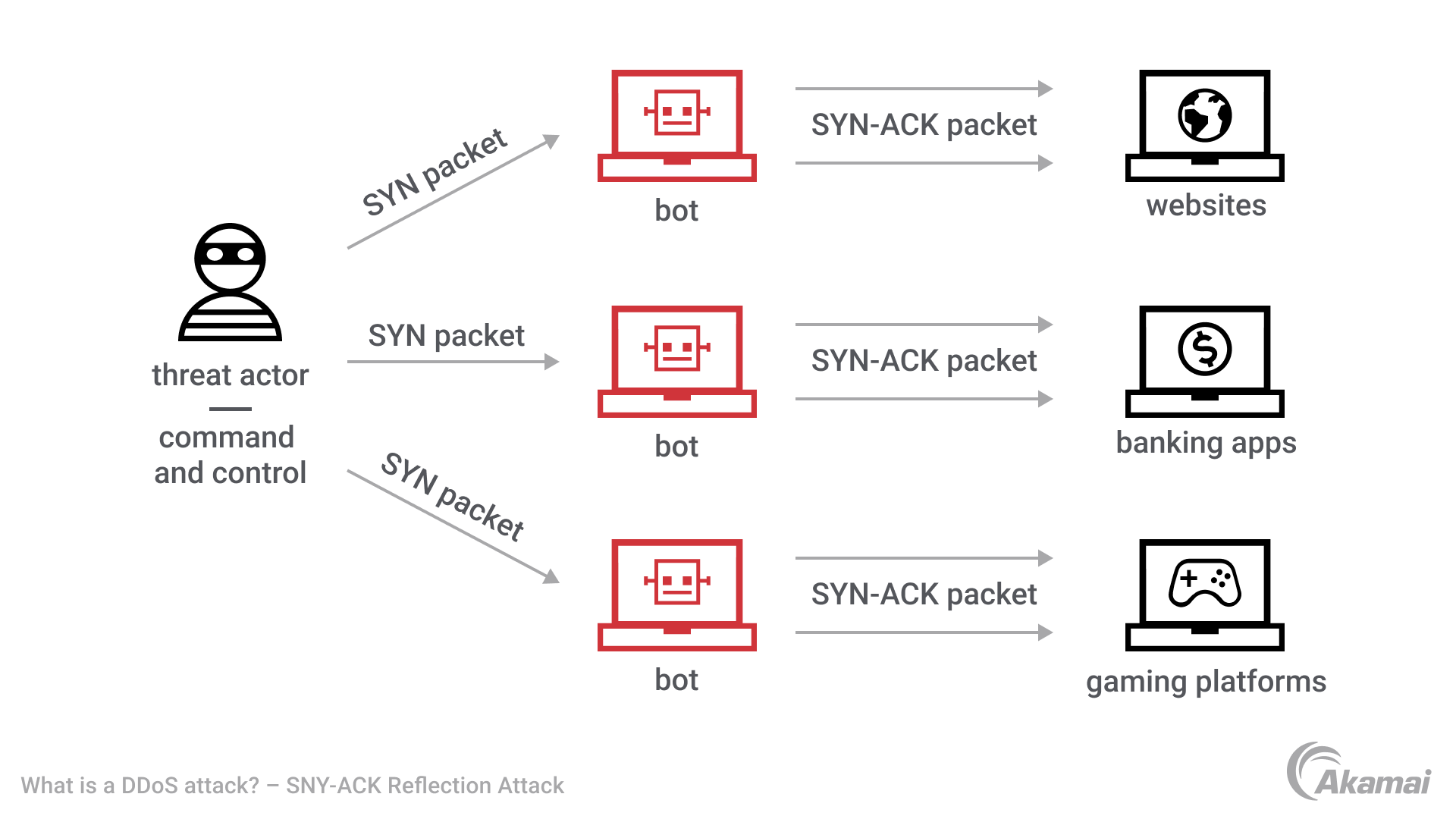
This article delves into the dual nature of the SYN packet: its indispensable role in establishing reliable network connections and its exploitation as a potent weapon in the arsenal of cybercriminals. We will explore its technical underpinnings, illuminate the mechanics of SYN flood attacks, and discuss the comprehensive strategies organizations employ to defend against this persistent digital threat, underscoring its enduring relevance in the dynamic landscape of digital security.
The Foundation: Understanding TCP/IP’s Three-Way Handshake
At the heart of reliable communication over the internet lies TCP, a protocol designed to ensure data delivery is ordered, error-checked, and successfully transmitted. Before any meaningful data can be exchanged between two systems—say, your computer and a web server—a connection must first be established. This process is known as the TCP three-way handshake, and the SYN packet is its inaugural step.
The Role of the SYN Packet in Connection Establishment
The three-way handshake is a meticulously choreographed sequence of messages that ensures both the client and the server are ready and willing to communicate. It begins with the client sending a SYN packet to the server. “SYN” stands for “Synchronize Sequence Numbers,” and this packet’s primary purpose is to initiate a connection and synchronize the sequence numbers that will be used for subsequent data transfer. Sequence numbers are crucial for ordering packets and detecting missing data, ensuring that the recipient can reassemble the data stream correctly. By sending a SYN packet, the client announces its intention to establish a connection and proposes an initial sequence number for its outgoing data.
Upon receiving the client’s SYN packet, the server responds with a SYN-ACK packet. This packet serves two functions: it acknowledges (ACK) the client’s SYN request and synchronizes its own sequence number (SYN) with the client. Essentially, the server is saying, “I received your request, I’m ready to connect, and here’s my starting sequence number.” Finally, the client sends an ACK packet back to the server, acknowledging the server’s SYN-ACK. At this point, the three-way handshake is complete, and a full-duplex connection is established, allowing data to flow in both directions. This seemingly simple process is fundamental to the internet’s stability and reliability.
Anatomy of a SYN Packet
A SYN packet, like all TCP packets, is a structured unit of data that travels across a network. It contains various fields within its header, each serving a specific purpose. Key fields include:
- Source Port and Destination Port: These identify the specific application or service on the sending and receiving hosts, respectively (e.g., port 80 for HTTP, port 443 for HTTPS).
- Sequence Number: The initial sequence number proposed by the sender for its outgoing data. This number is pseudo-randomly generated and helps prevent replay attacks and ensures uniqueness.
- Acknowledgement Number: In a pure SYN packet, this field is typically zero. In a SYN-ACK packet, it carries the next expected sequence number from the original sender.
- Flags: This is a crucial section, containing various control bits. The SYN flag (bit) is set to 1 in a SYN packet, indicating its purpose. Other flags include ACK (acknowledgment), PSH (push), URG (urgent), FIN (finish), and RST (reset).
- Window Size: This field indicates the amount of data (in bytes) that the sender is willing to receive without an acknowledgment, acting as a flow control mechanism.
- Options: SYN packets often carry TCP options, such as Maximum Segment Size (MSS), which specifies the largest amount of data a host can receive in a single TCP segment.
Understanding these components is vital not only for network administrators troubleshooting connectivity issues but also for cybersecurity professionals dissecting attack vectors.
Beyond SYN: ACK and FIN in the TCP Lifecycle
While the SYN packet initiates a connection, it’s just one part of the TCP lifecycle. The ACK flag is ubiquitous, present in almost every packet after the initial SYN, serving to acknowledge the receipt of data and indicating the next expected sequence number. This continuous acknowledgment mechanism is what makes TCP a reliable protocol. If an ACK is not received within a certain timeout period, the sender retransmits the data, ensuring delivery.
The FIN (Finish) flag, on the other hand, signals the graceful termination of a TCP connection. When a host is done sending data, it sends a FIN packet to its peer. The peer then acknowledges the FIN and, when it’s also done sending, sends its own FIN. This two-way FIN exchange, also acknowledged by both sides, ensures that both ends of the connection agree to close it without any data loss. The entire process—SYN for initiation, ACK for reliability, and FIN for termination—forms the robust framework of TCP-based communication.
When SYN Becomes a Threat: The SYN Flood Attack
The elegant simplicity of the TCP three-way handshake, while ensuring reliable communication, harbors an inherent vulnerability. This weakness is precisely what attackers exploit in a SYN flood, one of the oldest and most persistent forms of Denial of Service (DoS) and Distributed Denial of Service (DDoS) attacks.
How a SYN Flood Works: Exploiting the Handshake
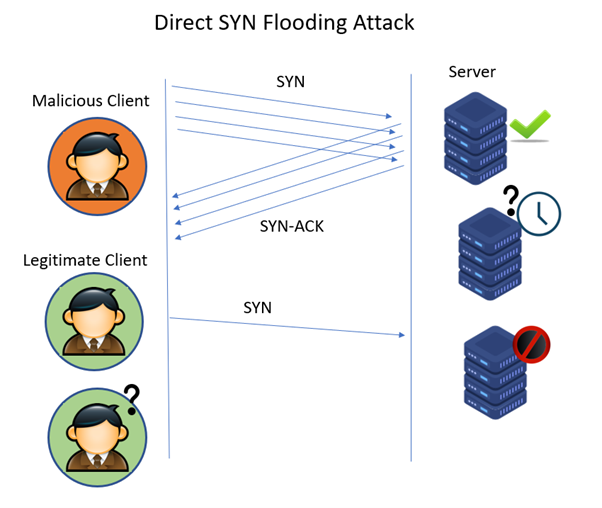
A SYN flood attack targets the server’s ability to complete the three-way handshake. The attacker sends a large volume of SYN packets to the target server, often with spoofed source IP addresses. The server, following the TCP protocol, responds to each SYN packet with a SYN-ACK packet and then allocates resources—specifically, an entry in its connection state table (often called the “backlog queue” or “half-open connection queue”)—to await the final ACK from the client.
However, because the attacker has either spoofed the source IP address or simply never intends to send the final ACK, the server never receives it. The connection remains “half-open” in the server’s memory. As the flood of SYN packets continues, the server’s connection state table quickly fills up. Each half-open connection consumes a small amount of memory and processing power. Once the table is full, the server can no longer process legitimate incoming SYN requests from genuine clients, effectively denying service to them. It can’t even respond to new SYN requests, or it might respond with an RST (reset) packet, but the effect is the same: legitimate users are locked out, experiencing timeouts and an inability to access the service.
The Devastating Impact of SYN Floods
The consequences of a successful SYN flood can range from significant inconvenience to catastrophic financial and reputational damage.
- Service Unavailability: The most immediate impact is the denial of service. Websites, online applications, email servers, and other critical internet-facing services become inaccessible to legitimate users.
- Operational Disruption: For businesses heavily reliant on online operations, this can halt sales, customer support, and internal communications, leading to substantial financial losses.
- Resource Exhaustion: Beyond connection tables, a SYN flood can exhaust other server resources like CPU, memory, and network bandwidth, further degrading performance or causing crashes.
- Reputational Damage: Prolonged outages erode customer trust and can severely damage a brand’s reputation, especially in competitive markets.
- Cascading Failures: In complex interconnected systems, the failure of one service due to a SYN flood can trigger failures in other dependent services, leading to a wider outage.
- Distraction Tactic: Sometimes, a SYN flood is used as a smokescreen to divert security teams’ attention while attackers attempt to breach other parts of the network or exfiltrate data.
The relatively low technical barrier to executing a basic SYN flood, coupled with its potential for widespread disruption, makes it a perennial threat that organizations must actively defend against.
Real-World Examples and Historical Significance
SYN floods have been a staple in the cyber attacker’s toolkit for decades, proving their enduring effectiveness. One of the earliest and most famous examples dates back to February 2000, when a series of SYN flood attacks orchestrated by a hacker known as “Mafiaboy” brought down major websites including Yahoo!, eBay, CNN, and Amazon. These attacks, while rudimentary by today’s standards, highlighted the vulnerability of internet infrastructure and prompted a significant shift in how organizations approached online security.
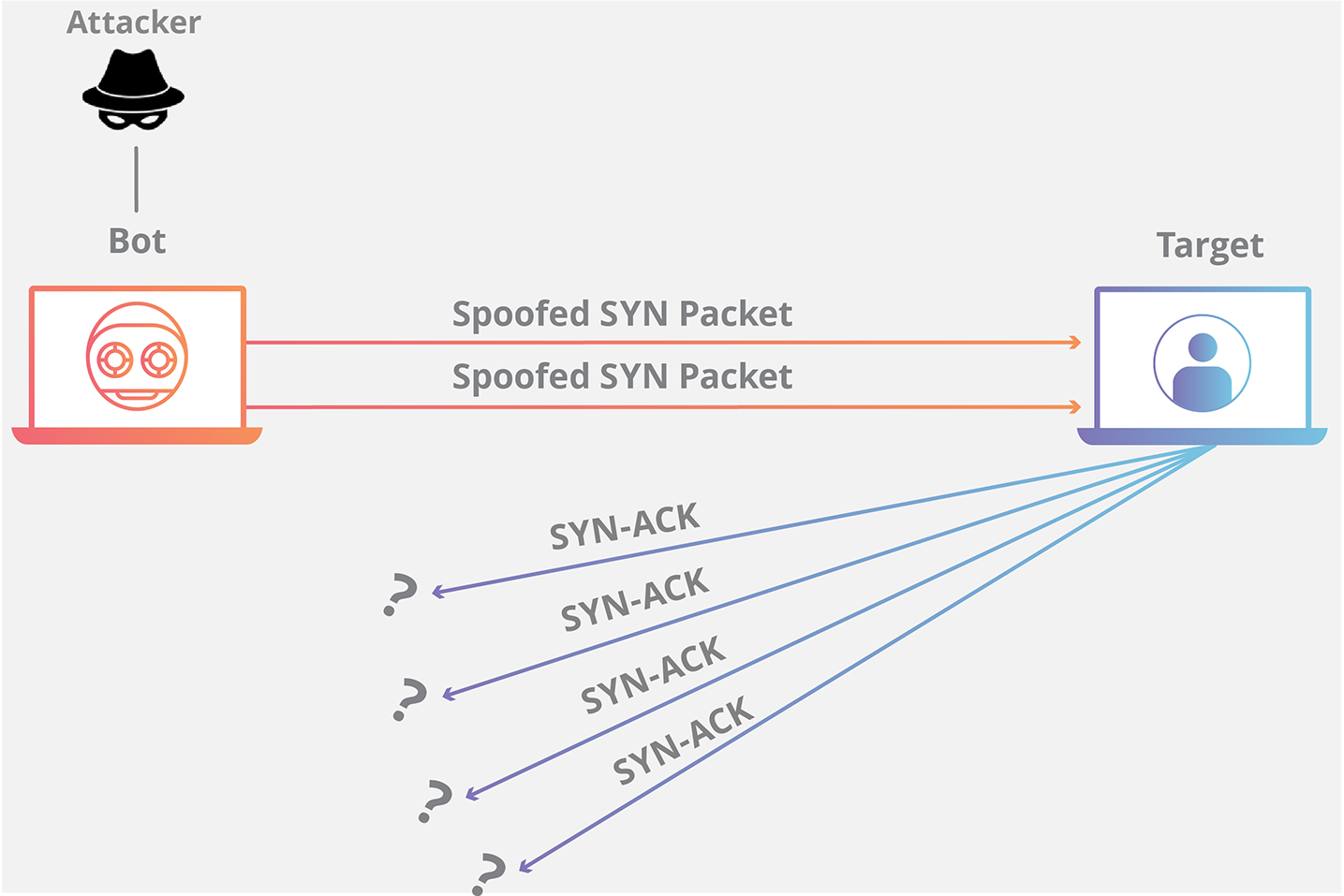
More recently, sophisticated botnets, massive networks of compromised computers, have been leveraged to launch SYN floods of unprecedented scale. These modern attacks can generate hundreds of gigabits or even terabits per second of traffic, making them incredibly difficult to mitigate without specialized infrastructure. The Mirai botnet, for instance, which comprised compromised IoT devices, was responsible for some of the largest DDoS attacks in history, often utilizing SYN floods as a primary vector against targets like Dyn (a DNS provider), causing widespread internet outages. These incidents underscore the persistent relevance of SYN flood attacks and the continuous need for robust defensive measures.
Defending Against the Deluge: Mitigation Strategies for SYN Floods
Given the pervasive nature and potential impact of SYN floods, effective mitigation strategies are crucial for maintaining online service availability and protecting digital assets. Defense against these attacks requires a multi-layered approach, combining network-level protections with server-side countermeasures and specialized DDoS mitigation services.
Network-Level Protections: Firewalls and Intrusion Detection Systems
The first line of defense often lies at the network perimeter. Firewalls, both traditional and next-generation, can be configured to detect and block suspicious traffic patterns characteristic of a SYN flood. This might involve rate-limiting incoming SYN requests from a single source IP address or dropping SYN packets that don’t adhere to expected TCP handshake parameters (e.g., packets with unusual flag combinations or zero window sizes). However, simple firewalls can themselves become overwhelmed by very large SYN floods.
Intrusion Detection Systems (IDS) and Intrusion Prevention Systems (IPS) play a more active role. These systems continuously monitor network traffic for signatures of known attacks, including SYN floods. An IDS can alert administrators, while an IPS can automatically take action, such as blocking the offending IP addresses or implementing more aggressive rate limiting. Modern IPS devices often incorporate advanced heuristics and anomaly detection capabilities to identify SYN floods even when attackers attempt to vary their attack patterns.
Server-Side Countermeasures: SYN Cookies and Connection Limits
While network devices provide initial filtering, servers themselves must be resilient. SYN cookies are a highly effective server-side mechanism to combat SYN floods. When a server receives a SYN packet, instead of immediately allocating resources and creating a half-open connection entry, it sends a SYN-ACK packet where the sequence number is a cryptographic hash (a “cookie”) of the client’s IP address, port, and other connection details. The server then discards the SYN request from its memory. Only if the client responds with a valid ACK packet (containing the correct “cookie” in its acknowledgment number) does the server reconstruct the original SYN request and establish the connection. This prevents the server’s connection table from being exhausted by spoofed or incomplete SYNs, as resources are only committed for legitimate connections.
Another common server-side strategy is to implement connection limits. This involves configuring the operating system or application server to limit the number of concurrent connections or half-open connections it will accept. While effective in preventing complete resource exhaustion, setting these limits too low can inadvertently block legitimate traffic during peak times, and setting them too high can still leave the server vulnerable. It’s a balancing act that requires careful tuning based on expected traffic patterns.
Advanced Techniques: Traffic Scrubbing and DDoS Mitigation Services
For organizations facing large-scale, sophisticated SYN floods, relying solely on on-premise solutions may not be sufficient. This is where DDoS mitigation services come into play. These specialized services operate globally, leveraging massive network capacities and advanced scrubbing centers. When an attack is detected, traffic is rerouted through the mitigation provider’s network. There, sophisticated hardware and software analyze incoming packets in real-time, identifying and filtering out malicious SYN flood traffic while allowing legitimate requests to pass through to the protected server.
These services employ a range of advanced techniques, including:
- Behavioral Analysis: Identifying deviations from normal traffic patterns.
- Protocol Validation: Ensuring that SYN packets adhere strictly to TCP/IP standards.
- IP Reputation Filtering: Blocking traffic from known malicious IP ranges.
- Geo-blocking: Restricting traffic from regions not relevant to the business.
- Dynamic Rate Limiting: Adjusting traffic limits based on real-time attack detection.
This “traffic scrubbing” process is often performed transparently to the end-user and is crucial for maintaining business continuity against sustained, high-volume attacks.
The Broader Landscape: SYN in Modern Digital Security
The SYN packet, initially conceived as a simple handshake component, remains a critical focal point in the ever-evolving domain of digital security. Its fundamental role in initiating network connections guarantees its continued relevance as both a functional necessity and a potential attack vector.
Evolving Threat Vectors and the Persistent Relevance of SYN Attacks
Despite decades of defensive innovation, SYN attacks persist because they exploit a foundational element of TCP/IP. Attackers continually refine their methods, leveraging new technologies and vulnerabilities. Modern SYN floods are often part of multi-vector attacks, combining SYN floods with other attack types (e.g., UDP floods, HTTP floods) to overwhelm different layers of a target’s infrastructure. The rise of large, easily accessible botnets and the increasing number of internet-connected, often poorly secured, IoT devices provide attackers with unprecedented firepower to launch massive SYN floods.
Furthermore, attackers are becoming more adept at evading detection, using fragmented SYN packets, non-standard TCP options, or rapidly changing source IP addresses to make mitigation more challenging. This forces security professionals to constantly adapt, employing advanced analytics, machine learning, and threat intelligence to identify and neutralize these evolving threats.
Proactive Security Postures and Continuous Monitoring
Effective defense against SYN floods, and indeed all cyber threats, demands a proactive security posture. This includes:
- Regular Security Audits and Penetration Testing: Identifying and patching vulnerabilities before attackers can exploit them.
- Robust Network Architecture: Designing networks with redundancy and segmentation to limit the impact of an attack.
- Up-to-Date Software and Hardware: Ensuring all systems are running the latest security patches.
- Employee Training: Educating staff about phishing and other social engineering tactics that can lead to system compromise.
- Continuous Monitoring: Implementing comprehensive monitoring solutions that track network traffic, server performance, and security events in real-time. This allows for early detection of unusual SYN traffic patterns and rapid response.
- Incident Response Planning: Developing clear, actionable plans for how to respond to a SYN flood or any other cyberattack, including communication strategies and recovery procedures.
By embracing these proactive measures, organizations can significantly enhance their resilience against SYN floods and ensure the continuous availability of their critical online services.
Conclusion
The SYN packet, a humble yet powerful component of the TCP three-way handshake, embodies a fundamental paradox in network communication. It is the indispensable digital “hello” that enables the vast majority of internet connections, ensuring reliable and ordered data exchange across the globe. Yet, this very mechanism, designed for efficiency and trust, becomes a critical vulnerability when manipulated by malicious actors. The SYN flood attack, leveraging this inherent weakness, remains a potent and ever-present threat in the cybersecurity landscape, capable of disrupting vital online services and causing significant damage.
As technology advances and the internet becomes increasingly central to every facet of life, the sophistication of SYN floods and other DDoS attacks will undoubtedly continue to evolve. Therefore, understanding “what is a SYN” goes beyond mere technical curiosity; it is a vital component of digital literacy for anyone involved in managing, securing, or simply relying on the internet. Robust, multi-layered defense strategies, encompassing network protections, server-side countermeasures, and specialized DDoS mitigation services, coupled with a proactive security posture, are not just best practices—they are necessities in the ongoing battle to maintain the integrity and availability of our interconnected digital world.
aViewFromTheCave is a participant in the Amazon Services LLC Associates Program, an affiliate advertising program designed to provide a means for sites to earn advertising fees by advertising and linking to Amazon.com. Amazon, the Amazon logo, AmazonSupply, and the AmazonSupply logo are trademarks of Amazon.com, Inc. or its affiliates. As an Amazon Associate we earn affiliate commissions from qualifying purchases.