
In the realm of consumer electronics and diagnostic hardware, few interfaces are as iconic or as high-stakes as the “two lines” on a home pregnancy test. While the average user views these lines through a lens of personal significance, from a technological standpoint, those two lines represent a masterpiece of biochemical engineering and microfluidic logic. The home pregnancy test is, in essence, a single-use, disposable computer that uses fluid dynamics and molecular recognition instead of silicon chips and electrical currents to deliver a binary output.
Understanding what those two lines mean requires a deep dive into the evolution of diagnostic technology, the transition from analog chemical reactions to digital optical sensors, and the burgeoning field of connected health tech.
The Engineering of the Lateral Flow Assay: How Microfluidics Work
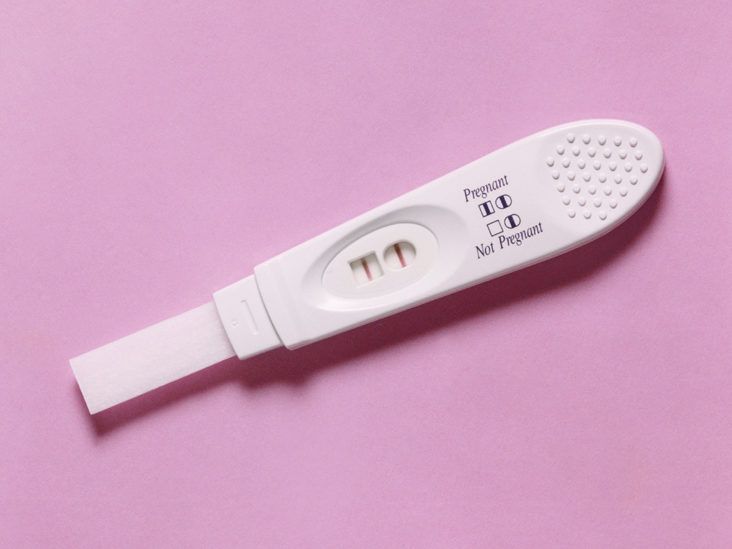
At its core, the traditional “two-line” test is a piece of sophisticated hardware known as a Lateral Flow Immunoassay (LFA). This technology is a marvel of material science, designed to move a liquid sample across a series of reactive zones without the need for an external power source.
The Chemical Logic Gate: Binding and Detection
The “technology” of the two lines functions similarly to a logic gate in a computer circuit. The input is a biological signal—specifically, the hormone Human Chorionic Gonadotropin (hCG). When the sample is applied, it travels via capillary action through a nitrocellulose membrane.
The first line (the “Test” line) is embedded with immobilized antibodies. If the hCG signal is present, it “completes the circuit” by binding to these antibodies, which are often tagged with gold nanoparticles or latex beads. This binding causes a localized accumulation of pigment, creating the first visible line. The second line (the “Control” line) acts as a system diagnostic. It contains a different set of antibodies designed to capture any excess reagents, proving that the fluid has successfully traversed the entire length of the “hardware.” If the control line fails to appear, it is the biological equivalent of a system “404 Error.”
Precision Manufacturing: From Paper to Hardware
The manufacturing of these tests requires extreme precision. The nitrocellulose membrane must have a consistent pore size to ensure the flow rate—the “clock speed” of the test—is uniform. If the liquid moves too fast, the antibodies won’t have time to bind; too slow, and the reagents may degrade or produce “noise” in the form of evaporation lines. Tech companies specializing in diagnostics invest millions into the calibration of these flow rates, ensuring that the “UI” (the lines) is legible and accurate within a 99% threshold.
The Digital Shift: From Analog Lines to Liquid Crystal Displays
As consumer expectations for clarity increased, the technology evolved from simple reactive strips to sophisticated digital handhelds. This transition represents the “digitization” of home diagnostics, replacing human interpretation with machine precision.
Optical Sensors vs. Human Vision
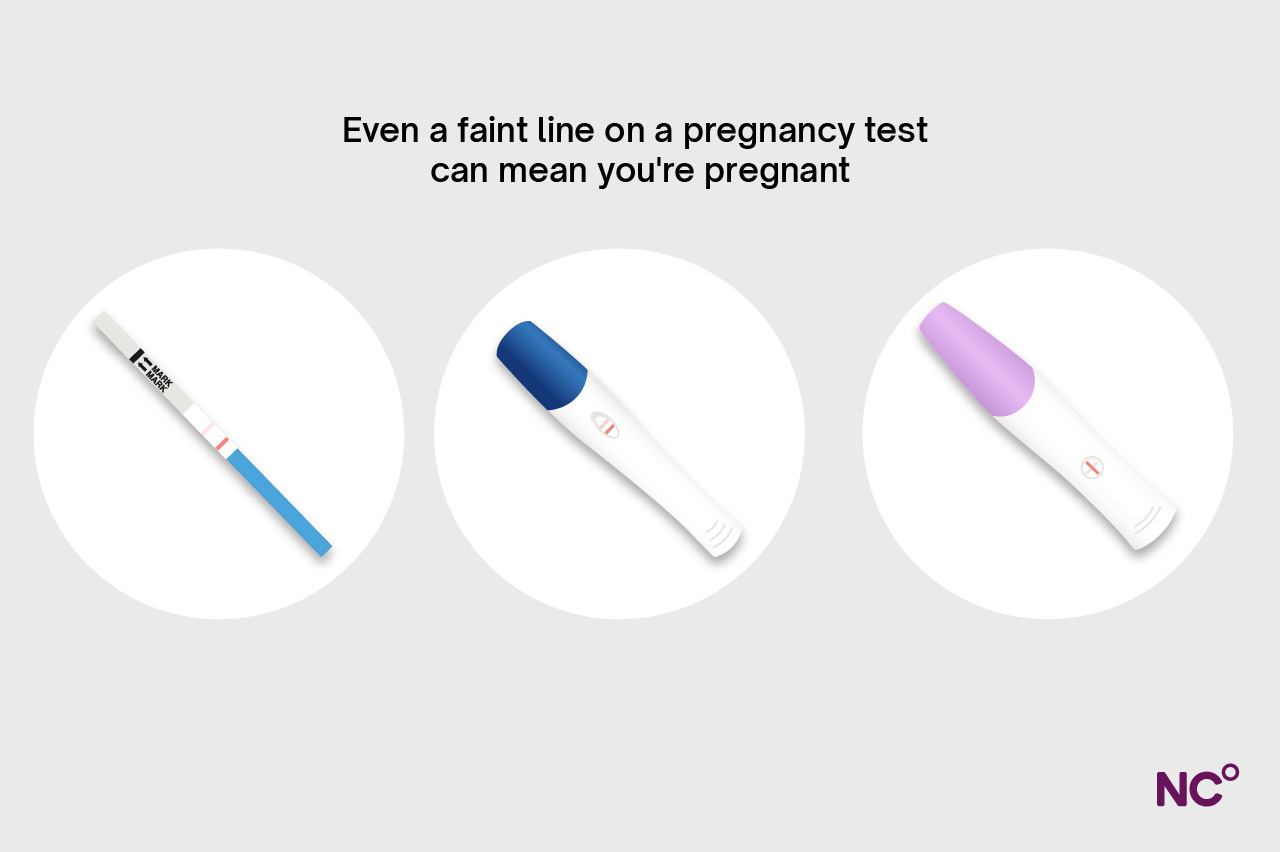
One of the primary “bugs” in the analog two-line system is human error—specifically, the interpretation of “faint lines.” To solve this, companies like Clearblue and First Response integrated optoelectronic components into their tests.
Digital pregnancy tests contain a small internal processor and a series of light-emitting diodes (LEDs) and photodetectors. Instead of a human eye trying to discern a color change on a strip, the device’s internal sensor measures the amount of light absorbed by the test strip. This “optical density” is then converted into a digital signal. The onboard microprocessor analyzes the data against a pre-programmed threshold and outputs a clear, text-based result on a Liquid Crystal Display (LCD). This eliminates the “analog ambiguity” of the two lines, providing a definitive “Pregnant” or “Not Pregnant” readout.
Power Management in Single-Use Gadgets
The engineering challenge of digital tests lies in power management and shelf life. These devices must remain dormant in a box for months or even years, only to “boot up” instantly upon contact with moisture. This is achieved through a moisture-activated switch or a simple mechanical bridge. The battery must be small enough to fit within the plastic chassis while providing enough voltage to power the LEDs and the LCD for several hours. This reflects a broader trend in “Disposable Tech,” where complex electronics are miniaturized and optimized for high-volume, low-cost production.

IoT and the Future of Connected Home Diagnostics
The “two lines” are no longer the end of the data journey. We are currently witnessing the integration of home diagnostics into the Internet of Things (IoT) ecosystem. This movement, often referred to as “FemTech,” is transforming the pregnancy test from a standalone tool into a data-entry point for comprehensive health tracking.
Smart Tests and App Integration
Newer iterations of testing technology utilize Bluetooth connectivity to sync results directly to a smartphone. In this model, the “two lines” are transmitted as a data packet to an app. This allows for immediate integration with period tracking software, prenatal health databases, and even clinical portals.
For the tech-savvy consumer, this means the test result is the first “bit” of data in a nine-month longitudinal study of their own health. The app can use the timestamp of the positive result to calculate gestational age, schedule reminders for the first “hardware” check (the ultrasound), and provide a curated feed of information based on the specific “firmware” of the user’s pregnancy.
Data Privacy in Intimate Tech
As diagnostics move into the cloud, data security becomes a paramount concern. A positive pregnancy result is one of the most sensitive pieces of personal data an individual can generate. Tech companies in this space are now required to implement robust encryption and adhere to strict data privacy regulations (like GDPR or HIPAA-adjacent standards) to ensure that the “two lines” are only visible to the intended user and their authorized healthcare providers. The transition from a physical strip to a digital record introduces the same cybersecurity challenges faced by any other FinTech or MedTech platform.
AI and Machine Learning in Image Recognition Testing
The most recent leap in testing technology doesn’t even require a digital test; it uses the computer already in the user’s pocket. Artificial Intelligence (AI) and Machine Learning (ML) are being used to “read” traditional analog tests with higher accuracy than the human eye.
Eliminating the “Faint Line” Ambiguity
Several startups have developed apps that use a smartphone’s camera to perform a high-resolution scan of a standard two-line test. Using computer vision algorithms trained on thousands of test results, the AI can detect the presence of hCG-bound pigment that might be invisible to the naked eye. By adjusting for lighting conditions, shadows, and camera angles, the software can provide a “verified” reading of the two lines, effectively upgrading a $5 analog test into a high-precision digital tool.
Cloud-Based Result Verification
By aggregating these AI-scanned results, researchers can track reproductive health trends across populations in real-time. While the individual user cares about their specific two lines, the “Big Data” side of this tech allows for the identification of batch failures in manufacturing or regional fluctuations in fertility rates. This is a prime example of how edge computing (the phone) and cloud processing (the AI) are revolutionizing even the most basic medical tools.
The Ethical and Environmental Roadmap of Testing Technology
As we look toward the future, the technology of the “two lines” faces a reckoning regarding sustainability and accessibility. The “Tech” niche is increasingly focused on the environmental impact of disposable electronics.
Biodegradable Components and E-Waste
The rise of digital pregnancy tests has introduced a significant amount of e-waste—batteries, circuit boards, and plastic casings—into the environment for a device that is used for only three minutes. The next frontier in diagnostic tech is the development of “green hardware.” This includes biodegradable paper-based electronics and tests that use enzymatic reactions rather than gold nanoparticles, reducing the carbon footprint of the “two lines.”
Democratizing Access through Open-Source Hardware
Finally, the evolution of this technology is moving toward democratization. Researchers are working on low-cost, open-source microfluidic platforms that can be printed on standard inkjet printers. This would allow the “two lines” technology to be deployed in resource-limited settings, providing the same “diagnostic compute power” found in a high-end pharmacy test to anyone with access to a basic printer and the correct chemical “ink.”
In conclusion, the “two lines” on a pregnancy test are far more than a simple chemical reaction; they are a sophisticated user interface for a complex biological system. From the microfluidic architecture of the nitrocellulose strip to the AI-powered image recognition on our smartphones, the technology behind these lines continues to push the boundaries of what is possible in home diagnostics. As we move further into the era of connected health, those two lines will remain a fundamental example of how tech can bridge the gap between the microscopic world of biology and the macroscopic world of human experience.
aViewFromTheCave is a participant in the Amazon Services LLC Associates Program, an affiliate advertising program designed to provide a means for sites to earn advertising fees by advertising and linking to Amazon.com. Amazon, the Amazon logo, AmazonSupply, and the AmazonSupply logo are trademarks of Amazon.com, Inc. or its affiliates. As an Amazon Associate we earn affiliate commissions from qualifying purchases.