
In the dynamic world of blackjack, where strategic decisions can significantly impact a player’s financial outcome, the concept of “surrender” stands out as a crucial tool for risk management and capital preservation. Far from being a sign of weakness, executing a surrender at the appropriate moment is a sophisticated financial maneuver that minimizes losses and optimizes a player’s long-term financial position at the table. It is a decision rooted in mathematical probability and expected value, akin to cutting losses in a volatile investment portfolio rather than holding onto a losing position in the hope of an improbable turnaround.
The Strategic Financial Decision of Surrendering
At its core, surrendering in blackjack is a tactical retreat designed to mitigate potential financial damage. It is an acknowledgment that, given the specific cards in play, the probability of achieving a favorable outcome by continuing the hand is so low that it is more financially prudent to forfeit a portion of your stake.
Minimizing Losses: A Core Financial Principle
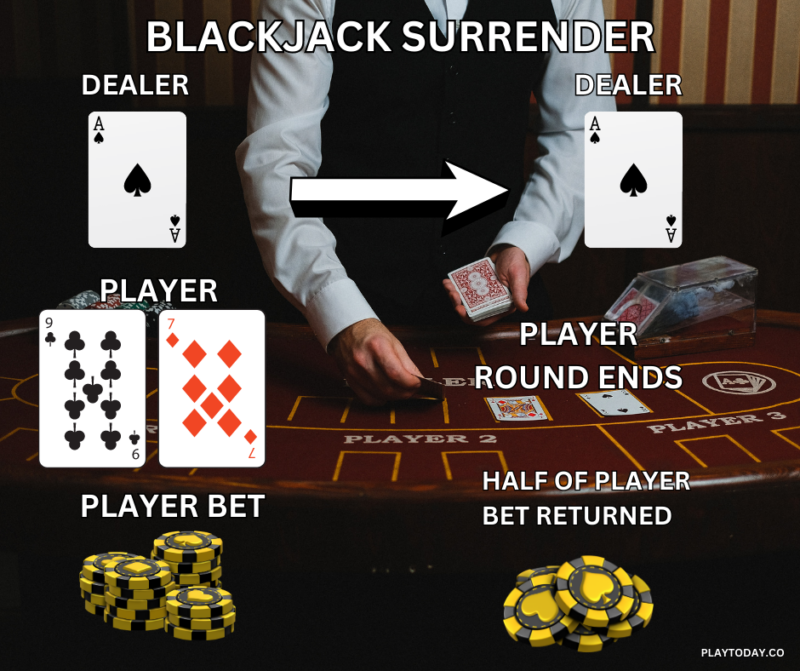
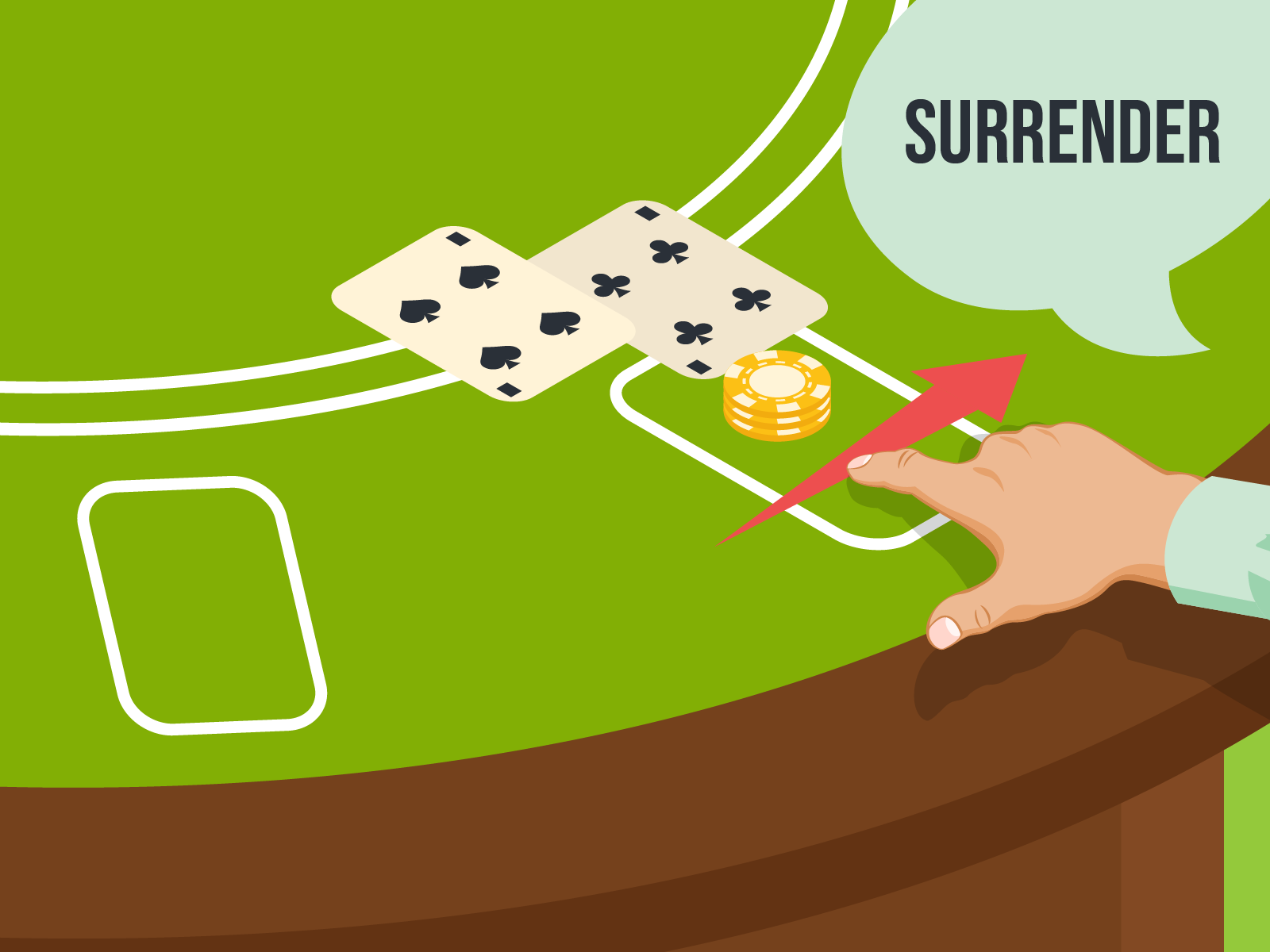
To surrender means to give up half of your original wager and end the hand immediately, without playing it out. This decision is activated when a player determines that their hand has an overwhelmingly low chance of winning against the dealer’s visible upcard. Instead of risking the entire initial bet on a highly improbable victory or an equally probable bust, the player chooses to surrender, effectively guaranteeing that only 50% of their capital for that hand is lost.
This principle is directly transferable to broader financial management. Savvy investors frequently employ stop-loss orders or make strategic divestments when an asset underperforms significantly and the outlook remains poor. They understand that preserving capital by accepting a smaller, predetermined loss is often more financially sound than clinging to a position that is likely to lead to a complete loss. In blackjack, surrendering is the equivalent of a disciplined investor cutting their losses to protect their bankroll for future opportunities. It’s a calculated move to reduce variance and stabilize the overall financial trajectory.
Early vs. Late Surrender: Different Risk Profiles
The mechanics of surrender are further refined by its two forms: early surrender and late surrender, each carrying distinct financial implications for the player.
Early Surrender (ES) allows a player to surrender their hand before the dealer checks for blackjack. This is a highly player-favorable rule because it protects against the dealer having a natural blackjack. If the dealer has an Ace or a 10-value card showing, and the player believes their hand is poor, they can surrender immediately, even if the dealer subsequently reveals a blackjack. From a financial perspective, early surrender offers a broader umbrella of protection, as it hedges against the worst possible outcome (dealer blackjack) across a wider range of player hands. Games offering early surrender significantly reduce the house edge, making them more financially attractive for players committed to optimal strategy.
Late Surrender (LS), the more common variant, permits a player to surrender only after the dealer has checked their hole card and confirmed they do not have a blackjack. If the dealer’s upcard is an Ace or a 10-value card, they will first check their hole card. If it results in a blackjack, the hand is over, and the player automatically loses their entire bet (unless they also have a blackjack, resulting in a push). Only if the dealer doesn’t have blackjack can the player then opt for a late surrender. While less advantageous than early surrender, late surrender is still a powerful financial tool that, when used correctly, significantly improves a player’s expected return by allowing them to salvage half their bet in highly unfavorable situations.
Understanding the difference between these two forms is critical for evaluating the financial fairness and profitability potential of a blackjack table.
Identifying Optimal Surrender Opportunities
The decision to surrender is not arbitrary; it’s dictated by specific combinations of the player’s hand and the dealer’s upcard, derived from extensive probability calculations. Adhering to these strategic surrender points is fundamental to managing one’s finances optimally in blackjack.
Dealer’s Upcard and Player’s Hand: The Financial Equation
For late surrender, which is prevalent in most casinos, the mathematically correct situations to surrender typically involve a hard total (a hand without an Ace counted as 11) against a strong dealer upcard. These are the primary financial equations to consider:
- Player has a hard 16 (e.g., 10-6, 9-7, 8-8 without splitting) against a dealer’s 9, 10, or Ace: In these scenarios, hitting the 16 carries a very high risk of busting (going over 21), and the dealer is likely to make a strong hand. The expected loss from hitting is statistically higher than 50% of your bet. By surrendering, you cap your loss at exactly 50%.
- Player has a hard 15 against a dealer’s 10: Similar to the hard 16, a hard 15 against a dealer’s 10 is a notoriously bad hand. The probability of improving it without busting is slim, and the dealer’s 10-upcard signals a high likelihood of them forming a strong total. Surrendering converts a probable full loss into a guaranteed half-loss.
These specific scenarios represent situations where the expected value (EV) of playing the hand out is less favorable than the EV of surrendering (which is a guaranteed loss of 0.5 units). This mirrors the critical financial skill of risk assessment, where one weighs the potential upside of an action against its probable downside, choosing the option that minimizes expected loss or maximizes expected gain.
The Cost of Ignoring Surrender: Unnecessary Financial Drain
Failing to surrender when the strategy dictates it is a direct financial detriment. Imagine holding a hard 16 against a dealer’s 10 and choosing to hit instead of surrender. Statistical analysis shows that your expected loss when hitting in this situation is approximately 75% to 80% of your initial bet. By contrast, surrendering caps that loss at a precise 50%. Over numerous hands, consistently making the incorrect decision to hit rather than surrender in these situations can lead to a significant, unnecessary drain on your bankroll.
This concept extends beyond the casino floor. In investment, refusing to acknowledge a poor investment and stubbornly holding onto it can lead to larger losses than if one had accepted a smaller initial loss. In business, failing to pivot or discontinue an unprofitable product line out of misplaced optimism can deplete resources. The cost of ignoring optimal surrender opportunities in blackjack is quantifiable and directly translates to reduced profitability and an accelerated depletion of funds over time. Basic strategy charts for blackjack meticulously incorporate these surrender decisions because they are vital for achieving the lowest possible house edge and, consequently, the best long-term financial outcome for the player.
Surrender as a Money Management Tool
Beyond individual hand decisions, surrender functions as an integral component of a broader money management strategy, significantly impacting bankroll preservation and overall profitability.
Preserving Bankroll: A Foundation of Sustainable Play
One of the most immediate benefits of surrendering is its role in bankroll preservation. By only losing half your bet instead of the entire amount in dire situations, you retain more capital. This allows you to play more hands, endure natural variance, and extend your playing session. For any form of financial engagement, whether trading stocks or operating a business, capital preservation is paramount. A larger, more resilient bankroll provides the buffer needed to weather inevitable downturns and continue participating in opportunities.
Furthermore, the psychological impact of surrendering should not be underestimated. Losing half a bet, while still a loss, is often less disheartening than losing the entire stake. This can help players maintain emotional discipline, preventing them from chasing losses with irrational bets—a common pitfall that leads to even greater financial distress. Surrender promotes a mindset of controlled risk and strategic retreat, fostering more sustainable and financially responsible play.
Impact on House Edge and Long-Term Profitability
The correct application of late surrender reduces the house edge by approximately 0.05% to 0.08%, depending on the specific rules of the game. While this percentage may seem small, in the context of thousands of hands played, it translates into substantial savings. For a player betting $10 per hand, reducing the house edge by even 0.05% means saving $0.005 per hand on average. Over 1,000 hands, this amounts to $5. Over 10,000 hands, it’s $50. These incremental savings accumulate, making surrender a critical factor in minimizing the cost of playing blackjack.
Consider this in comparison to financial fees. Seemingly minor management fees on investments or transaction costs in business can erode profits over time. Similarly, ignoring the surrender option is akin to voluntarily accepting higher “fees” on your blackjack bets, thereby sacrificing potential long-term returns. For financially astute players, optimizing every available rule, including surrender, is a non-negotiable part of maximizing their financial outcome.
The Role of Surrender in Advanced Strategies
While basic strategy provides the foundation for surrender decisions, advanced players, such as card counters, may deviate from standard surrender strategy based on the composition of the remaining deck. When the “true count” (a running count adjusted for the number of decks remaining) is significantly positive, indicating a deck rich in high-value cards, a card counter might choose to hit a hand like a hard 16 against a dealer’s 10, whereas basic strategy would dictate surrender. The altered probabilities mean that the expected value of hitting might surpass the expected value of surrendering under those specific, favorable conditions. This demonstrates a deeper financial understanding where the value of an action changes based on dynamic market (deck) conditions, requiring flexible strategic adjustments beyond rote memorization. However, for the vast majority of players, adhering to basic strategy surrender rules is the most financially sound approach.
Practical Application and Financial Discipline
Integrating surrender into one’s blackjack strategy requires both knowledge and disciplined execution. It is a skill that, when mastered, significantly enhances a player’s financial longevity at the tables.
Learning and Implementing Surrender Strategy
The first step is to thoroughly learn the basic strategy charts that incorporate surrender decisions. These charts are readily available and clearly outline when to surrender based on your hand and the dealer’s upcard. Memorization is crucial, but more importantly, understanding the underlying mathematical rationale reinforces the decision.
Financial discipline is paramount. Just as one must consistently stick to a budget or an investment plan, a player must consistently apply the surrender strategy, even when it feels counter-intuitive or when emotions run high. The temptation to “hit just one more card” in a desperate situation can be strong, but succumbing to such impulses negates the financial advantage surrender offers. Robotic adherence to the mathematically proven strategy is the path to optimal financial management in blackjack.
Surrender Availability and Rule Variations: Due Diligence
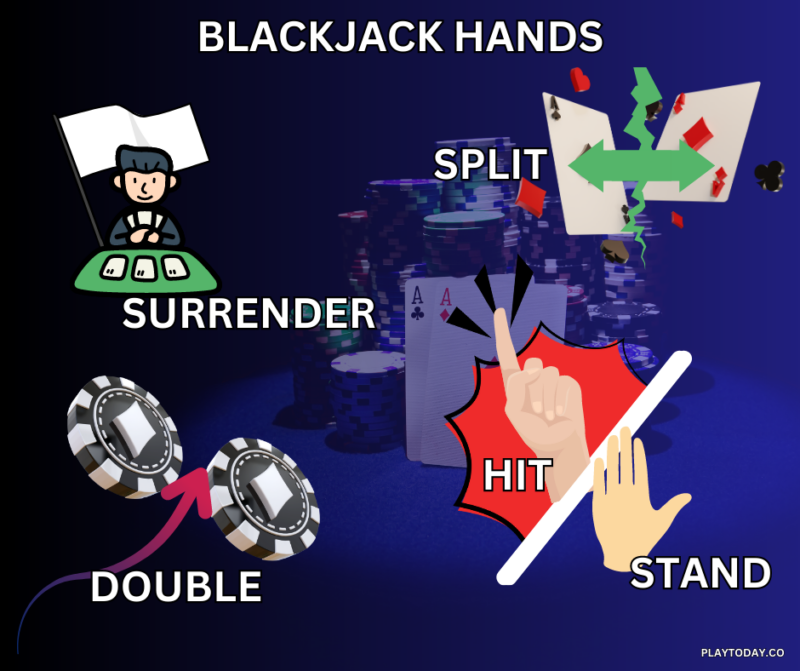
Not all blackjack games offer the surrender option. Players must exercise due diligence by checking the table rules before placing any bets. Rules are usually displayed on the felt or a placard. If surrender is not offered, it means the house edge is slightly higher for the player, as a valuable risk mitigation tool has been removed.
For financially savvy players, seeking out games with favorable rules, including the availability of late or, ideally, early surrender, is a smart long-term strategy. Just as investors compare fees, returns, and terms across different financial products, blackjack players should evaluate table rules to find the most financially advantageous environment. Prioritizing games with surrender options is a critical element of responsible financial play, ensuring that every available tool is utilized to minimize losses and maximize potential returns over time.
aViewFromTheCave is a participant in the Amazon Services LLC Associates Program, an affiliate advertising program designed to provide a means for sites to earn advertising fees by advertising and linking to Amazon.com. Amazon, the Amazon logo, AmazonSupply, and the AmazonSupply logo are trademarks of Amazon.com, Inc. or its affiliates. As an Amazon Associate we earn affiliate commissions from qualifying purchases.