
In the fast-paced world of technology development, the difference between a product that revolutionizes an industry and one that fails to gain traction often lies in the quality of the research behind it. At the heart of this research is the “study design.” In a technical context, a study design is the strategic framework or architectural blueprint used to collect, measure, and analyze data to solve a specific problem or validate a technological hypothesis. Whether you are building a new AI model, optimizing a SaaS platform’s user interface, or stress-testing a cybersecurity protocol, the study design dictates how you will prove that your solution actually works.

A well-constructed study design ensures that the data gathered is both reliable and valid. Without a rigorous design, tech teams risk falling into the trap of “vanity metrics” or anecdotal evidence, which can lead to costly pivots or failed product launches. In this guide, we will explore the components of study design through the lens of technology, software development, and digital innovation.
The Foundations of Study Design in the Tech Ecosystem
In tech, a study design is not merely an academic exercise; it is a risk-mitigation strategy. Before a single line of code is written or a server is deployed, researchers and product managers must determine what they are trying to learn and how they will prove it. This phase of the development lifecycle is critical because it defines the parameters of success.
The Blueprint of Innovation
Think of a study design as the system architecture of a research project. Just as a software architect determines how different modules of an application will interact, a researcher determines how variables will be manipulated and observed. In tech research, these variables might include user engagement rates, latency periods, or the accuracy of a machine learning algorithm. The design specifies the population (e.g., mobile users in North America), the timeframe (e.g., a two-week sprint), and the environment (e.g., a staging server or a live production environment).
Bridging the Gap Between Data and Development
Software engineering is often viewed as a purely creative or constructive process, but modern product development is increasingly scientific. The “Lean Startup” methodology, for instance, is essentially an application of experimental study design to business. By establishing a formal study design, tech teams can bridge the gap between raw data—such as logs or clickstream data—and actionable development insights. It transforms a chaotic stream of information into a structured narrative that answers the question: “Does this feature provide value to the user?”
Core Methodologies: Qualitative vs. Quantitative in Tech
Choosing the right study design requires an understanding of the two primary pillars of research: qualitative and quantitative methodologies. In the technology sector, these are rarely used in isolation; instead, they are combined to create a holistic view of the product’s performance.
Qualitative Deep Dives: Generative Research
Qualitative study designs focus on the “why” and “how.” In tech, this is often referred to as generative research because it helps generate new ideas and directions. Common qualitative designs include:
- User Interviews: One-on-one sessions where researchers probe into the pain points of a specific user persona.
- Contextual Inquiry: Observing users in their natural environment as they interact with software. This is crucial for identifying friction points that users might not even notice themselves.
- Focus Groups: Facilitated discussions that help gauge the collective sentiment toward a new brand identity or a proposed feature set.
These designs provide the “texture” behind the data, helping developers understand the emotional and psychological drivers of user behavior.
Quantitative Precision: Evaluative Research and A/B Testing
Quantitative study designs are the backbone of data-driven tech companies. These designs are used to evaluate existing products and measure performance with mathematical precision.
- A/B Testing (Randomized Controlled Trials): The gold standard of tech research. By randomly assigning users to a “control” group (the current version) and a “treatment” group (the new version), companies like Netflix or Amazon can determine exactly how a small change in an algorithm affects conversion rates.
- Surveys and Questionnaires: Tools used to gather large-scale data on user satisfaction (NPS scores) or demographic information.
- System Performance Benchmarking: A quantitative design used in backend engineering to measure how a system handles increased load or different hardware configurations.
Structuring Your Study: Common Frameworks for Software and AI
Depending on the goals of your tech project, you will select a specific structure for your study. Each framework offers different advantages in terms of speed, cost, and depth of insight.
Observational Studies in User Behavior
In an observational study design, the researcher does not interfere with the environment. In the digital world, this often takes the form of “shadowing” or using tools like heatmaps and session recordings. By observing how users naturally navigate a complex SaaS dashboard, researchers can identify “dead zones”—areas of the screen that are ignored—or confusing navigation paths. This design is particularly useful in the early stages of a UI/UX overhaul, where the goal is to understand current user habits without biasing them with new prototypes.
Experimental Design for Algorithm Training
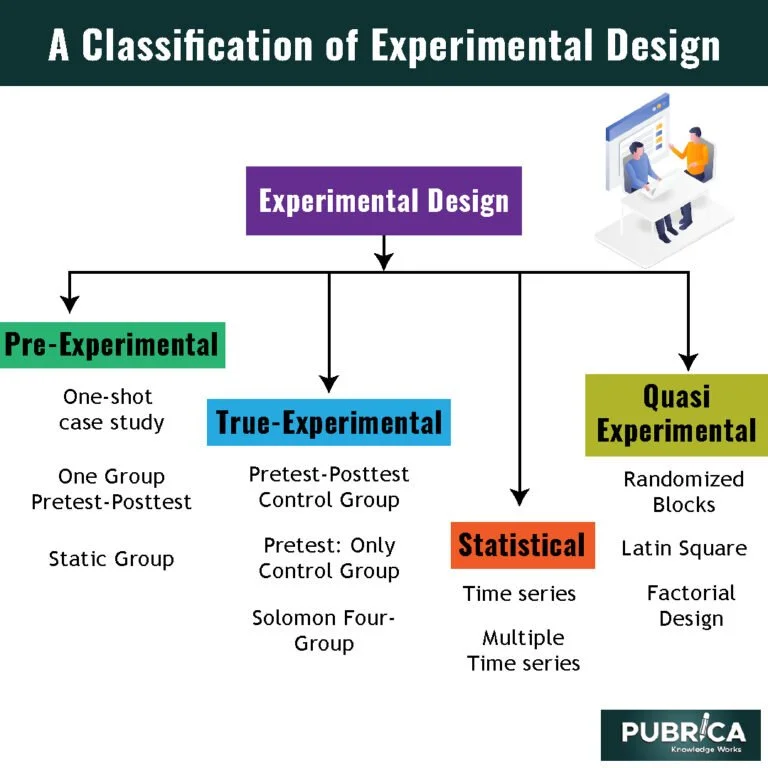
Experimental designs are highly structured and involve the active manipulation of variables. In the context of AI and Machine Learning, this involves split-testing different model architectures or training data sets to see which yields the highest precision and recall.
For example, a developer might use a “factorial design” to test how three different hyperparameters interact with one another. This allows the team to find the “sweet spot” for the algorithm’s performance. Unlike observational studies, experimental designs allow for the establishment of causality—proving that X change in code specifically caused Y improvement in output.
Longitudinal Studies for Product Adoption
Most tech research is “cross-sectional,” meaning it takes a snapshot of a single moment in time. However, to understand long-term retention and the “stickiness” of a platform, developers must use longitudinal study designs. This involves following the same group of users over weeks, months, or even years.
Longitudinal data is vital for subscription-based models (SaaS) where the goal is to reduce churn. By designing a study that tracks user behavior from onboarding through the first six months, a company can identify the exact “Aha! moment” when a user becomes a lifelong advocate for the product.
The Lifecycle of a Tech Study Design
Implementing a study design requires a disciplined approach to ensure that the results are actionable for stakeholders, from engineers to C-suite executives.
Defining Hypotheses and Research Questions
Every study begins with a question. In tech, these are often framed as hypotheses: “If we implement a single-click checkout, the cart abandonment rate will decrease by 15%.” A clear research question prevents “scope creep” in the research process and ensures that the team stays focused on the most impactful metrics.
Selecting Tools and Participant Sampling
The modern tech researcher has a vast arsenal of tools at their disposal. For remote usability testing, platforms like UserTesting or Maze allow for rapid feedback. For data analysis, Python libraries like Pandas or R are used to process large datasets.
Sampling is equally important. If you are testing a new feature for “power users,” your study design must exclude casual users to avoid skewed data. In tech, this is often handled through “feature flags,” where a new piece of code is only toggled on for a specific subset of the user base.
Data Integrity and Security Protocols
In the era of GDPR and CCPA, a study design must include a rigorous plan for data security. This includes anonymizing user data, securing consent, and ensuring that any PII (Personally Identifiable Information) is encrypted. A study that fails on the grounds of privacy is not only unethical but can lead to significant legal and brand damage for a tech company.
Future Trends: AI-Driven Study Designs and Automation
As technology evolves, the way we design studies is also changing. We are moving toward a future where research is increasingly continuous and automated.
Synthetic Users and Simulation
One of the most exciting trends in tech research is the use of “synthetic users.” By leveraging Large Language Models (LLMs), researchers can create personas that simulate how a human might react to a specific interface or marketing copy. While this cannot replace real human feedback, it allows for “pre-testing” study designs to catch obvious flaws before investing in expensive human-centric trials.

Real-time Iterative Design
The traditional model of “research, then build” is being replaced by “continuous discovery.” In this model, the study design is integrated directly into the product’s CI/CD (Continuous Integration/Continuous Deployment) pipeline. Automated A/B tests run constantly, and the system automatically scales the “winning” version of a feature. This represents the ultimate evolution of study design: a self-optimizing system that learns and adapts based on real-time data.
Ultimately, a study design is more than just a document; it is the intellectual foundation of the technological world. By understanding how to structure research, tech professionals can move beyond guesswork and build products that are truly aligned with user needs and technical excellence. Whether you are a solo developer or part of a global engineering team, mastering the art of study design is the key to sustainable innovation.
aViewFromTheCave is a participant in the Amazon Services LLC Associates Program, an affiliate advertising program designed to provide a means for sites to earn advertising fees by advertising and linking to Amazon.com. Amazon, the Amazon logo, AmazonSupply, and the AmazonSupply logo are trademarks of Amazon.com, Inc. or its affiliates. As an Amazon Associate we earn affiliate commissions from qualifying purchases.