
At its most fundamental level, a stock or share represents a fractional piece of ownership in a corporation. When you purchase a stock, you are not merely betting on a price movement on a digital screen; you are acquiring a legal claim to a portion of that company’s assets and earnings. For centuries, the stock market has served as one of the most potent engines for wealth creation, allowing individual investors to participate in the growth of global enterprises. Understanding the mechanics of these financial instruments is the first step for any investor looking to build a resilient financial future.
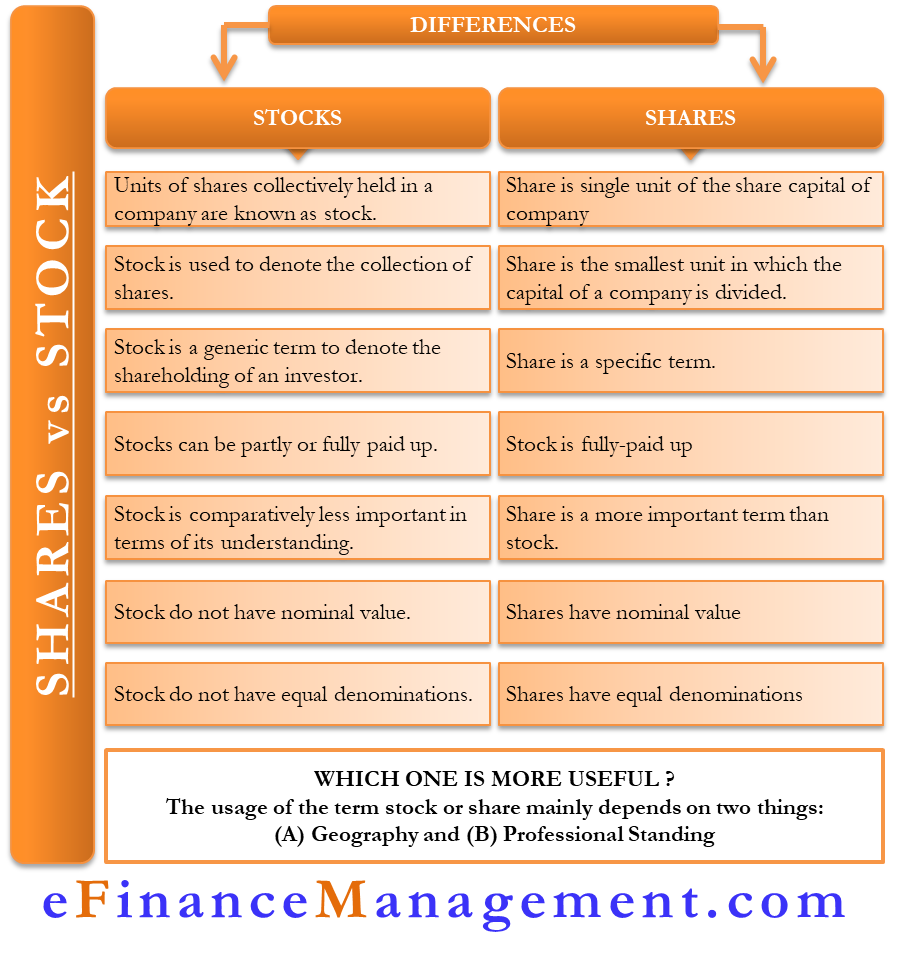
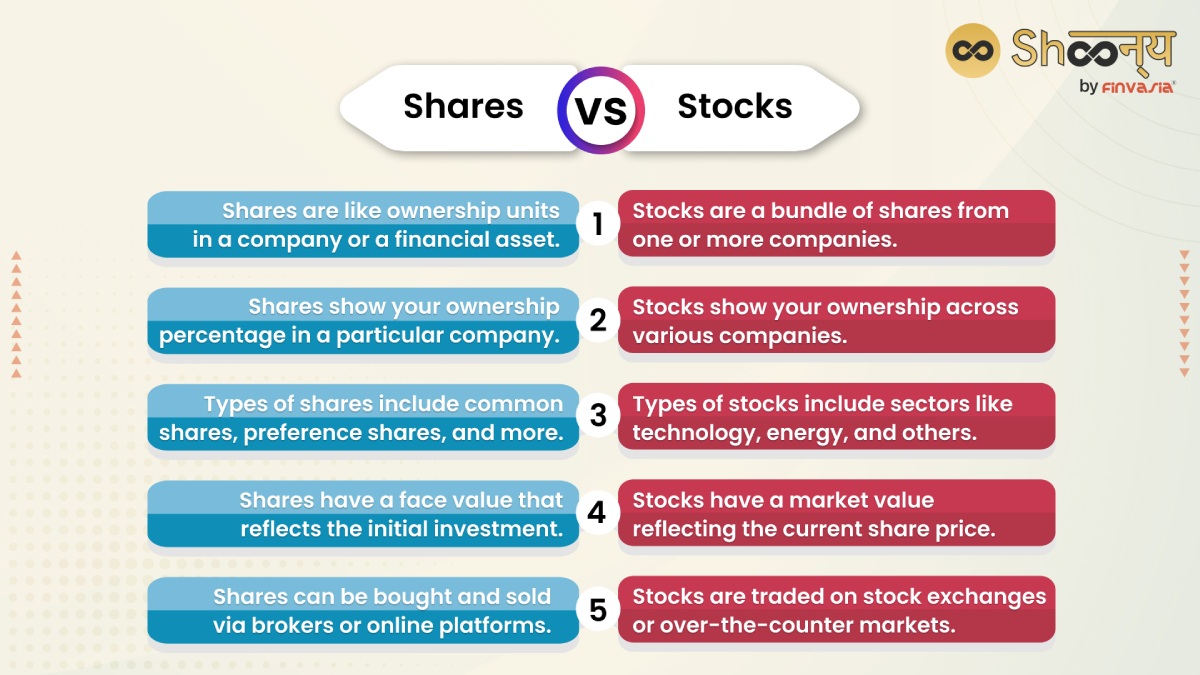
The Anatomy of Ownership: Defining Stocks and Shares
To understand stocks, one must first understand why they exist. A corporation requires capital to grow—to build new factories, develop innovative software, or expand into international markets. To raise this money, a company can either borrow it (debt) or sell a piece of the business (equity). When a company chooses the latter, it issues shares of stock.
Ownership Rights and Claims
A share is a unit of measurement for your ownership stake. If a company has 1,000,000 shares outstanding and you own 10,000 of them, you own 1% of the company. This ownership traditionally grants the shareholder three primary rights:
-
Voting Rights: Shareholders often have the right to vote on corporate policies and the election of the board of directors.
-
Claim on Assets: In the event of liquidation, shareholders have a claim on what remains after all creditors and bondholders have been paid.
-
Right to Profits: Companies may distribute a portion of their earnings directly to shareholders in the form of dividends.
Capital Accumulation for Corporations
From the perspective of a business, issuing stock is a strategic move to de-risk. Unlike a bank loan, equity does not require monthly interest payments. This allows the company to reinvest its cash flow into research and development. In exchange for this “interest-free” capital, the original founders give up a portion of their control and future profits to the public.
Categorizing the Market: Different Types of Stocks
Not all stocks are created equal. The financial markets offer a variety of instruments tailored to different risk tolerances, income needs, and growth objectives. Understanding these categories helps investors align their portfolios with their personal financial goals.
Common Stock vs. Preferred Stock
The most frequent type of stock purchased by individual investors is Common Stock. This is the standard form of equity that provides potential for long-term capital appreciation and voting rights. However, in the hierarchy of a company’s capital structure, common shareholders are at the bottom; they are the last to be paid if a company goes bankrupt.
Preferred Stock, on the other hand, functions more like a hybrid between a stock and a bond. Preferred shareholders usually do not have voting rights, but they have a higher claim on assets and earnings. Most importantly, they receive fixed dividends that must be paid out before any dividends are issued to common shareholders. For investors seeking steady income rather than aggressive growth, preferred stocks can be an attractive alternative.
Classification by Market Capitalization
Market capitalization (market cap) is the total dollar market value of a company’s outstanding shares. It is calculated by multiplying the current share price by the total number of shares. Investors generally group stocks into three buckets:
-
Large-Cap ($10 billion+): These are often “blue-chip” companies with a long history of stability and consistent earnings (e.g., Apple, Microsoft).
-
Mid-Cap ($2 billion to $10 billion): These companies are often in a growth phase, offering a balance between the stability of large-caps and the growth potential of small-caps.
-
Small-Cap ($300 million to $2 billion): These are typically younger, more volatile companies with significant room for expansion but a higher risk of failure.
Growth vs. Value Stocks
Growth stocks are companies expected to grow sales and earnings at a faster rate than the market average. These companies rarely pay dividends, preferring to reinvest every cent of profit back into the business to fuel further expansion. Value stocks are companies that appear to be trading at a price lower than what their fundamentals (earnings, sales, assets) suggest they are worth. These are often mature companies that have fallen out of favor with the market but continue to generate strong cash flow.
How the Market Functions: From IPOs to Trading
The process of a company “going public” and its subsequent trading on an exchange is a complex but highly regulated ecosystem designed to provide liquidity and transparency.
The Primary Market: Initial Public Offerings (IPOs)
The first time a company sells its stock to the public, it happens in the primary market via an Initial Public Offering (IPO). This is the only time the company actually receives money from the sale of its shares. Investment banks facilitate this process, underwriting the offering and setting an initial price. Once the IPO is complete, the shares begin trading among the public.
The Secondary Market: Stock Exchanges
The vast majority of stock trading happens on the secondary market. When you buy a share of a company today, you are not buying it from the company itself; you are buying it from another investor who wishes to sell. Platforms like the New York Stock Exchange (NYSE) or the NASDAQ serve as the central hubs where these transactions occur. These exchanges ensure that there is a fair and orderly market, providing “liquidity”—the ability to convert your shares into cash quickly and at a fair price.
The Role of Market Makers and Digital Brokerages
In the modern era, trading is almost entirely digital. Market makers are specialized firms that stand ready to buy or sell a particular stock at any time, ensuring that even if there isn’t an immediate buyer for your shares, the trade can still go through. Individual investors access this world through brokerages, which provide the software and interface to execute trades within milliseconds.
Evaluating Performance: How Investors Build Wealth
Investment success is rarely about timing the market; it is about “time in the market.” There are two primary ways an investor makes money from a stock or share.
Capital Appreciation
Capital appreciation occurs when the market price of a stock increases above the price you paid for it. This is driven by the company’s performance and investor sentiment. If a company develops a revolutionary product, its projected future earnings increase, leading more investors to want to own the stock, which drives the price up. You realize these gains only when you sell the stock—a process known as “realizing” a profit.
Dividend Investing and Compounding
Dividends are a distribution of a portion of a company’s earnings to its shareholders. For many, dividend investing is the ultimate form of passive income. High-quality companies, often referred to as “Dividend Aristocrats,” have a history of increasing their dividend payouts every year for decades. When these dividends are reinvested to buy more shares, it triggers the power of compounding—where you earn returns on your returns—exponentially growing the value of the investment over time.
Stock Splits and Buybacks
Companies also use other mechanisms to manage their share value. A stock split increases the number of shares while lowering the price per share, making the stock more accessible to retail investors without changing the company’s total valuation. Conversely, a share buyback is when a company uses its own cash to buy its shares back from the open market. This reduces the number of shares outstanding, which increases the ownership percentage of the remaining shareholders and often boosts the share price.
Risk Management and the Strategic Investor
While stocks offer high potential returns, they come with inherent risks. Price volatility is a constant feature of the equity markets, influenced by everything from geopolitical tension to changes in interest rates.
Market Volatility and Economic Cycles
Stock prices do not move in a straight line. They are subject to the laws of supply and demand, which are often influenced by human psychology—fear and greed. Economic cycles, characterized by periods of expansion (bull markets) and contraction (bear markets), dictate the general direction of the market. Understanding that volatility is the “price of admission” for stock market returns is crucial for maintaining a long-term perspective.
The Importance of Diversification
One of the most effective ways to mitigate risk is through diversification. Instead of putting all your capital into a single stock (idiosyncratic risk), investors spread their money across different sectors, industries, and geographies. This ensures that a downturn in one specific company or sector doesn’t devastate the entire portfolio. This is why many investors choose Exchange-Traded Funds (ETFs) or index funds, which allow them to own a basket of hundreds or thousands of stocks in a single transaction.

Fundamental vs. Technical Analysis
To decide which stocks to buy, investors generally use two methodologies. Fundamental analysis involves looking at the company’s financial health, including its balance sheet, income statement, management team, and competitive advantage. The goal is to determine the “intrinsic value” of the company. Technical analysis, by contrast, focuses on price charts and volume to identify patterns and trends, betting that historical price movements will repeat themselves.
Investing in stocks and shares is a journey of continuous learning. By understanding what a share truly represents—a piece of a living, breathing business—investors can move past the noise of daily market fluctuations and focus on the long-term compounding of wealth. Whether through growth-oriented tech giants or stable, dividend-paying stalwarts, the stock market remains the premier venue for participating in the global economy’s success.
aViewFromTheCave is a participant in the Amazon Services LLC Associates Program, an affiliate advertising program designed to provide a means for sites to earn advertising fees by advertising and linking to Amazon.com. Amazon, the Amazon logo, AmazonSupply, and the AmazonSupply logo are trademarks of Amazon.com, Inc. or its affiliates. As an Amazon Associate we earn affiliate commissions from qualifying purchases.