
In the landscape of business finance and entrepreneurship, certain documents serve as the foundational bedrock upon which a company is built. For many new business owners, side hustlers, and investors, the “SS-4” is one of the first and most critical pieces of paperwork they will encounter. While it may sound like just another dry tax form, the SS-4—formally known as the “Application for Employer Identification Number”—is essentially the birth certificate of a business entity in the eyes of the United States government.
Understanding the SS-4 and the resulting Employer Identification Number (EIN) is vital for anyone looking to professionalize their financial life, protect their personal assets, or scale a venture from a hobby into a legitimate corporate entity. This guide delves deep into the nuances of the SS-4 form, its financial implications, and why it is a non-negotiable tool for modern business finance.
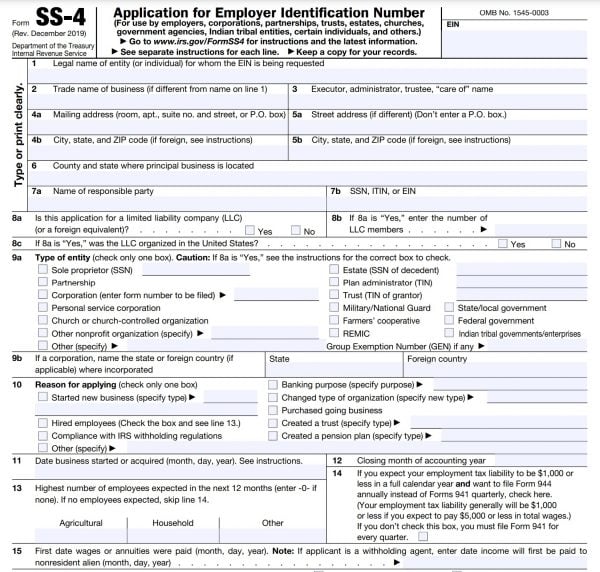
Understanding the SS-4 Form and the Employer Identification Number (EIN)
At its core, the SS-4 is the application used to obtain an Employer Identification Number (EIN). To understand the SS-4, one must first understand the EIN itself. Just as an individual is assigned a Social Security Number (SSN) to track their personal financial and tax obligations, a business is assigned an EIN to track its corporate financial activities.
Definition of Form SS-4
Form SS-4 is a document issued by the Internal Revenue Service (IRS). Its primary purpose is to collect information about a business entity, including its legal name, physical location, the “responsible party” overseeing the entity, and the reason for the application. When the IRS processes this form, they issue a unique nine-digit number that serves as the permanent identification for that business.
What is an EIN (Tax ID)?
The EIN, often referred to as a Federal Tax Identification Number, is the result of a successful SS-4 filing. It follows a format of 12-3456789. Unlike a Social Security Number, which stays with a person for life, an EIN is specific to the business entity. If a business closes or undergoes a radical structural change (such as moving from a sole proprietorship to a corporation), a new SS-4 may need to be filed to obtain a new number.
Why Your Business Needs an EIN
From a financial management perspective, the EIN is the key that unlocks professional banking and credit. Without it, a business owner is often forced to use their personal SSN for business transactions, which creates a “commingling” of funds—a dangerous practice that can lead to personal liability and tax nightmares. The EIN allows the business to exist as a separate “taxpayer” in the eyes of the law, which is the first step toward building a distinct financial identity.
Who Needs to File Form SS-4?
Not every person who earns money online or through a side hustle needs an SS-4 immediately, but the moment a venture shifts toward a formal structure, it becomes a necessity. The financial niche is diverse, and different entities have different requirements for this form.
Business Entities: LLCs, Corporations, and Partnerships
If you have formed a Limited Liability Company (LLC) with multiple members, a Partnership, or a Corporation (either S-Corp or C-Corp), you are legally required to file an SS-4. These entities are recognized as separate from their owners, and the EIN is the identifier used on all corporate tax returns. Even a single-member LLC, which is often treated as a “disregarded entity” for tax purposes, usually requires an EIN to hire employees or open a business bank account.
Sole Proprietors and Side Hustlers
For those operating as sole proprietors—individuals who own an unincorporated business by themselves—an SS-4 is not always legally mandatory. You can technically use your SSN. However, most financial advisors recommend filing an SS-4 anyway. Using an EIN instead of an SSN on W-9 forms for clients or vendors provides an extra layer of digital security and privacy, preventing your personal identity from being circulated in corporate databases.
Non-Profits, Trusts, and Estates
The SS-4 is not limited to for-profit businesses. Non-profit organizations seeking 501(c)(3) status must file an SS-4 to obtain an EIN. Similarly, when a person passes away, their estate becomes a separate legal entity that needs its own tax ID to manage assets and distribute funds to heirs. Trusts also frequently require an EIN to hold assets and file tax returns.
The Step-by-Step Process of Applying for an SS-4
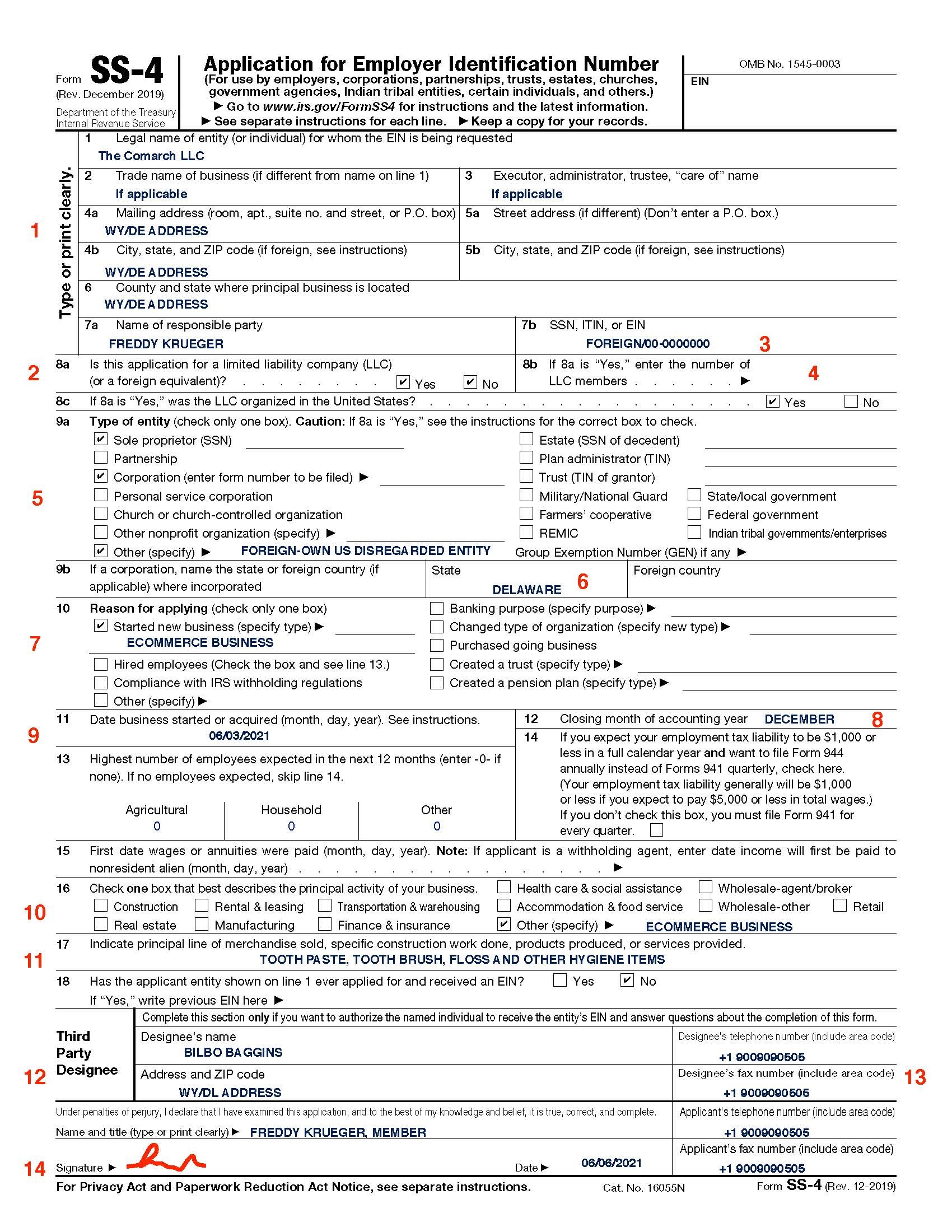
The application process for an SS-4 has been significantly streamlined in the digital age, yet it requires precision. Errors on an SS-4 can lead to delays in tax processing or issues when applying for business loans.
Online vs. Paper Applications
The most efficient way to file an SS-4 is via the IRS website. The online application is an interview-style process that, when completed successfully, provides an EIN immediately. However, the online system is only available during certain hours (typically Monday through Friday, 7 a.m. to 10 p.m. EST) and is restricted to entities where the responsible party has a valid SSN or ITIN. For international business owners or those without standard documentation, a paper or faxed version of Form SS-4 is required, which can take several weeks to process.
Required Information for the Application
To complete the SS-4, you will need several key pieces of information:
- Legal Name of Entity: This must match the name registered with the Secretary of State.
- Trade Name (DBA): If the business operates under a different name than its legal name.
- Responsible Party: The individual who controls or manages the entity. This person must provide their own SSN or ITIN.
- Type of Entity: You must specify if it is a corporation, LLC, partnership, etc.
- Reason for Applying: Common reasons include “Started a new business,” “Hired employees,” or “Opened a bank account.”
Designating a Responsible Party
A critical update in recent years is the “Responsible Party” requirement. The IRS now requires a human being—not another entity—to be listed as the person who ultimately owns or controls the business. This prevents the creation of “anonymous” entities that could be used for illicit financial activities. Identifying the correct responsible party on the SS-4 is essential for maintaining compliance with federal anti-money laundering regulations.
Navigating Common Challenges and Financial Compliance
Once the SS-4 is filed and the EIN is issued, the work doesn’t stop. The EIN becomes a permanent part of your business’s financial record, and managing the documentation associated with it is a key part of financial literacy.
Processing Times and Confirmations
When you apply online, you receive an “EIN Confirmation Notice” (Notice CP 575) as a PDF download. It is vital to save this document. This notice is the only official proof of your EIN. If you apply via mail or fax, the IRS will send this notice to your registered business address. In the world of business finance, this paper is as important as a deed to a house; you will need it for every major financial milestone your business reaches.
Misplacing Your SS-4 Confirmation
Many business owners lose their CP 575 notice and later find themselves unable to open a merchant account or apply for a grant. If this happens, you must contact the IRS to request an “EIN Verification Letter” (Letter 147C). While this serves the same purpose, it can take time to receive, which might delay urgent financial transactions.
Banking and Financial Requirements
Banks are required by the “Know Your Customer” (KYC) laws to verify the identity of any business opening an account. They will almost always ask for a copy of your SS-4 or the CP 575 confirmation notice. Without this, you cannot establish a business checking account, which is the primary tool for managing business cash flow and separating personal expenses from professional ones.
The Financial Impact of an SS-4 on Your Business Growth
The SS-4 is more than a tax form; it is a catalyst for financial growth. Obtaining an EIN through the SS-4 process opens doors that are otherwise closed to individuals.
Opening Business Bank Accounts and Merchant Services
A dedicated business bank account is the first step in “Money” management for any professional. It allows you to accept payments in the business’s name, which builds trust with customers. Furthermore, if you want to accept credit card payments through processors like Stripe, Square, or PayPal for Business, you will need an EIN to verify your business’s legal existence and financial standing.
Establishing Business Credit
One of the most significant advantages of having an EIN is the ability to build a business credit score (such as a D-U-N-S number or a Paydex score). By using your EIN for vendor accounts and small business loans, you can build a credit profile that is independent of your personal credit score. This is a game-changer for entrepreneurs who want to secure high-limit financing or equipment leases without risking their personal assets.

Hiring Employees and Payroll Taxes
If your financial goal is to scale your business by hiring help, the SS-4 is a prerequisite. You cannot legally pay employees or withhold payroll taxes without an EIN. The SS-4 notifies the IRS that you will be an employer, triggering the necessary tax schedules and reporting requirements (like Form 941 or 940). This infrastructure ensures that your business remains compliant with labor laws and tax obligations as it grows.
In conclusion, while the SS-4 might appear to be a simple administrative hurdle, it represents a significant milestone in the journey toward financial independence and business maturity. By taking the time to understand and correctly file the SS-4, you are not just checking a box for the IRS; you are building the financial foundation necessary to protect your assets, scale your operations, and participate fully in the modern economy. For any serious investor or entrepreneur, the SS-4 is the first step toward turning a vision into a viable, legally recognized financial reality.
aViewFromTheCave is a participant in the Amazon Services LLC Associates Program, an affiliate advertising program designed to provide a means for sites to earn advertising fees by advertising and linking to Amazon.com. Amazon, the Amazon logo, AmazonSupply, and the AmazonSupply logo are trademarks of Amazon.com, Inc. or its affiliates. As an Amazon Associate we earn affiliate commissions from qualifying purchases.