
The term “SOCOM barrel” has become synonymous with a particular standard of performance, durability, and reliability in the realm of firearm components, particularly for AR-15 platform rifles. Far from being a mere marketing label, a SOCOM barrel refers to a specific type of rifle barrel designed and produced to meet the rigorous specifications and operational demands of the U.S. Special Operations Command (SOCOM). These barrels embody a unique blend of material science, precision engineering, and robust construction, tailored for extreme battlefield conditions and consistent performance under stress. Understanding a SOCOM barrel requires a deep dive into its technical characteristics, the operational philosophy behind its design, and the tangible advantages it offers.
The Genesis and Purpose of SOCOM Barrels
The origins of the SOCOM barrel are deeply rooted in the evolving requirements of elite military units. Special Operations Forces operate in diverse and often unforgiving environments, demanding equipment that not only performs reliably but also endures prolonged, intensive use without degradation in accuracy or structural integrity.
Origins in Special Operations Requirements
Traditional rifle barrels, while generally robust, sometimes exhibited limitations when subjected to the continuous high rates of fire, suppressive fire, and extreme environmental exposure common in special operations. Issues such as barrel whip, premature erosion of rifling, and inconsistent accuracy when hot became critical concerns. SOCOM, with its mandate to equip and support these specialized units, initiated a process to develop or procure barrels that could withstand these unique pressures. This led to a focus on barrels that could maintain accuracy over extended strings of fire, handle significant heat buildup, and offer enhanced longevity, often with the added requirement for reliable suppressor integration. The technical requirements were stringent, pushing manufacturers to innovate in materials, manufacturing processes, and barrel profiles.
Core Design Philosophy
At its core, the SOCOM barrel’s design philosophy prioritizes unwavering reliability and consistent accuracy under adverse conditions. This is not about achieving bench-rest levels of precision, but rather about maintaining combat-effective accuracy after hundreds or thousands of rounds, through rapid temperature shifts, and with various ammunition types. The design considers factors like thermal stability, resistance to bore erosion, and structural rigidity. It represents a commitment to functional resilience, ensuring that the barrel remains a dependable component regardless of the operational tempo or environmental challenges faced by the operator. This philosophy dictates specific material choices, heat treatments, and dimensional tolerances that differentiate SOCOM barrels from standard commercial offerings.
Distinctive Technical Characteristics
The defining features of a SOCOM barrel are not immediately apparent to the untrained eye but lie in its intricate technical specifications. These characteristics combine to produce a barrel capable of superior performance in demanding applications.
Material Science and Construction
The foundation of a SOCOM barrel’s robustness begins with its material composition. Typically, these barrels are forged from high-grade chrome-moly vanadium (CMV) steel, an alloy known for its excellent strength-to-weight ratio and resistance to wear and corrosion. A critical aspect of their construction is the process of cold hammer forging (CHF). This manufacturing technique involves hammering a barrel blank over a mandrel containing the inverse impression of the rifling. CHF produces a barrel with superior metallurgical properties, including a denser, more uniform grain structure, which translates to increased durability, extended barrel life, and improved accuracy consistency.
Furthermore, SOCOM barrels almost universally feature a chrome-lined bore and chamber. Chrome lining, while adding a slight degree of surface variation that can marginally affect extreme precision compared to an unlined match barrel, offers significant advantages in terms of wear resistance and ease of cleaning. The hard chrome layer protects the bore from gas erosion, corrosive ammunition, and fouling buildup, dramatically increasing the barrel’s lifespan under high-volume fire and reducing maintenance requirements in the field. The exterior is often treated with a durable, corrosion-resistant finish, such as manganese phosphate or nitride.
Profile and Weight Distribution
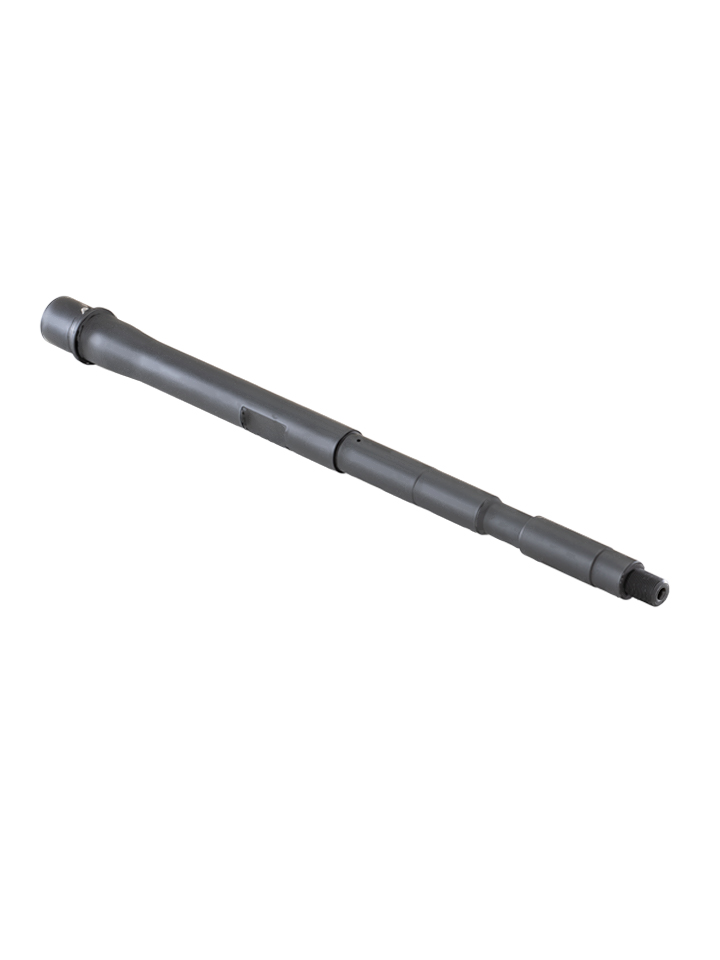
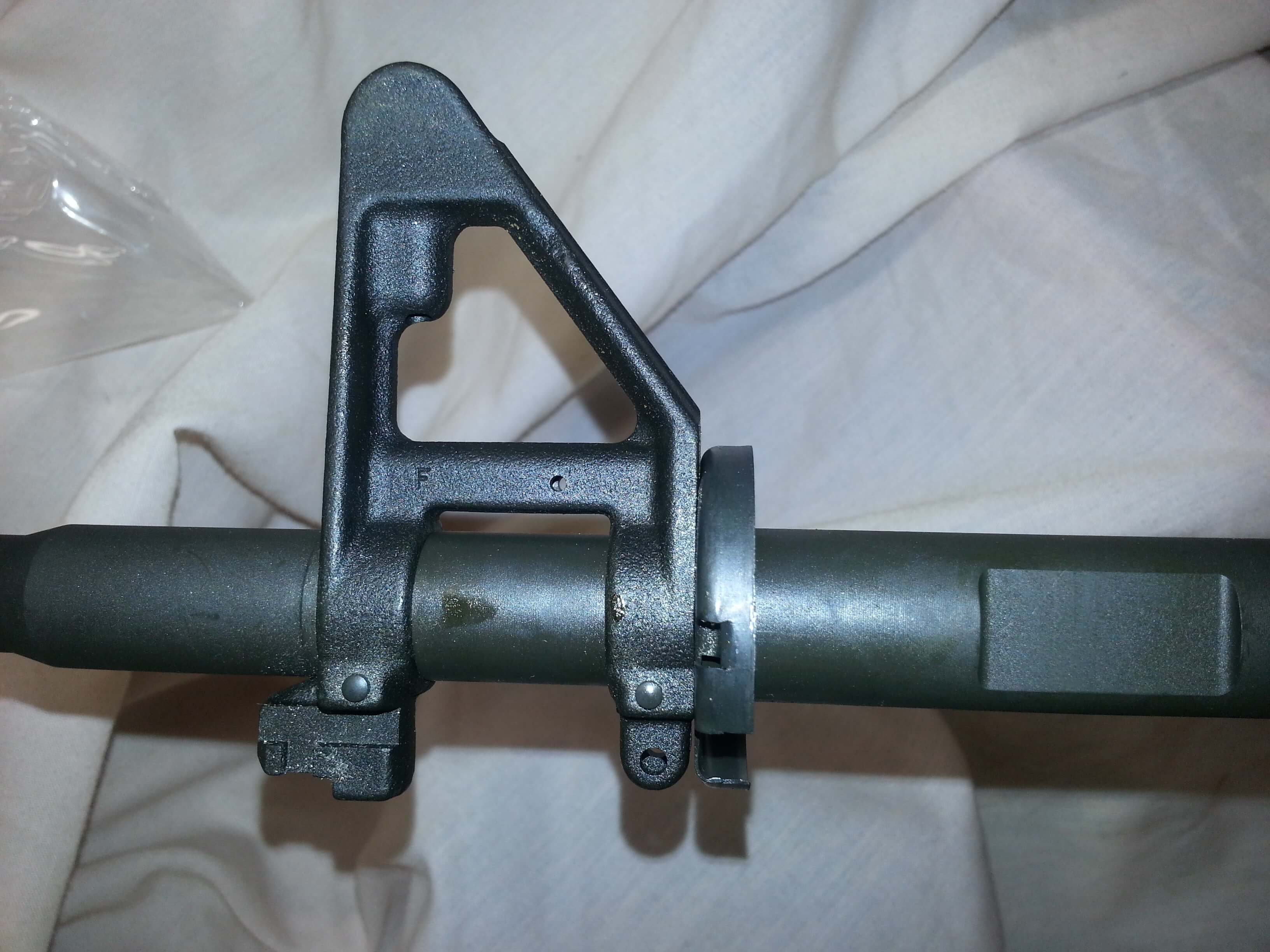
One of the most visually identifiable characteristics of a SOCOM barrel is its distinct profile. While often resembling the standard M4 “government profile” in its initial section, a true SOCOM profile barrel maintains a heavier contour under the handguards before stepping down near the gas block journal. This heavier profile, particularly in the critical area where barrel whip and heat distortion are most pronounced, adds significant rigidity. This rigidity is crucial for mitigating harmonic vibrations and thermal expansion effects, thereby preserving accuracy during sustained fire. The increased mass also acts as a heat sink, allowing the barrel to absorb more heat before performance degrades, though it does add a slight weight penalty compared to lighter, pencil-profile barrels. The precise tapering and dimensioning are carefully calibrated to balance rigidity, heat dissipation, and overall weapon balance.
Twist Rate and Chambering
SOCOM barrels are typically chambered in 5.56x45mm NATO, allowing for reliable feeding and safe firing of both 5.56 NATO and .223 Remington ammunition. The twist rate, which dictates how quickly the rifling spins the projectile, is a critical technical specification. Modern SOCOM barrels almost exclusively feature a 1:7″ (one turn in seven inches) twist rate. This faster twist rate is optimized for stabilizing heavier, longer bullets (typically 62 grains and above, including 77-grain OTM projectiles) commonly used by special operations forces for improved ballistic performance and terminal effects at extended ranges. While it can stabilize lighter bullets, its primary advantage is with the heavier loads, ensuring consistent flight and accuracy.
Muzzle Device Interface

Another non-negotiable aspect of a SOCOM barrel’s design is its robust muzzle threading and interface, specifically engineered for suppressor compatibility. The vast majority are threaded 1/2×28 TPI (threads per inch) for 5.56mm/.223 caliber, with a concentric and precisely machined muzzle crown. This meticulous attention to threading and concentricity is paramount for the reliable attachment and performance of suppressors. Poorly cut threads or an off-center bore can lead to baffle strikes, severe damage to the suppressor, and degraded accuracy. SOCOM barrels are designed to flawlessly integrate with military-spec quick-detach (QD) muzzle devices and suppressors, providing operators with the tactical advantage of reduced sound signature and flash, without compromising barrel integrity or accuracy.
Performance Advantages and Applications
The aggregation of these technical specifications translates into tangible performance benefits, making SOCOM barrels highly sought after by both military users and discerning civilian enthusiasts.
Enhanced Durability and Longevity
The combination of CHF CMV steel and chrome lining significantly extends the operational lifespan of a SOCOM barrel. Under conditions where standard barrels might quickly erode or fail, a SOCOM barrel maintains its integrity and accuracy for a much longer duration. This translates to fewer component replacements, reduced maintenance downtime, and a lower total cost of ownership for high-volume users. For military applications, this means greater readiness and fewer logistical burdens in the field.
Accuracy and Consistency Under Stress
While not designed for benchrest accuracy, SOCOM barrels excel at delivering consistent, combat-effective accuracy even after prolonged strings of fire. The heavier profile resists heat-induced warping and barrel whip, ensuring that point of impact shifts are minimized as the barrel heats up. This “cold bore to hot bore” consistency is vital for maintaining target engagement capability during dynamic situations where rapid and sustained fire may be necessary. Operators can have confidence that their weapon will perform predictably, shot after shot, regardless of the thermal state of the barrel.
Suppressor Compatibility
The careful design of the muzzle and its robust construction make SOCOM barrels ideal platforms for suppressor use. The added mass of the barrel helps to manage the increased back pressure and heat generated by a suppressor, while the precise threading ensures a secure and concentric attachment. This seamless integration allows operators to leverage the tactical advantages of suppression—reduced flash signature, lower sound levels, and mitigated recoil—without concerns about premature barrel wear or accuracy degradation often associated with suppressor use on less robust barrels.
Field Reliability in Harsh Environments
Ultimately, the SOCOM barrel is engineered for unwavering reliability in the most challenging operational environments on Earth. From desert heat and sand to arctic cold and moisture, the materials and finishes are selected to resist corrosion, abrasion, and thermal shock. The robust construction minimizes the likelihood of physical damage during rough handling, while the chrome-lined bore facilitates cleaning and reduces the impact of carbon fouling or adverse environmental contaminants. This overall resilience ensures that the weapon system remains functional and effective when it matters most.
Why Choose a SOCOM Barrel?
The specialized design and rigorous manufacturing standards of SOCOM barrels make them a preferred choice for specific applications, extending beyond military use.
Military and Law Enforcement Relevance
For military special operations units and law enforcement tactical teams, SOCOM barrels are an essential component. Their proven durability, reliability, and consistent performance under extreme conditions are non-negotiable for professionals whose lives depend on their equipment. The ability to maintain accuracy and functionality through high-volume training and real-world engagements directly contributes to operational success and operator safety.
Civilian Enthusiast Appeal
Beyond professional applications, SOCOM barrels have garnered significant appeal among civilian shooters, particularly those who participate in competitive shooting, high-volume range training, or tactical simulations. For enthusiasts seeking the ultimate in reliability and durability for their AR-15 platform, the SOCOM barrel offers a distinct advantage. It provides the confidence that their rifle can endure demanding use, perform consistently, and reliably host suppressors, mirroring the capabilities relied upon by elite forces.
Considerations for Custom Builds
When undertaking a custom AR-15 build, selecting a SOCOM barrel can be a pivotal decision. While it adds a slight weight penalty compared to lighter profiles, the trade-off is a significant gain in thermal stability and rigidity, particularly beneficial for rifles intended for sustained fire or suppressor use. Builders looking for a “do-it-all” barrel that prioritizes robust performance and longevity over minimal weight or absolute benchrest precision will find a SOCOM barrel to be an excellent, technically sound investment. Its compatibility with a wide range of muzzle devices and suppressors also offers flexibility in configuring the firearm to specific needs.
aViewFromTheCave is a participant in the Amazon Services LLC Associates Program, an affiliate advertising program designed to provide a means for sites to earn advertising fees by advertising and linking to Amazon.com. Amazon, the Amazon logo, AmazonSupply, and the AmazonSupply logo are trademarks of Amazon.com, Inc. or its affiliates. As an Amazon Associate we earn affiliate commissions from qualifying purchases.