
In the modern economic landscape, the term “social service agency” often evokes images of community centers, food banks, or government departments. However, from a business and financial perspective, a social service agency represents a sophisticated organizational model designed to manage capital, human resources, and legislative compliance to address specific societal gaps. Whether operating as a non-profit, a for-profit entity, or a government-contracted organization, these agencies are essential pillars of the economy. Understanding what a social service agency is requires a deep dive into its financial structures, revenue models, and its role within the broader fiscal ecosystem.
The Economic Anatomy of a Social Service Agency
At its core, a social service agency is a business entity focused on the delivery of services that improve the well-being of individuals, families, and communities. While their primary mission is social impact, their operational reality is rooted in rigorous financial management and strategic planning.
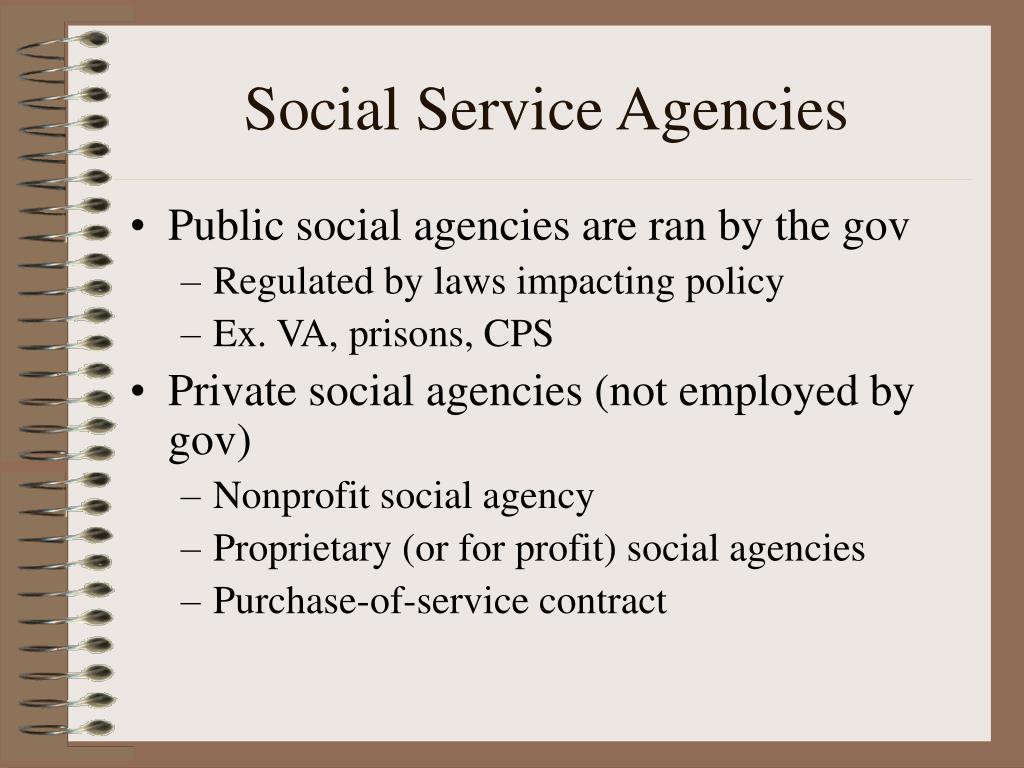
The Legal Framework: Non-Profit vs. For-Profit
The financial identity of a social service agency is largely determined by its legal structure. In many jurisdictions, these agencies operate as 501(c)(3) non-profit organizations. This status is not merely a label; it is a tax designation that allows the agency to exempt itself from federal income taxes, provided that its “profits” are reinvested into its mission rather than distributed to shareholders.
Conversely, the rise of “social entrepreneurship” has birthed a new wave of for-profit social service agencies. These entities operate on a “double bottom line” approach, seeking to generate a financial return for investors while simultaneously achieving measurable social outcomes. This distinction is critical for anyone looking at the sector through a “Money” lens, as the investment strategies and capital requirements differ vastly between the two.
Service Specialization and Market Positioning
Social service agencies are rarely generalists. To remain financially viable and effective, they must specialize in specific market segments. These include:
- Healthcare and Mental Health: Managing high-overhead clinics and specialized staff.
- Child Welfare: Navigating complex government reimbursement models for foster care or adoption services.
- Employment and Vocational Training: Functioning as a bridge between marginalized labor pools and the private sector.
- Housing and Homelessness: Managing real estate portfolios and capital-intensive shelter programs.
Diverse Revenue Streams and Fiscal Sustainability
One of the most complex aspects of a social service agency is its revenue model. Unlike a traditional retail business that relies on a direct customer-to-business transaction, social service agencies often employ a “third-party payer” system. This complexity necessitates sophisticated financial tools and expert fiscal management.
Government Contracts and Grant Management
For many agencies, the primary source of income is government funding. This can take the form of federal, state, or municipal grants and contracts. Navigating this landscape requires a deep understanding of public finance. Agencies often bid for contracts to provide services that the government has a legal mandate to provide but lacks the localized infrastructure to execute. This creates a stable, albeit highly regulated, revenue stream. However, the financial risk is high; a change in political leadership or a budget cut can lead to an overnight loss of funding.
Private Philanthropy and Impact Investing
To diversify their income, agencies look toward private wealth. This includes traditional donations from individuals and foundations, but more recently, it has evolved into “Impact Investing.” In this model, private investors provide “patient capital” to agencies, expecting a return on investment that is tied to specific social milestones. For example, a social service agency focused on recidivism might receive funding from an investor who is repaid by the government based on the money saved through reduced prison costs.
Fee-for-Service Models
Many modern agencies are adopting “sliding scale” fee structures. This allows them to generate earned income from clients who can afford to pay, which is then used to cross-subsidize services for those who cannot. This move toward a more commercial business model is a key trend in ensuring long-term financial sustainability and reducing “grant dependency.”

The Impact of Social Services on Local and Macro Economies
While social service agencies are often viewed through the lens of “charity,” they are significant economic drivers. Their financial health directly correlates with the economic stability of the regions they serve.
Human Capital and Workforce Participation
By providing vocational training, childcare, and mental health support, social service agencies act as a support system for the local labor market. When an agency helps a formerly unemployed individual gain a certification and a job, it increases the local tax base and reduces public expenditure on welfare. This “Social Return on Investment” (SROI) is a metric that savvy business financiers use to measure the true value of an agency beyond its balance sheet.
Job Creation and Direct Economic Contribution
The social service sector is a massive employer. From licensed clinicians and social workers to administrative staff and facility managers, these agencies support millions of jobs. In many mid-sized cities, a large social service agency may be one of the top ten employers. The payroll taxes, local spending by employees, and the agency’s procurement of goods and services (from office supplies to technology) inject significant capital back into the private sector.
Financial Management and Compliance in the Social Sector
Operating a social service agency requires a high degree of financial literacy and the use of sophisticated financial tools. Because they often manage “public money,” the level of scrutiny and audit requirements is significantly higher than in many private-sector industries.
Restricted vs. Unrestricted Funds
A unique financial challenge for these agencies is the management of restricted funds. When a donor or a government body provides money for a specific program (e.g., “Youth Literacy in Ward 4”), the agency cannot legally use that money for any other purpose, even if their rent is due. Mastering the “fund accounting” method is essential for an agency’s survival, as mismanagement can lead to legal penalties and the loss of tax-exempt status.
Overhead and the “Starvation Cycle”
A major point of contention in the business of social services is the “overhead ratio.” For years, donors and watchdogs pressured agencies to keep administrative costs low. However, financial experts now recognize the “Nonprofit Starvation Cycle,” where underfunding infrastructure (like IT security, HR, and financial software) leads to organizational failure. Modern agencies are now focusing on “full-cost recovery” models, ensuring that every grant and contract covers the actual business costs of staying operational.
The Rise of Social Entrepreneurship and For-Profit Agencies
As the demand for social services outpaces government budgets, a new frontier of “social service business” has emerged. This is where “Money” meets “Mission” in its most literal sense.
Scalable Business Models for Social Good
The modern entrepreneur sees social gaps not just as problems, but as market opportunities. For-profit agencies are increasingly entering the space of elder care, behavioral health, and specialized education. These agencies utilize private equity and venture capital to scale quickly, using technology and data analytics to drive efficiency in a way that traditional non-profits often struggle to do.
The Future of Social Service Finance
We are seeing a convergence of the non-profit and for-profit worlds. B-Corps (Benefit Corporations) are becoming a popular structure for social service agencies, as they allow for profit-making while legally obligating the board to consider social impact alongside shareholder value. This evolution is attracting a new class of “fintech” and financial advisory services tailored specifically to the social sector, providing tools for real-time impact tracking and complex multi-source revenue management.

Conclusion
A social service agency is far more than a charitable endeavor; it is a complex financial entity that sits at the intersection of public policy, private capital, and community need. Whether it is managing multi-million dollar government contracts, navigating the nuances of fund accounting, or pioneering new models of impact investing, these agencies are businesses in every sense of the word. For the financially minded individual, understanding the social service agency is key to understanding how capital can be deployed to create a more stable, productive, and equitable economy. By treating social impact as a measurable and fundable asset, these agencies ensure that the “business of doing good” is both sustainable and scalable.
aViewFromTheCave is a participant in the Amazon Services LLC Associates Program, an affiliate advertising program designed to provide a means for sites to earn advertising fees by advertising and linking to Amazon.com. Amazon, the Amazon logo, AmazonSupply, and the AmazonSupply logo are trademarks of Amazon.com, Inc. or its affiliates. As an Amazon Associate we earn affiliate commissions from qualifying purchases.