
The quest for the perfect pair of shoes often leads us down a labyrinth of sizing charts, international conversions, and seemingly arbitrary numbers. For many, a “size 42” in women’s footwear can be a source of confusion, especially when navigating the global marketplace. This isn’t just about a number; it’s about understanding a system, the technological underpinnings of its creation, and how this knowledge empowers smart consumers to make informed purchasing decisions in an increasingly interconnected world. While the immediate question might seem purely practical, delving into the “what” of a size 42 reveals a fascinating intersection of standardization, international trade, and the digital tools that help us bridge these gaps.
The Evolution of Shoe Sizing: From Craft to Code
The seemingly simple act of assigning a shoe size is a testament to centuries of evolution, moving from artisanal measurements to the standardized systems we rely on today. Understanding this history provides context for why different sizing conventions exist and how technology has played a role in harmonizing them.
Ancient Origins and Early Standardization
Historically, shoe sizing was far from universal. Cobblers would often measure feet directly or use rudimentary guides based on body parts or even agricultural units. In Europe, for example, the “barleycorn” system, dating back to the medieval period, was prevalent, where a barleycorn was roughly one-third of an inch. This system, while an early attempt at standardization, lacked precision and varied significantly by region. The British shoe sizing system, which evolved from this, still retains some of these early principles, measuring in units of one-third of an inch.
The need for more consistent sizing emerged with the rise of mass production and the burgeoning shoe industry. As factories began producing shoes in larger quantities, predictable and reproducible sizing became crucial for efficient manufacturing and retail. This led to the development of national sizing standards. However, the divergence between these national standards—particularly between the United States, the United Kingdom, and continental Europe—created the very confusion that shoppers face today. Each system developed its own scale, often with different starting points and increments, making direct conversion a challenge.
The Impact of Globalization and E-commerce
The advent of globalization and, more recently, e-commerce has amplified the need for clear and accessible international sizing information. Consumers are no longer limited to local retailers; they can purchase shoes from brands and boutiques all over the world. This accessibility, while a boon for choice, also presents a significant hurdle if sizing is not clearly communicated. A shopper in the United States looking at a European brand’s website might find a “size 42” listed, but without proper guidance, they wouldn’t know if this translates to a US women’s size 10, 11, or something else entirely.
This is where technology begins to play a crucial role. E-commerce platforms and brands have invested in developing sophisticated tools to bridge these international divides. Online sizing converters, often powered by complex algorithms, are now commonplace. These tools, while appearing simple to the end-user, rely on vast databases of historical and current sizing information, cross-referenced and updated regularly. They are a direct technological response to the challenges posed by a globally interconnected retail landscape. The development and continuous improvement of these digital solutions are essential for facilitating seamless cross-border commerce in the fashion industry.
Deciphering Size 42: The European Footwear Standard
The designation “size 42” is most commonly associated with the European (EU) shoe sizing system. This system, often referred to as the Continental or Paris Point system, is distinct from US and UK sizing and forms the basis for understanding what a size 42 truly represents for women.
The Paris Point: A Millimeter-Based System
Unlike the inch-based UK system, the EU sizing system is based on the Paris Point, which is equal to two-thirds of a centimeter (approximately 6.67 millimeters). Each increase in a full EU size represents one Paris Point, or approximately 6.67mm, in the length of the shoe last (the mold used to create the shoe). This means that the difference between a size 41 and a size 42 is roughly 6.67mm.
The starting point of the EU system is also different. While US and UK sizes often begin with smaller numerical values for smaller feet, the EU system generally starts with lower numbers and progresses upwards. A size 42 EU is a mid-to-larger size within the women’s range, catering to individuals with longer feet. It’s important to note that shoe manufacturers may have slight variations in their sizing even within the EU system, but the Paris Point provides a standardized framework.
Converting Size 42: Bridging the Gap with Digital Tools
The most common challenge for consumers outside of Europe is converting this EU size into their familiar US or UK measurements. This is where digital tools and the underlying data they utilize become invaluable.
-
Online Sizing Charts and Converters: Most international fashion retailers and shoe brands provide comprehensive sizing charts on their websites. These charts typically include columns for EU, US, UK, and sometimes even other regional sizing systems, alongside a measurement in centimeters or inches to help customers find the closest match. Advanced online stores might even offer interactive sizing guides that ask for your foot length in centimeters (measured heel-to-toe) and then automatically suggest the corresponding EU size and its international equivalents.
-
The Role of Data and Algorithms: Behind these seemingly simple conversion charts lies a significant amount of data. Retailers and brands collect data on customer purchases, returns due to sizing issues, and feedback to refine their conversion algorithms. This data-driven approach helps them to more accurately predict how an EU size 42, for instance, will translate to different national sizing conventions, taking into account typical foot shapes and brand-specific fits. The accuracy of these digital tools directly impacts customer satisfaction and reduces the friction of international online shopping.
-
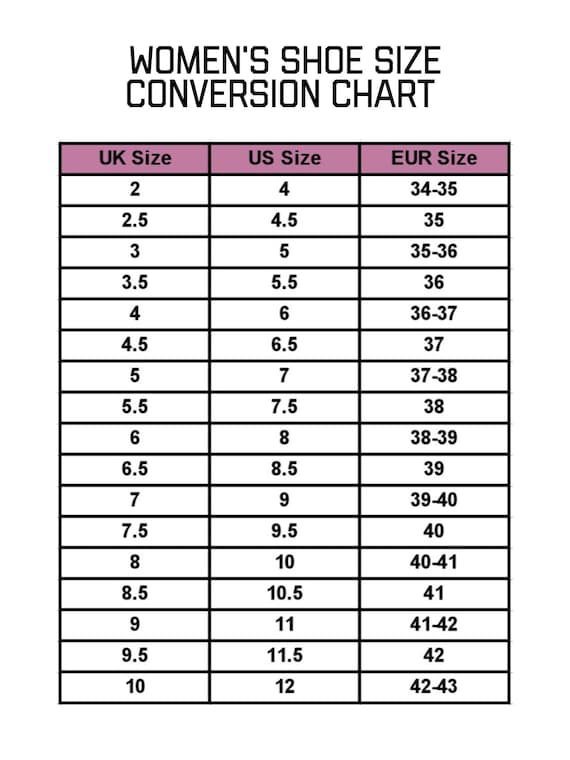
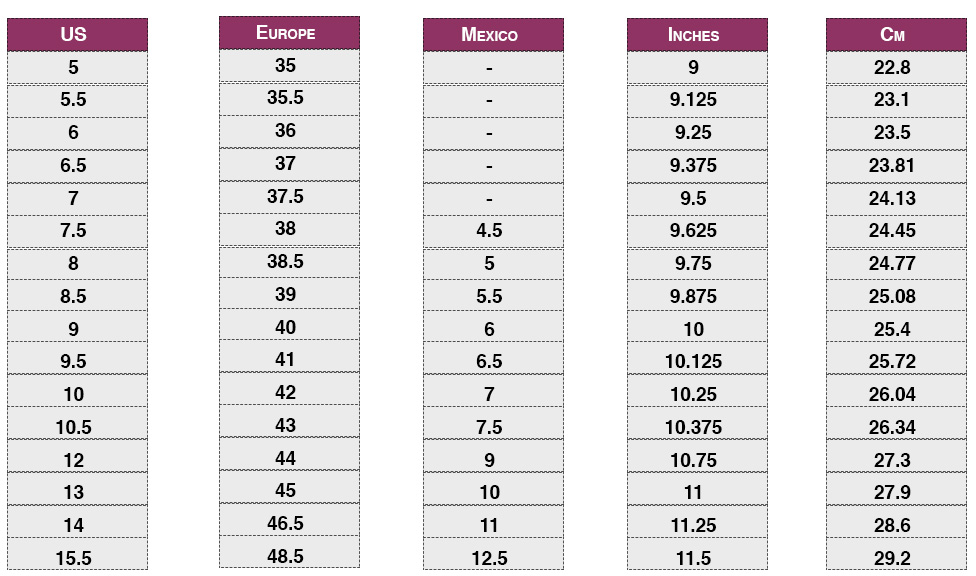
General Conversion Guidelines (with caveats): While precise conversion is best achieved through official charts, general guidelines can offer an initial estimation. Typically, a women’s EU size 42 equates to a US women’s size 10 to 10.5, and a UK women’s size 8 to 8.5. However, these are approximations. Factors like the width of the shoe, the style of the shoe (e.g., a heel versus a sneaker), and the specific brand’s manufacturing tolerances can all influence the actual fit. Therefore, always consulting the brand’s specific sizing guide is paramount.
Technology’s Impact on Sizing Accuracy and Consumer Empowerment
The challenges of international shoe sizing have been a fertile ground for technological innovation, leading to tools that not only simplify conversions but also aim to improve the overall accuracy of finding the right fit, even for less common sizes like a 42.
Advanced Measurement Technologies
Beyond simple charts, some forward-thinking brands and tech companies are exploring more advanced methods to ensure accurate sizing.
-
3D Foot Scanning: Emerging technologies utilize smartphone cameras or dedicated scanners to create 3D models of a customer’s feet. These models can capture intricate details like arch height, instep, and width, providing a much more precise measurement than a simple length and width. When purchasing shoes online, a customer could theoretically submit their 3D foot scan, and the system would recommend the best-fitting size across different brands and styles, including identifying the closest match for an EU 42. This technology promises to revolutionize online shoe shopping, reducing the guesswork and returns associated with incorrect sizing.
-
AI-Powered Fit Recommendations: Artificial intelligence (AI) is increasingly being employed to analyze vast datasets of customer feedback, return reasons, and product dimensions. AI algorithms can learn to predict how a specific shoe model will fit different foot types, even taking into account subtle variations. For example, an AI might identify that while a standard EU 42 is generally a US 10.5, a particular brand’s running shoe in that size tends to run narrow, and therefore recommend a US 11 for a customer with wider feet who is looking for that EU 42 equivalent. This sophisticated analysis goes beyond simple numerical conversion.
The Data Economy of Sizing
The collection and analysis of sizing data have become a crucial component of the modern fashion industry’s digital economy.
-
Brand-Specific Sizing Databases: Leading fashion brands and retailers maintain extensive internal databases that map their own sizing conventions to international standards. This requires continuous data collection and analysis. When a customer searches for “what is a size 42 in women’s shoes” on a specific brand’s website, they are likely accessing this proprietary database, which has been curated and refined over time. The accuracy of these internal databases is a competitive advantage, as it directly influences customer satisfaction and loyalty.
-
Personalized Sizing Profiles: In the future, it is conceivable that consumers will have personalized sizing profiles stored securely, which they can share with retailers. These profiles, built upon past purchases, foot scans, and even biometric data, would allow for highly accurate size recommendations across all brands, effortlessly translating an EU 42 into the perfect fit for that individual. This level of personalization, driven by sophisticated data management and AI, represents the next frontier in e-commerce, making the once-daunting task of international shoe sizing a seamless experience.
Strategic Shopping: Leveraging Digital Tools for Size 42 Confidence
Understanding what a size 42 represents is only the first step. Empowering yourself with the right digital tools and strategic approaches can ensure that your shoe purchases, regardless of origin, are successful and satisfying.
Navigating Online Retailer Platforms
When faced with a size 42, approaching online shopping with a plan is key to avoiding disappointment.
-
Prioritize Official Brand Sizing Guides: Never rely solely on generic conversion charts. Always seek out the specific sizing guide provided by the brand you are interested in. These guides are the most accurate representation of how their footwear translates across different sizing systems. Look for clear indications of EU sizing alongside US, UK, and potentially CM/inch measurements.
-
Read Product Reviews for Sizing Feedback: Customer reviews are an invaluable resource. Many shoppers will explicitly mention whether a shoe runs true to size, large, or small. Look for comments from customers who have also purchased the same size you are considering (e.g., “I usually wear a US 10.5, and the EU 42 was a perfect fit” or “This EU 42 felt tighter than my usual US 10”). This real-world feedback can offer crucial insights that even the most sophisticated sizing charts might not capture.
-
Utilize Interactive Sizing Tools: Many modern e-commerce sites offer interactive sizing tools. These might ask you to input your foot length in centimeters or to compare the fit of a shoe you already own. By engaging with these tools, you leverage the platform’s data and algorithms to get a more personalized recommendation, increasing your confidence in selecting the correct size 42 equivalent.

The Importance of Measurement and Understanding Fit
While technology provides approximations, a foundational understanding of your own foot measurements remains critical.
-
Accurate Foot Measurement Techniques: To confidently translate an EU size 42, know your own foot’s measurements. The most reliable method is to stand on a piece of paper with your heel against a wall, and mark the longest point of your toe. Measure from the heel to this mark in centimeters. Do the same for your widest point if width is a concern. This measurement in centimeters is often the most universal and accurate way to compare across different sizing systems.
-
Understanding “Fit” Beyond Size: Remember that “fit” is not just about the numerical size. Factors like the width of the shoe (narrow, regular, wide), the toe box shape, the arch support, and the material of the shoe all contribute to how it feels on your foot. An EU size 42 in a sleek stiletto will fit and feel very differently than an EU size 42 in a chunky sneaker. Consider the intended use of the shoe and how different styles might accommodate your foot shape, even at the same numerical size.
In conclusion, the question “what is a size 42 in women’s shoes” opens a window into the complex, yet increasingly navigable, world of international footwear sizing. Driven by technological advancements in data analysis, measurement, and AI, the ability to confidently purchase shoes across borders is more accessible than ever. By understanding the history, the systems, and leveraging the digital tools at our disposal, consumers can transform potential confusion into a strategic advantage, ensuring that every step taken in their new shoes is a comfortable and well-informed one.
aViewFromTheCave is a participant in the Amazon Services LLC Associates Program, an affiliate advertising program designed to provide a means for sites to earn advertising fees by advertising and linking to Amazon.com. Amazon, the Amazon logo, AmazonSupply, and the AmazonSupply logo are trademarks of Amazon.com, Inc. or its affiliates. As an Amazon Associate we earn affiliate commissions from qualifying purchases.