
At the heart of global finance lies an intricate and indispensable institution: the securities exchange. Far more than just a marketplace, a securities exchange is a highly regulated financial ecosystem where buyers and sellers convene to trade a vast array of financial instruments, primarily stocks, bonds, and other derivatives. It serves as a vital artery for capital flow, enabling businesses to raise funds for growth and providing investors with opportunities to participate in the economic landscape. Understanding the fundamental nature and operations of a securities exchange is crucial for anyone looking to navigate the world of finance, from individual investors to large institutional players.

The Core Function of a Securities Exchange
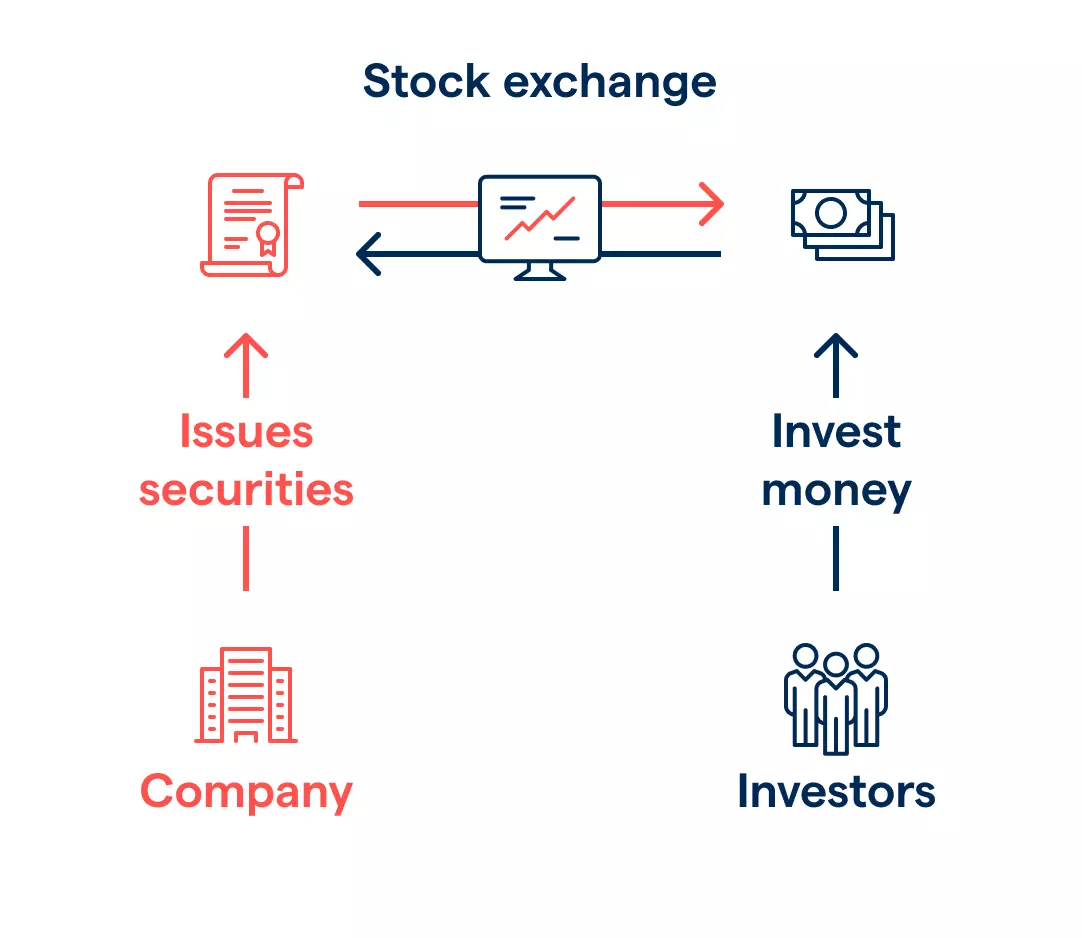
A securities exchange fulfills several critical functions that underpin the health and efficiency of modern economies. These functions extend beyond simply facilitating transactions, touching upon capital formation, liquidity, and market transparency.
Facilitating Capital Formation
One of the primary roles of a securities exchange is to facilitate capital formation. For companies, going public or issuing bonds through an exchange provides access to a broad pool of capital from investors. Instead of relying solely on bank loans or private funding, businesses can tap into public markets to raise significant funds needed for expansion, research and development, acquisitions, or to pay down debt. This process, often initiated through an Initial Public Offering (IPO) for stocks or a bond issuance, transforms private capital into productive investments, driving economic growth and job creation. Without exchanges, companies would face immense challenges in securing the necessary funding to innovate and scale.
Providing Liquidity for Investors
Liquidity is the ease with which an asset can be converted into cash without affecting its market price. A securities exchange provides unparalleled liquidity for financial instruments. Once shares or bonds are issued, investors need a venue where they can readily sell their holdings if they wish to exit an investment or reallocate their capital. The continuous trading environment on an exchange ensures that there is almost always a buyer for a seller and vice versa. This liquidity is paramount for investors, as it reduces the risk of being stuck with an illiquid asset and encourages participation in capital markets. Knowing they can convert their investments back into cash relatively quickly and at a fair market price provides confidence and flexibility.
Price Discovery and Market Transparency
Securities exchanges are powerful mechanisms for price discovery. The constant interplay of supply and demand from a multitude of buyers and sellers, all acting on their own information and expectations, determines the fair market price of a security at any given moment. This dynamic process ensures that prices reflect all available public information, making markets more efficient. Furthermore, exchanges promote market transparency by publishing real-time trading data, including bid and ask prices, trade volumes, and executed transaction prices. This transparency allows all participants to make informed decisions, reduces information asymmetry, and helps to maintain investor confidence in the fairness of the market. Regulators also rely on this transparency to monitor for unusual trading activities and potential market abuses.
Key Players and Instruments on an Exchange
The vibrant activity on a securities exchange involves a diverse range of participants and a wide array of financial products. Understanding who trades what is essential to grasping the market’s dynamics.
Equities (Stocks)
Stocks, also known as equities, represent ownership stakes in a company. When you buy a stock, you become a shareholder, entitling you to a portion of the company’s assets and earnings, and often a right to vote on corporate matters. Exchanges are the primary venues for trading stocks, ranging from blue-chip companies to emerging growth firms. Stock trading allows investors to benefit from capital appreciation (when the stock price rises) and potentially from dividends (a share of the company’s profits). The secondary market for stocks, facilitated by exchanges, is where existing shares are traded between investors, setting the company’s valuation and providing an ongoing measure of its perceived worth.
Fixed-Income Securities (Bonds)
Bonds are debt instruments issued by governments, municipalities, and corporations to raise capital. When you buy a bond, you are essentially lending money to the issuer in exchange for periodic interest payments and the return of your principal at maturity. While some bonds trade over-the-counter (OTC) or directly between institutions, many corporate and government bonds are also listed and traded on exchanges. Exchanges provide a transparent platform for bond trading, contributing to their liquidity and helping investors manage their fixed-income portfolios. Bonds are often seen as less volatile than stocks and play a crucial role in diversifying investment portfolios.
Derivatives and Other Financial Products
Beyond stocks and bonds, securities exchanges also facilitate the trading of derivatives, which are financial contracts whose value is derived from an underlying asset, index, or rate. Common derivatives include options, futures, and swaps. These instruments are used for hedging risks, speculating on future price movements, or gaining exposure to markets with less capital. Additionally, exchanges may list Exchange Traded Funds (ETFs), mutual funds, commodities (via futures contracts), and other structured products. The availability of such a diverse range of instruments allows investors to implement sophisticated strategies and tailor their exposure to various market segments.
Brokers, Dealers, and Market Makers
Individual investors typically do not trade directly on an exchange. Instead, they interact with brokers, who are licensed financial professionals or firms that execute trades on behalf of their clients. Brokers act as intermediaries, connecting investor orders to the exchange’s trading system. Dealers, on the other hand, trade for their own accounts, often taking positions in securities with the aim of profiting from price differences. Market makers are a specialized type of dealer crucial for market liquidity. They continuously quote both bid (buy) and ask (sell) prices for a given security, standing ready to buy from sellers and sell to buyers, thus ensuring there is always a counterparty for a trade, even in less liquid markets. Their role is vital for maintaining tight spreads and smooth trading.
How Securities Exchanges Operate
The seamless functioning of a securities exchange relies on sophisticated systems, clear rules, and robust processes.
Listing Requirements and Regulations
Before a company’s securities can be traded on an exchange, they must meet stringent listing requirements. These typically include minimum financial thresholds (e.g., market capitalization, earnings, shareholder equity), governance standards (e.g., independent directors, audit committees), and disclosure obligations. These requirements ensure that only reputable and financially sound companies are listed, protecting investors. Once listed, companies must adhere to ongoing reporting requirements, such as quarterly and annual financial statements, and promptly disclose any material information that could affect their stock price. These regulations are enforced by the exchange itself and often by government regulatory bodies (e.g., the SEC in the U.S.).
Trading Mechanisms: Order-Driven vs. Quote-Driven
Exchanges employ different trading mechanisms to match buyers and sellers. In an order-driven system, orders are placed directly into an electronic order book, which displays the quantity of securities buyers are willing to purchase (bids) and sellers are willing to offer (asks) at various prices. Trades are executed when a matching buy and sell order meet. This system is common for highly liquid stocks. A quote-driven system, or dealer market, relies more heavily on market makers. Participants trade with market makers who continually provide firm quotes for buying and selling securities. These systems are often used for less liquid securities or certain bond markets. Modern exchanges often blend aspects of both, utilizing advanced algorithms to ensure efficient order matching and execution.
Settlement and Clearing Processes
Once a trade is executed, it must be settled and cleared. Clearing involves confirming the details of the trade (who bought, who sold, at what price) and ensuring that both parties have the necessary funds or securities to complete the transaction. Settlement is the final step where ownership of the securities is transferred to the buyer, and payment is transferred to the seller. This process is typically handled by clearing houses and central depositories, which act as intermediaries to reduce counterparty risk. The standard settlement period, often “T+2” (trade date plus two business days), ensures that transactions are finalized efficiently and securely, minimizing potential defaults and errors.
Technological Infrastructure
The evolution of securities exchanges has been profoundly shaped by advancements in technology. Today’s exchanges operate on highly sophisticated electronic trading platforms, capable of processing millions of transactions per second. High-speed data networks, powerful servers, and complex algorithms are essential for real-time price dissemination, order matching, and risk management. Cybersecurity is paramount to protect against hacking and data breaches, given the sensitive financial information involved. This technological backbone has replaced the traditional “open outcry” pits, enabling global access, increased trading volumes, and greater efficiency.
The Role of Regulation and Oversight
Securities exchanges operate within a robust framework of regulation and oversight designed to protect investors, maintain fair and orderly markets, and preserve financial stability.
Protecting Investors and Ensuring Fair Practices
Regulatory bodies, such as the Securities and Exchange Commission (SEC) in the United States, the Financial Conduct Authority (FCA) in the UK, or national market regulators globally, oversee exchanges and market participants. Their mandate includes ensuring that exchanges operate fairly, transparently, and in the best interest of investors. This involves enforcing rules regarding disclosure, trading practices, and preventing fraudulent activities. Regulations aim to level the playing field, ensuring that all investors have access to the same material information and that market prices are not manipulated by a select few.
Preventing Market Manipulation
A critical aspect of regulation is the prevention of market manipulation. This includes practices like insider trading (trading based on non-public information), spoofing (placing large orders with no intention of executing them to influence prices), front-running (brokers trading ahead of client orders), and wash sales (simultaneously buying and selling the same security to create a misleading impression of activity). Regulators use advanced surveillance systems and data analytics to detect and investigate suspicious trading patterns, imposing severe penalties on those found to be engaging in manipulative behavior. This vigilance is crucial for maintaining integrity and investor trust.
International Cooperation and Harmonization
Given the globalized nature of financial markets, international cooperation among regulatory bodies is increasingly important. Cross-border listings and multi-national investment flows necessitate coordinated efforts to share information, enforce regulations, and address systemic risks. Initiatives to harmonize accounting standards, disclosure requirements, and trading rules across different jurisdictions help facilitate international investment and reduce regulatory arbitrage. Organizations like the International Organization of Securities Commissions (IOSCO) play a key role in promoting such collaboration and setting global standards.
The Evolution and Future of Exchanges
Securities exchanges have undergone a profound transformation throughout history and continue to evolve in response to technological innovation and global economic shifts.
From Open Outcry to Electronic Trading
Historically, trading on exchanges occurred in bustling “pits” or “trading floors” where traders used hand signals and shouted orders (open outcry) to execute trades. Iconic images of the New York Stock Exchange floor or the Chicago Board of Trade epitomized this era. However, the advent of computer technology in the late 20th century revolutionized this system. Electronic trading platforms began to replace physical floors, offering greater speed, efficiency, and lower costs. Today, most major exchanges are predominantly electronic, with trades executed in milliseconds across vast data centers, making global markets accessible to a wider range of participants.
Globalization and Cross-Border Listings
The rise of electronic trading has also fueled the globalization of financial markets. Companies increasingly list their shares on multiple exchanges across different countries to tap into broader investor bases and enhance their brand visibility. This cross-border listing trend has led to greater interconnectedness between national markets, with events in one region often having ripple effects worldwide. Exchanges themselves have also expanded globally, through mergers, acquisitions, and strategic alliances, creating larger, more integrated market infrastructure providers.
The Impact of Fintech and Blockchain
The financial technology (Fintech) revolution is driving the next wave of change for securities exchanges. Distributed Ledger Technology (DLT), particularly blockchain, holds the potential to further streamline clearing and settlement processes, reducing costs and enhancing security through immutable records. Tokenization of assets, where ownership rights are represented by digital tokens on a blockchain, could broaden access to markets and create new types of tradable securities. Artificial intelligence (AI) and machine learning are also being deployed for sophisticated risk management, fraud detection, and even algorithmic trading strategies. These innovations promise to reshape market structures, potentially leading to more efficient, transparent, and resilient exchanges.

Emerging Markets and New Opportunities
While established exchanges in New York, London, Tokyo, and other financial hubs continue to dominate, exchanges in emerging markets are growing rapidly. As economies in Asia, Africa, and Latin America mature, their exchanges play an increasingly important role in mobilizing domestic savings and attracting foreign investment. These markets offer unique growth opportunities for investors and provide a crucial platform for local businesses to raise capital and expand. The future of securities exchanges will likely see continued innovation, greater global integration, and an ongoing adaptation to technological advancements, all while upholding their fundamental role as pillars of the global financial system.
In conclusion, a securities exchange is far more than a simple trading venue; it is a complex, regulated, and technologically advanced engine of economic growth. By facilitating capital formation, providing liquidity, ensuring price discovery, and operating under strict oversight, exchanges are indispensable to the functioning of modern financial markets. As technology continues to evolve and global economies become more intertwined, securities exchanges will remain at the forefront, adapting to new challenges and opportunities while continuing their essential mission of connecting capital with opportunity.
aViewFromTheCave is a participant in the Amazon Services LLC Associates Program, an affiliate advertising program designed to provide a means for sites to earn advertising fees by advertising and linking to Amazon.com. Amazon, the Amazon logo, AmazonSupply, and the AmazonSupply logo are trademarks of Amazon.com, Inc. or its affiliates. As an Amazon Associate we earn affiliate commissions from qualifying purchases.