
The Building Blocks of Understanding the Universe
At its core, a scientific concept is a fundamental idea that explains a phenomenon in the natural world. These concepts are not mere theories or hypotheses; they represent a robust, well-established understanding, rigorously tested and supported by a vast body of evidence. Think of them as the foundational bricks upon which the entire edifice of scientific knowledge is built. Without these conceptual frameworks, science would be a chaotic jumble of disconnected observations, lacking the explanatory power and predictive capability that define its success.
Scientific concepts are abstract representations that allow us to categorize, organize, and interpret our experiences of the world. They provide a shared language and a common understanding for scientists and laypeople alike, enabling effective communication and collaboration. From the simple concept of “gravity” that explains why an apple falls from a tree, to the more complex concept of “natural selection” that drives evolutionary change, these ideas are essential for comprehending the intricate workings of the universe.

The development of scientific concepts is an iterative process, deeply rooted in observation, experimentation, and critical evaluation. They evolve over time as new evidence emerges, existing theories are refined, and our understanding deepens. This dynamic nature is a testament to the self-correcting power of the scientific method. A concept that was once widely accepted might be modified or even superseded by a more comprehensive explanation, demonstrating science’s commitment to accuracy and truth.
The Nature of Scientific Concepts: Abstraction and Generalization
Scientific concepts are inherently abstract. They distill complex realities into simplified, generalized ideas. For instance, the concept of “atom” doesn’t represent a specific, tangible object we can hold. Instead, it’s an abstract model representing the fundamental unit of matter, with properties and behaviors that can be predicted and understood. This abstraction is crucial because it allows us to move beyond the unique characteristics of individual instances and identify underlying patterns and universal principles.
Abstraction as a Tool: Abstraction in science involves focusing on essential features while disregarding irrelevant details. When we talk about the concept of “force,” we’re not concerned with the specific color of the object being pushed or the exact material it’s made of, but rather the interaction that causes a change in its motion. This ability to abstract allows scientists to create models that are applicable across a wide range of situations, increasing their utility and explanatory power.
Generalization for Predictive Power: Generalization is the process of extending a concept derived from specific observations to broader contexts. Once a concept is established, it can be used to predict the behavior of new, unobserved phenomena. For example, the concept of inertia, established through experiments with moving objects, can be generalized to predict the behavior of planets in their orbits or the way a car continues to move after the brakes are applied. This predictive power is a hallmark of strong scientific concepts and is essential for technological advancement and informed decision-making.
The Role of Evidence and Testing in Concept Formation
A scientific concept is not born in a vacuum; it is forged in the crucible of empirical evidence and rigorous testing. The scientific method, with its emphasis on observation, hypothesis formation, experimentation, and analysis, is the engine that drives the development and validation of these concepts. Without a strong foundation of verifiable evidence, an idea remains speculative, not a scientific concept.
Empirical Observation as the Starting Point: The journey of a scientific concept often begins with careful observation of the natural world. Scientists notice patterns, anomalies, or phenomena that pique their curiosity. These observations serve as the raw material from which initial hypotheses and conceptual frameworks are developed. For instance, the observation of patterns in the inheritance of traits by Mendel laid the groundwork for the concept of genes.

Hypothesis Formulation and Experimental Design: Once observations are made, scientists formulate hypotheses – testable explanations for these observations. These hypotheses are then subjected to rigorous experimental testing. The design of these experiments is critical; they must be controlled, repeatable, and capable of yielding objective data that can either support or refute the hypothesis. The concept of the electron, for instance, was solidified through a series of meticulous experiments, like J.J. Thomson’s cathode ray tube experiments.
Falsifiability and Peer Review: A key characteristic of a scientific concept is its falsifiability. This means that it must be possible, in principle, to prove the concept wrong. If a concept cannot be tested in a way that could potentially disprove it, it falls outside the realm of science. Furthermore, scientific concepts are subjected to peer review, where other experts in the field scrutinize the evidence, methodology, and conclusions. This critical evaluation helps to ensure the robustness and validity of the concept.
The Interconnectedness of Scientific Concepts: Building a Framework
Scientific concepts rarely exist in isolation. They are intricately woven together, forming a complex and interconnected web of knowledge that allows us to understand the universe in its entirety. The strength of scientific understanding lies not just in individual concepts, but in how these concepts relate to and build upon one another.
Hierarchical Structures and Dependencies: Many scientific concepts exist in a hierarchical structure. For example, the concept of a “cell” is fundamental to biology. Within the concept of a cell, we have sub-concepts like “nucleus,” “mitochondria,” and “DNA,” each with its own set of properties and functions. These sub-concepts are dependent on the overarching concept of the cell, and the cell concept itself is influenced by broader biological principles like evolution and genetics.
Explanatory Power through Synthesis: When multiple scientific concepts are synthesized, their explanatory power is amplified. The concept of “plate tectonics,” for instance, synthesizes concepts from geology, physics, and chemistry to explain phenomena such as earthquakes, volcanic activity, and mountain formation. This integration allows for a more comprehensive and holistic understanding of complex Earth processes.
The Role of Theories and Laws: Scientific theories and laws are elevated forms of scientific concepts, representing well-established and extensively tested frameworks. A scientific law describes a fundamental relationship or regularity observed in nature, often expressed mathematically (e.g., Newton’s Law of Universal Gravitation). A scientific theory, on the other hand, is a comprehensive explanation of some aspect of the natural world, supported by a vast body of evidence and capable of making predictions (e.g., the Theory of Evolution). These theories and laws are built upon and integrate numerous fundamental scientific concepts.
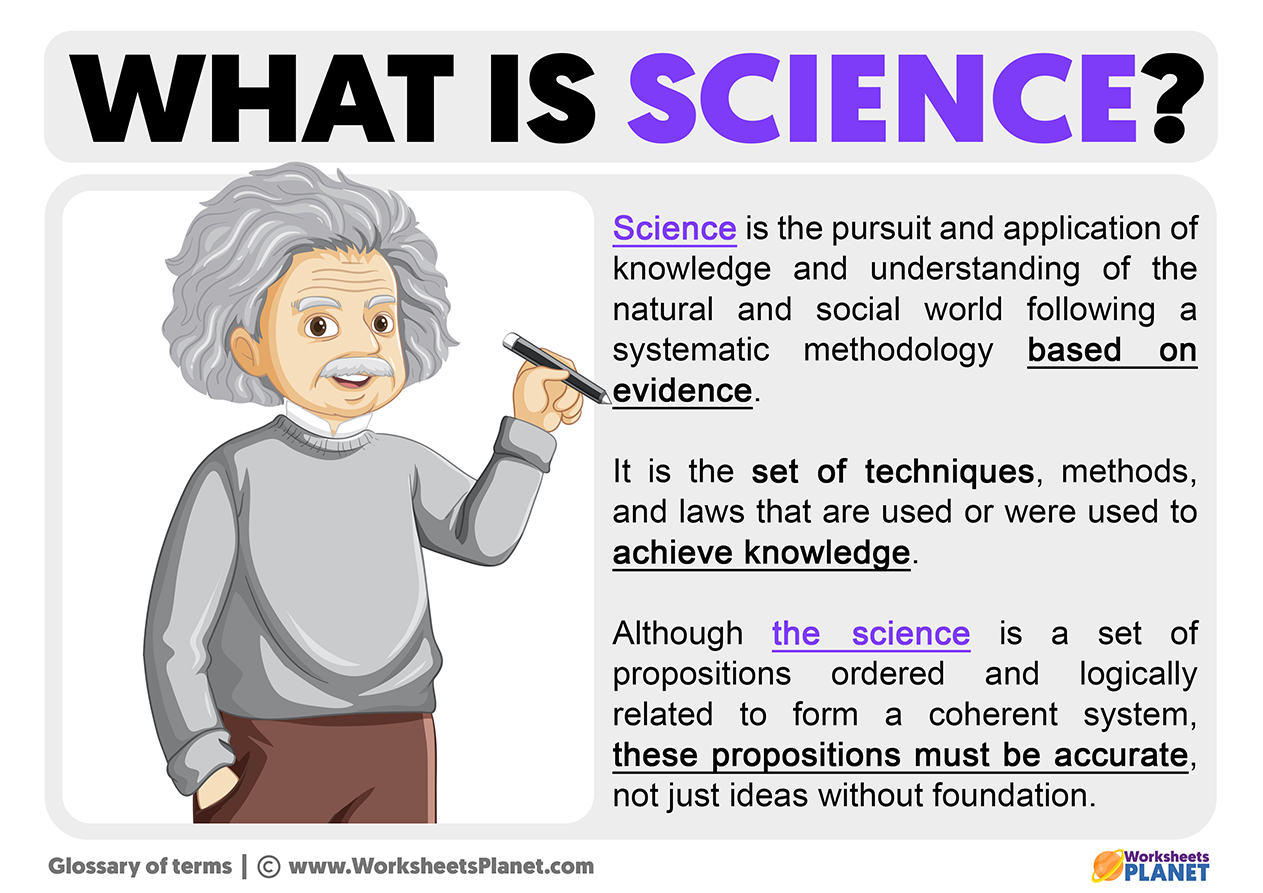
The Dynamic Evolution of Scientific Concepts
The scientific landscape is not static; it is a constantly evolving tapestry of ideas. Scientific concepts are not etched in stone but are dynamic entities, subject to refinement, revision, and sometimes, even revolution. This inherent dynamism is one of the greatest strengths of science, ensuring its continuous progress towards a more accurate understanding of reality.
Paradigm Shifts and Scientific Revolutions: Occasionally, new discoveries or overwhelming evidence can lead to a “paradigm shift,” a fundamental change in the basic concepts and experimental practices of a scientific discipline. The transition from the geocentric model of the universe to the heliocentric model, spearheaded by Copernicus and Galileo, is a classic example of a scientific revolution driven by the evolution of fundamental astronomical concepts. These shifts are often met with resistance but ultimately lead to a deeper and more accurate understanding.
Refinement through Ongoing Research: Even well-established concepts are subject to continuous refinement. As scientific tools become more sophisticated and research methodologies advance, scientists can probe phenomena with greater precision. This can lead to the identification of nuances, exceptions, or previously overlooked aspects of a concept, prompting its modification or extension. For example, our understanding of the atom has evolved dramatically from early models to the quantum mechanical description we have today.
The Importance of Openness to Change: The willingness of the scientific community to embrace change and challenge existing ideas is crucial for the progress of science. This open-mindedness, coupled with the rigorous demands of empirical evidence and logical reasoning, ensures that scientific concepts, while robust, are also adaptable and capable of growing with our ever-expanding knowledge. This continuous evolution is what keeps science relevant and powerful in its quest to unravel the mysteries of the universe.
aViewFromTheCave is a participant in the Amazon Services LLC Associates Program, an affiliate advertising program designed to provide a means for sites to earn advertising fees by advertising and linking to Amazon.com. Amazon, the Amazon logo, AmazonSupply, and the AmazonSupply logo are trademarks of Amazon.com, Inc. or its affiliates. As an Amazon Associate we earn affiliate commissions from qualifying purchases.