
The relationship between wavelength and frequency is a fundamental concept in physics, particularly when discussing waves. While it might seem like a purely academic pursuit, understanding this inverse relationship is crucial for comprehending a vast array of technologies that underpin our modern digital world. From the radio waves that carry our conversations to the light that enables our screens, and even the Wi-Fi signals that connect us, the interplay of wavelength and frequency dictates how these technologies function and how effectively they can transmit information. This article delves into the core principles governing this relationship and explores its profound implications within the realm of technology.

The Electromagnetic Spectrum: A Spectrum of Possibilities
The electromagnetic spectrum is a continuous range of electromagnetic waves, differentiated by their frequency and wavelength. These waves are the carriers of energy and information across space and time. Understanding where different technologies reside within this spectrum is key to appreciating their capabilities and limitations.
The Inverse Relationship: A Universal Law
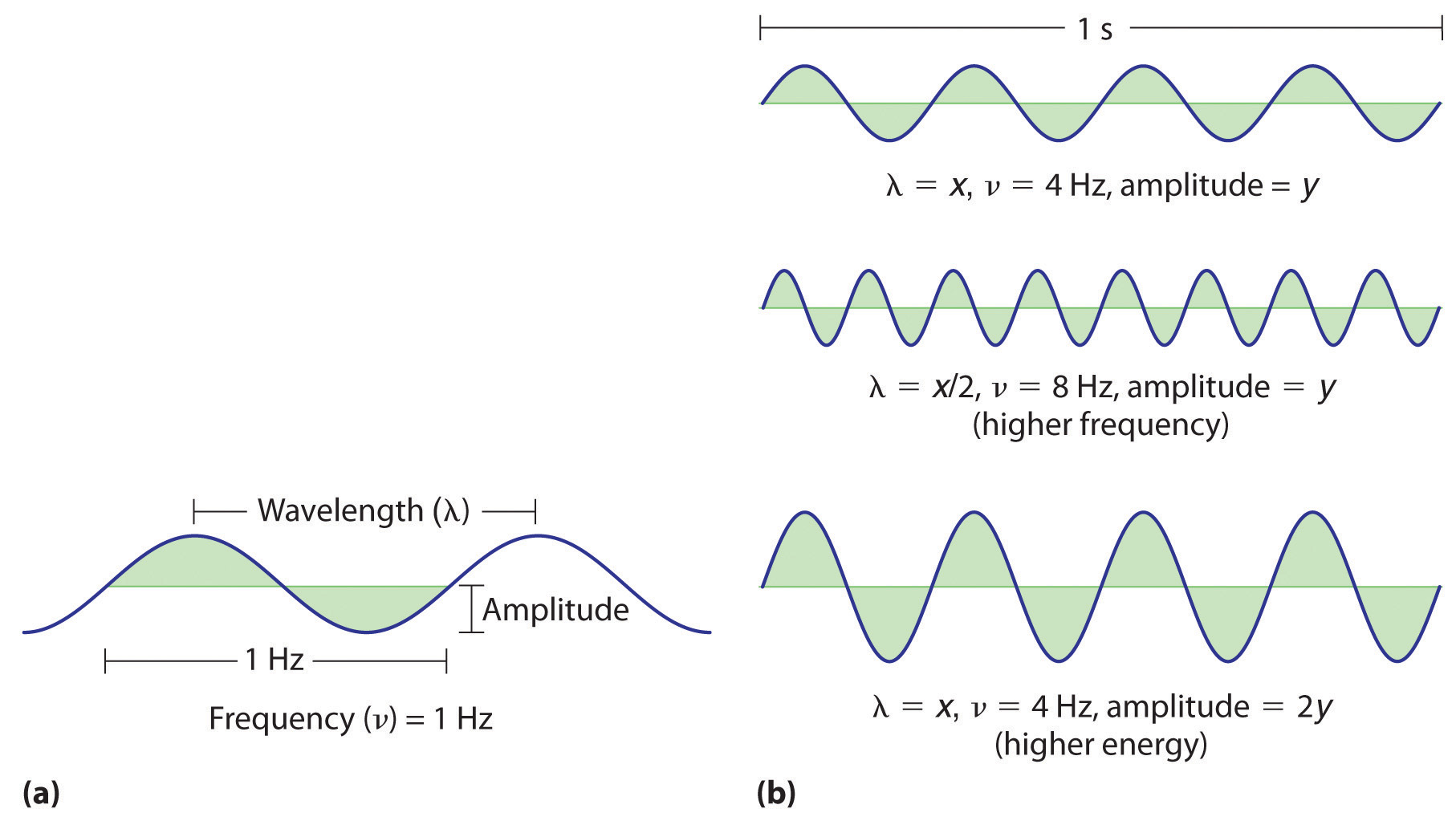
At the heart of this discussion lies a simple yet powerful equation: the speed of light ($c$) is equal to the frequency ($f$) of a wave multiplied by its wavelength ($lambda$). Mathematically, this is expressed as:
$c = f times lambda$
Since the speed of light in a vacuum is a constant (approximately 299,792,458 meters per second), this equation reveals an inverse relationship between frequency and wavelength. This means that as the frequency of an electromagnetic wave increases, its wavelength must decrease, and vice versa, to maintain the constant speed of light.
Imagine a ripple on a pond. If you create ripples very frequently (high frequency), the distance between the crests of each ripple (wavelength) will be short. Conversely, if you create ripples infrequently (low frequency), the distance between crests will be longer. The speed at which these ripples travel across the pond is analogous to the speed of light.
Frequency and Wavelength: Key Characteristics
- Frequency ($f$): This measures the number of wave cycles that pass a fixed point per unit of time, typically measured in Hertz (Hz), where 1 Hz equals one cycle per second. Higher frequency means more cycles per second. In technological terms, higher frequency often translates to a greater capacity for carrying information.
- Wavelength ($lambda$): This is the spatial period of a wave, the distance over which the wave’s shape repeats. It is the distance between consecutive crests or troughs of a wave, typically measured in meters. Shorter wavelengths mean the wave is more compressed in space.
The inverse relationship implies that technologies operating at higher frequencies will have shorter wavelengths, and those operating at lower frequencies will have longer wavelengths. This fundamental principle has significant ramifications for how we design, build, and utilize various technological systems.
Applications of Wavelength-Frequency Dynamics in Tech
The predictable inverse relationship between wavelength and frequency is not just a theoretical curiosity; it’s a cornerstone of countless technological applications. Engineers leverage this principle to design systems that can transmit data, generate images, and interact with the physical world in diverse ways.
Radio Waves: The Foundation of Wireless Communication
Radio waves occupy the lower frequency end of the electromagnetic spectrum, with wavelengths ranging from millimeters to hundreds of kilometers. This characteristic makes them ideal for long-distance communication.
- Low Frequency (LF) and Medium Frequency (MF): These bands have longer wavelengths and can travel further, even diffracting around obstacles like hills. This is why AM radio signals can often be heard over considerable distances. However, their lower frequency limits the amount of data they can carry.
- High Frequency (HF) and Very High Frequency (VHF): As frequencies increase into the HF and VHF bands, wavelengths decrease. These frequencies are used for applications like shortwave radio, FM radio broadcasting, and early television transmissions. They offer a better balance between range and data capacity.
- Ultra High Frequency (UHF) and Super High Frequency (SHF): These higher frequency bands, with their shorter wavelengths, are crucial for modern wireless technologies such as cellular networks (4G, 5G), Wi-Fi, and satellite communications. The shorter wavelengths allow for more compact antennas and enable higher bandwidth, meaning more data can be transmitted per second. The trade-off is often reduced range and a greater susceptibility to physical obstructions.
Microwaves: Precision and Data Density
Microwaves sit at even higher frequencies than radio waves, with wavelengths ranging from about one meter down to one millimeter. This enables a wide range of technological applications requiring precise signal directionality and high data throughput.
- Radar Systems: Microwave radar systems use short-wavelength pulses to detect objects and measure their distance, speed, and direction. The short wavelength allows for high resolution and the ability to detect smaller objects.
- Satellite Communication: Satellites transmit and receive microwave signals, allowing for global communication networks. The ability to focus microwave beams allows for efficient transmission of data to specific ground stations.
- Wireless Networking (Wi-Fi): Most Wi-Fi standards operate in the 2.4 GHz and 5 GHz frequency bands, which correspond to wavelengths of approximately 12.5 cm and 6 cm, respectively. These shorter wavelengths are suitable for indoor environments and allow for high-speed data transfer between devices.
- Microwave Ovens: Even our kitchen appliances utilize the properties of microwaves. The specific frequency used in microwave ovens (typically 2.45 GHz) causes water molecules within food to vibrate, generating heat and cooking the food efficiently. The wavelength of these microwaves is chosen to interact effectively with water.
Infrared, Visible Light, and Beyond: The Spectrum of Imaging and Sensing
As we move up in frequency and down in wavelength, we encounter infrared radiation, visible light, ultraviolet radiation, X-rays, and gamma rays. Each of these regions has distinct technological implications.

- Infrared (IR) Technology: Infrared radiation has longer wavelengths than visible light. It is used in thermal imaging cameras, remote controls for televisions and other devices, and fiber optic communication systems. The ability to carry encoded information through fiber optic cables relies on manipulating the wavelength and frequency of light pulses.
- Visible Light: This is the narrow band of the electromagnetic spectrum that our eyes can detect. Technologies like LED lighting, laser pointers, and optical sensors all operate within this range. The precise control of frequency and wavelength of light can be used to generate specific colors and patterns.
- Fiber Optic Communication: This is a prime example of how wavelength-frequency dynamics are harnessed for high-speed data transmission. Information is encoded into light pulses, with different wavelengths of light (often in the infrared spectrum) used to carry different streams of data simultaneously through a single optical fiber. This multiplexing technique dramatically increases data capacity.
- Imaging Technologies: From medical imaging using X-rays (short wavelength, high frequency) to astronomical observations using radio telescopes (long wavelength, low frequency), the choice of electromagnetic spectrum region is dictated by the physical properties being investigated and the resolution required.
Wavelength-Frequency Trade-offs and Technological Design
The inverse relationship between wavelength and frequency presents engineers with inherent trade-offs that must be carefully considered during the design and deployment of any communication or sensing technology.
Range vs. Bandwidth: The Fundamental Compromise
One of the most significant trade-offs is between the range of a signal and its bandwidth (the amount of data it can carry).
- Longer Wavelengths (Lower Frequencies): These signals tend to travel further and are less affected by obstacles. This makes them suitable for applications requiring broad coverage, such as long-range radio broadcasting or emergency communication systems. However, the lower frequencies inherently limit the amount of data that can be transmitted per unit of time. Think of a slow, wide river carrying a moderate amount of cargo.
- Shorter Wavelengths (Higher Frequencies): These signals can carry significantly more data (higher bandwidth) and allow for more focused transmission, leading to better signal-to-noise ratios and higher resolution in imaging. This is why technologies like 5G cellular networks and high-speed Wi-Fi operate at these frequencies. The downside is that their range is typically shorter, and they are more easily absorbed or reflected by physical objects like walls and buildings. Consider a fast, narrow canal capable of carrying much more cargo but with a more restricted path.
Antenna Size and Efficiency
The size of an antenna is directly related to the wavelength of the electromagnetic waves it is designed to transmit or receive.
- Longer Wavelengths: Require larger antennas. For example, low-frequency radio transmitters often employ massive antenna towers. This is because the antenna needs to be a significant fraction of the wavelength to efficiently radiate or capture the wave.
- Shorter Wavelengths: Allow for much smaller antennas. This is a key reason why modern portable devices like smartphones can incorporate sophisticated wireless communication capabilities. The antennas for Wi-Fi, Bluetooth, and cellular signals are minuscule compared to those used for AM radio.
The efficiency of an antenna is also tied to its design relative to the wavelength. An antenna that is a specific fraction of a wavelength (e.g., a half-wave dipole) is generally more efficient at transmitting or receiving that particular frequency.
Signal Propagation and Environmental Factors
The way electromagnetic waves propagate through the environment is heavily influenced by their wavelength and frequency.
- Diffraction: Longer wavelengths (lower frequencies) are better at diffracting, or bending, around obstacles. This is why AM radio can be heard even when the transmitter is not in line of sight.
- Reflection and Absorption: Shorter wavelengths (higher frequencies) are more prone to reflection off smooth surfaces and absorption by materials. This is why Wi-Fi signals can be blocked by concrete walls, and why higher frequency radar can be used to detect stealth aircraft by their reflective properties.
- Atmospheric Attenuation: Certain frequencies are more susceptible to attenuation (weakening) by atmospheric conditions like rain, fog, and even oxygen molecules. For example, very high-frequency microwaves can be significantly impacted by rainfall.
The Future of Wavelength-Frequency Exploitation in Technology
As our reliance on wireless communication and advanced sensing technologies continues to grow, the strategic utilization of the electromagnetic spectrum, driven by the wavelength-frequency relationship, will become even more critical.
The 5G and Beyond Revolution
The rollout of 5G technology, and its future iterations, is a prime example of leveraging higher frequencies (and thus shorter wavelengths) to achieve unprecedented data speeds and lower latency. By utilizing millimeter-wave (mmWave) frequencies, which have extremely short wavelengths (1-10 mm), 5G can unlock massive bandwidth. However, the limited range and susceptibility of mmWaves to obstruction necessitate a denser network of smaller base stations. Future generations of wireless technology will continue to explore and utilize higher and higher frequency bands, pushing the boundaries of wavelength-frequency engineering.
Internet of Things (IoT) and Spectrum Efficiency
The burgeoning Internet of Things (IoT) involves a vast number of connected devices, each requiring wireless communication. Efficiently allocating and utilizing spectrum is paramount to supporting this massive growth. Technologies that can operate efficiently across a wider range of frequencies or dynamically switch between them will be crucial. Novel antenna designs and signal processing techniques that can optimize performance for varying wavelengths and frequencies will be key.
Advancements in Sensing and Imaging
Beyond communication, the precise control of wavelength and frequency is driving innovation in sensing and imaging.
- Advanced Medical Imaging: Techniques like functional Magnetic Resonance Imaging (fMRI) rely on specific radio frequencies to interact with atomic nuclei, providing detailed insights into brain activity.
- LiDAR and Radar Evolution: Advancements in LiDAR (Light Detection and Ranging) and radar are enabling autonomous vehicles and advanced robotics. These technologies are refining their use of specific wavelengths of light and radio waves to create highly accurate 3D maps of their surroundings.
- Quantum Technologies: Emerging quantum technologies are exploring the manipulation of electromagnetic waves at extremely precise frequencies and wavelengths for applications in quantum computing and secure communication.
In conclusion, the fundamental inverse relationship between wavelength and frequency is far more than a simple physics equation. It is a guiding principle that underpins the design, function, and evolution of nearly every piece of technology we use to communicate, connect, and perceive the world around us. As we continue to push the boundaries of innovation, a deep understanding and clever exploitation of this universal law will remain at the forefront of technological advancement.
aViewFromTheCave is a participant in the Amazon Services LLC Associates Program, an affiliate advertising program designed to provide a means for sites to earn advertising fees by advertising and linking to Amazon.com. Amazon, the Amazon logo, AmazonSupply, and the AmazonSupply logo are trademarks of Amazon.com, Inc. or its affiliates. As an Amazon Associate we earn affiliate commissions from qualifying purchases.