
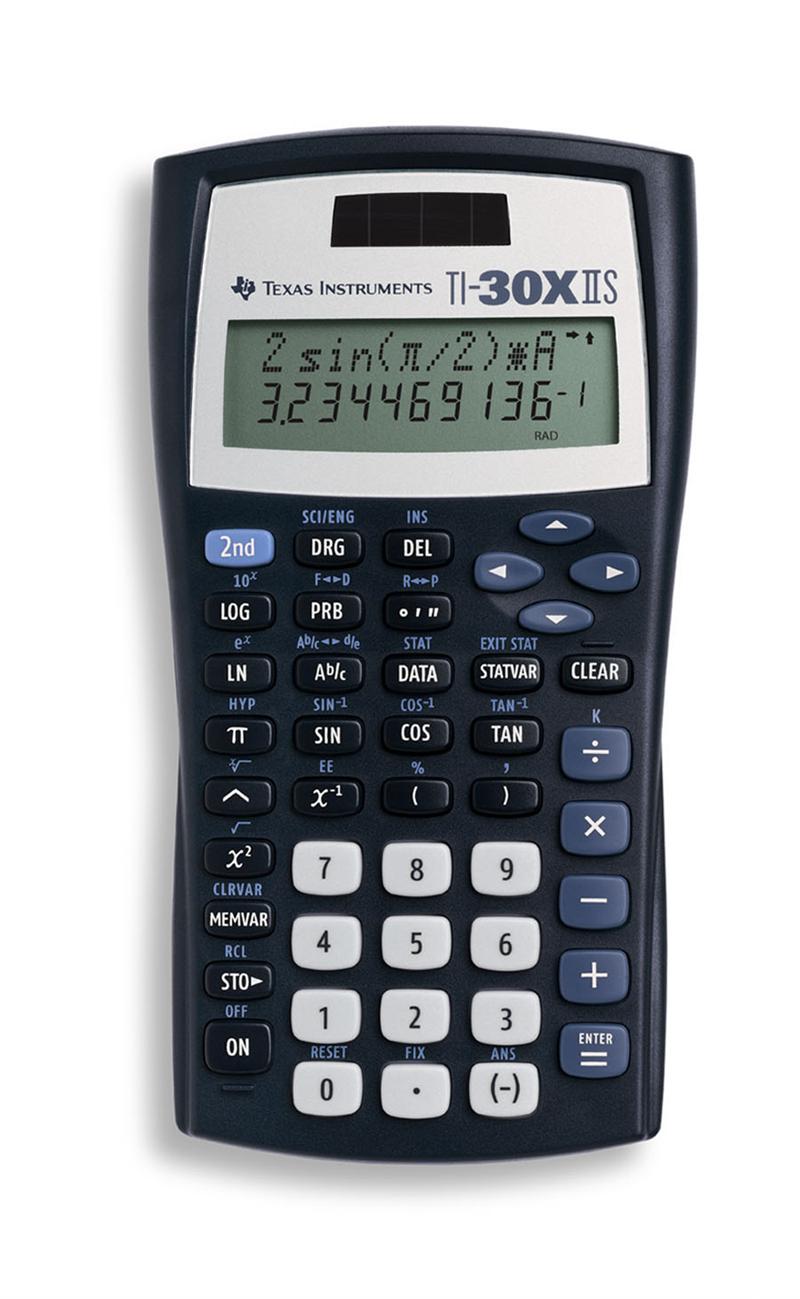
In the vast landscape of computational tools, the scientific calculator stands as a specialized and indispensable device, far surpassing the capabilities of its basic arithmetic counterparts. More than just a gadget for simple addition or subtraction, a scientific calculator is engineered to tackle complex mathematical, scientific, and engineering problems, serving as a critical ally for students, educators, and professionals across numerous disciplines. It’s a dedicated piece of technology designed to bring sophisticated functions to your fingertips, transforming daunting equations into manageable calculations. From trigonometric functions to statistical analysis, and from logarithmic operations to unit conversions, the scientific calculator demystifies the intricate world of numbers, making advanced computation accessible and efficient.
The Core Functionality: Beyond Basic Arithmetic
At its heart, a scientific calculator’s primary purpose is to extend the user’s mathematical reach beyond what a standard four-function calculator can offer. It’s built upon a foundation of fundamental operations but quickly branches out into an array of specialized functions essential for higher-level problem-solving.
Fundamental Operations and Constants
Every scientific calculator naturally performs all basic arithmetic operations: addition, subtraction, multiplication, and division. Crucially, it incorporates robust support for the correct order of operations through the use of parentheses, allowing for the precise grouping of terms in complex expressions. Beyond these basics, scientific calculators typically feature dedicated keys for fundamental mathematical constants such as Pi (π) and Euler’s number (e), eliminating the need for manual input and ensuring accuracy. Memory functions (M+, M-, MR, MC) are also standard, providing the ability to store, recall, add to, or subtract from a running total, which is invaluable for multi-step calculations.
Advanced Mathematical Functions
This is where the scientific calculator truly distinguishes itself. It comes equipped with a comprehensive suite of advanced mathematical functions vital for science, technology, engineering, and mathematics (STEM) fields. This includes trigonometric functions (sine, cosine, tangent) and their inverses (arcsine, arccosine, arctangent), which are fundamental for geometry, physics, and engineering. Logarithmic functions (common logarithm ‘log’ base 10 and natural logarithm ‘ln’ base e) are readily available for exponential growth, decay, and scaling problems. Exponents and roots, from simple squaring and square roots to arbitrary powers (x^y) and nth roots, are handled with ease. The factorial function (!), essential for combinatorics and probability, is also a standard feature.
Scientific Notation and Engineering Mode
Working with extremely large or incredibly small numbers is a common occurrence in scientific and engineering contexts. Scientific calculators seamlessly manage these figures using scientific notation, allowing users to input and display numbers like 6.022 x 10^23 (Avogadro’s number) or 1.602 x 10^-19 (the elementary charge) efficiently and accurately. Many models also include an “Engineering” (ENG) mode, which displays numbers with exponents that are multiples of three (e.g., 10^3, 10^6, 10^-3, 10^-6), aligning with common engineering prefixes like kilo, mega, giga, milli, micro, and nano. This feature simplifies unit conversions and makes magnitudes more intuitive for practical applications.
Specialized Features and Modes
Beyond its core mathematical toolkit, a scientific calculator often integrates a range of specialized features and operational modes designed to address specific analytical needs across various technical disciplines.
Statistical Capabilities
For those dealing with data analysis, many scientific calculators offer robust statistical functions. Users can typically input a set of data points and then compute various statistical measures, including mean, median, and standard deviation, which are crucial for understanding data distribution and variability. More advanced models might even support linear regression analysis, allowing the calculator to determine the line of best fit for a set of paired data, predicting trends and relationships between variables. This makes them invaluable tools for introductory statistics courses and experimental data processing in science labs.
Unit Conversions and Physical Constants
To streamline calculations that involve different measurement systems, many scientific calculators incorporate built-in unit conversion functions. This feature allows for quick conversions between common units, such as centimeters to inches, degrees Celsius to Fahrenheit, or kilograms to pounds, saving time and reducing errors. Additionally, some calculators store a library of commonly used physical constants, like the speed of light (c), the gravitational constant (G), or Planck’s constant (h). This immediate access to accurate values is a significant advantage for physics, chemistry, and engineering students and professionals alike, eliminating the need to memorize or look up these fundamental numbers.
Equation Solving and Complex Numbers
While not typically as powerful as a dedicated graphing calculator, higher-end scientific calculators often include basic equation-solving capabilities. These may allow users to find the roots of quadratic, cubic, or even higher-order polynomial equations, or solve systems of linear equations. Another advanced feature found in many scientific models is the ability to perform calculations with complex numbers. This involves numbers that contain both a real and an imaginary component (e.g., a + bi), which are essential in fields like electrical engineering, quantum mechanics, and advanced mathematics. The calculator can handle addition, subtraction, multiplication, and division of complex numbers, as well as conversions between rectangular and polar forms.
Base Conversions
For individuals working in computer science, digital electronics, or any field involving binary logic, the ability to convert between different number bases is critical. Most scientific calculators include functions for converting numbers between decimal (base 10), binary (base 2), octal (base 8), and hexadecimal (base 16). This feature simplifies tasks such as representing memory addresses, understanding digital circuit outputs, or debugging code, by allowing users to switch effortlessly between these different numerical representations.
Why and Who Uses Scientific Calculators?

The utility of a scientific calculator extends far beyond a niche application, permeating various educational and professional environments due to its versatile computational power.
Academic Fields
The scientific calculator is an omnipresent tool throughout secondary and higher education. In high school, it becomes essential for subjects like Algebra, Geometry, Pre-calculus, and especially for Physics and Chemistry, where complex formulas and unit conversions are routine. At the university level, its importance escalates dramatically. Students pursuing degrees in Engineering (Civil, Mechanical, Electrical, Chemical), pure Mathematics, Physics, Chemistry, Computer Science, and even certain branches of Economics rely heavily on these devices for coursework, problem sets, and examinations. It enables them to focus on understanding concepts rather than getting bogged down by tedious manual calculations, thereby facilitating deeper learning and exploration of complex theories.
Professional Applications
In the professional realm, the scientific calculator is an indispensable tool for a wide array of specialists. Engineers across all disciplines use them daily for design calculations, structural analysis, circuit impedance calculations, fluid dynamics, and material property evaluations. Scientists, including physicists, chemists, and researchers, utilize them for data analysis, experimental calculations, and modeling phenomena. Architects and surveyors find them useful for intricate geometric calculations, area estimations, and angle computations on site or in the office. While dedicated financial calculators exist, financial analysts and professionals sometimes leverage the scientific calculator for its powerful statistical and logarithmic functions, particularly when dealing with complex financial models or risk assessments that go beyond basic interest calculations.
Everyday Problem Solving
While less common for the general public, the precision and advanced functions of a scientific calculator can be surprisingly useful for certain hobbyists and in specific DIY scenarios. For instance, hobby electronics enthusiasts might use it for circuit calculations, amateur astronomers for celestial mechanics, or advanced home renovators for complex angle and area measurements. It serves those who require a precise, portable, and reliable tool for calculations that extend beyond simple budgeting or quick mental math. The scientific calculator empowers individuals to tackle problems that demand a higher degree of mathematical rigor, irrespective of their professional background, making complex calculations accessible and manageable in diverse practical contexts.
Choosing the Right Scientific Calculator
Selecting a scientific calculator isn’t a one-size-fits-all decision. The ideal choice often depends on the user’s specific needs, academic level, and intended applications. A few key factors should guide your decision-making process.
Key Factors to Consider
One of the most significant advancements in scientific calculators has been in display type. Older models typically feature segmented displays, showing numbers and basic symbols. Modern calculators, however, often come with “natural display” or “textbook display” capabilities, which allow fractions, roots, and other mathematical expressions to be shown exactly as they would appear in a textbook. This significantly aids comprehension and reduces errors. The power source is another practical consideration; options include solar-powered, battery-powered, or hybrid models, with hybrid models often offering the best of both worlds. Ergonomics and durability are also important for a tool that will be used frequently; the feel of the buttons, the clarity of the labels, and the overall build quality can impact user experience and longevity.
Crucially for students, the allowed in exams factor cannot be overstated. Many standardized tests (like the SAT, ACT, AP exams, and various university assessments) have strict rules regarding which calculator models are permitted. It is imperative to check these guidelines before making a purchase to ensure the calculator can be used where it matters most. Lastly, while most scientific calculators are not fully programmable like their graphing counterparts, some advanced scientific models offer limited programmability or the ability to store custom formulas. This can be a boon for specific repetitive calculations, but it’s also a feature often restricted in exam settings.
Evolution and Future of Scientific Calculators
The trajectory of technology suggests that even foundational tools like scientific calculators are subject to continuous evolution. While the physical gadget remains vital, its capabilities and forms are expanding.
From Physical Gadgets to Digital Tools
The digital revolution has profoundly impacted how we perform calculations. Alongside traditional physical scientific calculators, there has been a significant rise in mobile apps and computer software emulators that replicate and often enhance their functionality. Dedicated online scientific calculators offer instant access to powerful computational tools through web browsers, eliminating the need for a physical device. Furthermore, the principles of scientific calculation are increasingly integrated into programming languages like Python, with libraries such as math and NumPy providing robust functions for scientific and engineering computations. This diversification offers users flexibility, allowing them to choose the medium that best suits their context, whether it’s a dedicated device, a smartphone app, or a coding environment.
AI Integration and Advanced Computational Tools
Looking ahead, the landscape of complex computation is further being reshaped by AI integration and advanced computational tools. While not directly replacing the basic scientific calculator, platforms like Wolfram Alpha, symbolic calculators (which can solve equations algebraically rather than just numerically), and computational notebooks (e.g., Jupyter notebooks) represent the next frontier. These tools leverage artificial intelligence and vast databases to interpret natural language queries, perform symbolic computations, generate visualizations, and even derive step-by-step solutions to incredibly complex problems. They extend the concept of “calculation” into areas of semantic understanding and advanced problem-solving, moving beyond mere numerical processing.

Enduring Relevance
Despite the proliferation of digital alternatives and the emergence of AI-powered computational platforms, the physical scientific calculator retains its enduring relevance. For students, it provides a reliable, distraction-free environment crucial for exams and focused study. Its simplicity, immediate responsiveness, and lack of internet dependency make it an essential tool for situations where digital devices might be prohibited or impractical. Moreover, the tactile experience of interacting with a physical calculator often aids in the learning process, fostering a hands-on understanding of mathematical operations. It stands as a fundamental learning tool, a constant companion in academic pursuits, and a reliable gadget for professionals, ensuring its place in the tech ecosystem for years to come.
In conclusion, the scientific calculator is far more than a simple number cruncher; it is a sophisticated piece of technology that empowers users to navigate the complexities of mathematics, science, and engineering. From its comprehensive array of advanced functions to its specialized modes for statistics and unit conversions, it has cemented its position as an indispensable tool in education and professional practice. Even as digital alternatives and AI-driven computational systems evolve, the core utility, reliability, and focused functionality of the physical scientific calculator ensure its continued relevance as a fundamental gadget in our increasingly data-driven world.
aViewFromTheCave is a participant in the Amazon Services LLC Associates Program, an affiliate advertising program designed to provide a means for sites to earn advertising fees by advertising and linking to Amazon.com. Amazon, the Amazon logo, AmazonSupply, and the AmazonSupply logo are trademarks of Amazon.com, Inc. or its affiliates. As an Amazon Associate we earn affiliate commissions from qualifying purchases.