
In the rapidly evolving landscape of the modern property market, the difference between a top-producing agent and one who struggles to keep up often boils down to their “tech stack.” At the heart of this digital infrastructure lies the Real Estate Customer Relationship Management (CRM) system. While the term “CRM” is common across all business sectors, a real estate-specific CRM is a specialized piece of software designed to handle the unique, long-form sales cycles and high-stakes data management inherent in the housing industry.
Technically speaking, a Real Estate CRM is a centralized database and automation engine that manages interactions with current and prospective clients. It serves as the “brain” of a real estate operation, integrating lead generation, communication logs, property data, and transaction management into a single, cohesive digital environment. As we move further into the age of Big Data and Artificial Intelligence, understanding the technical nuances of these platforms is essential for any professional looking to leverage technology for operational excellence.
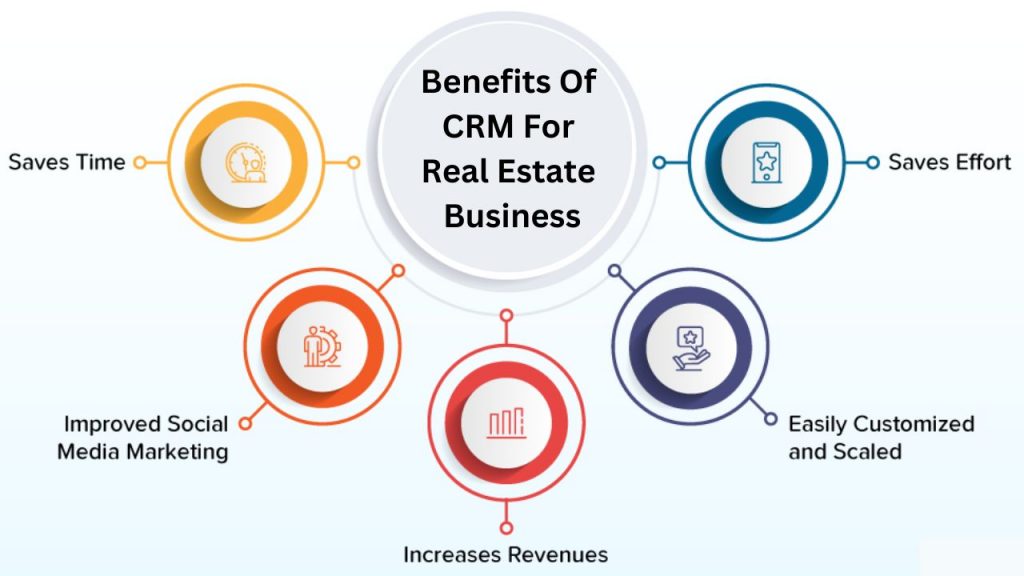
1. Defining the Real Estate CRM Ecosystem
To understand what a real estate CRM is, one must first look at its evolution from a simple digital address book to a sophisticated SaaS (Software as a Service) ecosystem. In the early days of real estate technology, agents relied on localized databases or simple spreadsheets. Today, the modern CRM is a cloud-native platform that facilitates real-time data synchronization across multiple devices and stakeholders.
From Rolodex to Cloud-Based Platforms
The transition from physical filing systems to cloud-based CRMs represents a massive shift in technical capability. Modern platforms utilize distributed cloud computing (often hosted on AWS, Azure, or Google Cloud) to ensure that an agent in the field has the same access to client history as an administrator in the office. This cloud architecture allows for high availability and redundancy, meaning data is rarely lost and is accessible 24/7. This shift has enabled the “always-on” nature of real estate, where response times are measured in seconds rather than days.
Core Components of a Modern Tech Stack
A real estate CRM does not exist in a vacuum; it is the hub of a larger technological stack. It typically integrates with three primary layers:
- The Intake Layer: Where leads are ingested from portals like Zillow, Realtor.com, or private IDX websites.
- The Processing Layer: Where the CRM applies logic to categorize, score, and route those leads.
- The Output Layer: Where the software executes automated email drips, SMS sequences, and task reminders.
Understanding this modular architecture is key to realizing why a generic CRM often fails to meet the specific technical demands of the real estate industry, which requires deep integration with property-specific data sources.
2. Essential Technical Features of Real Estate CRMs
When evaluating the “Tech” niche of real estate, the value of a CRM is found in its specific features. These aren’t just buttons on a screen; they are complex algorithms and automated workflows designed to reduce “human latency”—the time wasted when a human has to manually perform a repetitive task.
Automation and Workflow Optimization
The most powerful aspect of a real estate CRM is its automation engine. Using “If-This-Then-That” (IFTTT) logic, these systems can trigger complex sequences based on user behavior. For example, if a lead views a specific property on an agent’s website three times in 24 hours, the CRM can automatically trigger an SMS notification to the agent and an automated “Property Brief” email to the client. This level of technical responsiveness ensures that no high-intent lead falls through the cracks, allowing the software to handle the heavy lifting of lead nurturing.
Lead Routing and Intelligent Scoring
In larger real estate teams or brokerages, the CRM acts as a traffic controller. Through sophisticated lead routing protocols—such as Round Robin, Shark Tank (broadcast), or Weighted Distribution—the software ensures that inquiries are delivered to the right person instantly. Furthermore, modern CRMs employ “Lead Scoring” algorithms. These algorithms assign numerical values to leads based on their interactions with digital assets. A lead who opens every email and clicks on mortgage calculators will have a higher technical priority score than a passive browser, allowing agents to focus their manual efforts on the highest-probability conversions.
Integrated Communication Channels (Omnichannel)
A modern real estate CRM is an omnichannel communication hub. It integrates Voice over IP (VoIP), Short Message Service (SMS), and Email (via IMAP/SMTP or API) into a single interface. This technical integration ensures that every “touchpoint” is logged in a centralized timeline. From a technical standpoint, this involves complex API handshakes between the CRM and various telecommunications providers, ensuring that whether an agent calls from their mobile app or their desktop, the data is captured and archived for future reference.

3. Data Integration and the Role of the MLS
What truly separates a Real Estate CRM from a generic sales tool like Salesforce or HubSpot is its ability to communicate with real estate-specific data sets, most notably the Multiple Listing Service (MLS).
IDX and MLS Syncing Capabilities
The technical backbone of a real estate CRM is often its integration with Internet Data Exchange (IDX) feeds. Through Real Estate Transaction Standard (RETS) or the newer RESO Web API protocols, the CRM pulls live listing data directly from the MLS. This allows the CRM to “know” which houses are on the market, which are pending, and which have sold. For the user, this means the CRM can automatically suggest properties to clients based on their search history—a feat of data matching that requires robust backend database management.
Predictive Analytics and AI-Driven Insights
We are currently entering the era of the “Intelligent CRM.” By leveraging machine learning (ML), some high-end real estate CRMs can now perform predictive analytics. By analyzing thousands of data points—including public records, social media activity, and past purchase behavior—the software can predict which contacts in a database are most likely to list their home in the next six months. This “Predictive Seller” technology is a prime example of how AI is being integrated into real estate software to provide a competitive technical advantage.
4. Security, Scalability, and Mobile Accessibility
In the “Tech” world, a platform is only as good as its security and its ability to grow with the user. Real estate CRMs handle sensitive Personal Identifiable Information (PII), including financial records, home addresses, and legal documents, making security a top-tier technical requirement.
Data Protection and Cloud Security
Professional-grade real estate CRMs employ enterprise-level security protocols. This includes SOC 2 compliance, end-to-end encryption for data at rest and in transit, and multi-factor authentication (MFA). As cyber threats against the real estate industry increase—particularly wire fraud and data breaches—the technical robustness of a CRM’s security architecture becomes a critical factor for any brokerage. Furthermore, the use of automated backups ensures that in the event of a localized hardware failure, the business’s most valuable asset—its database—remains intact.
Mobile-First Architecture for Agents on the Go
Real estate is a mobile profession. Consequently, the technical development of these platforms has shifted toward a “mobile-first” philosophy. This isn’t just about having a responsive website; it’s about dedicated iOS and Android applications built on frameworks like React Native or Flutter. These apps must support offline data caching (for when agents are in basements or remote areas) and background synchronization to ensure that the desktop and mobile versions are always in parity. The ability to scan a driver’s license at an open house and have it instantly parsed into a CRM contact record via Optical Character Recognition (OCR) is a testament to the mobile power of these tools.
5. Choosing the Right Software Architecture for Your Business
Selecting a real estate CRM is a technical decision that impacts the long-term scalability of a business. It requires an understanding of how different software architectures suit different organizational needs.
Off-the-Shelf vs. Customizable Solutions
There are generally two technical paths a real estate professional can take. The first is an “all-in-one” solution (like kvCORE or Chime), which provides a rigid but highly integrated ecosystem including a website, CRM, and marketing tools. The second is a “Best-of-Breed” approach (like Follow Up Boss), which focuses on being the best possible CRM while offering robust API documentation for custom integrations. From a technical standpoint, the former offers ease of use and “one-click” functionality, while the latter offers infinite customizability through platforms like Zapier or custom-built API bridges.
Future-Proofing Your Real Estate Operations
As technology continues to advance, the “Real Estate CRM” of tomorrow will likely involve even deeper integrations with Augmented Reality (AR) for virtual tours and Blockchain for transparent transaction management. When choosing a platform today, the focus should be on “extensibility”—the software’s ability to adopt new features and integrate with future technologies. A CRM that lacks an open API or fails to update its UI/UX regularly will quickly become “technical debt,” a burden that slows down the business rather than accelerating it.
In conclusion, a Real Estate CRM is far more than a digital Rolodex. It is a sophisticated technological engine that automates communication, analyzes data patterns, and secures the most sensitive information in the property industry. By mastering the technical aspects of these platforms—from Lead Scoring algorithms to MLS API integrations—real estate professionals can transform their workflow from a series of manual tasks into a high-efficiency, tech-driven operation. In the modern era, the CRM is not just a tool; it is the foundation of the digital real estate enterprise.
aViewFromTheCave is a participant in the Amazon Services LLC Associates Program, an affiliate advertising program designed to provide a means for sites to earn advertising fees by advertising and linking to Amazon.com. Amazon, the Amazon logo, AmazonSupply, and the AmazonSupply logo are trademarks of Amazon.com, Inc. or its affiliates. As an Amazon Associate we earn affiliate commissions from qualifying purchases.